Wednesday, March 26th 2025

Latest AMD and NVIDIA GPUs Are Losing the MSRP Battle: Real-World Prices Far Above MSRP

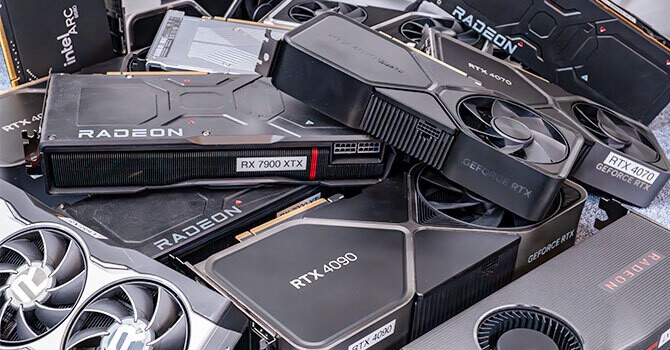
Tom's Hardware just published an intensive data collection of online prices of the latest GPUs from AMD and NVIDIA, suggesting that real-world prices are nowhere near MSRP. With an investigation into the 30-day eBay average price based on listings, the data shows that a lot of GPU SKUs are retailing for well-above-average price premiums. The data tracker also looked for the best-priced listing of a specific SKU. For instance, NVIDIA's GeForce RTX 5070 is seen retailing at around $700—a 27% increase over its official MSRP of $550—while the RTX 5080 pushes these premiums even further by selling at over 50% above its suggested price. The flagship RTX 5090 tops the chart with a staggering $4,222 on secondary markets compared to its $2,000 MSRP, an increase of roughly 111%.

In contrast, earlier models like the RTX 4060 and RTX 4060 Ti show relatively minor inflation, with increases of only about 3% and 5%, respectively, according to recent eBay averages. Still, selling years-old GPUs at MSRP today proves that there is demand. On the AMD side, the Radeon RX 9070 series is no less dramatic. The base RX 9070, with a $550 MSRP, averages around $817 in real-world sales—a nearly 48% premium—while its high-end sibling, the RX 9070 XT, jumps to approximately $1,001 from a $600 MSRP, marking an increase of roughly 66%. Early figures even suggest that first-week sales for the RX 9070 series were ten times higher than those of previous AMD models, justifying the price surge. AMD is working on addressing this supply, which should improve in April, and NVIDIA is working with AIB partners, too, to deliver more Blackwell GPUs.
Source: Tom's Hardware
Add your own comment

64 Comments on Latest AMD and NVIDIA GPUs Are Losing the MSRP Battle: Real-World Prices Far Above MSRP

#51
SSGBryan
Xaledlosing? the battle?
There is no losing and there is no battle
Authorities should investigate and stop this fraud. YES it is free market and each one can assign the price they want but please do that without this MSRP lies.
How is it fraud?

I swear, have ANY of you taken a single econ or business course?

Nvidia simply isn't providing enough gpu chips for the AIBs. Let me give you an example...

If as XaledAIB are expecting 2,000 5070 gpu dies per month, & Nvidia only sells you 200 - what are you going to do?

You still have a workforce to pay, and capital expenditures to deal with.
Posted on Reply
#52
RandallFlagg
A new trend may be emerging.

Seems like there's a parallel with crypto in here somewhere..

Posted on Reply
#53
ZoneDymo
JustBenchingAnd neither amd or nvidia are benefiting from these increases. People point the finger at them for being greedy or whatever, but they are not pocketing the extras. It's just the sellers that reap the benefits.
Welllll that is not entirely fair, remember why EVGA stopped, at MSRP they are barely making any profits, so yeah, it is most def for a large part AMD and Nvidia to blame.
If they were willing to sell for a lot cheaper, then the vendors had more room to keep prices low.

If it costs them 580 bucks to sell a card for 600....yeah that is not really worth the effort, makes sense then make it 700 or more.
But its Nvidia and AMD to state the MSRP as well as the price they are selling the hardware to the vendors for.
Posted on Reply
#54
Naito
SirKeldonSure, in theory, if everyone stopped buying, prices would drop. Just like if everyone abstained from voting, the system might shake. Sounds great, until you remember we don’t live in that kind of world.

Different people have different needs. Their GPU dies, they rely on one for work, or maybe they're starting a business that depends on GPU power. Not everyone can afford to wait around for prices to magically fall, or rely on the second-hand market.

That "just stop buying" take only works if everyone does it. Spoiler: they won’t.
The difference is people who need and people who want. People needing to buy has always been the case, whether it be for work or the fact their old GPU has died. The thing that has changed is the people that want - I believe social media has bred a constant level of anxiety and FOMO in people which has produced super consumers. Prior to recent years, I can't remember too many occasions where demand often outstripped supply, but now it happens almost every product launch. The other argument could be that manufacturers are all turning to JIT production or scarcity marketing to enhance profits? Or perhaps it is both reasons?
Posted on Reply
#55
SirKeldon
NaitoThe difference is people who need and people who want. People needing to buy has always been the case, whether it be for work or the fact their old GPU has died. The thing that has changed is the people that want - I believe social media has bred a constant level of anxiety and FOMO in people which has produced super consumers. Prior to recent years, I can't remember too many occasions where demand often outstripped supply, but now it happens almost every product launch. The other argument could be that manufacturers are all turning to JIT production or scarcity marketing to enhance profits? Or perhaps it is both reasons?
Fair point, and I agree there's a real difference between need and want. Social media and FOMO definitely fuel the "want" side, no question there. That said, when the original message says "people should just stop buying" it paints the whole consumer base with the same brush, which is where I pushed back. The reality is more nuanced, like you said.

You make a good observation about JIT production and intentional scarcity too. It's probably a mix of all those factors and probably more, but either way, blaming the outcome entirely on consumers felt like oversimplifying a more complex market dynamic as you clearly stated.

Plus, gaming's more mainstream than ever, pushed by streamers, esports, and the whole PCMR wave. Then there's crypto, smaller AI companies, and other GPU-hungry industries competing for the same hardware. Demand isn't just growing, it's being constantly fueled. The landscape has changed a lot certainly.
Posted on Reply
#56
Naito
SirKeldonFair point, and I agree there's a real difference between need and want. Social media and FOMO definitely fuel the "want" side, no question there. That said, when the original message says "people should just stop buying" it paints the whole consumer base with the same brush, which is where I pushed back. The reality is more nuanced, like you said.

You make a good observation about JIT production and intentional scarcity too. It's probably a mix of all those factors and probably more, but either way, blaming the outcome entirely on consumers felt like oversimplifying a more complex market dynamic as you clearly stated.

Plus, gaming's more mainstream than ever, pushed by streamers, esports, and the whole PCMR wave. Then there's crypto, smaller AI companies, and other GPU-hungry industries competing for the same hardware. Demand isn't just growing, it's being constantly fueled. The landscape has changed a lot certainly.
I totally get that the market is more complex now with all these competing industries like gaming, AI, crypto, etc, but I still think the root of the issue is that consumers are accepting these inflated prices, which is allowing the trend to continue. If people collectively held off on buying at these prices, manufacturers, retailers, and distributors would be forced to adjust. If they see demand drop due to prices being too high, they’ll have to rethink their pricing strategies or ramp up production to meet demand at more reasonable price points.

It’s not about ignoring demand - it’s about consumers pushing back against the idea that these prices are acceptable just because 'everyone else is buying.' The anxiety and FOMO fueled by social media have created a climate where people feel like they have to buy now, before they miss out, and that drives these inflated prices even higher. Sure, the market’s growing and there are new industries competing for GPUs, but without the pressure from consumers to slow down and wait for supply to stabilize, we’ll just keep seeing MSRP prices creep up and more price premiums. And let's not even get started on scalpers who thrive in, and make worse, this kind of market scenario....

But who knows - as said, it might be all 'manufactured' demand where production will always be lower than demand and consumers will just have to put up with it so the companies involved can profit hoard. Stock markets all around the world seem hyper-inflated, even given current events, so the pressure to grow and return profit to investors will match.

The old saying goes - "vote with your wallet"
Posted on Reply
#57
AusWolf
dyonoctis699£ is 900$, or 835€. That's pretty far above MSP still :D
Well, I'm used to seeing $1 MSRP = £1 retail, so in that regard, we're not doing so bad over here.
PaddieMayneWhere are you seeing those prices?
At Scan UK.
Posted on Reply
#58
Quicks
ZoneDymoWelllll that is not entirely fair, remember why EVGA stopped, at MSRP they are barely making any profits, so yeah, it is most def for a large part AMD and Nvidia to blame.
If they were willing to sell for a lot cheaper, then the vendors had more room to keep prices low.

If it costs them 580 bucks to sell a card for 600....yeah that is not really worth the effort, makes sense then make it 700 or more.
But its Nvidia and AMD to state the MSRP as well as the price they are selling the hardware to the vendors for.
I think it's more like 20% profit is not good enough from AMD & Nvidia and AIB partners want 35%+, and finding loopholes to make that happen.
Posted on Reply
#59
RandallFlagg
QuicksI think it's more like 20% profit is not good enough from AMD & Nvidia and AIB partners want 35%+, and finding loopholes to make that happen.
Gross margin for Nvidia is over 70%. AMD just hit 51% in Q4 2024.
Posted on Reply
#61
Totally
Just chiming in again because a counterargument or an attempt at a counterargument that frequently pops up and it more or less "bUt INfLatIoN!" So what? Inflation has nothing to do with the conversation what does value have to do with spending power in this context? What has everyone out of sorts is RRP > MSRP? When did we normalize that? The norm used to be MSRP = RRP, sometimes RRP being a bit higher if there is anticipation of serious demand, then RRP would fall off. I'm aware our current GPU pricing being out of whack is the product of several factors but inflation isn't one of them because an unending amount of people will to pay above MSRP is what is causing inflation. As uninformed I can be at sometimes I know enough to realize that the end result cannot be the cause.
Posted on Reply
#62
RandallFlagg
TotallyJust chiming in again because a counterargument or an attempt at a counterargument that frequently pops up and it more or less "bUt INfLatIoN!" So what? Inflation has nothing to do with the conversation what does value have to do with spending power in this context? What has everyone out of sorts is RRP > MSRP? When did we normalize that? The norm used to be MSRP = RRP, sometimes RRP being a bit higher if there is anticipation of serious demand, then RRP would fall off. I'm aware our current GPU pricing being out of whack is the product of several factors but inflation isn't one of them because an unending amount of people will to pay above MSRP is what is causing inflation. As uninformed I can be at sometimes I know enough to realize that the end result cannot be the cause.
This is all just fair market price, people don't seem to get that. Nobody sets the market price, the market does that.

I can sit here and tell you a house is worth $500K. But when I put it on the market, it's not going to be worth what I think, it's going to be worth what someone is willing to pay. If there are more houses just like mine in the same area than there are buyers for that house in that area, the price will go down. If however, there are 100 buyers and I'm the only one selling, guess what? You get a bidding war. Suddenly my 500K house is actually worth 750K. The price keeps rising until most of the buyers are simply priced out, which brings demand into line with supply.

Same thing happens to GPUs. It's really simple. The prices go up, which prices people out, and it continues to go up until the number of people buying is roughly in line with the number of units available to sell.

And just like if you were selling your house, don't expect the seller to 'settle' for way less than they can get. It would be really dumb of a homeowner / home seller to do that, same goes for retailers and AIBs.

In this case, my main gripe vs Nvidia and AMD is that I'm certain they both knew their MSRPs were bogus. They have market analysts that know these things. The MSRPs were too low and generated far more demand than they had supply. This causes scalpers to enter the market. They have some other motives for doing this that are not clear.
Posted on Reply
#63
Totally
RandallFlaggThis is all just fair market price, people don't seem to get that. Nobody sets the market price, the market does that.

I can sit here and tell you a house is worth $500K. But when I put it on the market, it's not going to be worth what I think, it's going to be worth what someone is willing to pay. If there are more houses just like mine in the same area than there are buyers for that house in that area, the price will go down. If however, there are 100 buyers and I'm the only one selling, guess what? You get a bidding war. Suddenly my 500K house is actually worth 750K. The price keeps rising until most of the buyers are simply priced out, which brings demand into line with supply.

Same thing happens to GPUs. It's really simple. The prices go up, which prices people out, and it continues to go up until the number of people buying is roughly in line with the number of units available to sell.

And just like if you were selling your house, don't expect the seller to 'settle' for way less than they can get. It would be really dumb of a homeowner / home seller to do that, same goes for retailers and AIBs.

In this case, my main gripe vs Nvidia and AMD is that I'm certain they both knew their MSRPs were bogus. They have market analysts that know these things. The MSRPs were too low and generated far more demand than they had supply. This causes scalpers to enter the market. They have some other motives for doing this that are not clear.
Buyers/selllers don't get to play that game here. A house and a GPU aren't even in the same asset class. The house isn't becoming more obsolete with each passing day and the GPU is losing value over time irrespective of the wants of buyer/seller. That argument can be made here. Then there's supply vs demand, when supply eventually catches up pricing doesn't ever or rarely dip below MSRP as of the past few years. "So they didn't make enough" doesn't quite hold either. The more I think about it the more it screams overt manipulation. Maybe in a few years once the bubble bursts, governments will look into things and file price fixing and anti-trust lawsuits, and we'll have to settle with people defending these companies charging so much.
Posted on Reply
#64
RandallFlagg
TotallyBuyers/selllers don't get to play that game here. A house and a GPU aren't even in the same asset class. The house isn't becoming more obsolete with each passing day and the GPU is losing value over time irrespective of the wants of buyer/seller. That argument can be made here.
The same thing happens with cars, if you need an example of a rapidly depreciating asset class. During Covid, and it continues today, used car prices spiked such that in some cases a 1 or 2 year old used car was worth more than the exact same brand new car's MSRP. Of course, mostly you couldn't get a brand new car at MSRP, as the dealers would add a "Market Adjustment" to the price. See how that works?

Though I would submit, houses do not last forever, the vast majority do in fact eventually depreciate to nothing. What percentage of houses from the 1940s and 1950s do you think are still standing?

Just because it happens too slow for you to notice it doesn't mean it isn't happening.
TotallyThen there's supply vs demand, when supply eventually catches up pricing doesn't ever or rarely dip below MSRP as of the past few years. "So they didn't make enough" doesn't quite hold either. The more I think about it the more it screams overt manipulation. Maybe in a few years once the bubble bursts, governments will look into things and file price fixing and anti-trust lawsuits, and we'll have to settle with people defending these companies charging so much.
Way too many conspiracy theorists in the GPU world. There is no big collusion or conspiracy, just more buyers than sellers. The simple fact is that these GPUs are worth more than the MSRP because people will pay more than the MSRP. "Demand" is a function of price. If the price is higher than you are willing to pay, then you are no longer part of demand. You equalize supply and demand by raising the price until "demand" equals supply.

In a different scenario, like when crypto collapsed and GPUs entered the market en masse, you lower price until demand rises to equal supply.

This is really basic stuff and I don't know what to tell you if you don't get it. GPUs are like any other commodity, there's nothing special about them.
Posted on Reply
Add your own comment
Nov 27th, 2026 19:17 CST change timezone

New Forum Posts

Popular Reviews

TPU on YouTube

Controversial News Posts