Tuesday, August 12th 2025

Samsung Launches World First Micro RGB TV
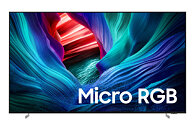
Samsung Electronics America today announced the official launch of its Micro RGB TV, the world's first display to feature a micro-scale RGB LED backlight behind a super big and fully immersive 115-inch screen. This breakthrough display delivers brilliant brightness and hyper-realistic hues, allowing you to indulge in color like never before.
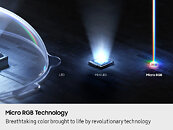
The category-defining TV is built with Samsung proprietary Micro RGB Technology, which arranges individually controlled red, green and blue micro LEDs—each less than 100 µm in size—in an ultra-fine pattern behind the panel. Unlike most conventional backlighting, the architecture enables precision control over each red, green and blue LED—resulting in an industry-first 100% color coverage of BT.2020, an international standard for color accuracy established by the International Telecommunication Union (ITU).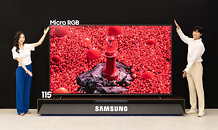
 "Micro RGB achieves unprecedented precision in the control of micrometer-sized RGB LEDs, raising the bar for color accuracy and contrast in consumer displays," said Taeyong Son, Executive Vice President and Head of the R&D Team of the Visual Display (VD) Business at Samsung Electronics. "With this launch, we're setting the standard in the large-sized, ultra-premium TV market and reinforcing our commitment to next-generation display innovation."
Powered by the Samsung Micro RGB AI engine, this new innovation uses AI processing to finely control the red, green and blue backlight for next-level color expression, as well as optimized picture and sound. This advanced technology analyzes each frame in real time and automatically optimizes color output for a more lifelike and immersive picture. With AI, Micro RGB Color Booster Pro recognizes scenes with dull color tones to intelligently enhance colors across all content for a more vivid and immersive viewing experience.
Plus, the display features Micro RGB Precision Color, which lends a new level of intense immersion to your movie night. The technology finely and precisely controls colors, adding depth and dimension for a level of detail nearly indistinguishable from real life. Samsung Micro RGB TV also received 'Micro RGB Precision Color' certification from the Verband der Elektrotechnik (VDE), a leading German electrical engineering certification institute.
Samsung Micro RGB TV is designed with our most advanced Glare Free technology to minimize reflections, even in bright lighting conditions for a more comfortable and focused viewing experience. Apart from providing next-generation performance, the Micro RGB TV's super slim metal design achieves a sleek, minimalistic profile to compliment any interior.
With Samsung Vision AI integrated, the display offers a smarter viewing experience, enabling features like an upgraded Click to Search, powered by Samsung Bixby. Viewers can ask Bixby contextual questions about the content on screen and receive natural language answers, as well as access actor bios, related content and real-time recommendations without ever leaving the screen.
Samsung Micro RGB TV is also secured by Samsung Knox, the industry-leading security solution designed to protect your sensitive personal data, and supports the Samsung 7-year free Tizen OS Upgrade program, which ensures ongoing software enhancements and long-term upgrades.
Samsung Micro RGB TV will be available in the U.S. for an MSRP of $29,999. It's also available in Korea, with future plans for a global rollout featuring a variety of sizes to meet customer needs.
Source:
Samsung
The category-defining TV is built with Samsung proprietary Micro RGB Technology, which arranges individually controlled red, green and blue micro LEDs—each less than 100 µm in size—in an ultra-fine pattern behind the panel. Unlike most conventional backlighting, the architecture enables precision control over each red, green and blue LED—resulting in an industry-first 100% color coverage of BT.2020, an international standard for color accuracy established by the International Telecommunication Union (ITU).


Powered by the Samsung Micro RGB AI engine, this new innovation uses AI processing to finely control the red, green and blue backlight for next-level color expression, as well as optimized picture and sound. This advanced technology analyzes each frame in real time and automatically optimizes color output for a more lifelike and immersive picture. With AI, Micro RGB Color Booster Pro recognizes scenes with dull color tones to intelligently enhance colors across all content for a more vivid and immersive viewing experience.
Plus, the display features Micro RGB Precision Color, which lends a new level of intense immersion to your movie night. The technology finely and precisely controls colors, adding depth and dimension for a level of detail nearly indistinguishable from real life. Samsung Micro RGB TV also received 'Micro RGB Precision Color' certification from the Verband der Elektrotechnik (VDE), a leading German electrical engineering certification institute.
Samsung Micro RGB TV is designed with our most advanced Glare Free technology to minimize reflections, even in bright lighting conditions for a more comfortable and focused viewing experience. Apart from providing next-generation performance, the Micro RGB TV's super slim metal design achieves a sleek, minimalistic profile to compliment any interior.
With Samsung Vision AI integrated, the display offers a smarter viewing experience, enabling features like an upgraded Click to Search, powered by Samsung Bixby. Viewers can ask Bixby contextual questions about the content on screen and receive natural language answers, as well as access actor bios, related content and real-time recommendations without ever leaving the screen.
Samsung Micro RGB TV is also secured by Samsung Knox, the industry-leading security solution designed to protect your sensitive personal data, and supports the Samsung 7-year free Tizen OS Upgrade program, which ensures ongoing software enhancements and long-term upgrades.
Samsung Micro RGB TV will be available in the U.S. for an MSRP of $29,999. It's also available in Korea, with future plans for a global rollout featuring a variety of sizes to meet customer needs.
75 Comments on Samsung Launches World First Micro RGB TV
so far, what i have seen using a 75in miniLED for a few weeks, its good enough to have no blooming around small bright stuff on dark background (like subs/text), but i can tell its not a tv from a top (tv) brand, and uniformity lacks.
@Prime2515102
not sure what and how you are watching, but i have sold lots of tvs streaming YT vids in 4k, same for FHD content on BD, which is same/less than what most quality streams will have (fps/bitrate).
ignoring with proper tvs you dont have to have a "full" 4K BD like signal, to get almost the same (visible) IQ at same seating distance.
@cucol
have sold OLEDs as part of "my" tv lineup for almost 10y, and the miniLEDs i had a chance to "test" (running some of my old demo content to compare) seemed good enough to not make me limit my options to oled.
Burn in is there, but overhyped IMO. The brightness limitations are more of a thing to worry over (if in a bright room).
PS: Bright room is what made me go MiniLED with my Hisense this time around. It can do nearly 1600 Nits and is great in my well lit gaming room! There are drawbacks vs OLED of course, but they are hard to notice most of the time. Pleased overall.
yeah, a joke, anything above 75 really needs 8K to look good at close distance (for theater feel).
@R-T-B
what model was it?
remember a few years back the LG oleds on dissplay had IR issues after 1y of 9-9 demo use, while the Sony (LG provided same panel) did not, so sw/refresh or things like pixel shift are important.
It's expensive yes. But it is progress regardless.
So is Samsung abandoning true micro led because they will never be able to bring the cost down or is this a half step towards it being a reality. I guess only time will tell.
arstechnica.com/gadgets/2024/04/meet-qdel-the-backlight-less-display-tech-that-could-replace-oled-in-premium-tvs/
LG invested heavily in Oled tech and are the nr 1 supplier for everyone so its big and a position they like to keep, that leads to innovation.
Reading what Qdel is suppose to be, it seems like the logical next step though, Oled benefits without burn in risk? sign me up.