Tuesday, August 12th 2025

Samsung Launches World First Micro RGB TV
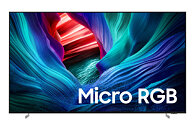
Samsung Electronics America today announced the official launch of its Micro RGB TV, the world's first display to feature a micro-scale RGB LED backlight behind a super big and fully immersive 115-inch screen. This breakthrough display delivers brilliant brightness and hyper-realistic hues, allowing you to indulge in color like never before.
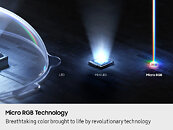
The category-defining TV is built with Samsung proprietary Micro RGB Technology, which arranges individually controlled red, green and blue micro LEDs—each less than 100 µm in size—in an ultra-fine pattern behind the panel. Unlike most conventional backlighting, the architecture enables precision control over each red, green and blue LED—resulting in an industry-first 100% color coverage of BT.2020, an international standard for color accuracy established by the International Telecommunication Union (ITU).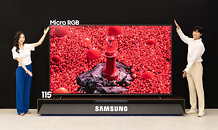
 "Micro RGB achieves unprecedented precision in the control of micrometer-sized RGB LEDs, raising the bar for color accuracy and contrast in consumer displays," said Taeyong Son, Executive Vice President and Head of the R&D Team of the Visual Display (VD) Business at Samsung Electronics. "With this launch, we're setting the standard in the large-sized, ultra-premium TV market and reinforcing our commitment to next-generation display innovation."
Powered by the Samsung Micro RGB AI engine, this new innovation uses AI processing to finely control the red, green and blue backlight for next-level color expression, as well as optimized picture and sound. This advanced technology analyzes each frame in real time and automatically optimizes color output for a more lifelike and immersive picture. With AI, Micro RGB Color Booster Pro recognizes scenes with dull color tones to intelligently enhance colors across all content for a more vivid and immersive viewing experience.
Plus, the display features Micro RGB Precision Color, which lends a new level of intense immersion to your movie night. The technology finely and precisely controls colors, adding depth and dimension for a level of detail nearly indistinguishable from real life. Samsung Micro RGB TV also received 'Micro RGB Precision Color' certification from the Verband der Elektrotechnik (VDE), a leading German electrical engineering certification institute.
Samsung Micro RGB TV is designed with our most advanced Glare Free technology to minimize reflections, even in bright lighting conditions for a more comfortable and focused viewing experience. Apart from providing next-generation performance, the Micro RGB TV's super slim metal design achieves a sleek, minimalistic profile to compliment any interior.
With Samsung Vision AI integrated, the display offers a smarter viewing experience, enabling features like an upgraded Click to Search, powered by Samsung Bixby. Viewers can ask Bixby contextual questions about the content on screen and receive natural language answers, as well as access actor bios, related content and real-time recommendations without ever leaving the screen.
Samsung Micro RGB TV is also secured by Samsung Knox, the industry-leading security solution designed to protect your sensitive personal data, and supports the Samsung 7-year free Tizen OS Upgrade program, which ensures ongoing software enhancements and long-term upgrades.
Samsung Micro RGB TV will be available in the U.S. for an MSRP of $29,999. It's also available in Korea, with future plans for a global rollout featuring a variety of sizes to meet customer needs.
Source:
Samsung
The category-defining TV is built with Samsung proprietary Micro RGB Technology, which arranges individually controlled red, green and blue micro LEDs—each less than 100 µm in size—in an ultra-fine pattern behind the panel. Unlike most conventional backlighting, the architecture enables precision control over each red, green and blue LED—resulting in an industry-first 100% color coverage of BT.2020, an international standard for color accuracy established by the International Telecommunication Union (ITU).


Powered by the Samsung Micro RGB AI engine, this new innovation uses AI processing to finely control the red, green and blue backlight for next-level color expression, as well as optimized picture and sound. This advanced technology analyzes each frame in real time and automatically optimizes color output for a more lifelike and immersive picture. With AI, Micro RGB Color Booster Pro recognizes scenes with dull color tones to intelligently enhance colors across all content for a more vivid and immersive viewing experience.
Plus, the display features Micro RGB Precision Color, which lends a new level of intense immersion to your movie night. The technology finely and precisely controls colors, adding depth and dimension for a level of detail nearly indistinguishable from real life. Samsung Micro RGB TV also received 'Micro RGB Precision Color' certification from the Verband der Elektrotechnik (VDE), a leading German electrical engineering certification institute.
Samsung Micro RGB TV is designed with our most advanced Glare Free technology to minimize reflections, even in bright lighting conditions for a more comfortable and focused viewing experience. Apart from providing next-generation performance, the Micro RGB TV's super slim metal design achieves a sleek, minimalistic profile to compliment any interior.
With Samsung Vision AI integrated, the display offers a smarter viewing experience, enabling features like an upgraded Click to Search, powered by Samsung Bixby. Viewers can ask Bixby contextual questions about the content on screen and receive natural language answers, as well as access actor bios, related content and real-time recommendations without ever leaving the screen.
Samsung Micro RGB TV is also secured by Samsung Knox, the industry-leading security solution designed to protect your sensitive personal data, and supports the Samsung 7-year free Tizen OS Upgrade program, which ensures ongoing software enhancements and long-term upgrades.
Samsung Micro RGB TV will be available in the U.S. for an MSRP of $29,999. It's also available in Korea, with future plans for a global rollout featuring a variety of sizes to meet customer needs.
75 Comments on Samsung Launches World First Micro RGB TV
It'll be interesting to see if this is a tech that will be used in computer monitors as well.
I disassembled a few LCD TV.
one of the marketing picture of this topic suggests such a big led size.
I think they mistook the background LED Light stripe of cheap trash TVs which are long obsolete for over 15 years.. What I remember is a long piece with small LED on them. On top of them there was some sort of lens. That picture from this article looks like half of such a unit of the backlight.
I really prefer when they would write in the picture the dimensions. Maybe dots per inch (DPI) or similar means to identify the improvement.
Is it really such hard to make a slide for the technology 50 years ago with name x, 30 years ago with name y and now the super duper Samsung tech with dimensions and specs?
7 years of update sounds like nothing for a television.Why should i buy a samsung when i can something else which is replaceable when there will be no updates?
70 years of updates would be noteworthy. 7 years is an indicator to avoid it anyway. Is it like from the smartphone business, 7 years from the annoucement of the device? and later they just change the terms of those 7 years...
Note that LG and FireTV doesn't even get version updates, instead you're stuck with whatever base OS you got on the devices when you bought it.
However, it does seem like LG has changed that policy since 2024 and will now update the base OS every year for five years.
They showed a 75" Wall TV with 2160p in 2020 or so but it never appeared as a product.
The Wall being sold was last year or the year before with 2160p at 146" and $250k price tag.
It still looks like OLED is here to stay and microLED with augment it in the list of SKUs. MicroLED can and will be used for large sizes while OLED will keep the relatively smaller screens.
Can every pixel be switch off independently as on oled TV?
It's a deal breaker for me
looks like OLED is still king over Micro-LED
OLED forever, OLED for life, all hail, OLED!!!
The reason it's 115" and only 4K is because their "Micro RGB" (really just RGB MiniLEDs for now) is too big to be used as pixels in smaller displays. I'm sure in a few years, when they keep shrinking (and they start calling them MicroLED), you'll start seeing these on a more reasonable size.
I think their "Micro RGB" stuff is also going to get used as dimming zones in high end "MiniLED" TVs as they are much better than regular white/blue MiniLEDs regarding color and image quality.
Edit: Just seen the Hisense 116UX, that's where this stuff (although bigger) is used as dimming zones.
most people not complaining with shorter warranty before
7years for software support is decent actually, basically 7years of maintaining security mostly beside anything else, i have yet to find TV getting new features like phone-updates, as its pretty rare, heck even sony BRAVIA top line promising feature on release, and releasing the feature years later only half-working
Nowdays even windows only keeping updating for like a decade (ie windows10 2015-2025)
more importantly do you think nowdays TV last that long ? imo current TVs its already good if it last a decade, before failure either in powersupply or mainboard happen.
then when try to replace those will cost like 1/3 of TV price, not including shipping and labor if needed, in the end costing like more than half-of TV prices, which for more people, its just better ditch the broken one and just get new one
"..., which arranges individually controlled red, green and blue micro RGB LEDs — each less than 100µm in size ...."
That's a rather small LED ... capable of having more than 60,000 packed per sq. inch
i planned to upgrade any monitor i buy after 6-7 years anyway, cause i prefer different resolutions sometimes, higher refresh rates, and so on. if you prefer to keep your monitor for longer than 7 years, then yes look elsewhere. life is short though, I want OLED til the day I die :D which is... maybe only 5 more monitors for me... 7 x5.. 35 years... so i only will be buying 5 more monitors before i die.
if you use it to watch a movie a couple of hours a week they should be fine for a very long time.
But if you keep a TV running like a radio every wakinghour of the day, it seems FALD tv's are the best choice.
Personally i'd go for FALD as those are nice and bright and perfect blacks don't come to their right in well lit rooms
(I know, I know, it's getting better couldn't resist the joke)Technically OLED is also "backlighting", the main point is full per pixel control (colour and brigthness), regular backligths can't do it, OLED can, micro rgb should be able to as well.
The big difference is per pixel control, not where the light is coming from.