Tuesday, August 19th 2025

Phison Responds to Windows 11 24H2 Update Crashing SSDs
Yesterday we reported on Windows 11 24H2 security update as part of the August 2025 Patch Tuesday cycle to counter the Lumma stealer and similar malware and exploits. The cumulative package KB5063878 included in the update caused SSDs to fail, possibly corrupting data. Community testing has since identified a reproducible pattern in which certain SSDs, when running sustained sequential writes of approximately 50 GB, become inaccessible and display unreadable SMART telemetry. Additionally, under 60% or higher controller load, most of the SSDs failed. This indicates that Microsoft's patch and some controller firmware may be disagreeing in the logic of operations. However, Phison, as one of the makers of the impacted controllers, has decided to be vocal about it and informed Tom's Hardware that the company is actively looking into the issue.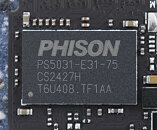
Source:
Tom's Hardware
Phison for Tom's HardwarePhison has recently been made aware of the industry-wide effects of the 'KB5063878' and 'KB5062660' updates on Windows 11 that potentially impacted several storage devices, including some supported by Phison. We understand the disruption this may have caused and promptly engaged industry stakeholders. We are steadfast in our commitment to product integrity and the success of our partners and end users. At this time, the controllers that may have been affected are under review and we are working with partners. We will continue to provide updates and advisories to partners who may have been impacted to provide support and ensure any applicable remediation.

97 Comments on Phison Responds to Windows 11 24H2 Update Crashing SSDs
I can only really say that my sample of 6 Crucial P5 Plus drives and one Optane P5800X have done fine. That doesn't mean much statistically, but both those use none-Phison, in-house controllers, with ram (other than the Optane).Almost all these drives have been tested in SSD reviews to properly thermally throttle, so very doubtful IMO. (Some of the Gen 5 Phisons didn't, but that was exceptional and quickly fixed).
And if a MS update is causing a even slightly large percentage of drives to overheat, that's called drive eratta and should be accounted for. This is still an MS update issue as this should never had shipped.
Or are you trying to say no one tested if they fixed the Gen 5 throttle bug? Because buddy, the site you are posting on did.
By the way, I'm a security researcher with multiple reported vulnerabilities under my belt. I'd chose my next attempt to discredit me via appealing to authority carefully.
Security researchers are low on my list of respected groups, after the nonsense they brought with the meltdown and spectre hysteria, despite there being no way to actually pull off a drive by infection.
Anyhooo, 14,000 computers with 24h2, across several organisations, no failures across a mixed nvme or hdd spread, its time to call this BS.
The people correlating failures to this update are just statistical noise with drives that were ready to die.
The last thing we need is vendors moving on trying to just to turn a blind eye to it as that wont do any good for confidence.
Has there been any news indicating if this happens more on Intel or AMD systems?