Monday, August 25th 2025

ASRock Adds Overheating Protection to Its L-Shaped 12V-2x6 GPU Cable

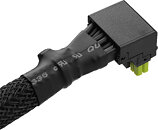
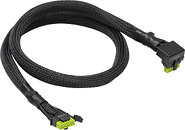
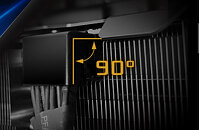
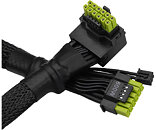
ASRock announced a right-angled 12V-2×6 cable designed to make tight builds neater and to avoid stressing the cable bend radius. The lead is 700 mm long, sleeved in black, and finished with ASRock Classic Green tips so you can quickly check insertion. It meets ATX 3.1 and PCIe 5.1 standards, utilizes 16 AWG conductors, is rated for up to 600 W, and is designed for systems with power supplies of 750 W or greater. ASRock bundles stickers for Taichi, Phantom Gaming, and Steel Legend builds and offers a two-year warranty. The cable also features a built-in NTC temperature sensor that detects rising temperatures by measuring resistance changes, enabling over-temperature protection when used with compatible Taichi and Phantom Gaming PSUs. ASRock reminds users to follow their GPU maker's power recommendations, to fully seat connectors until they click, and to avoid bending or stressing the cable near the plug. Priced at around $40 (5,980 yen including tax in Japan), it is definitely on the pricey side.

Sources: ASRock, GDM Japan, via VideoCardz
Add your own comment

48 Comments on ASRock Adds Overheating Protection to Its L-Shaped 12V-2x6 GPU Cable

#26
INSTG8R
Vanguard Beta Tester
I have a Seasonic Prime TX-1000 Platinum that comes with the 12V cable it uses 16AWG wire but unlike this particular cable it’s a twin 8 pin to the PSU. I almost ended up with a Sapphire Nitro which uses it and was definitely wary even tho I trust Seasonic. But it turns out I jumped the gun and missed that it was a 9070 Nitro not and XT so unfortunately I noticed to late to cancel so I’ve already got a return tag for when it shows
But in the end I ended up with the Sapphire Pure 9070XT which just uses twin 8 pin.
I was definitely curious about using the 12V connector but also not really fully trusting it either so I’m glad I ended up with the card I did.
I will feel a lot better using the “normal” connections and not have to always be questioning the 12V connector’s reliability..
Posted on Reply
#27
Dr. Dro
TheinsanegamerNApparently it does, since the internet still incorrectly labels this is a connector or PSU issue when debauer already debunked this as being a load balancing issue.
I agree in general, but you see, load balancing per-pin was never a thing before, it was per-connector. Since we have just one connector now, the "logic" here was to do away with the load balancing stage, since technically it's "no longer needed." After all, it makes sense that you'd have the connector fully plugged in and that every pin would be connected correctly, if only the world was perfect as the engineers who designed this thing believed :D
Posted on Reply
#28
user556
DragokarThis price for a thermistor XD
And even that is not an actual fix. All it does it shut off the power when it gets hot. The getting hot is still the real problem to be fixed.
Posted on Reply
#29
Elessar1
Dr. DroI agree in general, but you see, load balancing per-pin was never a thing before, it was per-connector.
Wrong, the 3090 Ti had it and Nvidia in their eternal wisdom decided to save a few pennies and remove the safety measures, load balancing, from the next generation, Ada, RTX 40, so that it in fact has no load balancing anymore. This is deeply analysed by @buildzoid for example, so if you don't trust me go and google his video where he analyses the PCBs and explains this in detail. Essentially 3090 Ti, higher power consumption and still more safe than a 4090 - resulting in no accidents that I know of, in stark contrast to the many of the 4090 and 5090 and other Nvidia GPUs. And ofc it is easily more safe than a 5090 (peak wattage 525W vs 575W btw, 4090 only about 420W). The entire connector was Nvidias idea, and Nvidia is part of the design of the connector as well as other companies like PCI-SIG and Intel, all these are to blame and first of all Nvidia, but not AMD, unlike the other guy said. AMD had no hands in the design of the failed connector and doesn't even recommend its AIBs to use it - that is also why it is barely used on Radeon cards. The not-released version of the 9070 XT Ref would've been with 2x8 Pin connectors in fact. Needless to say that 8 Pin and 6 Pin connectors are easily better and barely any accidents in over 20 years of usage, not even remotely comparable to the failed 12 Pin connector.
Posted on Reply
#30
Blueberries
Need a male 90 to female 0 extension and I'd happily pay $40 for the peace of mind
Posted on Reply
#31
b1k3rdude
While its nice to see, this should have never been required. The 12vHpwr, 12v2x6 connector is a fundamentally flawed connector standard.

- www.techpowerup.com/forums/threads/melting-12vhpwr-connector-claims-its-first-amd-rx-9070-xt-victim.340193/

So why a 350w GPU needs this shitty connector is beyond me, when 2x 8pin are enough and are proven and reliable. But here we are again, with another gfx card that is melting the 12v2x6 connector, that on paper is rated for 600w, its a joke and everyone on the PCI-SIG committee that approved it should be shot.

Imho the only safe way to use one of these connectors is via the use of a Thermal Grizzly Wireview. I have one of the OG units on my MSI 4080. But I curve optimised that to keep the power under 300w (which before anyone asks, it boosts the efficiency as I'm only loosing a handfull of percent from max FPS)
Posted on Reply
#32
TheinsanegamerN
Dr. DroI agree in general, but you see, load balancing per-pin was never a thing before, it was per-connector. Since we have just one connector now, the "logic" here was to do away with the load balancing stage, since technically it's "no longer needed." After all, it makes sense that you'd have the connector fully plugged in and that every pin would be connected correctly, if only the world was perfect as the engineers who designed this thing believed :D
Incorrect. Even on old 8 pin cards, there was, in fact, per pin load balancing. PCIe 8 pin had 3 grounds, 3 12v pins, and 2 sense pins. As much hay as people make about "oh the old connector could handle more" if you routed all 150 watts through ust 1 pin on that 8 pin connector it would.....MELT. Because each pin was only rated for 100w maximum. 300w like people claim it could do would destroy the connector and card without per pin load balancing.

And as already covered, the 3090/ti had load balancing on its connector, nvidia has continually cheapened the design on their cards. This was also covered by debauer.
b1k3rdudeWhile its nice to see, this should have never been required. The 12vHpwr, 12v2x6 connector is a fundamentally flawed connector standard.

- www.techpowerup.com/forums/threads/melting-12vhpwr-connector-claims-its-first-amd-rx-9070-xt-victim.340193/

So why a 350w GPU needs this shitty connector is beyond me, when 2x 8pin are enough and are proven and reliable. But here we are again, with another gfx card that is melting the 12v2x6 connector, that on paper is rated for 600w, its a joke and everyone on the PCI-SIG committee that approved it should be shot.

Imho the only safe way to use one of these connectors is via the use of a Thermal Grizzly Wireview. I have one of the OG units on my MSI 4080. But I curve optimised that to keep the power under 300w (which before anyone asks, it boosts the efficiency as I'm only loosing a handfull of percent from max FPS)
No, it is not flawed. It can safely deliver 625 watts under continuous load. What is flawed is the cards not doing load balancing. The 8 pin could not handle a card without load balancing any better.

Also still waiting for someone to provide hard numbers showing 12 2x6 is actually failing any more than the 8 pins did.
Posted on Reply
#33
JustBenching
rackster37How long until we see one of these go up in flames?
Since it's coming from Asrock, who's motherboards burn amd chips on the daily, yeah I'd guess not too long.
Posted on Reply
#34
Elessar1
TheinsanegamerNNo, it is not flawed. It can safely deliver 625 watts under continu
Both are flawed, the PCB design with no load balancing and then the connector as the safety margins with 12 Pin connector are way lower than with 8 and 6 Pin, 8 Pin for example can do up to 250+~ iirc, which means it has a tolerance of over 80% extra, while the extra tolerance of 12 Pin is only about 10%, or 660W, this means it fails easier if it is not in perfect condition and perfectly used as well, which is of course displayed in more failings per card %wise in history compared to 8 Pin. I don’t need proof and extra statistics for that, it has a reason why 8 Pin has a solid reputation and 12 Pin has not otherwise you need also proof to not believe in Unicorns and Dragons.
Posted on Reply
#35
Dr. Dro
TheinsanegamerNIncorrect. Even on old 8 pin cards, there was, in fact, per pin load balancing. PCIe 8 pin had 3 grounds, 3 12v pins, and 2 sense pins. As much hay as people make about "oh the old connector could handle more" if you routed all 150 watts through ust 1 pin on that 8 pin connector it would.....MELT. Because each pin was only rated for 100w maximum. 300w like people claim it could do would destroy the connector and card without per pin load balancing.
First time I'm ever hearing of this. Is this done by the controller microchip? I never noticed any specific circuitry regarding this and I'm not aware of any card that came before the ROG Astral 50 series that had the ability to be specifically aware of the exact power draw of each and every pin in the connector. Maybe there was a miscommunication between us too
Posted on Reply
#36
user556
Talk of load balancing is a red-herring. You need redundancy for that. Otherwise any protection is just an auto-power-off mechanism. An auto-power-off is hardly a desirable fix when you're really wanting the computer running.

Either the GPUs are overloading the connectors, or the connectors are not achieving their own spec. Both are plausible.
Posted on Reply
#37
Dr. Dro
user556Talk of load balancing is a red-herring. You need redundancy for that. Otherwise any protection is just an auto-power-off mechanism. An auto-power-off is hardly a desirable fix when you're really wanting the computer running.

Either the GPUs are overloading the connectors, or the connectors are not achieving their own spec. Both are plausible.
FWIW, the auto power-off also doesn't always occur in time to prevent damage from occurring, either. Perhaps just in the nick of time to avoid a fire, which is a desirable but not optimal outcome.
Elessar1Wrong, the 3090 Ti had it and Nvidia in their eternal wisdom decided to save a few pennies and remove the safety measures, load balancing, from the next generation, Ada, RTX 40, so that it in fact has no load balancing anymore. This is deeply analysed by @buildzoid for example, so if you don't trust me go and google his video where he analyses the PCBs and explains this in detail. Essentially 3090 Ti, higher power consumption and still more safe than a 4090 - resulting in no accidents that I know of, in stark contrast to the many of the 4090 and 5090 and other Nvidia GPUs. And ofc it is easily more safe than a 5090 (peak wattage 525W vs 575W btw, 4090 only about 420W). The entire connector was Nvidias idea, and Nvidia is part of the design of the connector as well as other companies like PCI-SIG and Intel, all these are to blame and first of all Nvidia, but not AMD, unlike the other guy said. AMD had no hands in the design of the failed connector and doesn't even recommend its AIBs to use it - that is also why it is barely used on Radeon cards. The not-released version of the 9070 XT Ref would've been with 2x8 Pin connectors in fact. Needless to say that 8 Pin and 6 Pin connectors are easily better and barely any accidents in over 20 years of usage, not even remotely comparable to the failed 12 Pin connector.
I just read this, and come on, you're acting like AMD, a vendor of both graphics AND processors isn't part of the PCI-SIG. Read what I've wrote in other posts as well. I've watched his video and also Roman's, and they don't really talk of per-pin load balancing with an active measurement as seen in the Astral cards. If anything, the 3090 Ti had some "leftover mechanics" from its traditionally powered siblings, the vanilla 3090 uses 6+2 inputs. The reason the 7900 XTX didn't have it is because the Navi 31 PCB was complete by that time, and 355W board power on the reference design models actively hurt its performance. It was simply convenient for AMD marketing that 12VHPWR had problems.

Besides, unlike you guys who live on FUD and speculation, I actually have a RTX 5090. It's not "525 vs 575", it's actually 575 on base models and 600 on the "OC editions", going even further on more exotic hardware.
Posted on Reply
#38
Elessar1
Dr. DroROG Astral 50 series that had the ability to be specifically aware of the exact power draw of each and every pin in the connector.
Which was a emergency measure because PCI-SIG specced it so that load balancing is not allowed in the spec / ultimately on pcb so you don’t have to pretend ASUS did anything great here, it’s merely a band aid wannabe fix that doesn’t even safe the card - it merely warns you IF the software is installed. If not the card just burns and then you notice and only then.
user556Talk of load balancing is a red-herring. You need redundancy for that.
That is why I mentioned that both pcb design and connector are flawed and not just the former.
Dr. DroI just read this, and come on, you're acting like AMD, a vendor of both graphics AND processors isn't part of the PCI-SIG.
They are but as AMD opted not to use the connector it is more than obvious (maybe not obvious enough for some) that AMD doesn’t support or like the new connector. A wise decision obviously.
Dr. DroI've watched his video and also Roman's, and they don't really talk of per-pin load balancing with an active measurement as seen in the Astral cards.
Then you didn’t watch the videos, no, both have talked about the Asus design extensively. They have talked literally about everything, you’re way off here.
Dr. DroIf anything, the 3090 Ti had some "leftover mechanics"
It’s cute that you’re trying to play Nvidias fail down, but the truth is the spec was worsened this has nothing to do with “leftover mechanics” it is a engineering fail plainly, and many experts did already say so, so you will be very alone here if you try to claim otherwise because you seem to be a heavy Nvidia fan, trying to defend them at every chance you get.
Dr. DroThe reason the 7900 XTX didn't have it is because the Navi 31 PCB was complete by that time
Wrong as well, RX7000 AMD plainly didn’t plan with it, and that’s the end of it, it’s this simple. You’re also contradicting yourself, on one hand AMD is part of PCI SIG so had a hand in it but then again they’re too slow to implement it but Nvidia is not? Makes exactly less than zero sense, sorry. Both had the same amount of time to do so, Nvidia made the mistake to implement it and AMD was smarter about it.
Dr. Droand 355W board power on the reference design models actively hurt its performance.
Eh totally wrong. All AMD cards are designed around efficiency, the 7900 XTX has a sharp falloff after 355W scaling so that it was the sweet spot to spec the card on, the Sapphire for example has 420W TDP on the Nitro but it’s barely 5-10% faster, not really worth it to ruin the efficiency of the card which looks bad in reviews compared to cards like 4080 and 4090 then.
Dr. DroIt was simply convenient for AMD marketing that 12VHPWR had problems.
No, it was a bonus. AMD already had decided against it, maybe they have better engineers, and then the damages happened as well. Win-win.
Dr. DroBesides, unlike you guys who live on FUD and speculation, I actually have a RTX 5090. It's not "525 vs 575", it's actually 575 on base models and 600 on the "OC editions", going even further on more exotic hardware.
Too bad that I live on knowledge and I’m more or less neutral, so if Nvidia does something great I’ll applaud them, if they don’t , I’ll mention the fail, and same with any other company. Unlike you, I’m not a heavy fan of one company (Nvidia in this case) so my opinions will be balanced and make actual sense. Saying the 12 Pin connector is a fail isn’t fud, it’s a fact, and if you say otherwise, well you’re gonna be very alone with that opinion as well.

Also you misunderstood and misread, 525W is specifically the 3090 Ti under max load, not the 5090, and a typical 5090 has about 575W max load, which is absolutely correct and doesn’t need any “correction” and then some side bragging from you. Ironic btw that you said PSUs are responsible for the connector failing and then go forth and use your 5090 with a 12 year old PSU. :D Maybe decide which it is now, are PSUs responsible or not? Rhetoric question, mind you.
Posted on Reply
#39
Dr. Dro
LOL, yeah dude, whatever you say. I'm getting way too old to argue with text walls that amount to "nuh uh, im right youre wrong" with pretty much zero backbone to the conversation. You've been repeatedly avoiding accountability on behalf of a megacorp just because you dislike the other one and I'm the one who's biased :rolleyes:
Posted on Reply
#40
Elessar1
Dr. DroLOL, yeah dude, whatever you say. I'm getting way too old to argue with text walls that amount to "nuh uh, im right youre wrong" with pretty much zero backbone to the conversation.
Nice cop out. I'm gonna translate it: "buuuahhhhaaahhh arguments are too much for me, i'm gonna insult / accuse the other guy of some complete nonsense and then cop out of it, pretending I "won" ". Too bad my text isn't related to your brain gymnastics. Consider being less of a extreme Nvidia fan, maybe? Then people won't call you out / you're not so offended when company X (Nvidia) gets rightly criticised for some nonsense they pulled off, I mean from the usual, that Blackwell is a disaster anyway, basically 2 viable cards, 5070 Ti for people who insist on DLSS and 5090 for people who want ultimate performance and aren't afraid of a dangerous connector pushed to its max. That's it, rest is too expensive / doesn't make sense / bad vram amounts (bad performance).
Dr. DroYou've been repeatedly avoiding accountability on behalf of a megacorp just because you dislike the other one and I'm the one who's biased :rolleyes:
Doesn't make much sense when the connector is 100% Nvidias idea and was mainly designed by Nvidia and Intel (the 12VHPWR that is), which is a fact, but you don't seem to know that much about it and still insist to pretend you do. :) Maybe refrain from discussing things you don't know much about, just because you feel attacked on behalf of a real megacorp's criticism (AMD isn't one), which isn't at all related to you, but you still feel related to anyway, which makes exactly zero sense as well. In other aspects: it is a fact AMD pretty much, 98% skipped the failed connector so far (just making it optional for AIBs to use it, but not recommended), you can cry and argue as much about it as you want, but at the end of the day this fact is still true. btw it's funny that Asus used the 12V high failure rate connector on the TUF GeForce cards (probably mandated by Nvidia, sadly) but opted for 3x 8 Pin on the 9070 XT instead, highly highly interesting and speaks volumes about Nvidia's connector. :)
Posted on Reply
#41
TheinsanegamerN
Dr. DroFirst time I'm ever hearing of this. Is this done by the controller microchip? I never noticed any specific circuitry regarding this and I'm not aware of any card that came before the ROG Astral 50 series that had the ability to be specifically aware of the exact power draw of each and every pin in the connector. Maybe there was a miscommunication between us too
It's done with resistors on the load, eg card, side. If one of the lines begins drawing more power then it should, the resistor will cause resistance to climb and the PSU rail should then start delivering amperage over the other pins, following the path of least resistance.

What happened is card makers, most notably nvidia themselves, began cutting the number they used and instead of per pin, or per set,t he 5090 only has one resistor for the whole 12v plane to ensure that voltage is correct, but it has no way of shuffling power draw between pins.
user556Talk of load balancing is a red-herring. You need redundancy for that. Otherwise any protection is just an auto-power-off mechanism. An auto-power-off is hardly a desirable fix when you're really wanting the computer running.

Either the GPUs are overloading the connectors, or the connectors are not achieving their own spec. Both are plausible.
You do not understand what you are talking about. Load balancing does not require redundancy nor does it cause an auto power off. Please go watch debauer's video on the subject.
Elessar1Both are flawed, the PCB design with no load balancing and then the connector as the safety margins with 12 Pin connector are way lower than with 8 and 6 Pin, 8 Pin for example can do up to 250+~ iirc, which means it has a tolerance of over 80% extra, while the extra tolerance of 12 Pin is only about 10%, or 660W, this means it fails easier if it is not in perfect condition and perfectly used as well,
That is not a flaw with the connector. Any connector, run over its rated power, will fail. The issue is lack of load balancing. Again, plenty of 8 pin connectors have failed over the years. If you have to rely on huge tolerances to not have things break, your process royally sucks and needs fixed.

The 8 pin is rated for 150w, and can go up to 300w. However, each pin can only handle 100w at most. The 150w rated load is sufficient to melt an 8 pin connected to a card with no load balancing.
Elessar1which is of course displayed in more failings per card %wise in history compared to 8 Pin.
What source do you have for this magical percentage being so much higher?
Elessar1I don’t need proof and extra statistics for that, it has a reason why 8 Pin has a solid reputation and 12 Pin has not
If you want to claim the 12v connector is flawed and the 8 pin is not, yes, you DO need statistics, data, or something to rely on other than "well i FEEL it bad, therefore it bad". Nvidia alone sells tens of millions of cards every year witht his connector and 99.9% of them are perfectly fine. There is nothing other than speculation to back up the claimt he 12v connector is at fault.
Elessar1otherwise you need also proof to not believe in Unicorns and Dragons.
Such a claim would be easy to disprove. Show me proof they exist. Show me a unicorn or dragon. Until you can, any claim you make they do exist is merely based on your opinion and means nothing.
Posted on Reply
#42
Dr. Dro
TheinsanegamerNIt's done with resistors on the load, eg card, side. If one of the lines begins drawing more power then it should, the resistor will cause resistance to climb and the PSU rail should then start delivering amperage over the other pins, following the path of least resistance.

What happened is card makers, most notably nvidia themselves, began cutting the number they used and instead of per pin, or per set,t he 5090 only has one resistor for the whole 12v plane to ensure that voltage is correct, but it has no way of shuffling power draw between pins.
I see, what I knew on the subject is from the buildzoid video, that each of these cables go into a certain number of phases for even power distribution and all - and that some load balancing was being done at the phase level to ensure optimal conversion efficiency, this I knew and I think it's where we misunderstood each other


Problem specifically being that the 4090 and 5090 basically treat the GPU side as just one big fat side, a problem that remains even with the Astral cards - with no way to detect any malfunction on the PSU side, it's going to keep drawing energy as usual even if only 1 out of the 6 pins are wired up, which is what results in an electrical fire


That's how I understood it anyway. I personally just ensure that all pins are connected and that the lock is securely latched with my card, haven't had any issues since getting the 4080 a few years ago. I did notice the cable gets hotter with the 5090, but it's not anything unreasonable and I suppose it can't be helped, it's 2x the power that used to go through it before.
Elessar1:)
:kookoo::shadedshu:
Posted on Reply
#43
Elessar1
TheinsanegamerNThat is not a flaw with the connector. Any connector, run over its rated power, will fail. The issue is lack of load balancing. Again, plenty of 8 pin connectors have failed over the years. If you have to rely on huge tolerances to not have things break, your process royally sucks and needs fixed.
Again, the tolerances which are extremely important due to diminishing quality of the cable / connector is way lower than on the 8 and 6 Pin, hence why the 12VHPWR is a fail waiting to happen. I don't know how to explain this to you so you can finally get it. I think to most people it is obvious by now what the problem is, low tolerance -> cable loses durability over time -> more failure with the 12VHPWR due to it having less tolerances.
TheinsanegamerNWhat source do you have for this magical percentage being so much higher?
What is so magical about the most obvious thing, that in a very short time, a few years, we had countless 12VHPWR fails yet if you want to find 8 Pin connector fails you have to search for it in detail? It's like the most obvious thing and you don't want to accept it - again - in a few years the 12VHPWR had more documented fails than the 8 Pin in 20 years.
TheinsanegamerNIf you want to claim the 12v connector is flawed and the 8 pin is not, yes, you DO need statistics, data, or something to rely on other than "well i FEEL it bad, therefore it bad". Nvidia alone sells tens of millions of cards every year witht his connector and 99.9% of them are perfectly fine.
No I do not, next you want to claim I have to prove to you that water is wet, which is also the most obvious thing. Maybe go to reddit and do a poll, see how many hundred users will confirm that the new connector is worse, then go and ask those hundreds of users boldly to give you "proof" because you can't accept reality. Some things are so obvious, they don't need proof, just some common sense.
TheinsanegamerNSuch a claim would be easy to disprove. Show me proof they exist.
No, you show ME proof that they don't exist, it's as realistic as your claim that 12VHPWR isn't trash and comparable in quality to 8 Pin - that is what you're playing at, right, that's why you're so nonsensically asking for proof for the most obvious thing ever. Yea I guess you're also just being edgy and boring. No need to discuss this any further then. I have better things to do with my time. Feel free to not understand the most obvious facts that everyone knows by now because all technicalities point to it as well.
Dr. DroProblem specifically being that the 4090 and 5090 basically treat the GPU side as just one big fat side
Dude finally understood what people now already knew since at least 8 months. How funny you claimed to have "seen the videos" but now you're suddenly watching them and beginning to understand? What's the saying... lies have short legs. ;)
Posted on Reply
#44
JustBenching
Elessar1Again, the tolerances which are extremely important due to diminishing quality of the cable / connector is way lower than on the 8 and 6 Pin, hence why the 12VHPWR is a fail waiting to happen. I don't know how to explain this to you so you can finally get it. I think to most people it is obvious by now what the problem is, low tolerance -> cable loses durability over time -> more failure with the 12VHPWR due to it having less tolerances.

What is so magical about the most obvious thing, that in a very short time, a few years, we had countless 12VHPWR fails yet if you want to find 8 Pin connector fails you have to search for it in detail? It's like the most obvious thing and you don't want to accept it - again - in a few years the 12VHPWR had more documented fails than the 8 Pin in 20 years.

No I do not, next you want to claim I have to prove to you that water is wet, which is also the most obvious thing. Maybe go to reddit and do a poll, see how many hundred users will confirm that the new connector is worse, then go and ask those hundreds of users boldly to give you "proof" because you can't accept reality. Some things are so obvious, they don't need proof, just some common sense.

No, you show ME proof that they don't exist, it's as realistic as your claim that 12VHPWR isn't trash and comparable in quality to 8 Pin - that is what you're playing at, right, that's why you're so nonsensically asking for proof for the most obvious thing ever. Yea I guess you're also just being edgy and boring. No need to discuss this any further then. I have better things to do with my time. Feel free to not understand the most obvious facts that everyone knows by now because all technicalities point to it as well.

Dude finally understood what people now already knew since at least 8 months. How funny you claimed to have "seen the videos" but now you're suddenly watching them and beginning to understand? What's the saying... lies have short legs. ;)
Saying we have more documented cases is meaningless. First of all cause you can't prove it, you can just claim it, second of all because even if you could prove it we never had cards drawing that much power the last 20 years anyways.

It so flawed that I can easily spin it. The 8pins are so flawed we have hundreds of documented cases of it melting on low power cards, we have 0 cases of that happening with 12vh.
Posted on Reply
#45
cyneater
we need more watts in smaller wires and connectors
Why not just add fuse wire :P
Posted on Reply
#46
Elessar1
JustBenchingSaying we have more documented cases is meaningless. First of all cause you can't prove it, you can just claim it, second of all because even if you could prove it we never had cards drawing that much power the last 20 years anyways.
It sounds more like you’re just uninformed and in denial, all experts agreed months ago that the new connector is trash and not comparable to the old ones, stop being delusional and inform yourself.

Here’s one example: old connector was so solid, AMD once used it to power a dual GPU card named R9 295X2 which needed over 500W peak with just 2 8 Pin, easily exceeding the nominal spec, yet I never heard of any cables burning, only PSUs which were not good enough to drive it. Anyone who understand what’s what will know that even this is less dangerous than a 5090 at 575W with the new connector and that’s the big joke here. Overspec being less dangerous than in-spec. The new connector is absolute trash because it doesn’t have enough safety margins, in other words it’s weak and not solid enough. Good old times vs new underbuilt stuff, it’s quite ironic.
Posted on Reply
#47
JustBenching
Elessar1It sounds more like you’re just uninformed and in denial, all experts agreed months ago that the new connector is trash and not comparable to the old ones, stop being delusional and inform yourself.
Which experts are you referring to? The only ones I know concluded that the cable is perfect (John G and Buassali).

Thanks for the compliments.
Posted on Reply
#48
b1k3rdude
TheinsanegamerN- Incorrect. Even on old 8 pin cards, there was, in fact, per pin load balancing.

- No, it is not flawed. It can safely deliver 625 watts under continuous load. What is flawed is the cards not doing load balancing. The 8 pin could not handle a card without load balancing any better.
I dont remember seeing "per pin load balancing" mentioned on any of the GPU's I have purchased in the last 20yrs, do you have link to this info/statement?

Er it kinda, sorta, definitely is. All the substandard male/female aspects of the pin manufacturing aside, the 12vHpwr/12v2x6 standard only has a very small amount of safety margin compared to the 8pin standard -

8pin - 3 * 7A * 12V = 252W. Rated maximum is 150W, so a safety margin of 68% or 102W
12pin - 6 * 9A * 12V = 644W. Rated maximum is 600W, so a safety margin of 6.4% or 44W

Also the pins in the 12pin connector are smaller and are pushing an extra 2A's. So sorry fella, but NO it is, a deeply flawed connector standard. If anything its should have been something like a 400W connector standard as in 6 * 6A * 12V = 432W. But as Jay says, but I digress.
Posted on Reply
Add your own comment
Nov 12th, 2026 21:39 PST change timezone

New Forum Posts

Popular Reviews

TPU on YouTube

Controversial News Posts