Friday, September 12th 2025

Intel Resurrects "Comet Lake" with Core i5-110 CPU

Even as we thought Intel had moved on from its older-generation CPUs, surprises still arise. Intel's five-year-old "Comet Lake" designs remain in circulation, as evidenced by the latest addition to the Intel Ark database. As noted by @momomo_us, Intel has introduced a curious Core i5-110 processor, a 6-core, 12-thread CPU built on Intel's well-known 14 nm+++ node, paired with UHD Graphics 630. With a TDP of 65 Watts, the CPU features a base clock of 2.9 GHz and a maximum turbo frequency of 4.3 GHz. These specifications match the Core i5-10400, which has the same core and clock configuration based on the Comet Lake microarchitecture, suggesting a refresh.

With an MSRP of $200, it's questionable whether this "value" purchase offers any real-world advantage, considering that more modern processors are available at the same price point. However, for LGA1200 users currently using lower-tier i3 processors, this might be a sensible upgrade. For anyone else building a DIY PC, the value proposition is lacking. However, MSRP and street pricing typically deviate quite noticeably, so take it with a grain of salt. Current Core Ultra 5 200S series "Arrow Lake" CPUs start at $236 MSRP, but real-world deals on Amazon and other retailers show prices below $180. Of course, additional costs such as motherboard and memory should be considered in the final purchase decision, but the high MSRP for a five-year-old CPU seems unjustified.
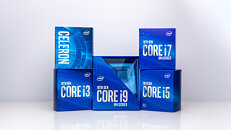

Source: @momomo_us
Add your own comment

55 Comments on Intel Resurrects "Comet Lake" with Core i5-110 CPU

#26
JustBenching
Great support, good to see LGA 1200 is still alive.
Posted on Reply
#27
RandallFlagg
_roman_AMd has a lot of old silicion. It is very confusing. I used wikipedia myself a lot to decode those mobile laptops chips.
I just look at the 3rd number, that's the generation. 2=Zen 2, 3=Zen 3, 4= Zen 4 etc. About 1/2 of AMDs get ruled out straightaway just knowing that one item. I mean, Zen 2 is over 6 years old and Zen 3 is about to turn 5. I guess it's fine they are still using this stuff, but people have no idea what they are getting when a 7520U = 2023 model year, Ryzen 5, Zen 2, low end tier, ultra low-power.

What makes it worse, is it seems AMD is slowly abandoning this scheme as their newer "AI" APUs don't follow it at all. Just backs up that it was a ruse to unload a bunch of aging inventory.
Posted on Reply
#28
Princess Garnet
This seems unusual, even though AMD was refreshing Zen 3 a number of times in recent years too. But since Intel has shorter lived platforms and wasn't recently doing that for any LGA 1200 CPUs, this is more of a surprise.

If this was on LGA1851 and had a lower price point, I might see the merit in it, but not at $200 in 2025. I would presume this is for system integrators and will be negotiated at lower than listed price, as someone else said.
Dr. DroPerforms similar to a Ryzen 5 1600X.
I think you're underestimating it a bit. The original Ryzen was closer to the 6th generation, no? The 10400F was often compared to the 8700K and 3600X. That's still below anything "current" on the market, but for general purpose roles, it should be fine for the foreseeable future.
Posted on Reply
#29
Hecate91
At least AMD gives you something to reference the generation by, this made up 100 series would imply these CPU's are new, not left over 6 year old 10th gen chips.
I guess LGA1200 is sort of still around if you count some left over silicon, just like how AM4 is still around because AMD is still selling left over inventory.
Posted on Reply
#30
Blurpy
I want whatever they were huffing
Posted on Reply
#31
RandallFlagg
Princess GarnetThis seems unusual, even though AMD was refreshing Zen 3 a number of times in recent years too. But since Intel has shorter lived platforms and wasn't recently doing that for any LGA 1200 CPUs, this is more of a surprise.

If this was on LGA1851 and had a lower price point, I might see the merit in it, but not at $200 in 2025. I would presume this is for system integrators and will be negotiated at lower than listed price, as someone else said.

I think you're underestimating it a bit. The original Ryzen was closer to the 6th generation, no? The 10400F was often compared to the 8700K and 3600X. That's still below anything "current" on the market, but for general purpose roles, it should be fine for the foreseeable future.
10400 was most compared to Zen 2 3600X, but it was decidedly faster in gaming than any Zen 2 chip.

1080P results, stock is in green:

Posted on Reply
#32
kondamin
yfn_ratchetYou're not thinking ambitiously enough. Imagine, the Core 2 Quad Q9400, now with AI!
Maybe they’ll be restarting Prescott production to skirt sanctions on Russia
JustBenchingGreat support, good to see LGA 1200 is still alive.
Yeah shuts up those whining about socket longevity.
Posted on Reply
#33
AusWolf
I've been wanting Intel to get back to making simple CPUs with only one kind of cores for years, but ehm... this isn't what I meant. :laugh:
Posted on Reply
#34
Princess Garnet
RandallFlagg10400 was most compared to Zen 2 3600X, but it was decidedly faster in gaming than any Zen 2 chip.

1080P results, stock is in green:

So they're 2% apart in what was the most practical conditions. The lower tier chipsets on LGA 1200 had a 2666 MHz limit, and buying a Zx90 and fast RAM only to get a 10400 probably wasn't common (I would imagine if you're spending up on motherboard and RAM, you're probably not getting nearly the lowest on CPU). That more would have been the conditions I had in mind when making that statement. But even if you compare it with a less practical motherboard and faster RAM, the difference becomes 6%.

Unless we're nitpicking, either difference seems to be something you can describe as "equivalent". Measurable, but not perceptible, comes to mind.
Posted on Reply
#35
Evrsr
GeofrancisThey must have found a stack of old silicon and a customer in Asia or South America for it that had a stack of motherboards since I doubt the 14+++++ node is still running.
For fabs to be profitable, they have to run legacy nodes. TSMC revenue sub 7nm was 30% ish a year ago.

That is with all the price increases on 7, 5 and 3 nm. Imagine the volume of older nodes.

Arrow Lake's base tile is Intel 22nm. Most chipsets are probably still built at 14nm but I'm not sure.
Posted on Reply
#36
phints
Somehow, 14nm returned.
Posted on Reply
#38
Wirko
To add insult to injury, the i5-10400 isn't even discontinued! Its status on Ark remains "Launched". And that's not some weird exception. Intel keeps some lower tier chips in each generation available for ordering for many years.
Posted on Reply
#39
cvaldes
phintsSomehow, 14nm returned.
It never left. It just disappeared from the headlines as tech pundits focused on other things like whatever 3nm node TSMC, Samsung are working on. And Intel's stumblings which takes up a lot the tech media's time and energy.

Or how difficult it is to get ____ graphics card du jour. You know, the TPU community members who refer to Nvidia as NGreedia.

There are still 28nm foundries still running. But they don't pump out smartphone SoCs or PC CPUs anymore so no one really cares.
Posted on Reply
#40
trparky
But why, though?

Seriously, it probably lacks the instruction sets for modern versions of Windows so I ask again… But why, though?
Posted on Reply
#41
RandallFlagg
Princess GarnetSo they're 2% apart in what was the most practical conditions. The lower tier chipsets on LGA 1200 had a 2666 MHz limit, and buying a Zx90 and fast RAM only to get a 10400 probably wasn't common (I would imagine if you're spending up on motherboard and RAM, you're probably not getting nearly the lowest on CPU). That more would have been the conditions I had in mind when making that statement. But even if you compare it with a less practical motherboard and faster RAM, the difference becomes 6%.

Unless we're nitpicking, either difference seems to be something you can describe as "equivalent". Measurable, but not perceptible, comes to mind.
If you're talking gaming, 10400 was "faster" than a 3600X, 3700X, 3800X, and 3900X.

I personally had a 10400F on a Z490 platform, though not an expensive one (Asus Prime). The 10400 was just a placeholder as I was upgrading from a 7700HQ on a laptop with a mobile 1070. I also BCLK overclocked my 10400.

I later upgraded to the 10850K when I saw one on sale for $299 at Microcenter, and yes I overclocked my DDR4-3200 memory (which was quite easy on Intel).

So yes on the benchmarks with a 2080 there wasn't much different between Zen 2 and Comet Lake.

But that didn't last long.

3080:


www.techpowerup.com/review/nvidia-geforce-rtx-3080-amd-3900-xt-vs-intel-10900k/27.html
Posted on Reply
#42
Princess Garnet
I'm not sure what your motive is here.

My original statement was that the 10400 (and thus, this new Core 5 110) was originally closeER (note the emphasis) to something like a 3600X or 8700K rather than the 1600. I didn't say it was exact to a 3600 in everything (no two CPUs are always exact so I would have thought that was apparent), so whether it is exact with the 3600X or a little faster (especially on a higher tier chipset and with fast RAM, things that it was unlikely to be paired with) is neither here nor there as far as the main point I was making. And even if I DID say it was exact (which I didn't), showing me results where they are only 6% apart, or results of two completely different CPUs (!?) wouldn't really be negating the claim-I-never-made-anyway.

Continuing this would be a bit off topic as the exact performance relative to other CPUs isn't worth elaborating on, so I'm going to drop it since I've made my point.

As a few others have said, this is probably being revived because Intel has extra silicon sitting around and giving it a new name probably makes it seem better to uninformed consumers than labeling it as a 10th generation CPU in 2025. So it makes it easier to offload it onto OEMs by giving it a new name. And it's probably going to go to OEMs for low end PCs anyway.
Posted on Reply
#43
R-T-B
RandallFlagg...

At least a laptop comes with the cpu there. It's not great, but I'd still call it a slightly better deal than... this hot mess here.
Posted on Reply
#44
efikkan
This CPU will perform in the same class as Zen 3 CPUs, which are still sold in retail, and are just as outdated. I wouldn't recommend buying either.
To my understanding Comet Lake isn't supported in the latest version of Windows 11.
DenverI'm here just to say: 14nm++++++++++++ :')
Then stop spreading this nonsense.
It's disappointing that this article keeps spreading misinformation about a '14 nm+++', there is no such thing. The 14nm node only exists in three iterations, and 14 nm++ is the last one.
Posted on Reply
#45
matar
I think this is for not the USA market or for prebuilds.
Posted on Reply
#46
Six_Times
Stable and reliable, not expensive. Great for office tasks.
Posted on Reply
#47
Lew Zealand
RandallFlaggIf you're talking gaming, 10400 was "faster" than a 3600X, 3700X, 3800X, and 3900X.

I personally had a 10400F on a Z490 platform, though not an expensive one (Asus Prime). The 10400 was just a placeholder as I was upgrading from a 7700HQ on a laptop with a mobile 1070. I also BCLK overclocked my 10400.

I later upgraded to the 10850K when I saw one on sale for $299 at Microcenter, and yes I overclocked my DDR4-3200 memory (which was quite easy on Intel).

So yes on the benchmarks with a 2080 there wasn't much different between Zen 2 and Comet Lake.

But that didn't last long.

3080:


www.techpowerup.com/review/nvidia-geforce-rtx-3080-amd-3900-xt-vs-intel-10900k/27.html
These aren't even the processors discussed here (10400 and 3600). I see the takeaway from that as:

If I'm going to buy the most powerful GPU available and waste that money by running it at 1/4 the resolution its performance is targeted at, I should consider Intel.

More realistically, ~1/2 year after that review we see the 10400f (and likely this Core i5-110) and 3600X about 1.5% separated at 4K and 5% separated at 1440p, reasonable resolutions for a 3080. Not identical but similar, aka what people are claiming.

www.techpowerup.com/review/intel-core-i5-11400f/
Posted on Reply
#48
RandallFlagg
Lew ZealandThese aren't even the processors discussed here (10400 and 3600). I see the takeaway from that as:
My takeaway from your post is that you didn't read this sub-thread, just decided to spout off some kind of AMD propaganda.
Lew ZealandIf I'm going to buy the most powerful GPU available and waste that money by running it at 1/4 the resolution its performance is targeted at, I should consider Intel.

More realistically, ~1/2 year after that review we see the 10400f (and likely this Core i5-110) and 3600X about 1.5% separated at 4K and 5% separated at 1440p, reasonable resolutions for a 3080. Not identical but similar, aka what people are claiming.
And 8% slower at 1080P and (as an indicator of the future) 10.5% slower at 720P. Regardless of how much you want to cherry-pick your resolutions, I don't have to play your game.

For that matter, on launch the 'editors choice' 3700X was beat by 10% by the 9700K, and 8% by the 9600K, at 1080P with a 2080 Ti.

To put this in terms perhaps you can understand, the 'best gaming processor' the 9800X3D, is a mere 7.2% faster overall at 1080P than a 14900K. Meanwhile the 9800X3D takes a fairly devastating loss to the much cheaper 14900K to the tune of 19.5% in CPU centric tasks (aka - productivity).

And yet, any day of the week I can find people hyping the gaming prowess of the 9800X3D here and all over in general.

You yourself own a 5800X3D.

So I find it quite odd that you would not care about at 10% performance gap. I might even call it hypocritical.
Posted on Reply
#49
Lew Zealand
RandallFlaggMy takeaway from your post is that you didn't read this sub-thread, just decided to spout off some kind of AMD propaganda.
LOL I started gaming with an Intel processor listed in the original graph because I use the best value processors available at the time and the only Zen I never owned was Zen 2 because they underperformed. But apparently you needed an assumption to spout off about.
RandallFlaggAnd 8% slower at 1080P and (as an indicator of the future) 10.5% slower at 720P. Regardless of how much you want to cherry-pick your resolutions, I don't have to play your game.

For that matter, on launch the 'editors choice' 3700X was beat by 10% by the 9700K, and 8% by the 9600K, at 1080P with a 2080 Ti.

To put this in terms perhaps you can understand, the 'best gaming processor' the 9800X3D, is a mere 7.2% faster overall at 1080P than a 14900K. Meanwhile the 9800X3D takes a fairly devastating loss to the much cheaper 14900K to the tune of 19.5% in CPU centric tasks (aka - productivity).
LOL you well know it's not that simple but yes, being 7.2% slower is OK if it didn't mean using twice as much power at the same time. That makes it a tough sell. But it's all about what conveniently gets left out of the equation, eh? I'll assume you were similarly defending Zen/+ at the time for it's -10% in gaming but +0-50% in applications.
RandallFlaggAnd yet, any day of the week I can find people hyping the gaming prowess of the 9800X3D here and all over in general.
Because this is a gaming focused website and since the 5800X3D, the X3D processors have been the best for gaming. Roles were reversed before that with AMD users consoling themselves with Ryzen's "better application performance" when the majority cares most about gaming.
RandallFlaggYou yourself own a 5800X3D.

So I find it quite odd that you would not care about at 10% performance gap. I might even call it hypocritical.
Of course you would make assumptions. I upgraded to a 5800X3D to improve 1% and 0.1% lows in a number of specific games mentioned by people here, something I could not do with my Intel processor because it did not have an upgrade path to anything modern enough to fix that. Imagine that, buying the right tool for the job.
Posted on Reply
#50
AusWolf
Lew ZealandOf course you would make assumptions. I upgraded to a 5800X3D to improve 1% and 0.1% lows in a number of specific games mentioned by people here, something I could not do with my Intel processor because it did not have an upgrade path to anything modern enough to fix that. Imagine that, buying the right tool for the job.
For me, the biggest advantage of X3D is the massively reduced power consumption, and thus, much better efficiency. In 5000-7000 series, that is. With the reversed cache die placement on 9000 series, AMD threw the above out of the window.

Just my 2 cents.
Posted on Reply
Add your own comment
Nov 25th, 2026 09:16 CST change timezone

New Forum Posts

Popular Reviews

TPU on YouTube

Controversial News Posts