Friday, September 19th 2025

ASUS Proposes Reinforced PCIe Slot to Deliver 250 W of Power From the Motherboard
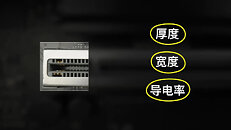
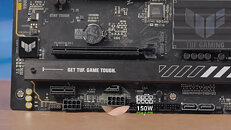
ASUS unveiled a prototype this week with a new method for graphics cards to draw power from the motherboard's PCIe expansion slot, proposing a solution that could eliminate the need for card-mounted power cables for many entry-level and mid-range GPUs. The concept focuses on beefing up the physical PCIe power path: ASUS engineers widened and thickened the contact pads at the front edge of the card's PCIe interface, enlarged the copper area inside the corresponding slot, and fused several 12-volt lanes into larger, lower-resistance conductors. To share the load, the traditional 8-pin connector is relocated onto the motherboard, allowing the slot and onboard connector to work together. Higher-conductivity materials and a larger terminal cross-section are used to increase the continuous current capacity without modifying the card's external form factor.
This idea could be a good match for GPUs in the 180-220 W range, where customers might appreciate a cable-free card. Examples could include RTX 5060 Ti-class parts or comparable AMD models. The company has not released full schematics, continuous current ratings, thermal validation, or long-term endurance data, and the headline 250 W claim leaves some questions unresolved. A conventional slot plus a motherboard auxiliary connector typically totals 225 W, where the 8-pin supplies 150 W and the PCIe connector gives 75 W. ASUS is already known for experimenting with alternative power delivery, with an example being the Graphics Card High-Power (GC-HPWR) connector. This is a higher-power design, rivaling NVIDIA's 12V-2x6V connector.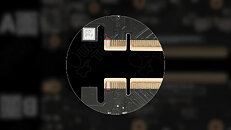
Sources:
IT Home, via ComputerBase
This idea could be a good match for GPUs in the 180-220 W range, where customers might appreciate a cable-free card. Examples could include RTX 5060 Ti-class parts or comparable AMD models. The company has not released full schematics, continuous current ratings, thermal validation, or long-term endurance data, and the headline 250 W claim leaves some questions unresolved. A conventional slot plus a motherboard auxiliary connector typically totals 225 W, where the 8-pin supplies 150 W and the PCIe connector gives 75 W. ASUS is already known for experimenting with alternative power delivery, with an example being the Graphics Card High-Power (GC-HPWR) connector. This is a higher-power design, rivaling NVIDIA's 12V-2x6V connector.


95 Comments on ASUS Proposes Reinforced PCIe Slot to Deliver 250 W of Power From the Motherboard
A normal gpu in an asus slot would work, but still require its pcie power connectors to be plugged in.
An asus gpu in a normal pcie slot would pull too much current and damage the mobo.
Let have MORE wattage going threw MB then we already have with CPU let now add GPU power too it too, those we need really beefy MB PCB layers among other thing which drive prices even higher then stupid they are now. But now one can have there MB and probably CPU and everything else go at same time as gpu.
Leave psu to feed the gpu and nvidia and amd need to put proper management of power draw on board/gpu them self so they dont do stupid thing. and stop using the 12x6 connector.
I like the idea of single cable or even none, but not expensive safety
Power pig video cards have issues with feeding them 600W or more. PCIe cables are not designed for such extremes. 6-pin 75W and 8-pin 150W is the extent of PCIe power standards.
Radeon card I had needed 3x 8-pin cables.
Yep, you guessed it....AsSus (among others) !
And the sad part is that if even 1 of the other major mobo makers adopt this, it will become widespread, and therefore considered a "standard" faster than flies can locate & land on a pile of fresh, steaming hot poop...then we'll all essentially be forced to accept it, along with the correspondingly higher prices :(
Nope, not doing that, and I'll just stick with my little, powerful-enough-for-me mini-me boxes, and be happier (and richer) for it... :D !
Not worth it, my card sits at a -10%/270watt max limit 24/7
Le: it also waves hello to nVidia's make believe power connector that is way more complex,but by the power of make believe also cheaper.
Then you would have the problem where you might want a board, that is definitely not budget category, so you pay extra for nice i/o options, overclocking chipset, but you have no interest in paying for a luxurious PCB that can feed 100s of watts to a PCIe slot. You might also not want the added point of failure, however the board vendors choice might be you pay for it, or you buy a bottom of the barrel $100 board without the feature and all the downsides with that, so instead of choosing between a $100 board or $400 board its now $100 or $1000.
Currently you buy a good PSU and you reasonably assured of good power delivery for a decade or so, this would change all that.
Basically you are on a mainboard which generates those voltages from other voltages which just will increase the mainboard price. I'm really surprised on the 5V one. Any Smartphone charger, usb keyboard, usb mouse shows that Voltage instantly on any label.
--
Power supply units needs to handle spikes. Much more complicated as the fancy big 750W number.
--
Asus should learn the basics about I/O lines and power delivery.
Where they drunk when thinking of this?
Long story short, this idea adds incompatibility and many opportunities for the average Joe to burn his system or have no idea why his new graphics card doesn't work on his not so old motherboard. And I believe this is more of an idea to push power consumption of graphics cards over 675W, than just offer "cable less" options up to 250W.
I would loved to see a normal production mb like this (not a sample that they presented and most likely they sent to reviewers), that had the pci-e slot abused (in the sense that a gpu has been plugged and removed in it for a lot of times, close to the limit of use for a pci-e), used with a gpu that also was abused same as the pci-e (same conditions as in the pci-e slot case, this gpu can be used to abuse that pci-e slot so the numbers match) run 24/24 7/7 for an entire year drawing 225 W (just 90%). I have my doubts that such an experiment will end up well, despite the fact that the theory saw that it should work totaly fine.
The higher the power drawn on an warn connector, the higher the probability of problems.
Wait until someone will say "We need to reduce the production cost to increase the profit." and they will cut the material used. It's always like this...
Joking: If this will go into production soon we will have motherboards with smoke detector and fire extinguisher 🤣
Maybe the case manufacturers will be the first ones to add the smoke dector and fire extinguisher.
If Asus will be the only manufacturer implementing this, I'm totaly fine with this, they can have their own ecosystem (they can have their asus mb and produce the asus gpu just for their mb). I blacklisted Asus long time ago for no customer support, extremely bad quality of bios (was just compiled and because it compiled fine they assume it also works fine, stayed broken from the version the problem showed up until EOL, only solution was to stay with the last bios that didn't experience the problem) + vbios, insane customer support agent answers (he admited that the costs to send it to their service located in another country + cost of flashing it are higher than a new product but he went on writing the same logical abberation also refused to escalate the case as I requested, hard to send me what I asked in the ticket...). I don't care they are now top class with the customer support (I doubt), when I blacklist a manufacturer (I need more than 1 case) the blacklist also comes with "DO NOT REEVALUATE" flag.
ATX was introduced in 1995, that's 30 years ago in a time there was no PCIe, even graphics cards were not known as GPUs, they were called graphics accelerators, they didn't even had any fans and consumed maximum of 15W. And the CPU was even lower at 10W.
Now these 10-15W only is taken by our lovely RGB lightings (if not more) and another maybe x2-4 times that just to cool down the system which can take 500W+ full load. CPUs and GPUs went from small un cooled, to a heatsink then a fan and becomes larger and larger everytime as we require more performance that what the process technology advance allows us to have. The way we install GPUs & M.2 drives takes up a lot of space of the motherboard which is inefficient, thats why we have 3+ slots GPUs these days and full ATX motherboards that only have 2x PCIe slots because M.2 slots takes all other space.
Millions of users may be fine, doesn't mean it's not a stupid design that prioritises space efficiency - that doesn't matter when attached to a brick of a GPU - over of power capacity and safety.
Doesn't take away that the design of the power delivery is fucked up, and has no safety systems in check.
Safest card would be the Astral which monitors the pins, though you still have to take actions yourself to prevent a disaster.The connector is technically safe, though the safety margin is very very small on a 600W card. The pins are rated for 9.5 Amps, which is in total givenor take 625W for the entire connector. This connector should be rated for 300W, but only if the power delivery on the board is balanced.
That said AMD cards with the same connector have this issue as well. The Sapphire card has the same poor board design which allows more than 100W per pin. Though i don't believe AMD forces these strict rules and partners have more freedom, but sadly some of them still don't bother.
It's all about saving pennies.
The problem is when a standard is designed with certain "expectectations" to be followed which are then removed by bean counters to gain a few cents per card when it should have been made part of the base specification.
Nvidia use be balance that stuff and even made point state they balanced they then stop and AMD followed suit. Most issue are stemming from them fact load is NOT balanced anymore