Wednesday, September 24th 2025

ASML Schedules Delivery of 56 Low-NA and 10 High-NA EUV Tools in 2027
ASML is about to manufacture significantly more Low-NA EUV and High-NA EUV machines than it originally anticipated. As you may be aware, acquiring an EUV scanner is a year-long process, during which companies make commitments that can span several years to procure these tools. According to ASML, the company estimates that in 2027, based on current order information and demand, it will deliver 56 Low-NA EUV scanners. This includes five units for Intel, seven units for Samsung, and as many as 20 units for SK Hynix. According to South Korean media, SK Hynix plans to install 20 Low-NA EUV units in the next two years, all designed for HBM memory and advanced storage solutions.
For High-NA, ASML plans to deliver 10 High-NA EUV scanners, each costing around $380 million. Intel will add to its facilities manufacturing the 14A node, and SK Hynix is expected to use two of those as well for its memory operations. Intel is betting big on its next-generation 14A node, adding additional EUV tools to its already existing High-NA portfolio. In the past, Intel disclosed that it processed over 30,000 wafers within a single quarter while achieving simplified manufacturing by cutting the required steps for a particular layer from 40 to fewer than 10, which naturally led to much faster cycle times. Similarly, Samsung has seen impressive results in its operations, documenting a 60% reduction in cycle time for one of its specific applications.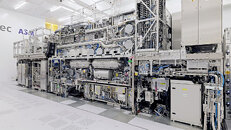
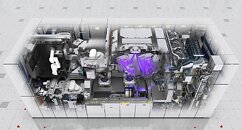 While Intel may have been the first to the High-NA EUV game, Samsung and SK Hynix are catching up. Even as the High-NA EUV market expands, Low-NA EUV tools are in equally high demand. SK Hynix is reportedly in the market for 20 additional tools over the next two years, equating to about 10 installations per year. This would require a significant amount of new manufacturing facility flooring, indicating that SK Hynix is also planning to construct a substantial amount of additional fab space across South Korea.
Sources:
via Jerry Cap on X, ComputerBase
For High-NA, ASML plans to deliver 10 High-NA EUV scanners, each costing around $380 million. Intel will add to its facilities manufacturing the 14A node, and SK Hynix is expected to use two of those as well for its memory operations. Intel is betting big on its next-generation 14A node, adding additional EUV tools to its already existing High-NA portfolio. In the past, Intel disclosed that it processed over 30,000 wafers within a single quarter while achieving simplified manufacturing by cutting the required steps for a particular layer from 40 to fewer than 10, which naturally led to much faster cycle times. Similarly, Samsung has seen impressive results in its operations, documenting a 60% reduction in cycle time for one of its specific applications.


4 Comments on ASML Schedules Delivery of 56 Low-NA and 10 High-NA EUV Tools in 2027
I would say that the problems Intel is having with their manufacturing process are 95% management and corporate culture problems. Intel has the raw engineering talent, the IP, the assets to be successful. Intel used to be successful. What changed is the attitude of the upper management and the corporate culture they created.
A secondary problem is that Intel's business model of pairing a foundry business with a design business may not work anymore. Intel has to choose which side to preserve and it looks like it will be forced into preserving the foundries. The fact that Nvidia is going to be putting its IP in Intel products is the first erosion of the design side of the business.
So in other words, I agree with you.
I don’t know what it is, is it because of their Israel ties? With some subset of commentators and publishers being firmly on Palestine’s side? What proportion of their business is even Israel, how much influence do they possess?
For whichever reason there may be, on many sites, I’ve personally noted on TPU in particular—which is why I’ve signed up in the first place—especially on here, a large fraction of people will never leave a good hair on Intel. They’ll use any reason to hate, and if there’s none, they’ll make one up.
You know how you could see this instead? “Oh, Intel is trying hard not to stagnate again, they’re leading the industry with their use of advanced technologies and they have the potential to gain a real leg up over their competition once their efforts bear fruit.”
But nooo, “see how awful and misled Intel is, doing everything except tackling the real™ problems” it is today. :shadedshu::nutkick:
They are tackling the problems they’ve had, aren’t they. Does TSMC maybe have some other advantages, some secret sauce? Maybe they do, aren’t they the bigger foundry business, after all? With Intel vs. TSMC, it’s the second in line against the juggernaut, yet in the news I consume, for them I see little sympathy.
People hate Intel for exactly THREE reasons.
First, people feel betrayed by a company that they used to support as they would a friend. Intel used to be monopolistic and used scummy tactics in the past. They charged very high prices for products that disappointed. Some people can't let go of the idea that companies should be their friends and they feel personally betrayed by Intel's actions. That seems silly to me but I can understand it on an emotional level.
Second, everyone hates a loser and there is no bigger loser than a former champion that lost the plot. Intel used to be the Big Gorilla in semiconductors and now that they are struggling not to drown and missing every single trend in the industry, it is fashionable to hate on them. IF I was a Intel hater, I would be in this camp.
Third, the people that bought Intel stock at a higher price are angry at Intel because their shares are now worth less than what they paid for the shares. I understand this motivation the most, it is the most logical of the three.