Monday, November 3rd 2025

AMD Clarifies "Maintenance Mode" for Radeon RX 5000/6000 Series, First-Day Game Support Remains

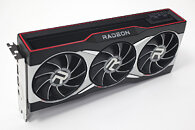
AMD surprised its customers yesterday by announcing that its Radeon RX 5000 and RX 6000 series GPUs will be partially retired from the regular monthly game optimization cycle. These RDNA 1 and RDNA 2 GPUs will still receive essential patches for security vulnerabilities and critical issues. However, with the release of Software Adrenalin Edition 25.10.2, the company is reallocating its development resources to focus on newer hardware. This decision is particularly surprising given that the Radeon RX 6000 series is less than four years old, making gamers who bought these GPUs at inflated prices (during the crypto mining boom), extremely disappointed at their sand cubes.

As the company shifts these GPUs into maintenance mode, we don't know what to expect in the coming months. However, an AMD spokesperson has clarified to Tom's Hardware: "New features, bug fixes and game optimizations will continue to be delivered as required by market needs in the maintenance mode branch." AMD plans to shift focus on the upcoming Adrenalin Edition releases for performance enhancements and game-specific improvements. This will happen exclusively on RDNA 3 and RDNA 4 architectures. Nonetheless, we don't know what is AMD's definition of what the "market needs," so we have to follow and wait for future driver updates before we can rule out these GPUs completely.
Update November 3: AMD's new statement follows after the break.

AMDWe've heard your feedback and want to clear up the confusion around the AMD Software: Adrenalin Edition 25.10.2 driver release.

This update introduces two optimized driver paths: one for RDNA 1 and RDNA 2 (Radeon RX 5000 and RX 6000 series), and one for RDNA 3 and RDNA 4 (Radeon RX 7000 and RX 9000 series).

Here's What this Means for You:
This is not the end of support for RDNA 1 and RDNA 2. Your Radeon RX 5000 and RX 6000 series GPUs will continue to receive:
  • Game support for new releases
  • Stability and game optimizations
  • Security and bug fixes
The difference is that these products now benefit from a dedicated, stable driver branch, one built on years of tuning and optimization. This approach helps deliver a smoother, more consistent experience for your games while insulating previous generation GPUs from rapid changes designed for newer architectures.

Why We're Doing This:
Our goal is simple: to give every Radeon gamer the best experience possible. By separating the code paths, our engineers can move faster with new features for RDNA 3 and RDNA 4, while keeping RDNA 1 and RDNA 2 stable and optimized for current and future games.

Our Commitment:
We've supported Radeon gamers for generations and that commitment isn't changing. Whether you're gaming on an RX 5000, RX 6000, or the latest RX 9000, you'll continue to get the reliability, performance, and care you expect from AMD. Because we're all part of the same gaming community and every Radeon gamer matters.
Sources: Tom's Hardware, AMD
Add your own comment

160 Comments on AMD Clarifies "Maintenance Mode" for Radeon RX 5000/6000 Series, First-Day Game Support Remains

#76
HD64G
dgianstefani"as required by market needs"
Seems concrete.

Meanwhile the older RTX 2000 Turing cards are still in full support.
Why most of us tend to fall so easy for the marketing terms without analysing what the words of those paid to fool us mean practically? I am sure that Nvidia's "full support" (for example, DLSS2 cannot work on RTX20X0 series) doesn't mean anything apart from a tweak or 2 for any game that doesn't work at all for the older gen GPUs. So, it is just the same with what AMD does for the last 2 years with CGN-arch GPUs. The same will keep happening with RDNA1/2 for years. Day one game support rarely means something important after all. Bug and security vulnerability fixing are the importants to keep being applied. New features? I agree but not the most important. Nvidia's RTX20X0 are invalid for DLSS2 and AMD offered those FSR3 helping them keep their GPUs for more. I cannot go against AMD for such a minor issue. They have done huge mistakes in the past and most times they tried to correct those after going public. This isn't such a huge topic imho.
Posted on Reply
#77
dgianstefani
TPU Proofreader
HD64GI am sure that Nvidia's "full support" (for example, DLSS2 cannot work on RTX20X0 series)
RTX 20 series supports DLSS 1-4, what are you talking about?
Posted on Reply
#78
Chrispy_
I think this is just a case of bad marketing and bad wording from AMD. RTG has been traditionally abysmal at PR and so this is nothing new, providing ammo for AMD haters to use while really just a nothingburger of a change.

Yes, performance optimisations for a 5 year old architecture are no longer a focus but I don't think that means what people think it means. Games are still written targeting RDNA2 since that's what powers all the consoles still. Poor performance due to bugs and developer mistakes will still be fixed. That's low-hanging fruit that typically runs on the unified driver features that all RDNA cards use. Fixing it on RDNA 4 will also fix it for RDNA 1.

As for "but muh nvidia card got 10 yurrs" people?

No, no it didn't. Nvidia dropped your GTX 980 like a bag of shit when RTX launched. Where is your DLSS? Where is your framegen? Where is your Integer Scaling? Where are your game optimisations? That's right, AMD gave you FSR instead. Lossless Scaling gave you framegen and Integer Scaling. The game developers gave you performance improvements in the rare cases where they bothered to patch performance. Pascal architecture was all but abandoned after four short years.

The problem here is that Nvidia's marketing department know how to word things. AMD's marketing department should never have used the word "maintenance mode" since that is the term Nvidia uses for near-total abandonment.
Posted on Reply
#79
dgianstefani
TPU Proofreader
Chrispy_As for "but muh nvidia card got 10 yurrs" people?

No, no it didn't. Nvidia dropped your GTX 980 like a bag of shit when RTX launched. Where is your DLSS? Where is your framegen? Where is your Integer Scaling? Where are your game optimisations?
Where are the Tensor cores for AI upscaling on the GTX 980? Where is the associated hardware for (decent) framegen? These aren't arbitrary moats, like AMD is doing for FSR 4, that demonstrably runs (slower than on RDNA 4, but still offering better than native performance and antialiasing) on RDNA 2/3.

The equivalent generations from NVIDIA are RTX 20 and 30 series, both of which are in full support, receiving new features (as much as their hardware is compatible with), so no frame gen or MFG (which certain people simultaneously whinge about, while pointing and saying "NGREEDIA" since it's the only RTX feature that didn't get brought to older generations), but certainly the latest DLSS, Super Video, streaming software.

The issue people are having, is that wording aside, reducing/dropping regular support then flipping when there's community outcry doesn't foster trust. It's not normal to put products they're literally still selling into "maintenance mode" for AMD's competition. They did something similar recently, but for Pascal, a nearly ten year old architecture.

It might have been understandable, as some have said, to do this to RDNA 1, that sold poorly, had limited SKUs, and has a lot of hardware reasons to be considered obsolete. But RDNA 2???

It's also misleading to say that GTX 980 support has been dropped, I just checked and it's still supported on the latest drivers, till the end of the year, I believe, along with Pascal and other pre RTX cards.

Posted on Reply
#80
AusWolf
dgianstefaniWhere are the Tensor cores for AI upscaling on the GTX 980? Where is the associated hardware for (decent) framegen? These aren't arbitrary moats, like AMD is doing for FSR 4, that demonstrably runs (slower than on RDNA 4, but still offering better than native performance and antialiasing) on RDNA 2/3.

The equivalent generations from NVIDIA are RTX 20 and 30 series, both of which are in full support, receiving new features (as much as their hardware is compatible with), so no frame gen or MFG (which certain people simultaneously whinge about, while pointing and saying "NGREEDIA" since it's the only RTX feature that didn't get brought to older generations), but certainly the latest DLSS, Super Video, streaming software.

The issue people are having, is that wording aside, reducing/dropping regular support then flipping when there's community outcry doesn't foster trust. It's not normal to put products they're literally still selling into "maintenance mode" for AMD's competition. They did something similar recently, but for Pascal, a nearly ten year old architecture.

It might have been understandable, as some have said, to do this to RDNA 1, that sold poorly, had limited SKUs, and has a lot of hardware reasons to be considered obsolete. But RDNA 2???
Let's calm down, guys. Nothing happened to RDNA 2. Just read the article - the whole situation is a big nothing burger around some bad wording, á la the usual bad PR from AMD.
Posted on Reply
#81
dgianstefani
TPU Proofreader
AusWolfLet's calm down, guys. Nothing happened to RDNA 2. Just read the article - the whole situation is a big nothing burger around some bad wording, á la the usual bad PR from AMD.
"nothing burger"

Mhm.

I guess it's normal to make excuses if you're an AMD GPU customer at this point.
Posted on Reply
#82
AusWolf
dgianstefani"nothing burger"

Mhm.
It's even in the title: "First-Day Game Support Remains". Does it need more explanation?
Posted on Reply
#83
dgianstefani
TPU Proofreader
AusWolfIt's even in the title: "First-Day Game Support Remains". Does it need more explanation?
While they feel like it, with no promises of how long or with what intensity. It's very obvious only RDNA 3/4 are being prioritised.
"New features, bug fixes and game optimizations will continue to be delivered as required by market needs in the maintenance mode branch."
Posted on Reply
#84
AusWolf
dgianstefaniWhile they feel like it.
So you'll get first-day game support, and bug fixes, but further optimisations may or may not arrive together with those for RDNA 3/4. Yup, that's a nothing burger. A big, fat, juicy one.
Posted on Reply
#85
Tomorrow
dgianstefanilike AMD is doing for FSR 4, that demonstrably runs (slower than on RDNA 4, but still offering better than native performance and antialiasing) on RDNA 2/3.
Because RDNA2 & 3 lack the required hardware to run FSR4 at full performance. Even DLSS4 on 20 series runs notably worse than it does on 50 series because of similar reason.
dgianstefaniThe equivalent generations from NVIDIA are RTX 20 and 30 series, both of which are in full support, receiving new features (as much as their hardware is compatible with), so no frame gen or MFG (which certain people simultaneously whinge about, while pointing and saying "NGREEDIA" since it's the only RTX feature that didn't get brought to older generations), but certainly the latest DLSS, Super Video, streaming software.
BS argument. 20 and 30 series are perfectly capable of ReBAR, FG and MFG. Modders, Lossless Scaling and FSR has proved that.
So much for this "full support".
dgianstefaniIt's also misleading to say that GTX 980 support has been dropped, I just checked and it's still supported on the latest drivers, till the end of the year, I believe, along with Pascal and other pre RTX cards.
So it has been in maintenance mode for years. The only difference is that Nvidia never told you that so you feel better about it?
The only lesson AMD will take from this is that they wont comment on this in the future. Just like Nvidia.
Posted on Reply
#86
dgianstefani
TPU Proofreader
TomorrowBecause RDNA2 & 3 lack the required hardware to run FSR4 at full performance. Even DLSS4 on 20 series runs notably worse than it does on 50 series because of similar reason.
Because AMD wants to sell RDNA 4. FSR 4 is absolutely better than FSR 3 on older generations even if it only gives 20% more performance, not 30%. If AMD had any smarts they would be falling over themselves putting FSR 4 everywhere they can to get away from the justified sentiment that FSR is worse than DLSS. And the point is DLSS 4 Transformer on every gen before Blackwell runs slightly slower than the CNN model, but those generations still got DLSS 4 Transformer, and consumers can still choose which DLSS they want to use.
TomorrowBS argument. 20 and 30 series are perfectly capable of ReBAR, FG and MFG. Modders, Lossless Scaling and FSR has proved that.
So much for this "full support".
Sure buddy. And FSR which runs on GTX 10 series is the same as DLSS right? It "proves" DLSS would have run on 10 series? Just like lossless Scaling running "proves" the significantly better NVIDIA FG/MFG would. Lmao.
TomorrowSo it has been in maintenance mode for years. The only difference is that Nvidia never told you that so you feel better about it?
The only lesson AMD will take from this is that they wont comment on this in the future. Just like Nvidia.
Assuming AMD will learn lessons is a big assumption.
Posted on Reply
#87
Tomorrow
dgianstefaniBecause AMD wants to sell RDNA 4. FSR 4 is absolutely better than FSR 3 on older generations even if it only gives 20% more performance, not 30%. If AMD had any smarts they would be falling over themselves putting FSR 4 everywhere they can to get away from the justified sentiment that FSR is worse than DLSS.
AMD already sells RDNA4 more than they did every previous generation. Porting FSR4 to older series is an engineering and time challenge, not a marketing decision. The very fact that someone was even able to compile the DLL based on leaked code shows that AMD was at least working on it internally.

If they really wanted to sell RDNA4 with FSR4 then why on earth would they internally work on FSR4 version that could run on older series?
Your argument makes zero logical sense.
dgianstefaniSure buddy. And FSR which runs on GTX 10 series is the same as DLSS right? It "proves" DLSS would have run on 10 series? Just like lossless Scaling running "proves" the significantly better NVIDIA FG/MFG would. Lmao.
I didn't say anything about 10 series. Why is Nvidia's FG and MFG significantly better than that of Lossless Scaling or FSR?
Lossless Scaling literally offers higher multipliers for FG and even an adaptive mode that Nvidia itself is yet to introduce.
Likely another 60 series exclusive where 50 series owners with their "full support" will get screwed over.
Posted on Reply
#88
dgianstefani
TPU Proofreader
TomorrowAMD already sells RDNA4 more than they did every previous generation. Porting FSR4 to older series is an engineering and time challenge, not a marketing decision. The very fact that someone was even able to compile the DLL based on leaked code shows that AMD was at least working on it internally.

If they really wanted to sell RDNA4 with FSR4 then why on earth would they internally work on FSR4 version that could run on older series?
Your argument makes zero logical sense.

I didn't say anything about 10 series. Why is Nvidia's FG and MFG significantly better than that of Lossless Scaling or FSR?
Lossless Scaling literally offers higher multipliers for FG and even an adaptive mode that Nvidia itself is yet to introduce.
Likely another 60 series exclusive where 50 series owners with their "full support" will get screwed over.
Lets not play pretend, nor go off on a tangent. You can look at latency, game support, and image quality yourself and very easily see how NV FG is the best of the current options if you have eyes and can read. TPU has done several write ups about it, and many, many game comparison screenshots, from every game performance review since FG released.

The bottom line is that people with AMD GPUs in their system specs are trying very hard to play down the "nothing burger" of AMD putting GPUs/iGPUs they are still selling in 2025, into "maintenance mode" driver support. The comparisons to GTX 980 series (literal 11 year old cards) going out of support this year is kind of sad.
Posted on Reply
#89
Tomorrow
Lossless Scaling wins by default on 20 and 30 series. Even FSR 3.1 does because Nvidia refuses to port their better FG to their supposedly "full support" cards.
So for 20 and 30 series owner it doesn't matter how good Nvidia's own FG if if they literally cant even use it.

Should the fact that AMD users like myself are calling this an nothingburger and pointing out the logical fallacies in emotional statements of Nvidia users tell you something? Most AMD users clearly dont think it's big deal. Those on RDNA1 and RDNA2 will have the same experience in games next month as they did today.

The fact that RDNA2 based products are sold today makes little difference. I too can buy a 30 series card brand new today. Not sure why i would, but lets assume for arguments sake i did. So does that mean i can demand support up until 2035 because i bought it today?

Or will Nvidia still end support in 2028 - 8 years after the architecture launched?
I think we all know the answer to that.

Steam Deck and consoles based on RDNA2 are not affected because they dont run with Windows drivers.
Rog Ally X launching with RDNA2 in 2025 is entirely on ASUS using such an old iGPU when much better Z2 Extreme Strix Point (RDNA 3.5) based options are available. Hell even Hawk Point Z2 is RDNA3 based.
Using Van Gogh or Rembrandt based RDNA2 is just lazy design.
Posted on Reply
#90
dgianstefani
TPU Proofreader
TomorrowThe fact that RDNA2 based products are sold today makes little difference.
Insane take.
Posted on Reply
#91
Tomorrow
dgianstefaniInsane take.
Like i i explained and broke down the different RDNA2 based products sold today. Most of them are not even affected by this change.
Most affected are the Xbox Ally base model and dGPU's running under Windows.

The first is solely on ASUS even using such an old iGPU based on RDNA2 on a very expensive handheld. Literally their own RDNA3 based Ally is cheaper.
The second is more impactful, but since RDNA2 dGPU users have not had meaningful driver performance improvements for years anyway it's a nothingburger for them. Or at least for those willing to look things objectively and not relying on emotional arguments that fall apart at the first sign of questioning.
Posted on Reply
#92
dgianstefani
TPU Proofreader
TomorrowLike i i explained and broke down the different RDNA2 based products sold today. Most of them are not even affected by this change.
Most affected are the Xbox Ally base model and dGPU's running under Windows.

The first is solely on ASUS even using such an old iGPU based on RDNA2 on a very expensive handheld. Literally their own RDNA3 based Ally is cheaper.
The second is more impactful, but since RDNA2 dGPU users have not had meaningful driver performance improvements for years anyway it's a nothingburger for them. Or at least for those willing to look things objectively and not relying on emotional arguments that fall apart at the first sign of questioning.
AMD is more than happy to supply RDNA 2 based APUs, but it's OEMs fault for using them. Nice logic.

Same for all those rebadged Zen 2/3/4 laptops with RDNA 2 iGPUS currently being sold. "sorry guys you should have consulted the AMD decoder wheel and bought something newer".
Posted on Reply
#93
Tomorrow
dgianstefaniAMD is more than happy to supply RDNA 2 based APUs, but it's OEMs fault for using them. Nice logic.
AMD is even happier to supply RDNA 3.5 based APU's. Surely these cost more and bring them higher revenue?
So ASUS is faultless here using 5 year old architecture in a handheld costing the same as a midrange dGPU?

Did AMD demand ASUS use RDNA2 or was it ASUS's own decision?
Think about that for a second who's fault is that.
Posted on Reply
#94
dgianstefani
TPU Proofreader
TomorrowThink about that for a second who's fault is that.
Not the consumer buying a new product that is already out of mainline driver support.
Posted on Reply
#95
Tomorrow
dgianstefaniNot the consumer buying a new product that is already out of mainline driver support.
I never said it was.
Posted on Reply
#96
dgianstefani
TPU Proofreader
TomorrowI never said it was.
But you're certainly pretending to not see the issue here. RDNA 2 is very common in 2022, 2023, 2024 and 2025 products. These are all in "maintenance mode" drivers now. This has a negative effect on those who bought those products, who probably (reasonably) expected more than a year or two of support. Let alone being out of mainline drivers the same year they purchased their device.
Posted on Reply
#97
Tomorrow
dgianstefaniBut you're certainly pretending to not see the issue here. RDNA 2 is very common in 2022, 2023, 2024 and 2025 products. These are all in "maintenance mode" drivers now. This has a negative effect on those who bought those products.
Because there is no "issue" here.

AMD formalized what has been the case with RDNA1 & 2 for years. Some people just cant handle the truth. They would rather live in ignorance and bliss believing that AMD totally optimized new games to run as good as possible on day 1 for these old architectures.

This has zero negative effects on those who bought those products. Unless we will see a mass wave of new games crashing, not running or artifacting on RDNA2 i call this baseless fearmongering.
Posted on Reply
#98
wolf
Better Than Native
Red HoodDodging the question and resorting to "strawman and moving the goalposts"
I won't apologise for calling out your multiple logical fallacies, and I refuse to entertain them, they have no bearing whatsoever on my original comment and aren't the gotcha you think they are. I'd suggest this one's worth dropping.

I'd rather get back on topic of the implications of changes to support and how PR is handling it.
R-T-BBut as I expected he does not agree
The first attempt was bonkers, but I suppose when like minded people provide constant affirmation, it's emboldening. Doesn't make them correct however.
Posted on Reply
#100
dgianstefani
TPU Proofreader
HD64GYou are correct that DLSS4 works but not well enough performance wise nvidia/comments/1ieqlfx/dlss_4_disappointing_on_2080_super
That's a bit different from "cannot work".

Again, people can choose what DLSS preset they want. Upscalers are performance and platform technologies that add value and help aging or lower end hardware. There's nothing that can be done about the fact that newer cards have more powerful AI hardware, but at least Turing owners have the option to run the latest models (that still perform and look better than native when it comes to antialiasing), unlike RDNA 1/2/3 owners who are currently locked out of FSR 4, or 1/2 who are on maintenance mode.
Posted on Reply
Add your own comment
Nov 24th, 2026 05:14 CST change timezone

New Forum Posts

Popular Reviews

TPU on YouTube

Controversial News Posts