Monday, November 3rd 2025

AMD Clarifies "Maintenance Mode" for Radeon RX 5000/6000 Series, First-Day Game Support Remains
AMD surprised its customers yesterday by announcing that its Radeon RX 5000 and RX 6000 series GPUs will be partially retired from the regular monthly game optimization cycle. These RDNA 1 and RDNA 2 GPUs will still receive essential patches for security vulnerabilities and critical issues. However, with the release of Software Adrenalin Edition 25.10.2, the company is reallocating its development resources to focus on newer hardware. This decision is particularly surprising given that the Radeon RX 6000 series is less than four years old, making gamers who bought these GPUs at inflated prices (during the crypto mining boom), extremely disappointed at their sand cubes.
As the company shifts these GPUs into maintenance mode, we don't know what to expect in the coming months. However, an AMD spokesperson has clarified to Tom's Hardware: "New features, bug fixes and game optimizations will continue to be delivered as required by market needs in the maintenance mode branch." AMD plans to shift focus on the upcoming Adrenalin Edition releases for performance enhancements and game-specific improvements. This will happen exclusively on RDNA 3 and RDNA 4 architectures. Nonetheless, we don't know what is AMD's definition of what the "market needs," so we have to follow and wait for future driver updates before we can rule out these GPUs completely.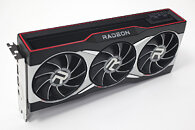 Update November 3: AMD's new statement follows after the break.
Sources:
Tom's Hardware, AMD
As the company shifts these GPUs into maintenance mode, we don't know what to expect in the coming months. However, an AMD spokesperson has clarified to Tom's Hardware: "New features, bug fixes and game optimizations will continue to be delivered as required by market needs in the maintenance mode branch." AMD plans to shift focus on the upcoming Adrenalin Edition releases for performance enhancements and game-specific improvements. This will happen exclusively on RDNA 3 and RDNA 4 architectures. Nonetheless, we don't know what is AMD's definition of what the "market needs," so we have to follow and wait for future driver updates before we can rule out these GPUs completely.

AMDWe've heard your feedback and want to clear up the confusion around the AMD Software: Adrenalin Edition 25.10.2 driver release.
This update introduces two optimized driver paths: one for RDNA 1 and RDNA 2 (Radeon RX 5000 and RX 6000 series), and one for RDNA 3 and RDNA 4 (Radeon RX 7000 and RX 9000 series).
Here's What this Means for You:
This is not the end of support for RDNA 1 and RDNA 2. Your Radeon RX 5000 and RX 6000 series GPUs will continue to receive:The difference is that these products now benefit from a dedicated, stable driver branch, one built on years of tuning and optimization. This approach helps deliver a smoother, more consistent experience for your games while insulating previous generation GPUs from rapid changes designed for newer architectures.
- Game support for new releases
- Stability and game optimizations
- Security and bug fixes
Why We're Doing This:
Our goal is simple: to give every Radeon gamer the best experience possible. By separating the code paths, our engineers can move faster with new features for RDNA 3 and RDNA 4, while keeping RDNA 1 and RDNA 2 stable and optimized for current and future games.
Our Commitment:
We've supported Radeon gamers for generations and that commitment isn't changing. Whether you're gaming on an RX 5000, RX 6000, or the latest RX 9000, you'll continue to get the reliability, performance, and care you expect from AMD. Because we're all part of the same gaming community and every Radeon gamer matters.
160 Comments on AMD Clarifies "Maintenance Mode" for Radeon RX 5000/6000 Series, First-Day Game Support Remains
This also provided a nice insight into what really goes on with what at least NVIDIA says when a driver suite is "optimized" for a game: it's just making a profile with all these tweaks in place. And annoyingly, the fix literally takes like a minute to apply so I wonder why the game publisher didn't submit a correction (maybe NVIDIA has a limited window for these things? Maybe it costs too much money?). But also, there's a huge number of parameters to choose from, and without really understanding the game's rendering implementation, it's probably not worth while poking at each one to see what it does.
Anyway, I have the same feeling AMD's drivers work in a similar way.
ATi and AMD had terrible driver support for decades. Its like everyone forgot what happened to HD6000 series buyers.Yeah, most of these "optimizations" are specific shader tweaks per game. It really doesnt take that long, the open source community has no issue doing this on Linux. It's not like these driver devs are recompiling game engines or anything crazy like that.
Moreover AMD makes a lot of money on datacenter GPUs, and has stated that the future business model is to release UDNA for consumers with the goal of using consumer GPUs to increase adoption of AMD's GPGPU software.
Lastly, RDNA4 and Blackwell are closer to feature parity than AMD has been at any time in the last 10 years. For the first time AMD customers won't feel they are missing anything. That's going to help AMD GPU sales when RDNA4 customers join future upgrade cycles.
Compute wise it seems like they are doing better.
videocardz.com/newz/intel-core-ultra-x7-358h-panther-lake-leak-reveals-xe3-arc-gpu-performance-in-geekbench
The above article is one of the few - reputable - leaks that I have seen on Panther Lake and it shows a 25% GPU performance uplift against Arrow Lake. In other words: slower than an RTX 3050, which - in turn - is much slower the the Strix Halo AI MAX 395+. So, advantage AMD still.
Amusingly:
www.notebookcheck.net/Benchmark-leak-Intel-Core-Ultra-X7-358H-slower-than-Core-Ultra-7-255H-but-iGPU-impresses.1151346.0.html
The Panther Lake leaks also show that its CPU performance is worse than Arrow Lake, at the same TDP.
Dealing with price, rather than performance, for a moment; it appears that YOU are the one claiming that the majority of the Handheld market is going to be devices that cost around $1,500. You are suggesting that Panther Lake could take over in 6 months, when the current Arrow Lake Core Ultra 7 parts are $300 to $400 dollars. The likelihood is that the new Core Ultra X7 is going to be $400 to $500 with its increased number of Xe cores (double that of Arrow Lake).
The Panther Lake X7 is very likely to compete directly with the Strix Halo, on price, not the Strix Point, which is a $200 part.
Considering this is your first post, I could even have to consider this as a bait post, so I will not lose my time.
Re read what I wrote, understand what I wrote and I might consider spending time here.
This topic is about AMD RDNA1 and RDNA2 drivers. Yet all i see is unrelated Intel talk here.
There are separate news threads for Panther Lake already where you can comment and speculate to you hearts content.
Thanks for bringing us back to the right path.
You said, and I'm quoting you directly: "AMD had the upper hand in integrated graphics. The problem here is that they lost that advantage with the release of the latest Core Ultra CPUs."
I posted two articles showing that the latest Core Ultra CPUs are slower than AMD integrated graphics, according to recent benchmark leaks.
How is mine a bait post? You posted an opinion, and I posted two sources of facts to contradict that opinion.
Please tell me this first. Do you have in mind Strix Halo and ONLY Strix Halo? If yes, please re read what I wrote and try to understand that the market isn't Strix Halo alone.
It's like saying "Intel isn't competitive in DESKTOP to AMD, because Intel can't compete with.... Threadripper".