Monday, November 3rd 2025

AMD Clarifies "Maintenance Mode" for Radeon RX 5000/6000 Series, First-Day Game Support Remains
AMD surprised its customers yesterday by announcing that its Radeon RX 5000 and RX 6000 series GPUs will be partially retired from the regular monthly game optimization cycle. These RDNA 1 and RDNA 2 GPUs will still receive essential patches for security vulnerabilities and critical issues. However, with the release of Software Adrenalin Edition 25.10.2, the company is reallocating its development resources to focus on newer hardware. This decision is particularly surprising given that the Radeon RX 6000 series is less than four years old, making gamers who bought these GPUs at inflated prices (during the crypto mining boom), extremely disappointed at their sand cubes.
As the company shifts these GPUs into maintenance mode, we don't know what to expect in the coming months. However, an AMD spokesperson has clarified to Tom's Hardware: "New features, bug fixes and game optimizations will continue to be delivered as required by market needs in the maintenance mode branch." AMD plans to shift focus on the upcoming Adrenalin Edition releases for performance enhancements and game-specific improvements. This will happen exclusively on RDNA 3 and RDNA 4 architectures. Nonetheless, we don't know what is AMD's definition of what the "market needs," so we have to follow and wait for future driver updates before we can rule out these GPUs completely.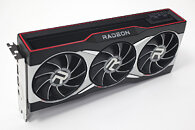 Update November 3: AMD's new statement follows after the break.
Sources:
Tom's Hardware, AMD
As the company shifts these GPUs into maintenance mode, we don't know what to expect in the coming months. However, an AMD spokesperson has clarified to Tom's Hardware: "New features, bug fixes and game optimizations will continue to be delivered as required by market needs in the maintenance mode branch." AMD plans to shift focus on the upcoming Adrenalin Edition releases for performance enhancements and game-specific improvements. This will happen exclusively on RDNA 3 and RDNA 4 architectures. Nonetheless, we don't know what is AMD's definition of what the "market needs," so we have to follow and wait for future driver updates before we can rule out these GPUs completely.

AMDWe've heard your feedback and want to clear up the confusion around the AMD Software: Adrenalin Edition 25.10.2 driver release.
This update introduces two optimized driver paths: one for RDNA 1 and RDNA 2 (Radeon RX 5000 and RX 6000 series), and one for RDNA 3 and RDNA 4 (Radeon RX 7000 and RX 9000 series).
Here's What this Means for You:
This is not the end of support for RDNA 1 and RDNA 2. Your Radeon RX 5000 and RX 6000 series GPUs will continue to receive:The difference is that these products now benefit from a dedicated, stable driver branch, one built on years of tuning and optimization. This approach helps deliver a smoother, more consistent experience for your games while insulating previous generation GPUs from rapid changes designed for newer architectures.
- Game support for new releases
- Stability and game optimizations
- Security and bug fixes
Why We're Doing This:
Our goal is simple: to give every Radeon gamer the best experience possible. By separating the code paths, our engineers can move faster with new features for RDNA 3 and RDNA 4, while keeping RDNA 1 and RDNA 2 stable and optimized for current and future games.
Our Commitment:
We've supported Radeon gamers for generations and that commitment isn't changing. Whether you're gaming on an RX 5000, RX 6000, or the latest RX 9000, you'll continue to get the reliability, performance, and care you expect from AMD. Because we're all part of the same gaming community and every Radeon gamer matters.
160 Comments on AMD Clarifies "Maintenance Mode" for Radeon RX 5000/6000 Series, First-Day Game Support Remains
Seems concrete.
Meanwhile the older RTX 2000 Turing cards are still in full support.
I doubt Nvidia has treated Maxwell (900-series) and Pascal (1000-series) much differently in relations to game optimizations and were most likely focusing on the most recent hardware to perform best.
However, officially and on paper my soldier of a GTX 980 was fully supported for 11 years, coming to an end today.
Hope they reverse the decision and align with the CPU branch in going for longtime support. Which is one of their strongest selling points next to performance.
But I think they are even stupider than this. They probably want to stop people from speculating of official FSR 4 support on RDNA 2 at least, probably they will offer it to RDNA 3, so they come up with this incredible (stupid) idea, of rushing to announce the end of optimizations for RDNA 2. Which is moronic considering they will be (far) behind in iGPU performance for handheld consoles when Panther Lake comes out. If they think Halo can secure their spot in the hand held market against Panther Lake, then they are as stupid as they where for as long as I remember them. Because terning an advantage to a disadvantage, is something they are doing for decades. Halo is an expensive chip and in no way will stop the F WHOLE MARKET to turn to Intel.
Still, for general driver support, Nvidia doesn’t seem to be holding back much, I’ll give them that.
On topic: I was hoping that this was just a communication issue when the first articles popped up. Now I think some decision maker in the graphics department need to be fired.
Intel is nowhere in handhelds. But sure. Panther Lake will come out and totally wipe the floor with Strix.If it hasn't happened yet then it will likely not happen.
Not that I like it, but there are a few buts here. Nvidia seems to hint, but doesn't confirm, that it will actually optimize new games for, for example, 20 and 30 series cards.
The only way to know is to test the latest and older drivers with 20 and 30 series cards in new games to see if the new drivers increase performance or not.
From AMD's perspective, there are several things here:
1. HUB itself has conducted a survey on its channel about how often people change cards. If I remember correctly, the most voted number was 4.
So most people replace their cards about every four years. RDNA1 is currently 7 years old. RDNA2 is 5 years old. By their own channel logic, most people have already moved on from these cards and sold them.
Of course, it can be argued that not everyone bought these cards as soon as they came out. Especially RDNA2, which was very expensive in 2020 and 2021 due to the crypto boom and only started to come down in price in 2022.
Of course, by that time RDNA3 had already arrived...
2. There's probably nothing much to optimize for 5 and 7 year old architectures. Everything that's been squeezed out has been done. Bug fixes will continue, so if a new game crashes outright, it will be fixed, but no architecture-specific optimizations will be made.
3 AMD's market share is supposedly so low that it could be counted on the fingers of one hand.
How does this low market share fit in with the current sh*tstorm? If so few people really use AMD, then this change will affect a very small percentage of people, right?
Since most people use Nvidia, I don't understand why it concerns them that 5-7 year old AMD cards no longer receive optimizations?
This kind of criticism is especially ironic from YouTubers who themselves have a 5090 in their machine.
4. Clickbait headlines. They seem to talk about the complete loss of support or "killed", but that's not the case. The same misleading headlines were used when Vega and the like also went into maintenance mode.
They have CHANGED their stance to now including optimizations for RX 6000 and 5000 series GPUs going forward, which they were not going to do previously.Anecdotes are not evidence.Oh screw off. We, as the consumer, have a right to complain about consumer hostile behavior. And some of us do, in fact, own AMD hardware.This is incorrect. When rDNA3 launched, and support for rDNA2 was halted, any new game release din that time frame saw the 6800xt go from a 3080 competitor to a 3070 competitor.
Optimizations are often GAME SPECIFIC, not generic API improvements.
Well maybe if they had not bought ever more expensive cards from Nvidia then AMD would continue to see reason to invest into ongoing optimization?
Keep buying Nvidia and watch AMD cut support...
It seems to me like those people actually want AMD to fail and Nvidia to have a complete monopoly.The clickbait headlines and ragebaiting misinformation is what made this sound like a total end of support for RDNA1 & RDNA2, it definitely had me a bit fooled and concerned for what AMD was going to do with RDNA3 and RDNA4. Although, AMD needs to be more careful with how they word these press releases and driver release notes, because things like this get misconstrued into sounding worse than it is in reality.
Now, APUs running RDNA 2 are selling as new (in fact even Vega based APUs are selling as new). CPUs using RDNA 2 is the standard in the market. It's not that Ryzen 9000 uses RDNA 3.x . "New" APUs for consoles that where announced this year are using RDNA2. SteamDeck is using RDNA2. This is way to stupid from them.
And considering that "AMD drivers are bad" goes back almost 20 years and AMD is trying to remove that stain from their reputation for those 20 years, saying that they will not have RDNA2 as a priority is a step, if not multiple steps, in the wrong direction. I mean, what are they trying to achieve here? Convince us that RX 9000 is their priority and they are throwing every resource they have on that series? Well F you AMD. Why buy a 9000 series GPU if I am going to see support for that card going in maintenance mode in 2 years? Or are you saying to me AMD, that if your GPU is more than a year in the market to not even bother looking at that model because the support might end tomorrow?
The CPU division has build a reputation of multi year support and the GPU division is building a reputation of "no support is warranted after a pretty slim period of time". "Fine wine" the only thing that was a positive aspect of their GPU drivers, means long time support. They are killing this.
And of course with Nvidia controlling 90% of the market it is only logical to assume that AMD will need to optimize for EVERY game coming out in the near future. Throwing RDNA 2 under the bus, is just stupid and it will drive long time supporters of AMD going to Nvidia. Giving VALID excuses to your loyal customer base to just give you the middle finger and go to Nvidia, is not a good idea.
PS I am not mentioning RDNA1 because it isn't used as much as RDNA 2. RDNA 2 is in about EVERYTHING.
Just because it's used in the consoles and handhelds?RDNA2 received game optimizations for 5 years. You saying RDNA4 going into maintenance mode in 2027 makes zero sense even given the context of this news.
If RDNA4 follows the same cadence it will into maintenance in 2030. By then new RDNA5 based consoles have been out for years and likely RDNA6 has launched a year prior.It doubt it. Most people do not buy their card based on nebulous support cycle of the previous cards from the same manufacturer. Last time TPU conducted a front page poll on what people look for in new cards the support aspect didn't even make it into the questions.So if a "bad product" gets it's support reduced why are people complaining? Especially people who dont own AMD to begin with.
Bad only in the eyes of those brainwashed by Nvidia marketing. 5070 is as fast as 4090 remember?
But how much optimization can there be for RDNA2 being used in iGPU's? It's not like AMD can be squeezing a ton more FPS out of those at this point, with RDNA2 being 5 years old. RDNA2 being used in consoles and the Steam Deck won't be affected by Windows updates, I don't see that applies to what is happening here.
AMD has gotten over the "drivers bad" reputation, but the mindshare of green team fans keep that reputation going and they would keep up the FUD no matter what, I still seen people saying AMD drivers are bad even while Blackwell drivers were causing black screens, crashing or BSOD's. And yes I think AMD should take some priority on 9000 series while putting in a lot more effort with FSR4, as maintenance mode does not mean end of driver support as all the clickbait headlines made you want to believe. The CPU division has a much easier time of building a reputation as Ryzen isn't competing with a near monopoly trying to push everyone else out of the market while influencing game devs to only optimize for their product, at the same time many of those game devs hardly optimize game titles at all. In addition to the sh*t mess of poorly optimized AAA titles, Nvidia forcing features on everyone that simply aren't ready for consumer graphics cards yet especially when some games coming out run like crap on a 5090.
I think it was a mistake to include RDNA2 being moved out of prioritized game optimization while products with RDNA2 are still being sold, someone needs to be fired for bad press releases like that because I've seen a lot of posts on reddit and the AMD Discord of people saying they're not going to buy another AMD card or selling their AMD card to buy an Nvidia one.
One more thing here. Windows 10 seeing an end of support from Microsoft, doesn't mean that Windows 10 stopped working or that suddenly became an insecure OS. But that announcement will drive dozens or even hundred of millions to upgrade to Windows 11. Why would we assume that GPU buyers will see this move from AMD any differently, why assume that it will not spook them and just give them a reason to reconsider or even avoid AMD GPUs today and in the future. Most people aren't liek me and probably you saying "well, who cares, not important anyway". I wouldn't throw my RX 6600 in the dust bin, but obviously this announcement does make me wonder if an AMD GPU should be the GPU that will replace that RX 6600 in the future. We should be getting a "FSR 4 comes to RDNA 3 and RDNA 2 with no promise from AMD of any future support or performance claims" news, instead of this BS decision.There is probably too much to optimize considering games that are targeting PCs are Nvidia optimized. Probably that's why AMD is dropping or at least relegating support. They see that they need to put too much resources to try to fix every game that comes out with perfect DLSS support and FSR crap support for all their RDNA generations. And because they got positive response from tech press for FSR 4, they are also focusing on that version of upscaling. By relegating RDNA 2 (and 3) they don't have the obligation to do much for FSR 2.x or 3.x support in newer games.So let's cut that one hand and let's do that "very small percentage" even smaller. Yeah, I can see the logic in that (NOT).One more reason why AMD shouldn't have done this. It offers the opportunity to every one using Nvidia to say to themselves and the whole.... Internet that their choice was the correct choice.Clickbait or not titles are a thing today. We aren't in the 70's. So when taking this decision AMD should know that this kind of news will have the same reaction as the "Windows 10 support ended, upgrade now to Windows 11 or your bank account will get emptied by criminals tomorrow morning and all your files will be locked by a ransomware".
If you are a multi billion company you at least have the metal capacity to understand this before shooting your own foot.No it doesn't. They are NOT that little poor AMD that didn't had money in the past. They do have money. lot's of money, meaning they should hire more people in their GPU driver department instead of giving ammunitions to their competitors and reasons to their support base to just swap camps. Until they start using UDNA in everything, they have an obligation to support all those architectures they keep selling in new products. There is no way to see it any differently.
I also assume that RDNA 3 will get FSR 4. This announcement was probably considered by their marketing department as a necessary step to not have to explain in the future why FSR 4 isn't coming to RDNA 2. "It's in maintenance mode". The stupidity in their decision is that we KNOW today that FSR 4 CAN RUN on RDNA 2 and RDNA 3, because of that code leak and tests that where done from various tech sites. Even Tim in HUB who is promoting Nvidia's DLSS as the biggest evolution after adding color in computer graphics had to acknowledge that FSR 4 on RDNA 2 and RDNA 3 was good. So, AMD instead of trying to build an excuse for not bringing FSR 4 to RDNA 2 hardware, they should offer that support. The cat is out of the bag and they are trying to put in back in, in front of everybody. Stupid.It's the architecture they are suing in multiple products and it is the architecture in at least one NEW Rog Ally game console and Steam Deck. They are hurting Steam Deck sales with this announcement and making the Nvidia loving ASUS have an excuse to be more Nvidia loving or even Intel loving in the future. Again. It is stupid. I don't know if AMD will save a number of millions in expenses by doing so, but they will lose sales and they will make some of their partners unhappy with this decision. And this probably will cost them much more in the future. I wonder if all that backslash online made them rephrase their announcement or if they got an angry phone call from Valve or ASUS that made them reconsider.They are reigniting that "bad drivers" reputation. Tomorrow you will have a heated discussion in here with someone about "AMD bad drivers" and one of their argument will be "AMD drops support for new hardware, while Nvidia is offering DLSS 4 in RTX 2000 owners". What will be your reply? AMD is making it harder that stupid myth about bad drives to go away (expecting an Nvidia fan to grab this line and explain us why it is not a myth).
The rest of your port, especially the part about the CPU department only makes it more obvious that AMD should increase their resources in the GPU department, not throw a white towel and go crying in a corner about unfair market. We can cry in forums about the unfairness of the GPU market and we will be absolutely right, but they are not an average user online. They are the company who needs to deal with it. If that means hiring more programmers and throwing more money in their GPU driver department, then that's what they need to do.That's why I am screaming here.Well Nvidia offered DLLS 4 in RTX 2000 and RTX 3000 users recently. Nvidia still doesn't offer Frame Generation to RTX 2000 owners and Multi Frame Generation to RTX 3000 owners, even when a simple app like Lossless Scaling can offer something like this, because obviously these are selling points for the newer cards. Even the timing is wrong for AMD here. AMD should be offering FSR 4 to RDNA 2 and RDNA 3 users to match Nvidia's move.
You have to be kidding with that comment about consoles and handhelds. In fact we could see AMD rushing offering FSR 4 to RDNA 2 consoles and handhelds if Panther Lake with XESS starts becoming the de facto option for every hand held that costs less than $1000.RDNA 2 is selling today in products announced in 2024 or 2025. Explain how those products get "5 years of support".
Yeah, RDNA 4 could go in maintenance mode in 2026, considering it doesn't offer a high end option. You are right. I probably was too optimistic there. Thanks for pointing at that.
You have to understand that AMD's decision only creates uncertainty to someone getting ready to buy an AMD product. AMD using older architectures in it's products, like 2020 RDNA 2, in 2024 or 2025 Zen 4/5 products, is good for them, but at the same time while it is offering them options, it also adds obligations to support those older architectures for longer.
Consoles have a 7 years life period. If RDNA 5/UDNA based consoles come out in 2027, they will last until 2033-2034. Also based on what AMD is doing, you can expect models using RDNA 5/UDNA to be selling as new by as long as 2032. If AMD cuts support for RDNA 5/UDNA before 2034, that will again be negative for their reputation. You can't cut standard support to products that you just announced.
PS Damn I hate TPU merging my posts. This is a HUGE TLDR magnet of a post.