Monday, November 24th 2025

AMD Prepares 10% GPU Price Hike Amid Memory Shortage
AMD has reportedly notified its supply chain that it will increase pricing across its entire GPU product line by about 10%. The main driver behind this is the massive memory shortage driving DRAM prices to skyrocket and eating up all the margins for GPU makers. Apparently, AMD's AIB partners have been notified that AMD plans to implement a 10% price increase across the board, which AIBs will likely match in the coming weeks to preserve their margins. GPU makers like AMD (and NVIDIA/Intel) bundle their GPU dies with GDDR memory and send that to AIBs as a kit. In situations like this, when AMD raises GPU prices, it is due to the cost of the DRAM bundled with the GPU, as the costs of AMD's raw silicon remain stable for now.
Additionally, this is AMD's second recent GPU price increase. The company did some price restructuring in October, but it seems that the memory supply chain is now starting to show signs of weakness and that a full 10% increase is needed. We have reported that AMD's long-standing AIB partner, PowerColor, is now urging gamers to purchase GPUs during this holiday season, and that 2026 is when we will see this price hike. It could be that AIBs have locked their pricing mechanisms for now with the old AMD pricing, and that 2026 will be implementing the new pricing strategy. This is also happening just as AMD's Radeon RX 9070 and Radeon RX 9070 XT graphics cards have finally reached their MSRPs of $549 and $599, respectively.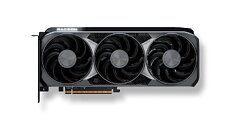 Previously, we reported a significant rise in DRAM prices—up 171.8% year-over-year—pushing costs for this essential component to new heights. DRAM is crucial for every GPU, smartphone, PC, and console. Major South Korean memory manufacturers, including Samsung and SK Hynix, are currently unable to meet all orders, fulfilling only 70% of them. Smaller OEMs and channel distributors have been advised to anticipate only 35-40% fulfillment through the first quarter of 2026. Even some larger AIBs, like PowerColor, might experience DRAM supply shortages, potentially leaving their GPUs without installed DRAM modules.
Sources:
UDN, via Dan Nystedt on X
Additionally, this is AMD's second recent GPU price increase. The company did some price restructuring in October, but it seems that the memory supply chain is now starting to show signs of weakness and that a full 10% increase is needed. We have reported that AMD's long-standing AIB partner, PowerColor, is now urging gamers to purchase GPUs during this holiday season, and that 2026 is when we will see this price hike. It could be that AIBs have locked their pricing mechanisms for now with the old AMD pricing, and that 2026 will be implementing the new pricing strategy. This is also happening just as AMD's Radeon RX 9070 and Radeon RX 9070 XT graphics cards have finally reached their MSRPs of $549 and $599, respectively.

70 Comments on AMD Prepares 10% GPU Price Hike Amid Memory Shortage
You know it. RX 9070 XT and RX 7900 XTX are AMD's Bulldozers in GPUs, they desperately need a Ryzen moment there, as well.
www.pcgamer.com/software/ai/nvidia-reminds-us-its-not-a-gaming-company-anymore-but-an-ai-data-center-infrastructure-company/
Ryzen 7 1800X was 168% faster than the Bulldozer FX-8350, while drawing 76% of its power!
www.cpubenchmark.net/cpu.php?cpu=AMD+FX-8350+Eight-Core&id=1780
www.cpubenchmark.net/cpu.php?cpu=AMD+Ryzen+7+1800X&id=2966
Obviously, all Radeons are too slow for what it's worth - too high power consumption while lagging in the FPS rankings.The scariest thing is that AMD has already forgot that it was on the brink of a bankruptcy in 2017, when its share was sold for $1.
If there is no Ryzen, there is no AMD, and when Ryzen fails, it will be game over, AMD.
There definitely seems to be some collusion and price fixing going on, also when RAM manufacturers have been caught price fixing before, governments need to investigate these RAM manufacturers and AI companies for illegal price fixing and market manipulation.Imagine if RTX/DLSS/MFG/CUDA etc. wasn't a proprietary walled garden, or if the AI datacenter company didn't have a near complete monopoly with an AI bubble scam, and companies riding the bubble passing money to each other to artificially inflate their market values.
2x raster is doable.
2x TDP ratio. I assume you mean the TDP stays the same while perf increases by 2x? This is doable.
2x VRAM is entirely unrealistic. You would quickly arrive at the situation where you have hundreds of GB's of VRAM, but nothing that really requires that much.
Midrange and high end cards now use 16GB. I dont expect it to double to 32GB in the next generation or for 6090 to move to 64GB.
My goals were as follows:
1.8x-2x perf.
Same or lower TDP.
Higher VRAM (but not expected to double).
Same price as my current card.
It took four years from 2021, but this year it happened and i upgraded.
Had i set the same conditions as you it would have meant a 24GB card at 2x perf as my used 2080 Ti at the same TDP while costing roughly 7xx.
There is no such card on the market. Even if 5070 Ti Super eventually launches it wont be 7xx and it wont reach 2x perf and not at the same TDP.7800 XT was not it's predecessor. Also 9070 XT almost matches 7900 XTX in raster perf while costing 400 less.
XTX was 999 and realistically retailed at around 1100-1200.10%.. so far.* Price increase due to market conditions but out of their control. Nvidia is ls already affected.
* FSR4/Redstone were never promised for older cards and given the lack of appropriate hardware it would perform and look worse on older series anyway.
* 6% market share is entirely unrealistic number. Same as Intel's 0%.
The fact that it almost matches the previous flagship in raster is... you know, progress...
Yes it costs less because hello 2/3 VRAM buffer.
How could it cost anything but less when it has less features relatively speaking?
But hey if you say that the 7800 XT was not its predecessor then which card was it?
If you cannot discern the difference between that and price increases for many products as a result of AI demand, you shouldn't be commenting on TPU. Go to reddit or facebook if you want to spout ignorance.
Certainly, AMD does do dumb and greedy things. That's not an excuse to paint every situation as if it's the same, equally bad, or other bad faith argument to muddy the waters.Memory makes up 20% of a GPU's BOM, a 10% increase in the total price means a very significant increase in the memory cost.
Blackwell didn't offer that kind of performance jump gen over gen, but you get to pay extra for those "features".
www.techpowerup.com/review/asrock-radeon-rx-9070-xt-taichi-oc/34.html
Whether it was correct or not doesn't matter, my point was about the hypocritical double standard which you dilligently strive to uphold here as well.
Also, your insistence that the arguments on TPU are somewhat "better" than on reddit or facebook is really cute. The tribalism and bias is the same no matter the platform, and putting hi-end specs in signatures does not change that either.
In reality: companies dont continue to make older products when new products are coming out. They will shut down production to move to the new model, and allow the old channels to clear out. That's business, not flooding the market with older products sold at a loss does not make them monopolistic.That "very significant increase" means $4-5 per card. Not $100+.The 9070xt is also on an improved process node compared to its predecessor, whereas Blackwell is not.
If VRAM has a price hike like DRAM, then everyone could experience a significant price increase of 100% or more, raising the price of a card by $80-90.
RX 7700 XT - Navi 32 - 54CU - 12GB GDDR6 VRAM
RX 6700 XT - Navi 22 - 40CU - 12GB GDDR6 VRAM
RX 5700 XT - Navi 10 - 40CU - 8GB GDDR6 VRAM- 'fattest' consumer-available RDNA1
AMD Radeon's multi-generational RDNA uArch is (apparently) bookended by 'mid-tier' GPUs.
Only RDNA II and RDNA III had 'high-end' 80/800- and 90/900-tier SKUs.
Comparing 9070s to their immediate predecessors (RX 7700s / RX 6700s), the RX 9070s look downright revolutionary.
However, without higher-tier SKUs in the RX 9000series, it is (rightfully) compared to previous-generations' top-tier offerings:
The RX 6900/6950 XT, and RX 7900 GRE, XT, XTX.
What you are trying to intentionally conflate is the degree to which Nvidia drained market supply. After all, how many GPU launches do you know of where last gen parts increased to a significant degree as a result of a company stopping supply and that alone? In a healthy market, this doesn't happen because competitors would scoop up those customers. The GPU market isn't healthy though.
The goal of stopping production is to ensure a smooth transition to a new gen. So explain to me, what excuse is there for Nvidia's stopping of supply outside of market manipulation?
Did you even look at any of the RX 9000 series reviews? Haters gonna hate!
I doubt they will ever forget that.
Agreed, Ryzen saved the company.