Monday, November 24th 2025

AMD Prepares 10% GPU Price Hike Amid Memory Shortage
AMD has reportedly notified its supply chain that it will increase pricing across its entire GPU product line by about 10%. The main driver behind this is the massive memory shortage driving DRAM prices to skyrocket and eating up all the margins for GPU makers. Apparently, AMD's AIB partners have been notified that AMD plans to implement a 10% price increase across the board, which AIBs will likely match in the coming weeks to preserve their margins. GPU makers like AMD (and NVIDIA/Intel) bundle their GPU dies with GDDR memory and send that to AIBs as a kit. In situations like this, when AMD raises GPU prices, it is due to the cost of the DRAM bundled with the GPU, as the costs of AMD's raw silicon remain stable for now.
Additionally, this is AMD's second recent GPU price increase. The company did some price restructuring in October, but it seems that the memory supply chain is now starting to show signs of weakness and that a full 10% increase is needed. We have reported that AMD's long-standing AIB partner, PowerColor, is now urging gamers to purchase GPUs during this holiday season, and that 2026 is when we will see this price hike. It could be that AIBs have locked their pricing mechanisms for now with the old AMD pricing, and that 2026 will be implementing the new pricing strategy. This is also happening just as AMD's Radeon RX 9070 and Radeon RX 9070 XT graphics cards have finally reached their MSRPs of $549 and $599, respectively.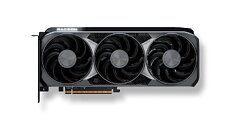 Previously, we reported a significant rise in DRAM prices—up 171.8% year-over-year—pushing costs for this essential component to new heights. DRAM is crucial for every GPU, smartphone, PC, and console. Major South Korean memory manufacturers, including Samsung and SK Hynix, are currently unable to meet all orders, fulfilling only 70% of them. Smaller OEMs and channel distributors have been advised to anticipate only 35-40% fulfillment through the first quarter of 2026. Even some larger AIBs, like PowerColor, might experience DRAM supply shortages, potentially leaving their GPUs without installed DRAM modules.
Sources:
UDN, via Dan Nystedt on X
Additionally, this is AMD's second recent GPU price increase. The company did some price restructuring in October, but it seems that the memory supply chain is now starting to show signs of weakness and that a full 10% increase is needed. We have reported that AMD's long-standing AIB partner, PowerColor, is now urging gamers to purchase GPUs during this holiday season, and that 2026 is when we will see this price hike. It could be that AIBs have locked their pricing mechanisms for now with the old AMD pricing, and that 2026 will be implementing the new pricing strategy. This is also happening just as AMD's Radeon RX 9070 and Radeon RX 9070 XT graphics cards have finally reached their MSRPs of $549 and $599, respectively.

70 Comments on AMD Prepares 10% GPU Price Hike Amid Memory Shortage
The 9070 XT is a full chip, the 7700 XT is cut down. Not just disabled cores but also bus width and subsequent VRAM.
It's ridiculous and hilarious to compare with the 7900 XTX. That's a flagship with 24GB buffer, increased from the previous flagship's 16GB.
So now the 9070 XT is going backwards? Mega lol!
The number (7) in the name doesn't mean anything, I mean AMD now changed the naming structure to align with nVidia's GPUs -> monkey see monkey do.
What are we going to do then, compare the 5080 with the 4080 instead of the 4080 Super? Nonsense, full chip vs full chip only.
And 5070 Ti with the 4070 Ti? Nope, with the 4070 Ti Super -> the same type of cut down relative to the 4080 Super.
TBQH, (at least in some small part) I have an R9700 32GB is because "It's named right" :banghead:
AMD's stated and continually re-stated position was and remains: RX5700series and RX9070series were and are 'mid-tier' SKUs, not high-end.
Regardless, the highest offering of current/next-gen, will always be compared to higher-tiers of the generations immediately preceding.
RX 5700 (XT) v. VII and Vega 64/56
RX 9070 (XT) v. RX 7900seriesI've recently had several friendly debates w/ a longtime friend and fellow enthusiast, on older GPUs and their cultural and marketing impacts
-from that PoV. I ended up defeating my own points, pretty quickly. :oops:
Easy AMD Examples:
Tonga-Antigua (GCN 3.0)
and
Ellesmere-Polaris (GCN 4.0)
Neither, ever were sold 'full fat, uncut'.
-Tonga (R9 285) had laser-cut shaders on all consumer-prosumer iterations. Only the enterprise market FirePro S7150 had all shaders enabled.
Antigua (R9 380/380X) is Tonga, renamed.
The R9 380X has all shaders enabled but, there never was a 384-bit memory bus "Tonga" or "Antigua" production card (Even outside of Radeon).
Both, were (more-less) uArch refreshes/translations of Tahiti's core configuration, with a die-shrink to 28nm. -positioned in-marketing to perform like 7970Ghz/280X, but a smidge 'better'. Which, after GCN3.0 driver maturation, the R9 285, 380, and 380x, did.
pcper.com/2015/12/amd-confirms-tonga-384-bit-memory-bus-not-enabled-for-any-products/
-Ellesmere-Polaris had more shaders than ever-seen on a production card. They were specifically there to be disabled in binning and defect checking. Consequent of this 'yield-engineered design', Polaris 10 and 20 became legendarily prolific. Even to this very day, any 8GB VRAM Polaris 10, 20, or 30 card, is still the bare-minimum entry point for non-RT gaming.
web.archive.org/web/20160708124649/http://forums.anandtech.com/showpost.php?p=38336220&postcount=40
For the most value-minded folks, Ellesmere-Polaris RX 480s, 580s, and 590s are still being compared to much-newer budget-oriented and secondary-market offerings.From the consumer's PoV, it's a matter of practical comparison.
-and, one of the reasons we often see lower-tier offerings of new/current generation(s), being compared against 1-3 generation old higher-end cards (in both internal marketing slides, and the broader consumer discussions/publications).
I personally replaced an RX580 with an 6500XT and benchmarked the Navi24 card as equal or better. -Until, 4GB of faster GDDR6 VRAM was not enough.
(There's an 8GB variant Navi24 in my collection, now. :p)Marketing and positioning, matter. Ignoring the marketing-psychology of numerology :wtf:, that is why the 7 matters.
It does 'mean something'.
AMD didn't just 'choose to copy Big Green'. They strategically positioned and marketed Navi48, as a competitor to the RTX 5070(Ti).
-a 'mid-tier, current generation' offering.In the terms I've had lobbed against myself (understandably-so): :laugh:
To a prospective customer (not necc. The Enthusiast), The 'tech' and 'fatness' of a given SKU matter far-less in all immediately tangible and practical matters than, absolute and relative capabilities -and, the absolute and relative price, for those capabilities.
For gaming, the RX 9070 XT performs "competitively", relative to the RX 7900 XT and XTX.
Those with a 7900 (XT/XTX) already and little-care for RT, may or may not see value in better thermals, less power, and a physically-smaller card.
Those with a 7800 (XT) will see broad benefits but, it might not be quite-enough to justify the expense.
Those with a 7700 (XT) (a 4070 competitor) can easily justify the upgrade, if they have had even the slightest prompt to do so.
Thus,
for marketing purposes the RX 9070series is a direct-successor to the RX 7700series.
for all practical considerations, the RX 9070series can be compared to the RX 7900series.
The difference, is where one is standing. As a company, you're targeting swaths of potential customers. As an individual or even a business, you're narrowing-down on a target product, for your needs.
Somewhat similarly (and retrospectively), "AMD ReBrandeon" was extremely reasonable.
About when the controversy had hit peak, the GCN1.0 Tahiti R9 280X(HD7970Ghz) had performance and capabilities in-line with a card below the R9 290 and 290X. Soon after, the GCN3.0 Tonga R9 285 was introduced to the R9 200series.
Come R9 285->380 and 380X 'rebranding', Antigua(Tonga) still sat in the same relative market position to Grenada(Hawaii).
That said,
there's many just-below-the-surface and seemingly-pedantic reasons alike, why the RTX 5000series is (apparently and overall) regressive for gamers
TBQH though, I have 0 issue w/ any company 'sliding the scale' on "internal vs. marketed tiering" as the generations go on. -as long as there are still real improvements in performance and efficiency, with no feature-regression. (and, preferrably with the top-tier SKU still being at least available as a halo-tier product)
The 9070 XT is still midrange, in spite of AMD skipping a flagship die this time, when compared to both the 7800 XT and the 5080. Also compared to the 4080 Super.
It is however true that for the previous Gen it took a flagship die (7900 XTX) from AMD to compete with the midrange die of nVidia (4080 Super).
Now the midrange AMD die (9070 XT) competes with the 5070 Ti which is absolutely respectable in my view.
Based on this achievement we could sort of be forgiving of a slight MSRP increase over the 7800 XT, although AMD using plain Jane GDDR6 on the 9000 series doesn't make that easy to do.It's understandable for those with a 7700 XT due to also getting a VRAM upgrade. For the other examples it's either parity or downgrade.Well if I would agree that makes it worse as the 7700 XT had a $450 MSRP.
In this comparison the gains are even larger and imply the VRAM as well (as expected by consumers who want progress and more value) but there's also a higher MSRP which has to be swallowed.
And if we're being honest after the launch rebates, the 9070 XT's street price indicated an MSRP that was more like $650 rather than $600.
So even though I want to give praise to AMD for the good things, I can't help but be disappointed by how they went elbow deep in the honey jar.
And I will always consider that skipping a flagship this turn was a missed opportunity.
They could have delivered 4090 performance for $1K, 24GB, 384 bus, 3x8 pin and the whole enchilada.
How dare nVidia not take another $1bn write-off like they had to do with leftover RTX 3000 series stock? Yup. Outrageous. They should absolutely always leave $1bn+ of inventory in the channel and just trash it when the new generation comes along. It might not be sustainable or make any economic sense at all but at least they can avoid being called a "monopolistic power" by a person on TPU... :D :roll:
Seriously. Every single sane company on the globe does exactly what nVidia has done. Especially if they took a $1bn write-off the generation before. nVidia have learned from their mistakes. People had two years to buy a RTX 4000 card so anyone caught in the phase between the RTX 4000 inventory/supply reduction driven price increase and RTX 5000 release only has one person to blame: Themselves.
We have also seen this same thing for at least a decade and a half. The days of selling off the old inventory for a discount are long gone. Unless there is a major oversupply, products go EOL and are replaced by new products these days. There is no major selloff anymore where companies take major losses to make greedy consumers happy.
This hasn't existed for a long time in the day and age of JIT deliveries with automated logistics. nVidia have done a great job with the RTX 4000 to 5000 transition, also with regard to sustainability, because not trashing $1bn of inventory helps avoid (literally) tons of electronic waste, too.
Wanting a product at MSRP at the end of it's lifecycle is considered greedy of customers now? Damn, send those dirty pigs to hell. What will Nvidia ever do with it's 4.4 trillion dollar marketcap if it can't sell above MSRP. An MSRP of which has already vastly outpaced inflation.
Certainly, gamers would like to have the days of discounted GPUs at the end of a gen back but that's not what my comment was asking for. I was pointing out that prices increased due to lack of supply, over that of MSRP. Perhaps you don't remember.
I would certainly contest the idea that discounted products don't happen elsewhere anymore given I frequently purchase prior revisions (like my mouse) at a steep discount. Your argument there is easily contested. I mean you can go buy a DCA Aeon Flow for $300, which is down from it's $700 MSRP. An ATK F1 v2 just came out and you can snag the v1 for $40. The new version is $90 (comparing equal editions). There are countless examples of discounted last gen products still being a thing.That's not what I said but you are free to misinterpret as you like. There's a difference between clearing the channel and the channel running completely dry months before launch, driving up prices past MSRP. That is highly abnormal in the GPU industry.Predicting demand and inventory levels is part of the business. You are trying to paint it as if Nvidia must either take a huge write-off or drain supply to the point where prices shoot up. We know this isn't true though because that instance was the exception and not the rule. Nvidia and AMD have managed to launch products without prices shooting up in the past dozens of times. It's something they have had and will continue to have to do for every product. Your argument lacks any nuance that exists in the real world.
You are basically justifying Nvidia's actions by blaming customer's for Nvidia's mismanagement of it's own supply. Certainly something.This statement is far too broad to be logical or true. Draining sales channels of last gen products inherently only makes sense for a select few markets. To imply that it applies to every company is amusing in the same sort of sense as when you go to a elementary school and listen to the kids explain their parent's professions.
I'm patient, I'll wait till the cards exits ripoff prices. And I would like to add that the RX 9070 XT "NEVER EVER" sold at tis MSRP, from the 1st day at launch. So much for AMD classifying it as a mainstream GPU, but with high end prices. Its alright though, because Nvidia plays an even worse game with GPU pricing. If only people knew that consumers control the market place, not AMD, not Intel, not Nvidia, not ASUS, not Gigabyte, not MSI etc.,
I couldn't access Best Buy right now so i substituted it with Newegg:
www.newegg.com/asrock-challenger-rx9070xt-cl-16g-radeon-rx-9070-xt-16gb-graphics-card-triple-fans/p/N82E16814930145?Item=N82E16814930145
www.newegg.com/powercolor-reaper-rx9070xt-16g-a-radeon-rx-9070-xt-16gb-graphics-card-triple-fans/p/N82E16814131871?Item=N82E16814131871
Also at MSRP.
So no. You're wrong. It is available at MSRP at several places.It took roughly 9 months but it did finally reach it's MSRP.But it is a high end GPU considering that it nearly matches 7900 XTX in raster and easily beats it in RT. Nvidia only has handful of obscenely priced cards that are significantly faster than it.
7900 XTX had an MSRP if 999.
To get a card that is effectively as fast at 400 less is very good and yet you say it never reached it's 599 MSRP and that it should be 200+ less than it is now.
Even the most optimistic people did not expect 9070 XT to launch at less than 399...
I'm in no rush, I'll wait for RDNA5 / UDNA5