Monday, November 24th 2025

AMD Prepares 10% GPU Price Hike Amid Memory Shortage
AMD has reportedly notified its supply chain that it will increase pricing across its entire GPU product line by about 10%. The main driver behind this is the massive memory shortage driving DRAM prices to skyrocket and eating up all the margins for GPU makers. Apparently, AMD's AIB partners have been notified that AMD plans to implement a 10% price increase across the board, which AIBs will likely match in the coming weeks to preserve their margins. GPU makers like AMD (and NVIDIA/Intel) bundle their GPU dies with GDDR memory and send that to AIBs as a kit. In situations like this, when AMD raises GPU prices, it is due to the cost of the DRAM bundled with the GPU, as the costs of AMD's raw silicon remain stable for now.
Additionally, this is AMD's second recent GPU price increase. The company did some price restructuring in October, but it seems that the memory supply chain is now starting to show signs of weakness and that a full 10% increase is needed. We have reported that AMD's long-standing AIB partner, PowerColor, is now urging gamers to purchase GPUs during this holiday season, and that 2026 is when we will see this price hike. It could be that AIBs have locked their pricing mechanisms for now with the old AMD pricing, and that 2026 will be implementing the new pricing strategy. This is also happening just as AMD's Radeon RX 9070 and Radeon RX 9070 XT graphics cards have finally reached their MSRPs of $549 and $599, respectively.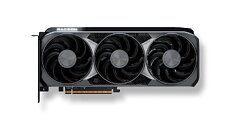 Previously, we reported a significant rise in DRAM prices—up 171.8% year-over-year—pushing costs for this essential component to new heights. DRAM is crucial for every GPU, smartphone, PC, and console. Major South Korean memory manufacturers, including Samsung and SK Hynix, are currently unable to meet all orders, fulfilling only 70% of them. Smaller OEMs and channel distributors have been advised to anticipate only 35-40% fulfillment through the first quarter of 2026. Even some larger AIBs, like PowerColor, might experience DRAM supply shortages, potentially leaving their GPUs without installed DRAM modules.
Sources:
UDN, via Dan Nystedt on X
Additionally, this is AMD's second recent GPU price increase. The company did some price restructuring in October, but it seems that the memory supply chain is now starting to show signs of weakness and that a full 10% increase is needed. We have reported that AMD's long-standing AIB partner, PowerColor, is now urging gamers to purchase GPUs during this holiday season, and that 2026 is when we will see this price hike. It could be that AIBs have locked their pricing mechanisms for now with the old AMD pricing, and that 2026 will be implementing the new pricing strategy. This is also happening just as AMD's Radeon RX 9070 and Radeon RX 9070 XT graphics cards have finally reached their MSRPs of $549 and $599, respectively.

70 Comments on AMD Prepares 10% GPU Price Hike Amid Memory Shortage
This price increase from AMD and nVidia most likely discontinuing non-supers while giving supers less perf/$, makes it easier for me to wait till 2027.
My bank account thanks you.
They could have made it a bit fairer than a flat 10% increase. Either way 8gb vram is not going away like this. Sad but it is how the market is, in a couple of years we may see it's prices plummit with chinese manufacturing ramping up, ai buildup halting and supply increasing from the current manufacturers.
When it’s AMD, it's naughty vendors, dastardly cartels, tough market conditions, price of tea in China.
Clients feedback: We Prepare to let the AMD GPUs rot on the Shelves
Reality Check: AMD's Abysmal Market Share of only 6% goes down to 0%. AMD declares no more future GPUs will be released. Focusing on other products.
Class-action lawsuits to follow because of Nvidia monopoly in the GPU market.
Cya next year
AMD is taking the blame for this with this article and the last one.
Memory chips are scarce due to companies buying capacity, stoked by wanting more memory for AI workloads.
A $10 price hike for AMD/Nvidia doesn't turn into a $10 hike for consumers, because the profit margin would go down.
They're planning to announce them, even PowerColor said that this shouldn't kick until after BF/CM.
>2x rasterization performance
>2x (TDP ratio) * rasterization performance (i.e. 2x at same TDP)
>2x VRAM (i.e. must be *more* than 16 gig)
Crazy that it's almost 2026 and only one of these is met in the current generation of consumer GPUs
Oh Oh OH, i wonder why <insert pikachu face>how are you overpaying when it's MSRP price ? what
Their latest high-end GPU, Navi 31, was released 3 years ago with broken chiplets architecture - the only thing can could do since then is to launch the mid-range Navi 48 with 8 GB less VRAM and pretend they are trying to compete. They are not.
It's so boring that it's painful to watch. :kookoo:
www.techpowerup.com/gpu-specs/radeon-rx-7900-xtx.c3941
Raytracing is vastly superior by ~89%, the upscaler is much better and also encoding quality is better.
But overall, it's not an otherwordly upgrade.
The 5070 Ti gives you more for more money, but power draw is same ballpark and also VRAM is the same.
Seems like you are in that situation where it's more advantageous to wait.Maybe it's because the 9070 XT should have been $500 like its predecessor the 7800 XT.
Even the 7900 GRE was $550, so $600 is pure "good guy AMD" madness. :laugh:I am willing to bet that every RAM kit that was sold by regular retailers to regular people since the start of the fake crisis was bought and then sitting in the warehouse or on store shelves PRIOR to the crisis. So this is 100% retailer scalping.
That said, I disagree with the idea that the lack of a “halo” product means they aren’t trying to compete. That’s a pretty silly take when you consider how few halo units they would actually sell. Instead, they focused on the segments where they knew they could realistically win market share, and they executed extremely well. It worked—they even got me to open my wallet.