Tuesday, November 25th 2025

Memtest86+ 8.0 Gets Support for Latest Intel/AMD CPUs and More Improvements and Fixes

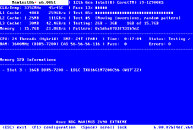
The popular RAM testing utility, the memtest86+, has been updated to the new 8.0 version, adding support for latest AMD and Intel CPUs as well as plenty of other improvements and fixes, like temperature reporting for DDR5 DIMMs, faster detection of CPUs with high core count, optional Dark Mode, fixed DDR5 XMP 3.0 issue, improved Loongson architecture support and more.

The newest memtest86+ 8.0 version also adds CLang/LLD support, and now ships as a single binary for both UEFI and legacy boot. It also brings better BadRAM support and reporting as well as better SPD detection for early ICHs, and better support for VTxxx serial console. The complete changelog can be found below.
memtest86+ v8.00 Changelog
  • Add support for latest Intel CPUs
  • Add support for latest AMD CPUs
  • Faster detection for many-cores CPUs
  • Added Temperature reporting on DDR5
  • Added optional Dark Mode
  • Fix DDR5 XMP 3.0 issue
  • Better BadRAM support and reporting
  • Better SPD detection on early ICHs
  • Better support for VTxxx serial console
  • Various refinements for Loongson µarch
  • Bug fixes & optimizations
Sources: Memtest, via Phoronix
Add your own comment

11 Comments on Memtest86+ 8.0 Gets Support for Latest Intel/AMD CPUs and More Improvements and Fixes

#1
Pepamami
Most useless memtest for me. That usually skips 95% of errors.

replaced it with TestMem5 and OCCT
Posted on Reply
#2
aktpu
PepamamiMost useless memtest for me. That usually skips 95% of errors.

replaced it with TestMem5 and OCCT
So you have tested the 8.0 version already?
Posted on Reply
#3
Pepamami
aktpuSo you have tested the 8.0 version already?
I mean Memtest86+ overall was garbage. Idk about 8.0, maybe I should give it a try, all I need to do is just lower the tRFC.
Posted on Reply
#4
Centurionio
PepamamiMost useless memtest for me. That usually skips 95% of errors.

replaced it with TestMem5 and OCCT
I don't know how you tested that but back in the day we had to boot on the Memtest (not on Windows), and waiting 10 pass to be sure, not 1
Posted on Reply
#5
ir_cow
Hmm maybe it will actually catch errors now :)
Posted on Reply
#6
Pepamami
FrancoportoI don't know how you tested that but back in the day we had to boot on the Memtest (not on Windows), and waiting 10 pass to be sure, not 1
it some times does not catch any errors even on 100th pass. And to be sure its better to use different memory tests.
Posted on Reply
#7
evernessince
Pepamamiit some times does not catch any errors even on 100th pass. And to be sure its better to use different memory tests.
Cannot say I've ever had a bad stick that wasn't caught by MemTest and I used to use the software commercially to validate PCs.

If you are catching issues in windows but not MemTest, there's a good probability that one of your non-isolated variables is causing that. Testing in an isolated environment is very important to limit, as much as possible, the issue down to just the memory. Windows adds a billion other headaches wherein it becomes extremely difficult to narrow down issues just to one component. I've had instances where memory was fine in MemTest but crashed in windows under TestMem and the issue turned out to be Windows Power Management after a boat load of testing. That one I almost gave up on and was ready to replace the parts given how much I had tested.
Posted on Reply
#8
abysal
Pepamamiit some times does not catch any errors even on 100th pass. And to be sure its better to use different memory tests.
100th pass? How long does that take you to test?
Posted on Reply
#9
Pepamami
evernessinceCannot say I've ever had a bad stick that wasn't caught by MemTest and I used to use the software commercially to validate PCs.

If you are catching issues in windows but not MemTest, there's a good probability that one of your non-isolated variables is causing that. Testing in an isolated environment is very important to limit, as much as possible, the issue down to just the memory. Windows adds a billion other headaches wherein it becomes extremely difficult to narrow down issues just to one component. I've had instances where memory was fine in MemTest but crashed in windows under TestMem and the issue turned out to be Windows Power Management after a boat load of testing. That one I almost gave up on and was ready to replace the parts given how much I had tested.
And? I have different scenario, where Windows and TestMem5 were crashing, but not MemTest. I thought its CPU malfunction, like something wrong with the crystal itself. But at the end it was bad voltage on ram sticks, I had to rise it from default to 1.28-1.3v. I figured it out by moving memory sticks to other PC, and having the same problem.

Same goes memory timings overclock, my memtest missed almost all problems on secondary timings, especially tRFC.

And even memtest cant narrow down problems, it can crash coz of bad cpu memcontroller, or bad VRM on memory or some interference and etc. Not the sticks itself.
Posted on Reply
#10
mouacyk
It has its uses. I run 2 SMP passes of #5 after boot to validate if a certain setting/timing is worth pursuing.

Otherwise, this is more useful for deciding if a module should be returned. In other words, a quick good test to determine the floor rather than potential ceiling. If a module fails this, it will fail everything else.
Posted on Reply
#11
Octopuss
I have just noticed I have Memtest86 on the PC. I believe the + was released when the original got abandoned, then got resurrected, and then there were two almost identical ones along with a slew of others?

What the hell do people use these days, and is this some kind of modern trend to switch testing programs for another flavour of the month every so often? lol
Posted on Reply
Add your own comment
Nov 16th, 2026 04:38 CST change timezone

New Forum Posts

Popular Reviews

TPU on YouTube

Controversial News Posts