Monday, December 15th 2025
Samsung Could Stop SATA SSD Production Amid NAND Flash Shortage
Samsung is reportedly considering halting its consumer SATA III SSD production lines due to a growing shortage of NAND flash in the supply chain. According to Moore's Law is Dead, industry insiders have been discussing Samsung's potential stop of regular SATA III SSD production. Most NAND flash is being allocated to datacenter customers, such as AI labs and hyperscalers, leaving limited supply for the lower-margin consumer market, including PC gamers and tech enthusiasts. However, this likely only impacts regular SATA III SSDs and not Samsung's popular M.2 PCIe NVMe drives, which have been a consumer favorite for years. Additionally, there are reports that Samsung is converting its NAND flash production lines in Pyeongtaek and Hwaseong to focus on DRAM production. The upcoming Pyeongtaek Fab 4 (P4) is also expected to operate as a DRAM-only facility using Samsung's latest 1c process.
Earlier industry sources suggest that Samsung is becoming cautious about the NAND market, while demand for standard DRAM has surged. This shift makes NAND flash a less attractive segment, causing the entire supply chain to slow down as inventories are depleted. The demand for AI infrastructure has rapidly depleted inventory across the supply chain, and NAND flash is no exception. The rapid expansion of AI infrastructure has led to NAND flash shortages, which could persist for years. It was noted that the price of a 1 Terabit TLC NAND increased from $4.80 in July 2025 to $10.70 in November 2025, marking an increase of over 100% in less than six months. Other types of NAND flash, such as MLC and QLC, have also seen their spot prices more than double.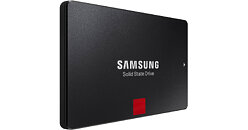 Samsung's customers are also impacted. Transcend has reportedly not received a NAND Flash shipment since October, significantly affecting its product availability. Transcend anticipates this situation will persist for another three to five months before any relief occurs. Customers can expect limited availability in the fourth quarter of 2025 and the first quarter of 2026. Although it's uncertain when the situation will peak, inventories are currently at record lows.
Sources:
Moore's Law is Dead, via Notebookcheck
Earlier industry sources suggest that Samsung is becoming cautious about the NAND market, while demand for standard DRAM has surged. This shift makes NAND flash a less attractive segment, causing the entire supply chain to slow down as inventories are depleted. The demand for AI infrastructure has rapidly depleted inventory across the supply chain, and NAND flash is no exception. The rapid expansion of AI infrastructure has led to NAND flash shortages, which could persist for years. It was noted that the price of a 1 Terabit TLC NAND increased from $4.80 in July 2025 to $10.70 in November 2025, marking an increase of over 100% in less than six months. Other types of NAND flash, such as MLC and QLC, have also seen their spot prices more than double.

45 Comments on Samsung Could Stop SATA SSD Production Amid NAND Flash Shortage
I think SAS may work on SATA controllers, or was it the other way around.
Anyway you can boot most newer computers from USB - NVME M2 2280 usb-a or usb-c bride cases these days.
Or you can boot and work from USB pen drives.
I can find an 8TB SATA SSD, but it's $500. I can get 2 - 8TB HDDs and still have money left over compared to buying just 1 - 8TB SATA SSD.
Even now, getting a 4TB SATA SSD is overly expensive compared to the HDD counterparts. You're looking at around $300 for a 4TB SATA SSD and then depending on the HDD brand/model you can get a 4TB one for $100-150. Nearly 2 years ago a 4TB SSD was only about $200, getting close to HDD prices. I wish the Crucial MX500 I did buy (2 of them at 4TB 2 years ago) were more available because I would have picked up another 2 or 3 had Micro Center had them in stock then, I grabbed the 2 they had and they restocked 1 or 2 here and there for a few months and then Crucial stopped the MX model.
I'd like SATA SSDs to still be a viable option, but they've slowly been going the other direction from HDDs in terms of price/GB and on a production scale level they've really dropped off. Not everything in the market works the way I'd like, so I just deal with it how I can.
It's time for The Hunger NAND Games, you two will be forced to fight to the death. Whoever wins gets the right to buy the last affordable Samsung SATA SSD.
Just like in another thread of someone complaining modern boards are only coming with two SATA ports, SATA is ancient technology, getting up there with PCI and parallel ports. Most of the remaining buyers ar ebudget focused upgrading old hardware, and they are not spending a premium for a samsung branded drive, they're going for cheap, DRAM less drives from Chinese companies where you wont notice the difference because Haswell is too slow to matter in the transfer speed game and web browsers dont need that much to function.
But because SATA drives aren't the newest hottest thing, they get short shrift from manufacturers, which leads to consumers abandoning them even faster than they might have otherwise, which leads to further marginalization from manufacturers. Capacity for consumer SATA is the same or worse than NVME, pricing likewise. It's a very tough sell.
PATA is that single-ended signaling ancient tech with far higher vulnerability to noise/interference.
Requiring that "CPR" of doubling cable's wire count by adding ground wire between every signal wire...
And SATA would be perfectly fine for low performance storage use like for music/video etc to get old spinning rust actually replaced by silent and (when properly made) low power draw SSDs.So six mass storage device ports are getting replaced by two and you call that as advance...
I'm not surprised by some of the elitist comments here, essentially calling SATA outdated even though it's much cheaper per GB for mass storage than an NVMe SSD.
A return of the spinning rust wasn't in my 2026 bingo, but at the rate it's going, even good HDDs will be facing shortages soon.