Monday, December 15th 2025

Samsung Could Stop SATA SSD Production Amid NAND Flash Shortage
Samsung is reportedly considering halting its consumer SATA III SSD production lines due to a growing shortage of NAND flash in the supply chain. According to Moore's Law is Dead, industry insiders have been discussing Samsung's potential stop of regular SATA III SSD production. Most NAND flash is being allocated to datacenter customers, such as AI labs and hyperscalers, leaving limited supply for the lower-margin consumer market, including PC gamers and tech enthusiasts. However, this likely only impacts regular SATA III SSDs and not Samsung's popular M.2 PCIe NVMe drives, which have been a consumer favorite for years. Additionally, there are reports that Samsung is converting its NAND flash production lines in Pyeongtaek and Hwaseong to focus on DRAM production. The upcoming Pyeongtaek Fab 4 (P4) is also expected to operate as a DRAM-only facility using Samsung's latest 1c process.
Earlier industry sources suggest that Samsung is becoming cautious about the NAND market, while demand for standard DRAM has surged. This shift makes NAND flash a less attractive segment, causing the entire supply chain to slow down as inventories are depleted. The demand for AI infrastructure has rapidly depleted inventory across the supply chain, and NAND flash is no exception. The rapid expansion of AI infrastructure has led to NAND flash shortages, which could persist for years. It was noted that the price of a 1 Terabit TLC NAND increased from $4.80 in July 2025 to $10.70 in November 2025, marking an increase of over 100% in less than six months. Other types of NAND flash, such as MLC and QLC, have also seen their spot prices more than double.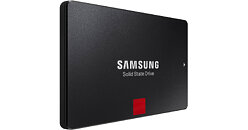 Samsung's customers are also impacted. Transcend has reportedly not received a NAND Flash shipment since October, significantly affecting its product availability. Transcend anticipates this situation will persist for another three to five months before any relief occurs. Customers can expect limited availability in the fourth quarter of 2025 and the first quarter of 2026. Although it's uncertain when the situation will peak, inventories are currently at record lows.
Sources:
Moore's Law is Dead, via Notebookcheck
Earlier industry sources suggest that Samsung is becoming cautious about the NAND market, while demand for standard DRAM has surged. This shift makes NAND flash a less attractive segment, causing the entire supply chain to slow down as inventories are depleted. The demand for AI infrastructure has rapidly depleted inventory across the supply chain, and NAND flash is no exception. The rapid expansion of AI infrastructure has led to NAND flash shortages, which could persist for years. It was noted that the price of a 1 Terabit TLC NAND increased from $4.80 in July 2025 to $10.70 in November 2025, marking an increase of over 100% in less than six months. Other types of NAND flash, such as MLC and QLC, have also seen their spot prices more than double.

45 Comments on Samsung Could Stop SATA SSD Production Amid NAND Flash Shortage
You tell everybody you stopped the production. Makes sense economically speaking.
Maybe they could introduce SATA4.
NVMe is nice, but M2 is a bad form factor in desktop.SATA 3 was a draft in 2008 and final in 2009. Early mainstream SSDs were around 2008. So probably not many SATA 2 SSDs.
(No one has put an accessible AnandTech archive online yet?)
SATA 4 would need to have an at least 100 Gb/s port to make up for the bandwidth woes of the format (and this would be bad for a forwards-compatible standard because this would be 12.5 GB/s, or what the lower end of Gen 5 NVMe SSDs hit), thing is, SATA Express was already tried and it utterly flopped in the market. It's extremely unlikely we will see updates to the SATA standard, as much as I deeply wish it was phased out altogether.
M.2 having no wires is HUGE for a lot of builds and I heavily prefer them that way
I agree on M.2 being a bad form factor for desktops, IMO too much room is taken up on the motherboard, and the M.2 form factor is too small for high performance SSD's.
The lack of PCIe lanes on desktops is a much more pressing concern, unfortunately both Intel and AMD think that expandability is something that only their HEDT customers deserve... all the while Intel exited the HEDT business altogether and AMD elitized it to the absolute extreme with their $10,000+ processors (which, hey, start at $1600, how nice, cheap and affordable)
I hardly see any motherboards who utilise m2 22110 format or any ssds in that size. Bad form factor and bad cooling form factor. remove a graphic card to access storage is not very well executed. Especially with those 4 slot big graphic cards which block everything
www.techpowerup.com/344126/samsung-denies-nand-flash-exit-as-sapphire-pr-manager-calls-for-calm
Note 6 to 8 months. So read carefully. In July 2026 everything is alright. That is later as 6 months by now! /sarcasm
However M.2 is terrible as a form factor for desktops, as it usually ends up being placed behind or near the GPU, we need a new SATA revision or something like U.2 on desktop to allow for mass storage that isn't placing SSD's near a hot GPU.
A lack of PCI-e lanes is only applicable for enthusiasts using more than 2-3 SSD's, but with the amount of cores and PCI-e lanes for the price of a Threadripper or Epyc is significantly better than what Intel provided before they gave up on the HEDT market.
Well, actually that's matter of interpretation;-)
Yes, they're better. They're also many years newer. So there's that. Top shelf 22-core BDW Xeons from 10 years ago are now $40 CPUs. Used EPYC market didn't boom because AMD made it hard with vendor locking and making them incompatible with the consumer grade chipsets. Would've loved a dirt cheap Naples server...
But a cabled interface is still better, with flexibility in where drives are placed, easier access, and the possibility of more drives.
And SAS is not the successor to SATA. It is designed for enterprise use and has specifications that would add too much cost in consumer products.
First, because the 2.5'' form factor has more physical space available than the M.2 form factor (common for NVMe), they can usually be made in higher capacities with lower prices compared to an equivalent high capacity NVMe drive. Second, because of their larger surface area and slower speeds, they run cooler and also typically draw less power (especially compared to PCIe 5.0 NVMe SSDs) - in fact, the risk of thermal throttling is practically nonexistent for SATA SSDs even during sustained work, while NVMe drives do need heatsinks and face a higher risk of thermal throttling if they reach high temperatures.
If anything, they are excellent as secondary storage drives (even for a game drive for games without Direct Storage support), and frankly I would trust a decent quality SATA SSD that runs at 30-50 C more than I would trust a "blazing fast" NVMe that runs at 45-70 degrees Celsius on average - sure maybe I am in the minority, but not everyone needs top performance. Some people are content with less.