Thursday, January 8th 2026

Amid Memory Crisis, AMD Considers AM4 Zen 3 Revival
An elevation of computer memory prices—throughout late 2025 and early 2026—has prompted revisits of older generation hardware. After all, cheaper DDR4 memory offers an alternative route in the current climate. Prime examples turned up last week, when Gigabyte unveiled and launched four new AM4 socket-based motherboard models. At the end of December, ASUS was reportedly engaged in a bolstering of its AM4 motherboard production lines. Pleasingly, AMD seems to considering similar steps with its compatible Ryzen desktop processor families. Tom's Hardware gathered relevant information during a pre-CES 2026 round-table discussion.
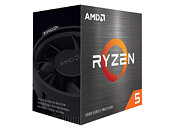
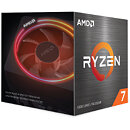
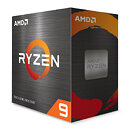
During an interview session, David McAfee—Team Red's VP and GM of client channel business—reportedly dropped a hint about potential revivals of AM4 CPU products. In the recent past, AMD has continued to roll out (sort of) new chips based on "Zen 3" architecture. Conversely, supplies of popular SKUs—like the gaming-centric Ryzen 7 5700X3D model—have dried up. When asked about a possible older generation re-release strategy, McAfee stated that the Red Team: "(is) certainly looking at everything that (it) can do to bring more supply and kind of reintroduce products back into the (AM4) ecosystem to satisfy the demands of gamers that maybe want that significant upgrade in their AM4 platform, without having to rebuild their entire system." Elaborating a tad more, he said: "(it is) definitely something (AMD is) very actively working on." According to the TechPowerUp news archive and GPU database, Team Red's most recent new "Zen 3" desktop releases include the Ryzen 5 5600F (last September) and Ryzen 5 5500X3D (mid-2025) SKUs.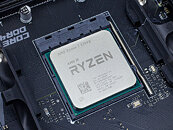
Source:
Tom's Hardware
During an interview session, David McAfee—Team Red's VP and GM of client channel business—reportedly dropped a hint about potential revivals of AM4 CPU products. In the recent past, AMD has continued to roll out (sort of) new chips based on "Zen 3" architecture. Conversely, supplies of popular SKUs—like the gaming-centric Ryzen 7 5700X3D model—have dried up. When asked about a possible older generation re-release strategy, McAfee stated that the Red Team: "(is) certainly looking at everything that (it) can do to bring more supply and kind of reintroduce products back into the (AM4) ecosystem to satisfy the demands of gamers that maybe want that significant upgrade in their AM4 platform, without having to rebuild their entire system." Elaborating a tad more, he said: "(it is) definitely something (AMD is) very actively working on." According to the TechPowerUp news archive and GPU database, Team Red's most recent new "Zen 3" desktop releases include the Ryzen 5 5600F (last September) and Ryzen 5 5500X3D (mid-2025) SKUs.


112 Comments on Amid Memory Crisis, AMD Considers AM4 Zen 3 Revival
Usually a year or so of delivery to purely enterprise likely makes up for months of labor to come.
Wouldn't happen easily.
First of all it would need designing that new memory controller capable to handling both DDR4 and DDR5. (or separate controllers with switches)
Then that design has to be "translated" to actual physical silicon, get it prototyped and tested and only then you could start moving to actual production.
So it would take significant time, then money for getting photomask done and you would also need to find free fab capacity for it.
3:
If you mean stacked 3D cache that's significant cost with both manufacturing for that extra piece of silicon and then more cmplex packaging of parts to make CPU.
And integrating more cache into CCD isn't easy either:
SRAM needing six transistors per bit is rather expensive in silicon area.
And that bigger physical size of cache block also means struggle to keep access latency down, because speed of electricity is simply limited in time scale modern processors operate at.
Different CCD would also incur all the costs of 1 and even more so because of needing more higher end node than IOD.
4:
Only thing that could ever achieve is worser performance for higher price!
Splitting cache like that would make more complex system with its "bureaucracy penalty" and the partition of cache on mobo would hardly be faster than RAM. (distance=lower performance)
So it wouldn't make much real sense even as additional L4 cache level.
5.
If such thing already exists, why should AMD spend resources on expanding to such product area?
Good modern chipset would more useful to replace current AM5 X-serie duct tape solutions wasting power and incurring latency penalties.
6.
AMD is no DRAM maker.
DIMM manufacturers simply buy what ever standard DRAM chips are available from manufacturers (who have moved capacity from DDR¤ to DDR5), then test and bin them, with higher end DIMMs using better bin chips and already as overvolted and overlocked.
And even if AMD wanted to become DRAM maker with new high clock speeds capable DDR4 DRAM chips, where would they find free fab capacity?
7. Dual CPUs made sense in time when CPUs were running single thread.
Now you're better of putting that money into higher up CPU model instead of even more expensive mobo than what they are nowadays.
(also in time of Abit BP6 memory controller was on mobo and not in CPU itself)
www.techspot.com/review/2862-ddr5-vs-ddr4-gaming/
DDR4 and DDR5 have different form factors and you add a new IO die that can support both cases.What? A better socket with more pins and support for newer PCIe standards and soeeds is a money grab? You know you don't need to buy it if you prefer slower components.Takes space, that's why AMD asks TSMC to stacks it on their CCDs.... and it's just a bandaid for the slow memory perf.30+ years ago CPUs didn't even have L2 cache. If you want to enhance performance you tune.It exists and it went nowhere because it's a janky solution at best, even worse than SODIMM to DIMM adapters. Probably has a lot of instability and made no sense, which is why they never actually sold it.Why would you use DDR4 5000 when DDR5 has clocked beyond 9k nowadays. How is making a better standard greed?
DDR4 is technically limited and even if it can reach 5000 MT/s this is only attainable on specific platforms (Intel) with a lot of tuning. AMD couldn't even do more than 3800 MT/s on chiplet Zen 3.Awful. Scheduling issues, latency issues, high consumption. This hasn't been a thing in years for us consumers because of how terrible it was for anything that isn't servers.
There's a reason standards have evolved or things have changed and no it's not just "greed!! money wagon!!". The greed is elsewhere like the structural reallocation of manufacturing toward high-margin products for AI at the cost of us consumers.
I hope the AI bubble pops soon and things become more reasonable again too.Weren't these CPUs leftover Milan-X CCDs? I doubt AMD has any interest in restarting production on 7nm node and having to still use TSMC's expensive packaging tech for the 3D v-cache.I believe many AM4 boards and CPU's do support ECC.
I mean registered ecc. That would increase the pool significantly.
But no, the answer is that because AM4 chips are still absolutely capable CPUs for whatever task you want to throw at them.
The software used obviously matters, like any Linux distro is going to handle old hardware than Windows 11 or even 10. Running a light distro or tweaking it will give you even more mileage, but you should know that older systems are quickly becoming more obsolete.
I would strongly advice thinking over it twice before going for any semi-obsolete platform, especially Zen 3 or older. There is a significant difference in system snappiness vs. newer generations. Even Raptor Lake (which I have side-by-side) is much more responsive, while the Zen 3 is borderline annoying for heavy surfing and office work. For gaming it will be decent, for now. But I believe those saving a few hundred bucks buying Zen 3 will be very disappointed in a couple of years as software continues to get more bloated.
Contrary to most, my advice is to by a current generation platform, as there are good options from both vendors, and it wouldn't immediately be borderline obsolete. But this probably means you have to save up a bit more, or adjust your expectations. You can shave off a bit by buying a cheaper case (or reusing one), cheaper motherboard, cheaper tower cooler instead of AIO, standard JEDEC speed memory instead of OC (which only lose you ~2-3% gaming performance, and be much more stable), going with less memory (for now), etc. but just don't skimp on the PSU. Even with CPUs you should consider 8 or even 6 cores with the fastest cores rather than 12 or 16 if you are budget constrained, as those will fare better than an older generation with more cores. (And there's also the time to try out Linux, just saying. ;) )
For those who really want (need) an older platform (new or used), Raptor Lake is a much stronger candidate than Zen 3, although you will need better cooling. But even here, you are sacrificing a bit of performance by using DDR4, but luckily it affects more larger productivity tasks than system responsiveness and latency.The current supply of DDR4 DIMMs are probably mostly based off old stock chips, and the DDR4 prices were already surging before this, so DDR4 isn't going to "save us" for long.L3 will only help a few cases, especially low resolution gaming, but not system responsiveness or computational performance.Those CPUs will not run those speeds 100% stable for long. The voltage needed would wear out the memory controller quickly.
HEDT platforms with quad channels are a much better option.Then go buy a couple of cheap Xeons off ebay, and you'll quickly realize that there's something called memory latency and that more cores never compensates for slow cores.There are some boards which "supports" it, but people's success with it varies. But don't forget that AM4 will only support ECC UDIMMs, which are only produced in low volumes for entry servers and "workstations", contrary to RDIMMs which are generally widely available used on ebay.
In that sense, going for the Skylake-W/Cascade Lake-W Xeons which supports RDIMMs, or the X299 platform for regular non-ECC DDR4, is much better, with quad channel memory, lots of PCIe and performance in gaming and general responsiveness which is equivalent or better than Zen 3. Back in 2021-22 during the hardware shortage, I was strongly considering buying 2-3 setups of these, as the CPUs were $100+ and very cheap RAM. I could find bundles for ~$500+ (with 64 or 128 GB). I haven't tracked the prices lately, but I would go for this long before considering buying into AM4.
And you might ask, why not Zen 3 Threadrippers? Those are generally way too expensive, but if you find a deal then everything should be on the table. :)
Contrary to most, I think obsolete = unfit for purpose, and not something that isn't sold anymore.
So bringing back Ryzen 5000 series CPU's? No brainer, excellent platform still! Only clueless whiny elitists think otherwise.