Thursday, January 8th 2026

Amid Memory Crisis, AMD Considers AM4 Zen 3 Revival
An elevation of computer memory prices—throughout late 2025 and early 2026—has prompted revisits of older generation hardware. After all, cheaper DDR4 memory offers an alternative route in the current climate. Prime examples turned up last week, when Gigabyte unveiled and launched four new AM4 socket-based motherboard models. At the end of December, ASUS was reportedly engaged in a bolstering of its AM4 motherboard production lines. Pleasingly, AMD seems to considering similar steps with its compatible Ryzen desktop processor families. Tom's Hardware gathered relevant information during a pre-CES 2026 round-table discussion.
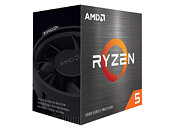
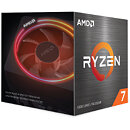
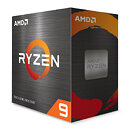
During an interview session, David McAfee—Team Red's VP and GM of client channel business—reportedly dropped a hint about potential revivals of AM4 CPU products. In the recent past, AMD has continued to roll out (sort of) new chips based on "Zen 3" architecture. Conversely, supplies of popular SKUs—like the gaming-centric Ryzen 7 5700X3D model—have dried up. When asked about a possible older generation re-release strategy, McAfee stated that the Red Team: "(is) certainly looking at everything that (it) can do to bring more supply and kind of reintroduce products back into the (AM4) ecosystem to satisfy the demands of gamers that maybe want that significant upgrade in their AM4 platform, without having to rebuild their entire system." Elaborating a tad more, he said: "(it is) definitely something (AMD is) very actively working on." According to the TechPowerUp news archive and GPU database, Team Red's most recent new "Zen 3" desktop releases include the Ryzen 5 5600F (last September) and Ryzen 5 5500X3D (mid-2025) SKUs.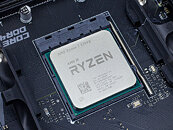
Source:
Tom's Hardware
During an interview session, David McAfee—Team Red's VP and GM of client channel business—reportedly dropped a hint about potential revivals of AM4 CPU products. In the recent past, AMD has continued to roll out (sort of) new chips based on "Zen 3" architecture. Conversely, supplies of popular SKUs—like the gaming-centric Ryzen 7 5700X3D model—have dried up. When asked about a possible older generation re-release strategy, McAfee stated that the Red Team: "(is) certainly looking at everything that (it) can do to bring more supply and kind of reintroduce products back into the (AM4) ecosystem to satisfy the demands of gamers that maybe want that significant upgrade in their AM4 platform, without having to rebuild their entire system." Elaborating a tad more, he said: "(it is) definitely something (AMD is) very actively working on." According to the TechPowerUp news archive and GPU database, Team Red's most recent new "Zen 3" desktop releases include the Ryzen 5 5600F (last September) and Ryzen 5 5500X3D (mid-2025) SKUs.


112 Comments on Amid Memory Crisis, AMD Considers AM4 Zen 3 Revival
I mean, that suggestion basically implies that one should upgrade every generation or every other generation of CPUs just to keep desktop performance bearable, which just isn’t the case? At all?
Actually I do have a pentium 3 Laptop at work still with windows 98 on it, which is actually pretty dang fast.
Putting a light weight Linux on that? hmmmm why not.....hmmm will check and post on the forums if I end up finding something.
In my opinion, buying something that's noticeably slower in general usage than current systems is too much of a trade off, since it will be "obsolete" within a couple of years. Assuming someone building a system in the $2000 range, and the desired RAM went from $300 to $1000 (and the SSD probably went +$50), I argue eating that cost is much better than buying an inferior system, since you will get many more years of good use of it before you feel it is too slow.
And let's not pretend like PCs are 3x the price or something. Luckily we are at least still in a window where upper mid-range GPUs are still very obtainable (but may not be for very long). Unlike just a few months ago, RTX 5070 and RX 9070 XT are frequently available sub MSRP, and sometimes even RTX 5070 Ti. Lower mid-range cards like RTX 5060 is frequently far below MSRP, but be aware there's a large performance gap between these. But my point being, there are good options for buying a PC now, gaming or not, and if you're buying now I would recommend looking at Zen 5 and Arrow Lake.I called it semi-obsolete for a reason, as I have a 5900X and a i7-14700K side-by-side in my home office which I use daily, there's a big difference in snappiness between them, and it's become a lot worse in the last two years with both Chrome and Firefox.(Then it's literally two generations, if you know what literally means, but I digress.)
It's not the amount of generations (minor or major), it's about which generations are above a certain performance threshold to be satisfiable for a certain task. While Zen 3 is strong when it comes to batch loads (for its era), its weakness lies in the front-end, which means it falls short in logic heavy software, typical for user interactive applications. Zen 4/5 closed in on this gap vs. Intel, which along with better clocks will result in a more responsive user experience. In this regard, even Raptor Lake feels like a "generation" ahead of Zen 3.No, I'm not suggesting that at all.
It's based on observations of the hardware I have on hand (personally own, family and work), not opinions from a favorite tech YouTuber or synthetic benchmarks. Up until about two-three years ago, all the Skylake family CPUs and even Haswell "good enough" for most use, Sandy Bridge was starting to show its age. Now, Sandy Bridge is far too slow for heavy office use, Haswell is borderline, and Skylake and Zen 3 is usable but noticeably not snappy, which is why I wouldn't recommend anyone buy into those platforms.
If you have one, and can still tolerate it, it might be okay for a couple of years more. But we are talking about people who are buying into it now and expecting to get 5+ years of decent use of it, which probably are going to result in dissatisfaction over time.
I don't see how you would feel the difference between Zen 3 and Raptor Lake in basic use if I barely feel anything between my Haswell vs Zen 4 setups.We don't know whether it'll be obsolete or not. At the current pace of software development, I'd say you could get way more out of that Zen 3 system than you could get out of any high-end system 10 years ago.
Even if I'm wrong, the price difference will account for that. I just checked, a 5700X is currently £170 at Scan. You're surely not expecting jaw-dropping speed and longevity for that price, right?I could call placebo on that, but let me not go that far. Let me just say that our perceptions seem to be be vastly different.I have no clue what you're talking about, and I doubt anyone looking for a Zen 3 CPU anno 2026 do, either.We have Skylake PCs at work, and they feel pretty snappy to me.
I think the problem many of the objectors here are having is that their perceptions are not on par with actual reality. Example?
This...
As for your snappiness comment - while the CPU does play a role and it might very well be that if you neurotically compare you might notice a difference, realistically, any CPU from the last… decade, honestly, and definitely 5 years, when paired with an SSD, will provide absolutely acceptable desktop performance for most tasks.
There is far too much negativity coming especially from Tech channels, like it's the death of PC, while the PC market survived and has thrived through the last decade of mining crazes and everything being hard to buy ~2020-2022. While RAM is very bad right now, CPUs and GPUs are pretty good (for now), so the constructive and intelligent discussion should rather be good upgrade paths. Like for instance, buying a good CPU now and only 16 GB of RAM, and upgrading RAM later vs. buying a slower CPU with cheaper RAM. Or, if someone wants to upgrade CPU and GPU, but perhaps can't afford both right now, it could be wise to do the GPU now, and then possibly the CPU in 8-12 months when Nova Lake and Zen 6 will (likely) be even more compelling. And those who like to complain about everything being bad without suggesting real good solutions, should probably go play somewhere else.
And IMO, it's more than just a placebo when someone recommends Raptor Lake, as those CPU's can still degrade. Some really old CPU's are still plenty usable for daily tasks, Sandybridge is just fine as an office system,use an SSD and it'll be enough for most people.
Also the RAMageddon going on is much worse than what happened in 2020 with shortages and the crypto bubble, you could get by without a GPU then, you can't without RAM, when RAM is overpriced or unavailable to a majority of people building or buying a PC, you either have to buy what you can get or settle with what you have, hence AMD considering restarting AM4 CPU production.
Things are so bad in the overall tech market, SI's are selling systems without RAM, OEM systems are going to ship with less RAM, everything with memory in it is going to be significantly more expensive as memory manufacturers have refused to increase production and some are delaying building of new fabs. I think the DIY PC market is in more trouble than it has been in before if these "shortages" go on for several years.
I wouldn't recommend anyone pay $400+ for 32GB of DDR5 at all, vs. buying a Zen 3 CPU+board and looking for a deal on some DDR4 RAM. I simply refuse to pay for price gouged DDR5, also because if people keep paying up for DDR5 at current prices that tells RAM makers you're fine with paying more for memory.
If indeed both are true, and availability / pricing is sane and not inflated considering relative performance, both are good news stories and good for consumers, in a market that it seems the major players are happy enough to neglect them. Decoupling reliance on hyperinflated DDR5 alone helps platform cost.
My 5800X3D is still a damn good CPU in my living room PC. I can only hope for consumers that if this comes to fruition, an X3D will also be offered.
Even reviving non-X3D chips sounds like it would be great for budget builders. I still see people buy Alder Lake when on a tight budget
When I talk about regular users, I have some office apps, a video player, and a web browser with a couple of tabs in mind. Maybe some light gaming. For that purpose, Zen 3 is more than enough.Like I said, the price difference will provide that nuance. Zen 3 isn't coming back for hardcore enthusiasts. It's coming back for people on a tight budget looking for a cheap, but still fairly capable upgrade.I agree that the negativity is sickening. But I don't think that having a wider range of budget-friendly options is a bad thing, quite the contrary.
Edit: I think having these budget-friendly options is exactly what we need to dispel the negativity, and show that PC gaming is far from being dead. We need PC gaming for the masses, not just the enthusiast elite.
I remember when the top of the range 5950X debuted for $800 a couple of years ago. Now, you can get its lower clocked sibling, the 5900XT for £280. If one can still get a motherboard and RAM with it as well, I think that's great. No one is trying to sell you the illusion of getting the fastest of the fastest for that price. But I think it makes total sense for the money they're asking for it.Heck yes I would! 12 GB VRAM in a relatively cheap midrange card with single fan, ITX sized versions available. What's not to like? :)
Especially if they bring back X3D chips whose single-threaded performance is relatively immune to slower RAM speeds.I don't think 9950X performance on AM4 is ever going to happen. It would take for AMD to design an IOD that supports DDR4 and Zen4/5 CCDs from the ground up. And even if they did that, the memory bandwidth would likely pull this fankenstein CPU back too much.
As for your hope of a reemergence of models like 5800X3D of any significant quantity is essentially hoping for "charity" from AMD. Wafer allocations are booked years in advance, so they would have to pay a hefty premium on extra wafers to boost production, which is made even worse by the already costly X3D die. So unless you're expecting to pay $800 for it, this will be a pretty long shot. Even in the best case scenario, scaling up production will also take 4-5 months to take effect, we'll be "drooling" over Zen 6 by then. And what would be the purpose? If DDR4 really is the requirement then Raptor Lake is still abundant and an overall better performer. As for the rest of the platforms listed, it really isn't much of an upgrade, unless you're specifically talking of people who own lower tier CPUs of the respective platforms. As considering this is a cost saving measure, we have to assume they are not going to run high-end GPUs, so the upgrade (or rather side-grade) will be very hard to justify. They would be much better off waiting a little longer for a worthwhile upgrade if their current one is still working.
No matter how you twist an turn it, buying a new Zen 3 CPU now will only make sense in some edge-cases. A lot of the problem is exaggerated to begin with, as it's the overpriced extreme OC memory "everyone" wants that's too expensive, considering it was 2x the normal price to begin with. I've been saying for years people are overpaying for "junk" memory, with speeds you wouldn't be able to run stable long-term anyways. Since you mentioned 32 GB, which many buyers can "survive" with for a while, they're starting at around $200-250 for DDR4 vs. $350 for DDR5 (NewEgg for reference), so effectively a $100-150 difference depending on other choices (Yeah, DDR4 has also increased in price...). And don't forget shops may offer bundles and discounts. (Back during the GPU shortages I manged to source several GPUs at reasonable prices.) You just need to know where to look and what to look for.
When we're talking about value, a part of that consideration must be the overall feature set and longevity. You're giving up a lot by choosing an old platform; overall performance in most areas (gaming, general responsiveness, productive applications, etc.), efficiency, IO, etc.
Remember, for AM4 it's only the X570 chipset which have PCIe 4.0 lanes to the chipset, while B550 has only x4 3.0 lanes which means a secondary SSD will effectively run at x2 3.0 speed since it's sharing bandwidth with NIC, SATA and USB. And X570 is not particularly cheaper then current gen, while it's the B550 that's the "bargain". So once again, it's sacrificing a lot for a relatively small saving (~$100-150 in our hypothetical example). The current gen. options from both vendors are objectively so much better, so I can't in honesty recommend that route.
As DDR4 supplies are dwindling and prices surging, those should really be prioritized for owners of existing systems. I don't think many fresh AM4 buyers will be happy if they discover replacement DIMMs cost a fortune a short time from now.
They are, after all, counting on a massive hit on AM5 CPU sales because DIYers virtually can't upgrade from older DDR4 platforms without paying for RAM as much as they'd traditionally pay for a high-end GPU.Wafer allocation is booked years in advance (actually more like a year AFAIK), but wafer setup isn't.$800 might actually make sense for e.g. a 5950X3D, for people who want/need lots of RAM and already have lots of DDR4.In 4 to 5 months, RAM is probably even more expensive than it is now. Best estimates point to prices "stabilizing" in Q3 and only then they'll go down.Raptor Lake ceases to be the better performer when using DDR4 and it's going for 500-600€. Add in a decent motherboard and we're better off just going with Zen3 X3D.Yes, it's obviously for people who don't own a Zen3 X3D.Define "a little longer".The Zen3 5500 is currently #2 in Amazon's best selling CPUs and the 5800X is #6. Even without X3D models, the demand is already way above "some edge cases".