Tuesday, January 13th 2026

Seagate Starts Shipping Its 32 TB CMR Exos, SkyHawk AI and IronWolf Hard Drives
Seagate Technology plc (NASDAQ: STX), a global leader in mass-capacity data storage, is showcasing advanced storage solutions at Intersec 2026 that help power the transformation of AI-driven video analytics into searchable, decision-ready intelligence. The edge-to-cloud portfolio is designed to help businesses unlock the full value of their data and make smarter, faster decisions.
AI applications in video image analytics (VIA) are fueling unprecedented data growth at the network edge. IDC reports that more than 75% of organizations expect their video data to at least double over the next five years, as AI adds summaries, annotations, and metadata to every frame. This surge is driven by new use cases across industries - from accelerating investigations and automating alerts to ensuring compliance and enabling deep operational insights.
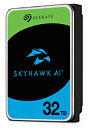
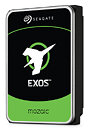
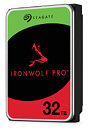 To help meet this demand, Seagate highlights its latest mass-capacity storage breakthroughs at Intersec. Building on its leadership in CMR technology, the company brings industry-leading 32 TB hard drives across its Exos, SkyHawk AI, and IronWolf Pro portfolio to channel and retail partners. Following the blueprint established in hyperscale cloud environments - where Seagate Mozaic technology at higher capacities is already proven - enterprise customers can confidently scale AI workloads across today's complex hybrid and multi-cloud infrastructures. Hard drives deliver unmatched capacity, performance, and scalability enabling businesses to efficiently store and process massive volumes of data, supporting AI adoption at the edge and in data centers.
"AI applications, like computer vision, are transforming how video is used across industries," said Melyssa Banda, SVP of Edge Storage and Solutions at Seagate. "From smart city initiatives to retail and critical infrastructure, video is becoming a searchable business intelligence, and it's changing how operations run day-to-day. This pivot demands a new kind of data backbone: mass-capacity storage at the edge and in the data center to keep insights flowing and archives searchable. Without it, the promise of AI-powered video analytics stalls."
Availability and Pricing:
SkyHawk AI, Exos, and IronWolf Pro 32 TB hard drives are available starting January 14 through Seagate's authorized channel partners worldwide.
Recommended retail price:
Source:
Seagate
AI applications in video image analytics (VIA) are fueling unprecedented data growth at the network edge. IDC reports that more than 75% of organizations expect their video data to at least double over the next five years, as AI adds summaries, annotations, and metadata to every frame. This surge is driven by new use cases across industries - from accelerating investigations and automating alerts to ensuring compliance and enabling deep operational insights.


"AI applications, like computer vision, are transforming how video is used across industries," said Melyssa Banda, SVP of Edge Storage and Solutions at Seagate. "From smart city initiatives to retail and critical infrastructure, video is becoming a searchable business intelligence, and it's changing how operations run day-to-day. This pivot demands a new kind of data backbone: mass-capacity storage at the edge and in the data center to keep insights flowing and archives searchable. Without it, the promise of AI-powered video analytics stalls."
"From smart city initiatives to retail and critical infrastructure, video is becoming a searchable business intelligence, and it's changing how operations run day-to-day." Seagate SVP of Edge Storage and Solutions, Melyssa BandaTo learn more, visit us at Intersec booth SA H19. Seagate experts are there to provide you with the latest updates on cutting-edge technologies designed to address the needs of the AI-driven data surge.
Availability and Pricing:
SkyHawk AI, Exos, and IronWolf Pro 32 TB hard drives are available starting January 14 through Seagate's authorized channel partners worldwide.
Recommended retail price:
- $699.99 - SkyHawk AI
- $729.99 - Exos
- $849.99 - IronWolf Pro
36 Comments on Seagate Starts Shipping Its 32 TB CMR Exos, SkyHawk AI and IronWolf Hard Drives
here's seagate's chart (also each drive model's datasheet has the recording tech listed too)
Newer versions of ZFS got a sequential resilver option which can run through a drive's LBA sequentially without thrashing them during resilver, but only if you have as much system memory as you do data stored. If you have less system memory than data, you can do the resilver in sections to reduce thrashing, but not eliminate it.
So it's 1GB RAM / TB
Another thing that would probably be good is every couple years moving to a new pool to get rid of the accumulated fragmentation on the old pool.I have, I've noticed some odd behavior, like the more drives I put into the raid array the faster the per drive performance becomes.
With 24 drives I'm hitting 14.1GB/s read speed which would put me a decent amount over the manufacture stated speed of 524MB/s per drive; and this was with a 1.6TB long test depth to rule out any unintended caching inflating the performance numbers.
Which dual actuator drives do you use?? (Model)
The newer Seagate 2x18 drives are supposed to be even faster; and WD's dual actuator drives are even faster than the newer Seagates.