Friday, January 23rd 2026

NVIDIA Ends "Open Price Program," Pushing GPUs Way Past MSRPs
According to Roman "der8auer" Hartung and HardwareLuxx, NVIDIA has effectively ended its Open Price Program (OPP). This program was intended to help NVIDIA's add-in card partners sell GPUs at NVIDIA-suggested MSRPs. The program reportedly ended a few days ago, which means the pricing of GPUs from NVIDIA's AIC partners will now fluctuate beyond MSRP. NVIDIA supplies its GPU dies and GDDR7 memory as a DIY kit to AIC partners, who purchase these kits at predetermined prices. They then install the GPU and memory on their customized PCBs to create third-party GPU designs. However, due to the scarcity of memory, GDDR7 prices have been rising significantly, and NVIDIA is passing these cost increases onto its AIC partners.
As per to HardwareLuxx, the OPP program helped NVIDIA's AICs maintain MSRPs for their custom GPUs. Participation in the OPP program allowed manufacturers to list their GPUs at MSRPs, making them more appealing to consumers due to their perceived value. However, with the end of the OPP program, prices are expected to rise significantly since NVIDIA will no longer "subsidize" these listings. This change is likely influenced by the strained supply chain in the memory segment, where manufacturers are running low on available memory, leading to increased lead times and higher costs. Fortunately, NVIDIA continues to provide GDDR7 memory with its GPUs, so AIC partners don't need to source it independently.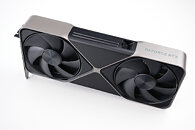
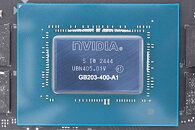
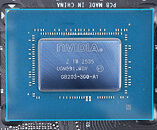 There were initial rumors about NVIDIA discontinuing the GeForce RTX 5070 Ti GPUs. Both the RTX 5070 Ti and the RTX 5080 use the same GB203 base die and 16 GB of GDDR7 memory. NVIDIA is reportedly prioritizing the RTX 5080, which has a higher MSRP. The RTX 5070 Ti has not been discontinued, but its production will make up a smaller portion of the manufacturing capacity. Since the RTX 5080 has a $250 higher MSRP, it makes sense to favor the higher-end model. In typical GPU manufacturing, chips that fully meet the RTX 5080's performance and power specifications are allocated to that SKU, while those that fall slightly short can be repurposed through binning for the RTX 5070 Ti. This approach optimizes yield without increasing silicon consumption, as both models come from the same die family.
Source:
HardwareLuxx
As per to HardwareLuxx, the OPP program helped NVIDIA's AICs maintain MSRPs for their custom GPUs. Participation in the OPP program allowed manufacturers to list their GPUs at MSRPs, making them more appealing to consumers due to their perceived value. However, with the end of the OPP program, prices are expected to rise significantly since NVIDIA will no longer "subsidize" these listings. This change is likely influenced by the strained supply chain in the memory segment, where manufacturers are running low on available memory, leading to increased lead times and higher costs. Fortunately, NVIDIA continues to provide GDDR7 memory with its GPUs, so AIC partners don't need to source it independently.


34 Comments on NVIDIA Ends "Open Price Program," Pushing GPUs Way Past MSRPs
Charge $2k for a 5070. Nvidia owners will pay it no questions asked.
The wheels are in motion to push any kind of pc component out of $$ reach for larger and larger segment's.
In the end it will be left as boutique hobby, much like human drived cars will be (in 10 years or so).
We will see alternating excuses for the cost to go up but in the end the only real reason is that they decide it's more profitable to sell compute by cloud as monthly subscription then to sell the different components to make a PC.
The end is (hopefully not so) nigh, brace yourself.
Nvidia cuts the OPP program to subsidize the cards to msrp
Nvidia reduces the 5070 ti production in favor of the rtx 5080
Both will get massive price hikes.
Also posed the question: why nvidia bothered in the first place to pus a low msrp.
I wonder something else: were the premium models also subsidized in some capacity?
If not then the subsidy was somewhat predictable because the pricing for the premium rtx 5080 models for example was 1200-1300$ (except asus).
So, up to 200$?
The memory (16gb) was less than 80$ because that was the price for 8x3gb gddr7 kits according to this:
www.techpowerup.com/337853/samsung-3-gb-gddr7-chips-sold-in-chinese-retail-attracts-memory-modders
So if we assume a 4x increase that would be less than 320$ for a price differential of 320-80=240$
Add them together and we get 440$
Checks out on vram and scarcity alone because for now the increases are about 300$ for the US and around the same in euros for the EU market.
Can we expect an sudden 100-200$ price hike then+a further 80-160$ from the ram?
Meaning at worst a 1200+300+200+160=1860$ for a premium rtx 5080?
Those 2500$ 5080 will come here sooner than later…