Wednesday, February 11th 2026

Intel Arc B390 Achieves 12x Performance and 8x Performance-per-Watt vs Gen9 iGPU
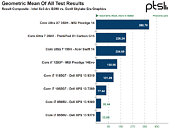
Intel's 10 years of integrated graphics have yielded massive performance improvements, according to recent testing by Phoronix. The latest testing shows that moving from Intel Gen 9 integrated graphics in the "Kaby Lake" CPUs introduced in 2016 to the modern Intel Arc B390 with Xe3 cores in "Panther Lake," results in a 12x performance boost and a 8x performance-per-watt efficiency increase. This is remarkable progress for Intel's iGPU team, delivering steady performance improvements year-over-year, with a significant boost in recent years. Phoronix tested iGPUs of top-end Core models, including: Core i7 8550U "Kaby Lake," Core i7 8565U "Whiskey Lake," Core i7 1065G7 "Ice Lake," Core i7 1185G7 "Tiger Lake," Core i7 1280P "Alder Lake," Core Ultra 7 155H "Meteor Lake," Core Ultra 7 258V "Lunar Lake," and finally the Core Ultra X7 358H "Panther Lake" processor.
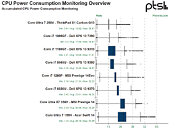
The oldest among these is the "Kaby Lake" generation, which utilized Intel UHD Graphics 620 on Gen 9 architecture, while the newest is Intel's most powerful creation to date—Arc B390 based on Xe3 cores. Comparing the 14 nm FinFET Intel node to the TSMC N3E node reveals a massive gap not only in performance but also in efficiency. In the geometric mean of all test results, Intel has achieved an 11.97x performance improvement from the 14 nm Gen 9 iGPU era to the modern 3 nm Xe3 iGPU era. This performance increase is accompanied by a significant efficiency gain, resulting from new nodes and more work done per watt, which Phoronix calculated to be 8x. While the "Lunar Lake" platform is the smaller power consumer with an average power draw of 13.82 W and a maximum of 36.97 W, "Panther Lake" uses a slightly higher average of 26.86 W and a maximum draw of 55.59 W for nearly twice the result.
Source:
Phoronix
The oldest among these is the "Kaby Lake" generation, which utilized Intel UHD Graphics 620 on Gen 9 architecture, while the newest is Intel's most powerful creation to date—Arc B390 based on Xe3 cores. Comparing the 14 nm FinFET Intel node to the TSMC N3E node reveals a massive gap not only in performance but also in efficiency. In the geometric mean of all test results, Intel has achieved an 11.97x performance improvement from the 14 nm Gen 9 iGPU era to the modern 3 nm Xe3 iGPU era. This performance increase is accompanied by a significant efficiency gain, resulting from new nodes and more work done per watt, which Phoronix calculated to be 8x. While the "Lunar Lake" platform is the smaller power consumer with an average power draw of 13.82 W and a maximum of 36.97 W, "Panther Lake" uses a slightly higher average of 26.86 W and a maximum draw of 55.59 W for nearly twice the result.


21 Comments on Intel Arc B390 Achieves 12x Performance and 8x Performance-per-Watt vs Gen9 iGPU
But we know how these guys like to fake performance and blow smoke up their own arseholes. So not holding my breath.
When Ice Lake came out with Iris Plus in the 10th gen series 6 years ago, thats when Intel started hitting back hard in the mobile space. It is credited as one of the first proponents of x86/PC handhelds (e.g. GPD Win). It forced AMD to integrate Vega into their mobile CPUs. 4800H/4900HS with Vega 7 was great, unstable as hell (ASUS Zephyrus G14), but was great.
I think it's pretty cool. More competition between AMD and Intel and also taking away some share from NVIDIA which currently has no CPU+GPU offerings beyond ultra niche ARM stuff that I'm not even sure they sell to consumer segment...
www.phoronix.com/review/intel-arc-b390-panther-lake-linux/10
Let's see if AMD can match or improve on that in their next gen. They have the disadvantage of sticking with RDNA 3.5 for their next gen, but a node bump, some extra units and a bump in the memory speeds should be able to close the gap.
Competition is nice :p
On another note, Strix Halo would obviously perform way better, but it would also use way more power.Premium laptops usually cost more than a gaming laptop with a dGPU, and many people prefer thin and light devices to a gamery one. I personally avoid laptops with dGPUs.
amd's chips look like a sad comedy show in comparison to every other laptop chip out there.
They're slower on mainstream igpu than intel, qualcomm and apple.. how they've fallen
Make sure not to hurt your knees when jerking that hard.
But these results are from Phoronix, so that doesnt matter.
It’s easy to see the people that read a sentence, it confirms their bias, and they can’t restrain their egos from crowing about it. They should be called out for no effort nonsense that does nothing but soothe their own feelings.
so... em... sorry but Phoronix is very trustfull source of data, they are maybe not as big as "other medias" but they are true to what they do
www.phoronix.com/review/windows-linux-panther-lake/2
www.phoronix.com/review/windows-linux-panther-lake/3
doubling efficiency every 3 years is about what I would expect
Now from what I hear, intel is back, so AMD's going to be on the defensive about their GPUs never being that great.
I still don't trust intel and would like AMD to keep going, and competition is a good motivator for AMD.
Or, another direction would be to.do.the unified shared ram the way MAC does it since M4 I belive. This will open a door to a market where people can load 70Billion plus models
For example, that's one if the reason I bought a used laptop with the 3080ti card which has 16GB VRAM - that hardly any 4th gen card has and only the high end 5th gen NVIDIa cards possesses.
It's CRAZY thst we are still STUCK mostly with 12 gb vram since 6 YEARS AGO!
Granted I'm.not a "high end gamer" - but my 3080ti card is maybe only 30% slower than the next user gen cards - and perhaps only on sub 4k gaming where People.need that 120fps in sports games etc - which is a "niche" anyway ....also now thst FRAME GENERATION has gotten much better in SOFTWARE - sort of negates the reason to pay X3 times to get 20%-30% incrsae in power / more FPS.