Monday, July 20th 2026

Per-Module GDDR7 Temperature Reading Unlocked on NVIDIA GeForce RTX 50 "Blackwell"
More individual readings are being unlocked on NVIDIA's GeForce RTX 50 series "Blackwell" graphics cards, as the modding community has started exploring GDDR7 temperature monitoring on a per-module basis. Interestingly, the modding community is diverse this time, including contributions from Brazilian GPU repair specialist Paulo Gomes, MSI Afterburner developer "Unwinder," Overclock.net member "asder00," HWiNFO creator Martin "Mumak" Malík, and Linux code developer "olealgoritme." By joining forces, the team managed to create a plugin for MSI Afterburner that provides access to individual, per-module GDDR7 temperature readings.
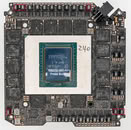
This new Hotspot.dll plugin, which previously only provided access to the hidden "Blackwell" GPU die, is now updated to handle GDDR7 temperature readings, unlocking the GDDR7 thermal sensors hidden inside memory ICs. For example, on the GeForce RTX 5090 GPU, there are 16 GDDR7 memory modules, each with a 2 GB capacity. Since there are 16 chips, the tool can read 16 temperature sensors and provide 16 individual readings. However, some GDDR7-equipped "Blackwell" GPUs use a clamshell memory configuration, meaning the GDDR memory is on both sides of the PCB. For example, in the case of the RTX PRO 6000 "Blackwell", this would mean only half the measurement points, as the GDDR7 memory is present in 16 locations on both sides of the PCB, for a total of 32 memory modules.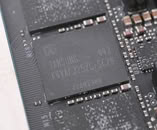
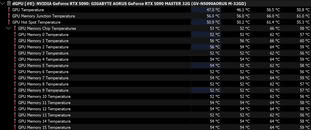
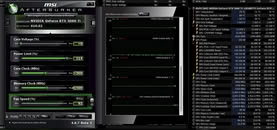
 Nonetheless, the addition of individual memory IC temperature readings is very helpful, especially when troubleshooting the GPU. When a GDDR7 memory module is not properly cooled, particularly if the thermal pad that should be present wears out or is missing, the module can overheat and reach the end of its life. Therefore, proper detection is always a good idea. With hotspot readings on the GPU die, hotspot delta, memory junction, and GDDR7 memory readings, NVIDIA's "Blackwell" is finally fully unlocked in terms of measurement.
Source:
via VideoCardz
This new Hotspot.dll plugin, which previously only provided access to the hidden "Blackwell" GPU die, is now updated to handle GDDR7 temperature readings, unlocking the GDDR7 thermal sensors hidden inside memory ICs. For example, on the GeForce RTX 5090 GPU, there are 16 GDDR7 memory modules, each with a 2 GB capacity. Since there are 16 chips, the tool can read 16 temperature sensors and provide 16 individual readings. However, some GDDR7-equipped "Blackwell" GPUs use a clamshell memory configuration, meaning the GDDR memory is on both sides of the PCB. For example, in the case of the RTX PRO 6000 "Blackwell", this would mean only half the measurement points, as the GDDR7 memory is present in 16 locations on both sides of the PCB, for a total of 32 memory modules.


36 Comments on Per-Module GDDR7 Temperature Reading Unlocked on NVIDIA GeForce RTX 50 "Blackwell"
Right now, it's great to have them so that we have some sort of EAS that the card is about to burn itself. :laugh:
Post your RTX 5xxx series hotspot temp.
The question is, why does Nvidia do censor those monitoring APIs?
Just because they are evil?
Or to "protect" the user?
NVIDIA certainly has not publicly explained why some temperature telemetry on many GeForce RTX 50-series cards was initially unavailable through the usual monitoring APIs.
My current 5090 has VRAM temps below 80°C at ~600W and below 70°C at ~400W.
Even the GPU-Hotspot is below 70°C at 400W. And I am at ~350W for my 24/7 gaming settings.
I tend to think that it just barely matters to the vast majority of users, and numbers can confuse them and cause them to think something is wrong when it isn't.
Easier to obfuscate it for everyone and perplex very few as to why, than worry perhaps far more over absolutely nothing.
I was trying to cool My 9070 xt cause GPU that is over 75C was for me unthinkable stuff, I've had 1070 ti which never exceeded 75C (while working normally) and was dead quiet with deshroud mod.
The stuff that is newer is more power hungry and warmer, the cooling capabilities for smaller nodes is problematic too, cause higher density tends to lead to higher temperatures even with proper cooling.
When I've changed from 1070 ti to 9070 xt, and from 2700 ryzen to 5700x I was dumbfounded why it is warmer even 2700 and 5700x are both 65W cpu.
But hey maybe you're right, it's just Jensen's law of Sensor Deprivation because he's evil.
Can manufacturers mixed where each chip is on PCB ? (sensor name "xyz" is in different place between MSI and Gigabyte PCBs)
Is VRAM chip "GDDR7 0A" (0 - channel, A-subchannel), always in the same spot on ASUS and Gigabyte ?
I can understand why Nvidia didn't want these sensors public.
"I expected 1666 RPM of Fan-speed at max, but my card has 2122 RPM under full load! I RMA this Card!"
So, always same story - it's all about money (save them).
Pascalat least Kepler.EDIT: And here's a PNY 5090
Source: Northwest Repair
And Titan Z
Otherwise, hiding sensors or choosing to not let general consumers know the hotspot temps seems easily grouped in without the general practice by companies to not include manual diagrams for repairing. Moves to remove Right to Repair/Anti-Consumer.
We should remember:
NV is an AI company now. We're on the last of their list of caring. Don't expect anything positive from them.