Thursday, July 23rd 2026

NVIDIA Reportedly Raises GDDR6 and GDDR7 Memory Kit Prices for RTX GPUs
NVIDIA has reportedly notified its add-in card partners of another GPU kit price increase, this time covering both GDDR7 and GDDR6 memory. This means the raise isn't limited to current Blackwell cards and could affect older GeForce products still using GDDR6 as well. The report comes from BenchLife via VideoCardz and follows a similar price adjustment for the RTX 5090 and RTX 5090D V2 back in May. NVIDIA supplies board partners with GPU and VRAM bundled together as a kit, so when memory costs go up, AIBs have little choice but to pass that along to retail pricing. BenchLife notes that partners are also seeing higher costs for coolers, PCBs, and packaging on top of the memory increases, though those secondary cost pressures are described as smaller than the memory-related ones.
The RTX 50 SUPER series is also affected by this. We've previously reported that those cards are on hold partly due to the cost of 3 GB GDDR7 modules. Inside sources say that each of those GDDR7 modules costs about $60-$70, roughly three times the cost of a 2 GB module at around $20. This adds a significant price premium on SUPER cards since the RTX 5070 SUPER was expected to be upgraded to offer 18 GB, while the RTX 5070 Ti SUPER and RTX 5080 SUPER would each provide 24 GB of GDDR7 memory. GPU prices have already increased 20-30% above where they were not long ago, and this latest round of kit price increases suggests there's more pressure to come. Previous-gen cards that use GDDR6 have been less affected up to now, but that appears to be changing.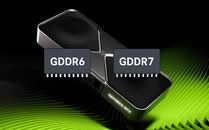
Sources:
VideoCardz, BenchLife
The RTX 50 SUPER series is also affected by this. We've previously reported that those cards are on hold partly due to the cost of 3 GB GDDR7 modules. Inside sources say that each of those GDDR7 modules costs about $60-$70, roughly three times the cost of a 2 GB module at around $20. This adds a significant price premium on SUPER cards since the RTX 5070 SUPER was expected to be upgraded to offer 18 GB, while the RTX 5070 Ti SUPER and RTX 5080 SUPER would each provide 24 GB of GDDR7 memory. GPU prices have already increased 20-30% above where they were not long ago, and this latest round of kit price increases suggests there's more pressure to come. Previous-gen cards that use GDDR6 have been less affected up to now, but that appears to be changing.

37 Comments on NVIDIA Reportedly Raises GDDR6 and GDDR7 Memory Kit Prices for RTX GPUs
Probably a 50% - 100% price increase for those Models.
A 5070Ti super with 8 VRAM chips would have $480 added at $60 per 3GB chip, or $560 at $70 per chip. A higher end midrange GPU going for upwards of $1,500 is ridiculous, but some people will still probably pay the AI tax on a GPU anyway.
AIcosts on to consumers.At this point, seems like the leather-jacket man runs a cult. "Charge whatever, we'll pay".
How will those people who like AI nudes, again not me, get their daily AI nudes without AI.
good News as my old card and my recent bought graphic card may rise in price. There are still plenty of affordable AMD Radeon and Intel graphic cards on the market.
Thank you leather jacket man. I was a bit annoyed as I bought a graphic card because of those "prices" are too cheap statements on various websites.I would not blame AI.
Those people who buy too often a smartphone with too much DRAM and Storage are to blame. Car buyers wiht a computer inside - not needed. Fridges with Screens also need storage and dram. The worst are those all in one chemical water solution coolers which sometimes state 4GIB DRAM for an useless screen on it.
I am sure there are more devices which consume DRAM or too much DRAM which I am not even aware of. I do not go into electornic supermarket and check what is sold.
When you use the cloud or microsoft cloud, you are also the root cause.
Somehow I doubt that if this is true and the prices are as doom and gloom as asserted, the GPUs will keep selling. Certainly not to those folk anyway who thought they were overpriced at MSRP.
And you're probably right about the 9070XT chip's low bus bandwidth. It has over 50000 transistors, which is more than the 5080's 45000 total transistors. In theory, it could outperform the 5080, but the 5080 has the much more power-efficient GDDR7 modules that offer 60% more bandwidth.
However, a benchmark from Hardware Unboxed shows that in some games, such as Doom the Dark Age, which is not particulary bandwidth sensitive, we did see the 9070XT outperforming 5080 even in 4K.
I could also argue that the whole Blackwell chip lineup, except 5090 are inferior to the Ada Lovelace. For example: 4070 Super vs 5070 (35800 vs 31100 total transistors). It's becoming clear that Nvidia is corner-cutting chips. They intend to rely on software gimmicks like the 8X frame gen to replace raw performance.
Blackwell isn't inferior to Ada, no, but it's not a groundbreaking change, it's mostly an Ada refinement just like Turing is a refinement of the Volta architecture. Nvidia's releasing a new GPU every 2 years, but they only really come up with something completely new every 4, the next big tock there should be the Rubin architecture. But I reckon we've reached diminished returns territory already. Situation with software is bad, there aren't games to make full use of the 40 series' capabilities yet.
Lock your spend down now until next year you will only be Ripped Off.
Damn sometimes I wonder if should just get a 5070 ti while I still can for.... well... less than it might be tomorrow. I dunno when my 4090 will die, its coil whine seems to be getting worse. I know that doesn't mean its dying, but still it, well it certainly makes me wonder if it can stand the test of time like my 1070 did... with the cable, and the pretty big die, and gddr6x (which can overclock much less before glitches occur than is average I have noticed in testing) all being points of worry.
So many things I didn't pull the trigger on before like a hdd and a new external SSD, and a ram upgrade, I am now regretting, because I told myself ' I didn't need them ' (and it was true tbf, but a hdd would be fun right now, instead I'm having fun, with.... compression)
Surely the bubble makers will want the bubble to remained bubbly. But a bubble cannot be maintained indefinitely.... not without a lot of state infusion anyway, and then that in itself cannot last forever.... even for the world's reserve currency holder ( though it will make it easier to hold out longer anyway.... especially if confidence holds, which is.... up in the air.... I guess... trying not to make a political statement here)
Oh, I dunno. Not knowing the future is such a bummer sometimes.
If you look at thisbenchmark, it shows that even the older 4080 matches the 5080 in 4K, and the 9070 XT has even less bandwidth than the 4080 btw. There are also various benchmarks showing that the 9070 XT and even the 4080 outperform the 5080 at 1080p but fall behind at 4K. It's obvious that the RDNA4 and RTX4000 are choking on memory bandwidth.
Suppose AMD wants to remain in competition (which I really hope they do) for their future RDNA5. They could mass-produce and reuse the older, cheaper GDDR6 modules but offer a larger GPU die with 386 bits and 512 bits to make up for the VRAM speed. Since GDDR7 is gonna get ridiculously overpriced due to AI data centers robbing stuff from consumers.
RTX 5080 is only 13% faster @4k than RTX 4080S but it costs 17% more so it's not even a stagnation but actual downgrade form RTX 4080S if we are looking at what you are getting for your $$$ (one generation up but worse performance for your money) RTX 5080 after 4 years has no performance gains or lower price if compare to original RTX 4080 from 2022 which was tremendously bad gpu for the money even then...
GPUs like 8800GT, GTX 470, GTX 670, GTX 970, RTX 1070 were much better than those new underwhelming gpus. At least you had some idea for what you are paying then or good prices + decent performance gains.Noticeable undervolt + cable check will be cheaper. Coil whine may appear in different games because of high fps. Some psus may help if you have crazy coil whine from psu and from gpu at the same time.
The last time AMD had an uncontested supremacy in this area was back in 2009, when they beat Nvidia to the punch by being the only vendor with DirectX 11 support at Windows 7's launch. This 6 month head start turned out to be more of a curse over time though, as their implementation basically supported none of the optional additions and updates to D3D11, notably the stuff that made stuff run faster. If you open GPU-Z you'll find stuff like Command Lists support is still missing, with the driver basically using a serial hardware scheduler and very few CPU threads to handle draw calls.id Tech is an extremely AMD-biased engine, and traditionally has been that way. That doesn't mean it runs poorly on Nvidia or Intel, just that it performs much above average on Radeon.
AD103 doesn't have the large cache of N48, so that's why you'll sometimes reach such conclusions, it's more of a problem on N48 though. Another engine that punched above its weight on RDNA 3 specifically was Creation Engine 2 (only game that runs on it is Starfield), 7900 XTX was pretty much 1:1 performance with the RTX 4090 in that game. They are outliers.
Several changes to the memory subsystem (GDDR7 will almost be a given, since there are limits to how large they can make the cache which is extremely defect sensitive) and compromises that were made in this midranger product will have to be revised when AMD releases a high-end GPU again. Which I am kind of hoping it is during the next generation.