Thursday, August 6th 2026

Nanya Announces $10.7B Investment in Fab5A, Aims for 10 nm-Class EUV DRAM

Nanya Technology Board of Directors announced on August 5 that the company has launched its largest investment program, committing up to NT$346.6 billion (around $10.7 billion) to its Fab5A facility through 2026-2029. The project covers 10 nm-class processes from 1b through 1e nodes and introduces EUV lithography. Nanya has also increased its 2026 capital expenditures budget by 34% to NT$69.7 billion (around $2.16 billion). The extra NT$17.7 billion is going toward advance payments for equipment to keep Fab5A on schedule. The production roadmap has wafer starts being produced in the second half of 2027, reaching 30,000 wafers per month in 2028 and 35,900 in 2029. The maximum planned capacity is around 45,000 wafers monthly. The 1c pilot production has already begun, while the 1d node is under development and expected to enter pilot production soon. Nanya Fab5A investment, when completed, is estimated at roughly $16 billion, deployed in phases based on market demand.

Commercially, Nanya is having a strong run. July revenue hit NT$43.87 billion (around $1.3 billion), up 49.3% month over month and 719.6% year over year, driven by continued DRAM price increases, particularly sharp gains in DDR4 contract prices. Remember that just a year ago DDR4 module prices overtook DDR5 for the first time, with Nanya among the biggest beneficiaries. Its customers include giants like NVIDIA, Google, Microsoft, Intel, AMD, and Qualcomm, with the future looking great for the Taiwanese company. Its long-term agreements reportedly now cover about 50% of production capacity, with short-term contracts gradually converted into long-term agreements.
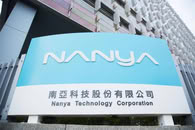
Sources: TrendForce, Nanya
Add your own comment

18 Comments on Nanya Announces $10.7B Investment in Fab5A, Aims for 10 nm-Class EUV DRAM

#1
sudothelinuxwizard
This may be a bit off-topic, but can you actually buy Nanya DDR5 anywhere? I was thinking since Nanya doesn't make HBM it ought to be at least a bit cheaper than market DDR5.
Posted on Reply
#2
TheLostSwede
News Editor
sudothelinuxwizardThis may be a bit off-topic, but can you actually buy Nanya DDR5 anywhere? I was thinking since Nanya doesn't make HBM it ought to be at least a bit cheaper than market DDR5.
It's used in a lot of embedded devices, not so much in DRAM modules, but Corsair use them in some of their cheaper product lines.
Posted on Reply
#3
jesdals
Well the more the less we get any way... sigh... Hope that Europe start produceing to so we get some change of getting memory to
Posted on Reply
#4
Athena
jesdalsWell the more the less we get any way... sigh... Hope that Europe start produceing to so we get some change of getting memory to
EU doesn't have any active memory fabs, unless they can bring up the ones that were shutdown in Dresden, and retool them, but, that will takes many years and billions of $
ASML does make the tools (EUV machines) to make DRAM though

The interesting thing about Nanya is, they are very cautious, and this investment shows that they think that there will be no bubble bursting for the foreseeable future, they basically don't have much to lose now since they have guaranteed buyers for what the new fabs can produce
Posted on Reply
#5
kondamin
AthenaEU doesn't have any active memory fabs, unless they can bring up the ones that were shutdown in Dresden, and retool them, but, that will takes many years and billions of $
ASML does make the tools (EUV machines) to make DRAM though

The interesting thing about Nanya is, they are very cautious, and this investment shows that they think that there will be no bubble bursting for the foreseeable future, they basically don't have much to lose now since they have guaranteed buyers for what the new fabs can produce
They would have to move to euv at some point and at the moment it’s easy for them to get credit for an investment like this.
Posted on Reply
#6
Wirko
Have there been any significant developments in DDR4 and LPDDR4 in the last five years since DDR5 came to the market? Given that it mostly goes into embedded stuff now, I'd expect some lower power variants on more modern nodes - that's something almost any newly designed product can benefit from.
Posted on Reply
#7
Verpal
I remember getting those Nanya DDR4 1600/1866 ram from ''the bin'', I don't even know where those come from since open market only have lowest 2133 at the time.
Anyway, those end up in trash DIY/store build for a while, I imagine these trash ram become valuable appreciating asset in current market.
Posted on Reply
#8
Let3r
Never heard of them until now. Can’t believe that they have casually been producing DDR5 for years. 😆
Posted on Reply
#9
Bwaze
Nanya Businesses, actually.

:p
Posted on Reply
#10
Prima.Vera
Is just me who never heard of this Narnya company??
Posted on Reply
#11
vigor
sudothelinuxwizardThis may be a bit off-topic, but can you actually buy Nanya DDR5 anywhere? I was thinking since Nanya doesn't make HBM it ought to be at least a bit cheaper than market DDR5.
Nanya business!
Posted on Reply
#12
Roph
Wow Nanya is an old name, to be honest I thought they'd died years and years ago
Posted on Reply
#13
olymind1
Prima.VeraIs just me who never heard of this Narnya company??
My DDR4 3200 cl16 memory has nanya chips, they're 8 years old and still working without a fault.
Posted on Reply
#14
Wirko
For those who care about the underdogs: Nanya's revenue in Q2 2026 was about 2.6 billion dollars. AMD only surpassed that number in Q3 2020 with 2.8 billion then-dollars.
Posted on Reply
#15
qlum
AthenaEU doesn't have any active memory fabs, unless they can bring up the ones that were shutdown in Dresden, and retool them, but, that will takes many years and billions of $
ASML does make the tools (EUV machines) to make DRAM though

The interesting thing about Nanya is, they are very cautious, and this investment shows that they think that there will be no bubble bursting for the foreseeable future, they basically don't have much to lose now since they have guaranteed buyers for what the new fabs can produce
The way the market is now, I am guessing they got orders lighned up and signed for even if it bursts long-term contracts will ensure they still get paid.
Could be a weird situation where there is a huge oversupply of memory, yet memory makers still have good financials on account of long-term contracts.
Posted on Reply
#16
DavidC1
qlumThe way the market is now, I am guessing they got orders lighned up and signed for even if it bursts long-term contracts will ensure they still get paid.
Could be a weird situation where there is a huge oversupply of memory, yet memory makers still have good financials on account of long-term contracts.
Contracts are broken all the time, and companies make mistakes projecting long term.

And many of these companies are basically betting that it will not crash as some(and increasingly) are expecting. Even though the economy and the foundations have been more shaky than it has ever been, and they are running a pseudo-ponzi scheme to prop themselves up.
Posted on Reply
#17
Wirko
DavidC1Contracts are broken all the time, and companies make mistakes projecting long term.

And many of these companies are basically betting that it will not crash as some(and increasingly) are expecting. Even though the economy and the foundations have been more shaky than it has ever been, and they are running a pseudo-ponzi scheme to prop themselves up.
Also contracts are not all the same, and don't necessarily set a fixed price and fixed quantities over their entire lifetime.
Posted on Reply
#18
qlum
DavidC1Contracts are broken all the time, and companies make mistakes projecting long term.

And many of these companies are basically betting that it will not crash as some(and increasingly) are expecting. Even though the economy and the foundations have been more shaky than it has ever been, and they are running a pseudo-ponzi scheme to prop themselves up.
Generally contracts are not outright broken, more either concept agreements that are never actually signed for, or paying yourself out of them. Or finding reasons to get yourself out of them. The way the market is now, memory makers can make sure they get their investments back regardless. Long-term profitability of the fabs is a different matter.

As long as the companies themselves don't go insolvant they are safe.
Posted on Reply
Add your own comment
Nov 12th, 2026 04:40 CST change timezone

New Forum Posts

Popular Reviews

TPU on YouTube

Controversial News Posts