Monday, September 7th 2026

CXMT Officially Starts Mass Production of LPDDR6 Memory

CXMT has achieved the remarkable feat of officially beginning high-volume manufacturing of LPDDR6 memory. This positions CXMT's LPDDR6 memory modules as some of the first in the industry, with South Korean memory makers on a similar timeline for volume production of this next-generation technology. Reportedly, Xiaomi is the first customer for CXMT's domestic LPDDR6 memory, set to feature in the upcoming Xiaomi 18 Fold smartphone. Since the Xiaomi 18 Fold is scheduled to launch in September, CXMT's LPDDR6 memory will need to be delivered before the end of the month, indicating that customer shipments are already underway. This news follows recent reports that CXMT is conducting risk production of LPDDR6, suggesting a very high yield in production.

CXMT's LPDDR6 memory will operate at speeds of up to 12.8 Gbps, with the base speed of LPDDR6 being 10.7 Gbps. LPDDR6 builds on where LPDDR5X left off, which could reach speeds of up to 10.7 Gbps when highly overclocked. However, the new standard aims for significantly higher speeds, with the first generation of LPDDR6 from CXMT's fabs reaching 12.8 Gbps. Additionally, CXMT is producing these chips with a 16 Gb capacity, equivalent to 2 GB, and the memory IC is housed in a package-on-package (POP) casing, featuring about 1,295 pins in a ball grid array.
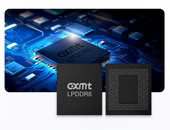
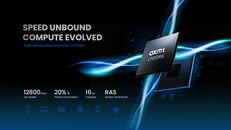
Update, 14:55 UTC, September 7th : CXMT's official website confirmed mass production, with Alibaba Cloud, ByteDance, Tencent, Lenovo, Transsion, Honor, Vivo, and Oppo as customers.

We also learned that SK hynix is close to mass production. The South Korean memory giant announced earlier that its LPDDR6 memory modules would feature a 16 Gb capacity on the sixth-generation 10 nm node, known as 1c, running at up to 14.4 Gbps. Although these SK hynix modules might operate faster, all these speeds fall within JEDEC's official specification for the LPDDR6 standard. We can expect even faster memory chips as technology and manufacturing capabilities continue to advance.
Source: Ice Universe
Add your own comment

22 Comments on CXMT Officially Starts Mass Production of LPDDR6 Memory

#1
Bigshrimp
We need them to produce more memory for the whole market. I wonder if they will be kept out of certain markets, but I am guessing so.
Posted on Reply
#2
kazuviking
IF they are willing to enter the consumer market and not only make memory for chinese AI datacenters.
Posted on Reply
#3
rusty caterpillar
kazuvikingIF they are willing to enter the consumer market and not only make memory for chinese AI datacenters.
They don't do HBM ATM, no tech and experience for that, so is consumer DDR and LPDDR mostly.
Posted on Reply
#4
Tsukiyomi91
I hope they can increase their market share with other smartphone brands and potentially portable PC "consoles".
Posted on Reply
#5
enb141
As far as I knew, DDR6 was supposed to be CAMM2?
Posted on Reply
#6
Athena
rusty caterpillarThey don't do HBM ATM, no tech and experience for that, so is consumer DDR and LPDDR mostly.
don't worry, going by their track record, they will steal the tech to do that as well...
Posted on Reply
#7
human_error
Good number of smartphone OEMs listed, which is good considering how short of supply some of them are in some markets.
Posted on Reply
#8
Onasi
enb141As far as I knew, DDR6 was supposed to be CAMM2?
LPDDR and DDR are different standards.
Posted on Reply
#10
enb141
OnasiLPDDR and DDR are different standards.
And CAMM is a third different standard.

So my point is that DDR6 was supposed to be CAMM2 only, or Am I wrong?
jdrchSmall reminder that CMXT is currently facing allegations it stole memory tech from Samsung.
Worst case scenario, they will be banned to US markets as Huawei.
Posted on Reply
#11
Onasi
enb141And CAMM is a third different standard.

So my point is that DDR6 was supposed to be CAMM2 only, or Am I wrong?
No, like… apples and oranges. CAMM2 is a form-factor for memory modules. It’s a replacement for DIMM and SO-DIMM. DDR6 and LPDDR6 are different memory types altogether. Fundamentally. You might notice this by the fact that LPDDR6 is (self-evidently) in production and devices are already out running it. DDR6 does not even have a finalized JEDEC spec.
Posted on Reply
#12
enb141
OnasiNo, like… apples and oranges. CAMM2 is a form-factor for memory modules. It’s a replacement for DIMM and SO-DIMM. DDR6 and LPDDR6 are different memory types altogether. Fundamentally. You might notice this by the fact that LPDDR6 is (self-evidently) in production and devices are already out running it. DDR6 does not even have a finalized JEDEC spec.
So is like DDR5, you don't need an special CPU for DDR5 or LPDDR5, so DDR6 when finalized, which is supposed to be CAMM2, will be something else, so in other words this DDR6 is some sort of beta.

By the way, CAMM (2) and LPCAMM (2), those will be more interesting.
Posted on Reply
#13
Onasi
@enb141
Brother, I am sorry, but, legitimately, what the fuck are you even talking about? Who brought up CPUs at all? Why are you insisting on mixing up memory module form-factors with memory types? They aren’t even applicable to most LPDDR use-cases, the vast majority of devices running it have it soldered to their main-board. How is CAMM relevant for Xiaomi who launched a smartphone with LPDDR6? No, LPDDR6 is not a beta for DDR6, what the fuck? Again - different memory types. Not like DDR5 and DDR6, no, more like how DDR and GDDR are different. Or do you think that GDDR6, which has been around for a while, is a “beta” for DDR6 too?

tl:dr - You are extremely confused.
Posted on Reply
#14
enb141
Onasi@enb141
Brother, I am sorry, but, legitimately, what the fuck are you even talking about? Who brought up CPUs at all? Why are you insisting on mixing up memory module form-factors with memory types? They aren’t even applicable to most LPDDR use-cases, the vast majority of devices running it have it soldered to their main-board. How is CAMM relevant for Xiaomi who launched a smartphone with LPDDR6? No, LPDDR6 is not a beta for DDR6, what the fuck? Again - different memory types. Not like DDR5 and DDR6, no, more like how DDR and GDDR are different. Or do you think that GDDR6, which has been around for a while, is a “beta” for DDR6 too?

tl:dr - You are extremely confused.
Ok, so that means DDR6 x86 CPUs supporting DDR6 will be available soon?

GDDR is different than DDR, that's a fact, the same for HBM.

So if DDR6 is ready to be produced, when x86 CPUs will start using it?
Posted on Reply
#15
810Cat
jdrchSmall reminder that CMXT is currently facing allegations it stole memory tech from Samsung.
Is that a bad thing? Its bringing memory into the market which means cheaper prices due to competition. Only has positives for us consumers i encourage them to steal from samsung.
Posted on Reply
#16
Onasi
enb141So if DDR6 is ready to be produced, when x86 CPUs will start using it?
What part of “the JEDEC spec isn’t even finalized yet” do you not understand?
Posted on Reply
#17
enb141
OnasiWhat part of “the JEDEC spec isn’t even finalized yet” do you not understand?
That's what I'm saying, if JEDEC spec is not finalized, then this DDR6 is some sort of "beta".
Posted on Reply
#18
LittleBro
Shame on US and Korean companies. Go go China, make the cartel bleed money they took from customers by overpricing shit.
Posted on Reply
#19
napata
LittleBroShame on US and Korean companies. Go go China, make the cartel bleed money they took from customers by overpricing shit.
Last I heard CXMT prices their memory higher than Samsung.
Posted on Reply
#20
Onasi
enb141That's what I'm saying, if JEDEC spec is not finalized, then this DDR6 is some sort of "beta".
Are you actually trolling at this point or have issues with reading comprehension? No, LPDDR is a separate standard all together, it’s a different development branch of DRAM, the version number does not indicate any ties to what regular DDR standard is like or will be like. It’s not a beta. It’s not a “this DDR”. It is LPDDR6. A fully different memory type. Again, you need to understand - LPDDR IS NOT DDR. I know this might SOUND confusing, but this is just how it is. Just like GDDR is NOT DDR. You. Are. Wrong. In. Your. Assumption.
Posted on Reply
#21
LittleBro
napataLast I heard CXMT prices their memory higher than Samsung.
CXMT is in a position that they can ask whatever price they want, since the trio cartel can't satisfy the market demand.
Once the CXMT becomes dominant supplier, they can crush the trio cartel with prices.
OnasiAre you actually trolling at this point or have issues with reading comprehension? No, LPDDR is a separate standard all together, it’s a different development branch of DRAM, the version number does not indicate any ties to what regular DDR standard is like or will be like. It’s not a beta. It’s not a “this DDR”. It is LPDDR6. A fully different memory type. Again, you need to understand - LPDDR IS NOT DDR. I know this might SOUND confusing, but this is just how it is. Just like GDDR is NOT DDR. You. Are. Wrong. In. Your. Assumption.
Historically, DDR and LPDDR were the same architecture until LPDDR4 came out. But since then, it's as you wrote, completely different approach to bus, dies and so on.
Posted on Reply
#22
enb141
OnasiAre you actually trolling at this point or have issues with reading comprehension? No, LPDDR is a separate standard all together, it’s a different development branch of DRAM, the version number does not indicate any ties to what regular DDR standard is like or will be like. It’s not a beta. It’s not a “this DDR”. It is LPDDR6. A fully different memory type. Again, you need to understand - LPDDR IS NOT DDR. I know this might SOUND confusing, but this is just how it is. Just like GDDR is NOT DDR. You. Are. Wrong. In. Your. Assumption.
Ok, understood. This time LPDDR6 had a JEDEC before DDR6.
Posted on Reply
Add your own comment
Nov 12th, 2026 04:39 CST change timezone

New Forum Posts

Popular Reviews

TPU on YouTube

Controversial News Posts