Wednesday, October 28th 2026

CXMT to Start HBM3E Mass Production by the End of 2026
CXMT is expected to start mass production of its first-ever HBM memory in the HBM3E form factor. According to an exclusive report from Reuters, this mass production is anticipated to begin within the next two months, meaning CXMT will officially start by the end of the year. Back in August, CXMT began risk production of HBM3E memory. However, the company has struggled with the yield of HBM3E memory modules, and this situation remains similar today, according to the latest report. While we don't have specific performance details, JEDEC's official data for HBM3E indicates a 1,024-bit width and speeds ranging from 9.2 Gbps per pin to 12.4 Gbps, with most standard configurations targeting 9.6 Gbps per pin. The total bandwidth is around 1.2 TB/s, and capacities range from 24 GB using 8-high stacks to 36 GB using 12-high stacks of 24 Gb layers.
CXMT's main challenge lies in the immaturity of the through-silicon via (TSV) technology it employs. In front-end manufacturing, CXMT achieves around 30% yields, while back-end processing adds about 70% on top of the original 30%. For example, Samsung uses about 5,000 TSVs per layer on HBM2, and SK hynix uses more than 8,000 TSVs per layer on its HBM3. However, data suggests that CXMT is attempting to achieve HBM3E with only 3,000 TSVs per layer and is trying to pack 8 layers into the regular 8-high HBM3E configuration. Given these challenges, the company is unlikely to transition to a higher-capacity 12-high HBM in the near term as it addresses engineering issues.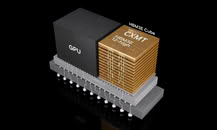 Sources close to Reuters claim that the performance of CXMT's HBM3E is closer to SK hynix's previous-generation HBM3 rather than the company's HBM3E. CXMT has started sending its customers two versions of HBM3E: one being a standard design and the other an updated version with changes intended to improve yields, which reportedly are only at 20%. However, poor yields are acceptable for now as the company continues to improve its production lines and refine manufacturing, while domestic chipmakers are in dire need of HBM.
Source:
Reuters
CXMT's main challenge lies in the immaturity of the through-silicon via (TSV) technology it employs. In front-end manufacturing, CXMT achieves around 30% yields, while back-end processing adds about 70% on top of the original 30%. For example, Samsung uses about 5,000 TSVs per layer on HBM2, and SK hynix uses more than 8,000 TSVs per layer on its HBM3. However, data suggests that CXMT is attempting to achieve HBM3E with only 3,000 TSVs per layer and is trying to pack 8 layers into the regular 8-high HBM3E configuration. Given these challenges, the company is unlikely to transition to a higher-capacity 12-high HBM in the near term as it addresses engineering issues.

5 Comments on CXMT to Start HBM3E Mass Production by the End of 2026
This is clearly just PR, so that the local players can have access to some kind of HBM3, and with the terrible yield rates, they lose what, 3/4ths of the chips they make... ouch!
People have to stop dismissing China's efforts. In less then a year they control nearly a quarter of the DRAM markets shipments. Them developing HBM should be a major wake up call to the big 3.
If it weren't for this crisis driving prices through the roof, no one would buy DRAM from them, unless forced to by a higher power. Unfortunately, they're lower-quality and more expensive chips.
It's true, however, that people underestimate the complexity of scaling up mass production of any type of chip; even with those terrible yields and misappropriated IP, it's impressive that they manage to produce them at all..