Saturday, August 29th 2026

Intel Confirms LGA1954 as the Socket for "Nova Lake-S" Processors Through Internal Tools
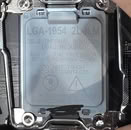
The upcoming Nova Lake-S lineup of Intel desktop CPUs has been the subject of strong rumors for a while, and one of them concerned the socket itself. Intel is moving away from LGA1851 and will have a brand-new socket for its upcoming Core Ultra 400 series processors, namely LGA1954. We already know about LGA1954 as its records appeared in shipping manifests months ago, and we even know what the socket looks like. Nova Lake-S will debut on this new socket, and Intel has now officially confirmed this, though not in the usual way.
Intel has just published an internal test tool on its website that connects the LGA1954 socket to Nova Lake-S processors. This listing is for validation hardware and provides some engineering and technical enablement equipment. Nevertheless, the important part is that this is the first time Intel itself has mentioned Nova Lake-S alongside LGA1954 in any sort of official capacity. This is confirmation that Nova Lake-S will indeed launch alongside the LGA1954 socket and Intel 900-series motherboards. Nova Lake is currently expected to launch in Q1 2027.
Source:
Harukaze5719 on X
Intel has just published an internal test tool on its website that connects the LGA1954 socket to Nova Lake-S processors. This listing is for validation hardware and provides some engineering and technical enablement equipment. Nevertheless, the important part is that this is the first time Intel itself has mentioned Nova Lake-S alongside LGA1954 in any sort of official capacity. This is confirmation that Nova Lake-S will indeed launch alongside the LGA1954 socket and Intel 900-series motherboards. Nova Lake is currently expected to launch in Q1 2027.


87 Comments on Intel Confirms LGA1954 as the Socket for "Nova Lake-S" Processors Through Internal Tools
This was the biggest pain in the ass when I used to use Intel. Want a new CPU with a tiny performance jump? That’ll be a new board for a few hundred to go along with it. What a bloody waste of money that was. Just look at AM4, I could have gone from an 1800X to a 5800X3D for an insane performance jump all on the same board. Intel can’t come close to that value.
What will be news is if Intel comes out and say "I will support this socket with new models and architectures for the next 5 years". And this could be easy a period like this, with excess CPU power and a RAMpocalypse that pushes people to remain on their platform for more time.Do you think someone who bought a motherboard with, say, the b650E chipset will be FORCED to change their motherboard just to move to an X870, for example? People keep their motherboards; they do not change them for no reason. Few people feel like changing motherboards all the time, facing the possibility of needing to reinstall drivers or the operating system itself, dealing with the slight chance that their new motherboard might be defective, or having to change their hardware because the new motherboard might feature a different set of ports and connections or have compatibility issues with the hardware they are using. And it's not always an upgrade. For example, on the AM4 platform, I never upgraded from X470 to X570 because I wanted the two PCIe x16 slots connected to the CPU running at 8x / 8x, rather than getting an X570 with only one PCIe x16 slot connected to the CPU. Changing a motherboard is not always desirable, and when it becomes mandatory in the case of the Intel platform, this cannot be considered a positive thing for the consumer or something to be mocked.
Even latter AM3+ boards had NVMe support. Even latter AM3+ boards had at least 4 USB 3.0 ports, except probably for really cheap microATX boards targeting office PCs that will be offering two.
Is there a board that offers only one? In any platform.
RAM works just fine most of the time, worst case scenario, running the RAM at a lower speed. No big deal really. Except for benchmarks. And guess what. Where the RAM sits now, changing boards isn't the safest bet.800 euros? Boards with that chipset cost less that 300. Newer X870E boards start at 200 euro here, probably lower in other countries. I payed for my X670E 240 euros. The two X470 boards I own had a price of lower than 100 euros. From 2019 to 2030, probably even more because of RAM, I would spend less than 500 euros for three boards that are in use today, covering a period for over 10 years. 800 euros?Isn't that 800 euros example a "2-5% of users"?AM5 was released in 2022. That's a minimum guaranteed period of 5 years support. When was the last time Intel announced 5 years of support and new products, for a platform?
Because of RAM prices not just AMD, but even Intel will have to support it's boards for longer, meaning people with AM5 boards can stick with their platform for at least 2030.
But I seriously doubt Intel would go to the trouble of changing the LGA1851 socket for a bigger one (which also comes with a new two-lever ILM) only to ditch it after Nova Lake.
I could see Intel pulling that crap after a Sandy Bridge but not after Arrow Lake.You can use the kit @kazuviking mentioned, but what NL chip are you planning to cool with that air cooler?
LGA 1954 is rumored to support 3 or more generations of CPUs. That means if you build it at launch, in 5 years there will be a new, significantly faster CPU you can drop in. Definitively ending the longevity debate, as both vendors will offer it. Intel can do data analytics just fine. They know it is a must have checkbox in retail now.Indeed. Could not agree more on this point.