Saturday, August 29th 2026

Intel Confirms LGA1954 as the Socket for "Nova Lake-S" Processors Through Internal Tools
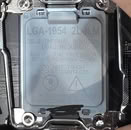
The upcoming Nova Lake-S lineup of Intel desktop CPUs has been the subject of strong rumors for a while, and one of them concerned the socket itself. Intel is moving away from LGA1851 and will have a brand-new socket for its upcoming Core Ultra 400 series processors, namely LGA1954. We already know about LGA1954 as its records appeared in shipping manifests months ago, and we even know what the socket looks like. Nova Lake-S will debut on this new socket, and Intel has now officially confirmed this, though not in the usual way.
Intel has just published an internal test tool on its website that connects the LGA1954 socket to Nova Lake-S processors. This listing is for validation hardware and provides some engineering and technical enablement equipment. Nevertheless, the important part is that this is the first time Intel itself has mentioned Nova Lake-S alongside LGA1954 in any sort of official capacity. This is confirmation that Nova Lake-S will indeed launch alongside the LGA1954 socket and Intel 900-series motherboards. Nova Lake is currently expected to launch in Q1 2027.
Source:
Harukaze5719 on X
Intel has just published an internal test tool on its website that connects the LGA1954 socket to Nova Lake-S processors. This listing is for validation hardware and provides some engineering and technical enablement equipment. Nevertheless, the important part is that this is the first time Intel itself has mentioned Nova Lake-S alongside LGA1954 in any sort of official capacity. This is confirmation that Nova Lake-S will indeed launch alongside the LGA1954 socket and Intel 900-series motherboards. Nova Lake is currently expected to launch in Q1 2027.


87 Comments on Intel Confirms LGA1954 as the Socket for "Nova Lake-S" Processors Through Internal Tools
Ever heard of ESG or programmed obsolescence? With ever increasing prices of literally every tech product, not having to throw your MB in the dumpster and buy a new one every time you want to upgrade is obviously the way to go. Intel itself has realized that. No wonder it sells Arrow Lake/Plus cpus at a loss, to make up for platform cost, to even be considered for a new build.
Now imagine being an early investor in LGA-1851, getting less gaming performance than the predecessor, and being left out of the Binary Optimization Tool released alongside the refreshed cpus.
Nova Lake has to be competitive, or Intel will keep losing market share on all fronts.
time for the classic stupid question:
is changing both the socket and chipset actually a critical move this time around?
Especially now that they're trying to win back the market after losing so much ground to AMD?
The important thing should be if this time they say: we are gonna to support this socket for 5 years.
Correct ?
On any platform - what would a new chipset offer that the old one did not? The only meaningful thing that could be upgraded would be the the number of lanes it offers with the latest PCIe standard. But how many people are actually starved for lanes on a mainstream board?
In order to be lane starved you'd have to run at least one x16 GPU, 3x NVMe and populate every USB port.
PCIe 5.0 is even less necessary as the impact on GPU's is within margin of error compared to 4.0 and for SSD's it matters only you're doing daily sequential transfers between two 5.0 drives in your system.Where was it written, that AM5 would be "only" supported until 2027?
AMD never committed to a firm end date when AM5 was announced.
There was no community outcry about AM5's support because there was and is no need.Can we please drop this nonsense?
Zen 2 doubled the number of cores with the same boards and memory. Were those extra cores starved? No they weren't.
Zen 6 doubling cores will also not require more channels.
Besides the officially supported memory speeds will be in the 7000-8000 range so bandwidth will increase anyway.So over 37'000 votes is just a statistical error?
Then maybe you'd like to share equal or greater number poll where more than 50% of people answered that platform longevity is not important at all?
This is especially ironic after AM4's success. AM5 is well on it's way to repeat this success and yet people like you are arguing that it's irrelevant 10 years after AM4's success.
56 cores is threadripper territory which comes with 4 channels
No the 56 cores wont be starved with two memory channels. I very much doubt most consumer mainstream programs even scale beyond ~20 cores.
Threadripper is a different beast. Four channels there exist for different reasons and 56 NVL-S cores are not directly comparable to 56 TR cores.
16P + 32E + 4LPE
I'm fine giving you that for most users 3 channels will be over kill, for a lot of users, the top end SKU will most certainly benefit from more memory bandwidth
Hardware Unboxed are clearly AMD shills and this is obviously not a case of tunnel vision?
JMO of course
You could have kept going, they have had AMD on blast for quite a while. But I think your point is crystal clear. I don't usually debate the shoot the messenger fallacy. It is a weak argument device. One need look no further than their comments section under the videos, to observe they get plenty of engagement from supporters of teams green and blue.
37K votes is many times what is necessary to get accurate results. The question was posed as to how many DIYers would, or want to, upgrade the CPU only. I provided data that the vast majority consider it of either some importance, or great importance, to their purchasing decision. Users that care about multi threaded performance, PCIe lanes, and memory channels, are a tiny sliver of that tiny slice. Gaming drives retail sales. One look there tells the same story of the importance of longevity.
Info we have suggests 1954 addresses both of team blue's biggest issues in retail/DIY. Platfrom longevity and gaming performance.If it is due to DRAM pricing, why is 1700, having DDR4 support, not benefiting the same way, in any of the western markets I noted? Yesterday there was not a single Intel CPU in the top 10 on Amazon in any of those countries. Only 1 today, on one country's rankings, and one on Newegg U.S. and that one is arrow lake; DDR5 only. When they do crack the top 10 Tom's considers it newsworthy www.tomshardware.com/pc-components/cpus/two-intel-chips-break-amazons-top-10-cpus-for-the-first-time-in-months-core-ultra-7-270k-and-core-i7-14700k-finally-challenge-amd-desktop-dominance
BTW, 4 of the top 5 selling boards on Amazon here, are B550, a cut down chipset from the last decade. The answer to the question I posed is platform longevity. It plays the long game. Even after the socket is technically long dead, you can sell CPUs to the owners. AMD said their adrenalin software telemetry showed a significant percentage of AM4 owners using older zen CPUs. Hence they were trying to fire up production of some SKUs. Here we are, with a decade old socket outselling everything Intel and most of AM5. Here's how long the game is; The lowly Ryzen 5500 has been a top seller the last year. The 5800X3D is going to look mighty tempting in a couple years, after price drops. DRAM and NAND are expected to still be high demand, so AMD will get them for yet another CPU sale.
AM5 will most likely enjoy the same prolonged sales success. 1954 hopping on the bandwagon would ensure its future success too. I'd like to see the top 10 an even split, with the top spot being back and forth. That's our best chance at a price war developing. Instead of 1 charging a premium and the other competing on bang for buck. Though my gut says both overcharge us as retail is almost inconsequential now.Why did they have so little stock on hand? It never cracked the top spots i.e. not enough units sold. Answer that and you will get to the root of Intel's retail woes.It can't get much worse in retail. They have to fire sale and or bundle games, to move units. They would rather sell those wafers to enterprise for much more money anyway. It's why retail 1700 prices went up, Intel 7 is in high demand in more profitable segments.
To conclude my thoughts and musings: Excited more for Nova's launch than any CPU since OG Zen.
Meet Golemit, the Carrizo+ X370 reference platform from 2016 prior to Zen's launch featuring NVMe Gen3x4, 4x USB 3.0, 2x USB 3.1 Gen1/2, and 1x USB 3.1 Type-C Gen1/2. DRAM support is down to the mix of IMC and AGESA updates and was a solved issue early on in AM4's life cycle.
There is a much better chance you will be able to sell the parts for a higher price if the pool of compatibility is several times larger. And if not sell it for the money, you at least will keep the resource waste / pollution down and provide a viable alternative to others in case a new RAMpocalypse type event comes along.
2nd point, because as of 2 days ago they were out of stock on Amazon seller specifically and once that went away the 3rd parties put the chip back over 300. Top 10 is updated hourly, they were gone as of yesterday and on the 28th when I looked for myself.
On the 24th the 270k Plus on sale hit #6 based on their velocity algo which is also demonstrated on the very link you shared. More than likely by people like me smart enough to grab DDR5 in 2025 and need something for more than just gaming. I'd be willing to bet not even necessary purchases, just a good deal. I was going to get one for the sake of it being $255, I don't need it at all.The above point and market logistics. Why produce lots of a chip that won't sell because the tourists want AMD regardless of any other metric? Their new chips are coming, RL is covering the DDR4 end, get rid of excess stock while you can. Plus, it did. You even linked it like I said before. Many outlets reported on it. Intel Gamer Days is going until September 13th, I'd be willing to bet if Amazon itself does get more broad stock it'll hit top 10 again.
If you bought into AM4 early with 16GB of RAM, you could keep your motherboard and upgrade your CPU to a 5000 series and 32GB of faster RAM later on on. Remember, the memory controller has been on the CPU forever. Sounds like a pretty awesome deal deal to me. And way less hassle.
Intel did it in the past so they could keep their older fabs busy making chipsets you would be forced to buy. Worked great for them. Those days are over and even Intel is caving with LGA 1954, why do you think that is? ARL-R is selling at fire sale prices and still gets beat by AMD, why is that?
Having a long lasting socket provides a great aftermarket of motherboards/CPU's later on in the secondhand market as well. Sounds very consumer friendly. It is also less e-waste. Seriously, what is not to like? Having options is a good thing. If there was some new chipset or feature that you just had to have, get a new board when you upgrade. If not, keep what you have. In what world is that bad?