Wednesday, September 23rd 2026

Taped Out Xbox Helix Chip Reportedly Reaches 56 TFLOPS, Surpassing PS6
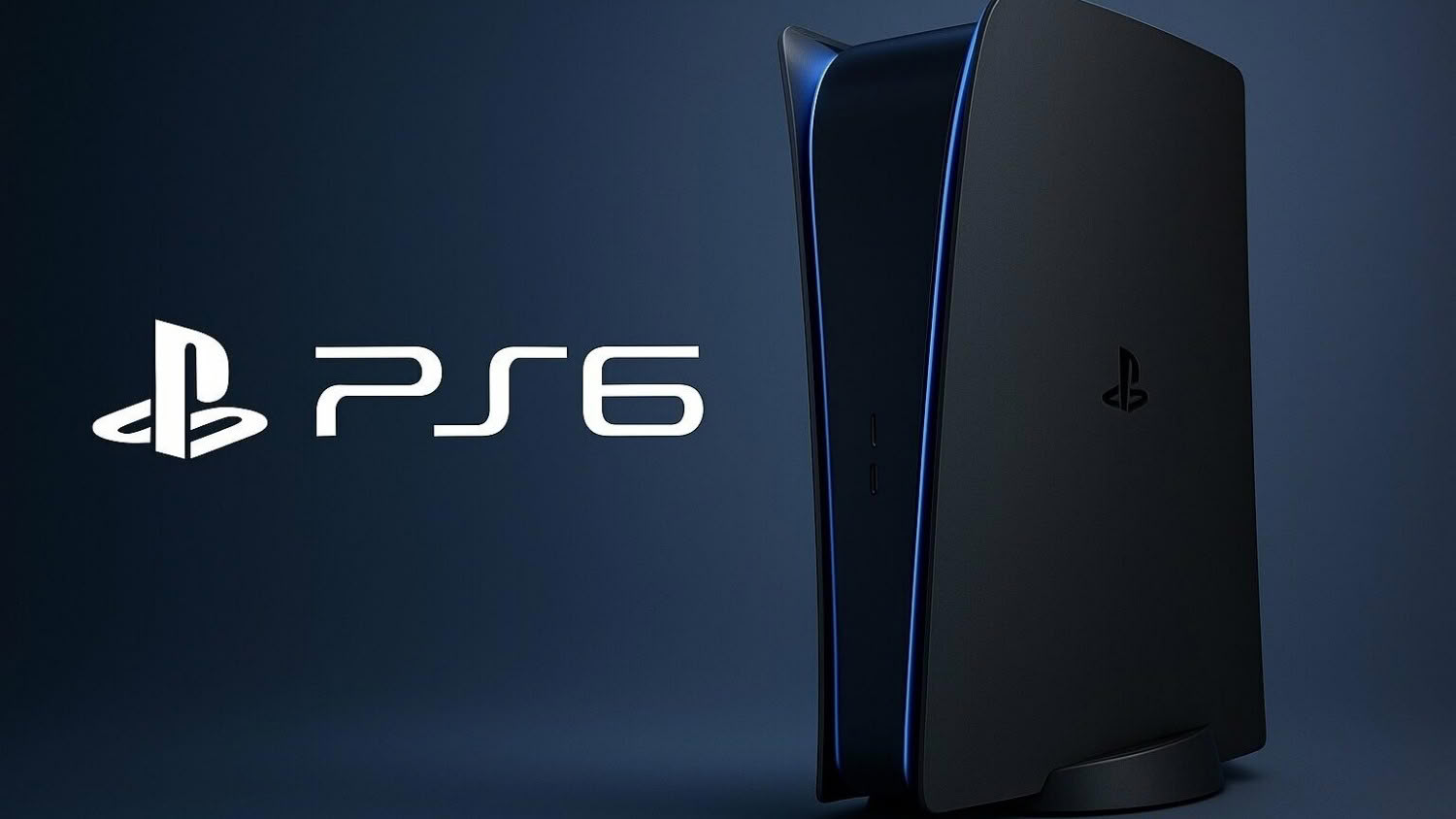
Prominent AMD leaker Kepler_L2 says the chips for both the PlayStation 6 and Microsoft's Xbox Project Helix have taped out. Posting on the NeoGAF forums, he also put the PS6 at 40 TFLOPS and the Xbox Helix at 56 TFLOPS, which works out to roughly 40% more for Microsoft's machine on paper. Kepler was replying to a thread claiming the PS6 would hit 80 TFLOPS, which he dismissed before giving the new figures. Earlier estimates had put the PS6 at 34 to 40 TFLOPS, so 40 sits at the top of that range.
TFLOPS is only peak throughput, though. Kepler himself argued in the thread that TFLOPS is just a measure of FMA throughput and shouldn't be "normalized" across architectures, so these numbers probably can't be compared directly to PS5 or Xbox Series X ratings. Memory bandwidth, ray tracing hardware, and clocks all matter too, so 40% more TFLOPS likely won't translate into 40% more frames. Of course, this is just a leak, and Sony, Microsoft, and AMD have not confirmed any of this.
 The pricing still remains an unanswered question. Kepler's PS6 bill of materials estimate jumped from about $760 to $960 in a few months, and we have no such number for Helix. However, most previous reports point to Xbox Project Helix being a more expensive console than the PS6. Given the current market situation, a significant launch price increase over current-gen consoles seems almost certain. As for the launch timing, a successful tape-out may suggest a late 2027 launch, but the market is just too unpredictable for anyone to make that assumption before Sony and Xbox officially confirm it.
Sources:
Kepler_L2 on NeoGAF Forums, Kepler_L2 on NeoGAF Forums
TFLOPS is only peak throughput, though. Kepler himself argued in the thread that TFLOPS is just a measure of FMA throughput and shouldn't be "normalized" across architectures, so these numbers probably can't be compared directly to PS5 or Xbox Series X ratings. Memory bandwidth, ray tracing hardware, and clocks all matter too, so 40% more TFLOPS likely won't translate into 40% more frames. Of course, this is just a leak, and Sony, Microsoft, and AMD have not confirmed any of this.

16 Comments on Taped Out Xbox Helix Chip Reportedly Reaches 56 TFLOPS, Surpassing PS6
If ps5 is closer to a 6700 (but rdna 1,5) and ps5 pro closer to a 6800 (but rdna 2+ rdna 3 int8 cores+rdna 4 rt cores) then this is going to be around 9070 xt performance (but with rdna 5 features)
The huge tflop increase comes from the dual issue cores.
If those consoles have 30 (ps6) and 32gb (xbox) unified ram, then the 10th gen games will run on 16gb vram cards like 9th gen games on 8gb vram cards. Well slightly better since the ps6 has 30, not 32.
It's going to be hilarious to witness if this is the case.
Cost is the other big factor, especially for consoles.TDP for the whole system will likely be less than this card. Keep in mind also the Base consoles suck at RT and have no good option for upscaling, also going from nerfed Zen2 cores to nerfed Zen6 cores should be a big upgrade.
Post-Release Reality Check: "Its 4k native and really pretty at 30fps or its scaled-up 4k in "pretty enough for you, console slob" 60fps mode, with an optional unlocked/VRR mode that will hit up to 120hz but more than likely that's gonna be closer to 70fps".
Or its actually going to be a real hammer of a machine, and it's going to cost $2000.
I mean call me a doubter but.........we've got the history on our side here......sadly.....
Once again it's not about how many polygons you can paint on the screen. Content is king.
As the consoles have a fixed set of hardware, it will be interesting to see if games can be coded to use them
First of all, Nintendo has shipped a few first-party exclusives for Switch 2 including Donkey Kong Bananza and Mario Kart World that run well.
Nintendo cannot fix all the problems their third-party developer partners inflict on themselves. If someone doesn't know how to engineer games for the Switch, that's their fault. Look at The Legend of Zelda: Tears of the Kingdom. Nintendo pushed the original Switch platform to its fullest capabilities with that swansong title. There were other developers who muttered "This can't be possible..."
And how to do you get a "much stronger devkit" [sic]? And even if some dev fairy handed you some overclocked unicorn devkit chungus, it's not like you wouldn't test the final code on a production Switch, Switch Lite, or Switch 2. That's asinine.
It actually would make more sense for Nintendo to configure the devkit with a 5% underclock compared to the production hardware. That would guarantee that anyone unlucky enough to have a unit with a mediocre SoC sample would still get decent performance. However my guess is that Nintendo's Switch 2 devkit has the identical specs as the production units. Nintendo is very Japanese and very precision oriented.
Soon we will have the Ocarina of Time remake and I bet it will run pretty well. I've never played the Pokémon Scarlet and Violet game but I have other titles for Switch OG and Switch 2 and most of those run pretty well.
And my guess is that Duskbloods will also run pretty well on Switch 2 because FromSoftware will actually run it on production Switch 2 units before they press the "release" button. They should know what the most graphically demanding sections of the title are.
Remember that Nintendo consoles have a different sales curve than most other gaming hardware. Same goes for their software titles. Over time as both Nintendo developers and third-party partners develop familiarity with the new system's capabilities and quirks, the better teams will learn how to properly harness the hardware's potential.
Nintendo still has a large community of original Switch owners, not everyone bought the Switch 2 on day one, month one, year one. They still want to encourage use of the older console generation while interest in the Switch 2 develops.
It's not a sprint, it's a marathon for Nintendo. If you don't understand that, you don't understand Nintendo (or the Japanese in general).
That said, it doesn't help that Xbox dev support was by many accounts absolutely awful for the XSX/XSS generation. At one point, indie devs couldn't publish to the store because apparently no one at Microsoft knew how to do it (sounded like they laid off the 1 person who understood the system).Game dev is an oxymoron. Most games never get any meaningful optimizations unless console makers, CPU makers, or GPU makers intervene either by pushing fixes or working directly with the devs.