Wednesday, October 28th 2026

Intel's Lip-Bu Tan Discusses Possible AMD Cooperation, Lays Out CPU and Foundry Plans
Intel CEO Lip-Bu Tan has spoken with AMD CEO Lisa Su about exploring potential areas of cooperation. Tan brought it up during an October 24 fireside chat with Jimmy Cheng, president of the Chinese American Semiconductor Professional Association (CASPA), though he didn't say what those areas are, and neither company has announced anything. AMD was earlier reported to be evaluating Intel's 14A node, so foundry work seems like an obvious guess. However, it could just as well be packaging, software, or something else entirely.
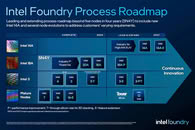
Most of the chat was about Intel's own turnaround. Tan reportedly said Intel has to "reclaim the leadership in CPU" and that it will now tailor chips like Xeon to customer needs, something he admitted the company was too proud to do before. He named ASICs, co-packaged optics, physical AI and advanced packaging as possible growth areas, and wants two or three of them to eventually bring in around 10% of Intel's revenue each. On the foundry side, 18A is in volume production, while 14A has its 0.5 PDK out, with 0.9 next and 1.0 for volume production early next year. Intel had targeted October for handing the 0.9 PDK to outside customers, and Tan's "stay tuned" suggests it hasn't happened just yet.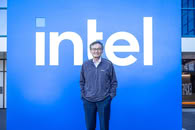

 The two x86 rivals already cooperate in several areas. Last week, AMD agreed to fold its ZenDNN optimizations into Intel's oneDNN library for PyTorch, and AMD has also been named among companies reportedly weighing Intel Foundry deals. Intel reports Q3 2026 results on October 29, and Tan may well be asked about AMD on the earnings call that follows.
Sources:
Chat with Jimmy Cheng, via Tom's Hardware
Most of the chat was about Intel's own turnaround. Tan reportedly said Intel has to "reclaim the leadership in CPU" and that it will now tailor chips like Xeon to customer needs, something he admitted the company was too proud to do before. He named ASICs, co-packaged optics, physical AI and advanced packaging as possible growth areas, and wants two or three of them to eventually bring in around 10% of Intel's revenue each. On the foundry side, 18A is in volume production, while 14A has its 0.5 PDK out, with 0.9 next and 1.0 for volume production early next year. Intel had targeted October for handing the 0.9 PDK to outside customers, and Tan's "stay tuned" suggests it hasn't happened just yet.


19 Comments on Intel's Lip-Bu Tan Discusses Possible AMD Cooperation, Lays Out CPU and Foundry Plans
It's not like Intel could just copy AMD's tech, sure, the foundry would have access (if AMD went with Intel), but the CPU group wouldn't be able to see anything at all
and mask can mean anything how they look like
Intel on the other hand I could understand why they'd want to know how AMD uses SMT, or stacked 3D cache.Intel is the only company that holds a majority of patents for X86. The foundry group may have no use for AMD's tech, but they're technically still Intel, with no doubt those secrets could get passed around.
If you want to know everything about a CPU for a company like Intel it's just like a car engine. Buy one and tear it down.
Modern CPU design is well understood and the designs are mostly the result of a set of requirements that prioritize one thing over another. The thing that hurt Intel in the past is that it didn't have TSMCs fabs, so even if it designed a better CPU it couldn't build it.
"“So, computer design is almost all engineering, and reduction of practice of known methods.”"
-Jim Keller
Plus AMD and Intel are leveraging the same designs with tradeoffs in pipeline performance and clock speed. The biggest driver now is prefetch and prediction modeling, cache size and latency.
Tiles for example are not part of the architecture of the Zen core.
i.e. Zen 3 cores exist as both 'chiplet' designs on desktop and servers, and 'monolithic' ones in laptops (Cezanne). The existence of the tile or the packaging doesn't really change the CPUs core architecture. i.e. Cezanne is still Zen 3
That said the packaging and the node is what is giving us faster CPUs. More density, greater power efficiency, faster transistor switching, layered designs = more options for the core design. This is all determined by advancements in TSMCs Fabs or Intel's Fabs, not by AMD (or Intel's CPU design team).
It's actually a very tricky business they are in, trying to predict the future.
Also I wonder if intel could reverse engineer AMD's designs and implement their strengths into their own products.
They might offer them to produce lower tier chips, ASICs, IO chilpet or similar.