Sunday, November 15th 2026
Samsung, SK hynix, and Micron Fail to Get DRAM Antitrust Suit Dismissed
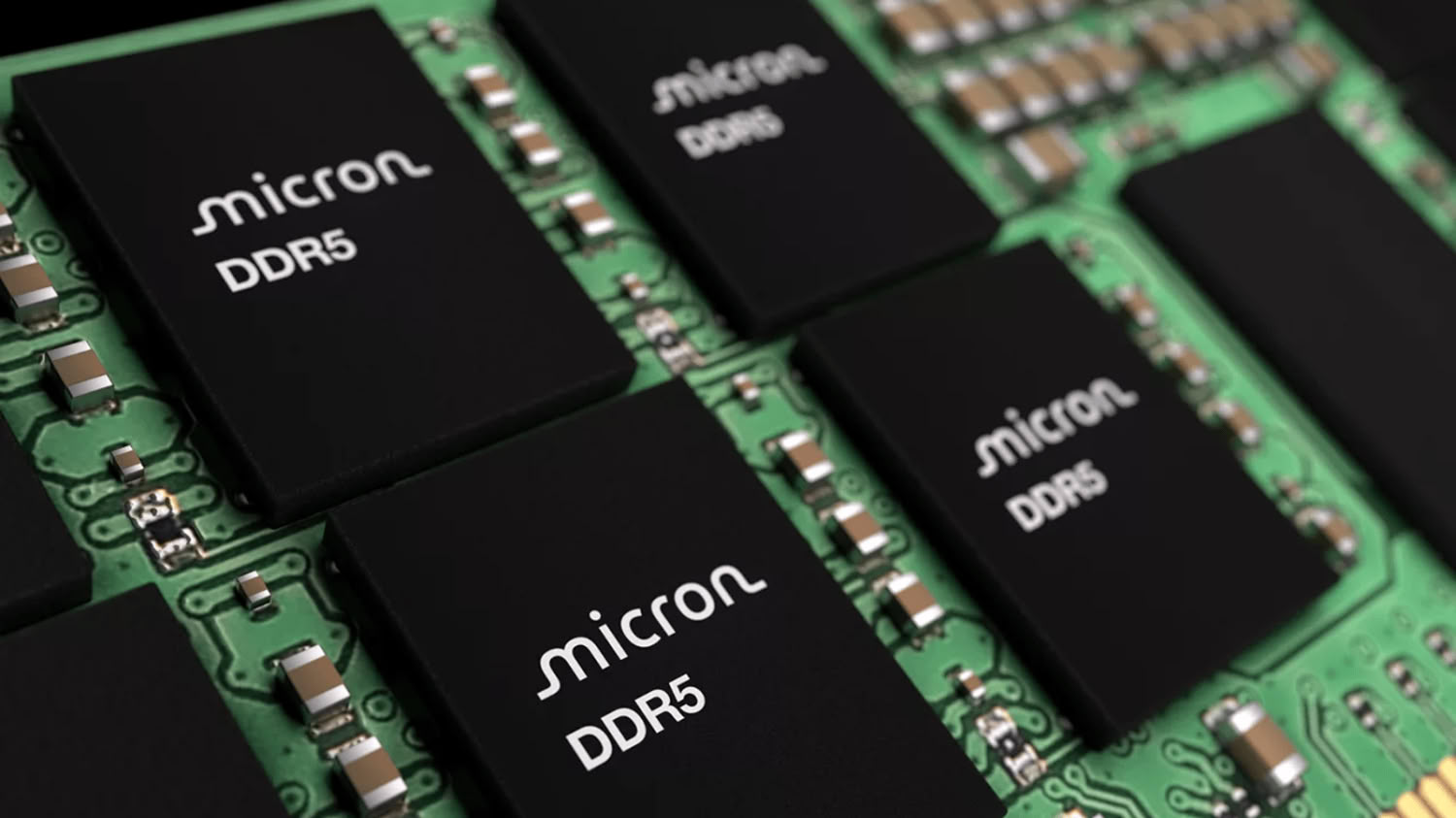
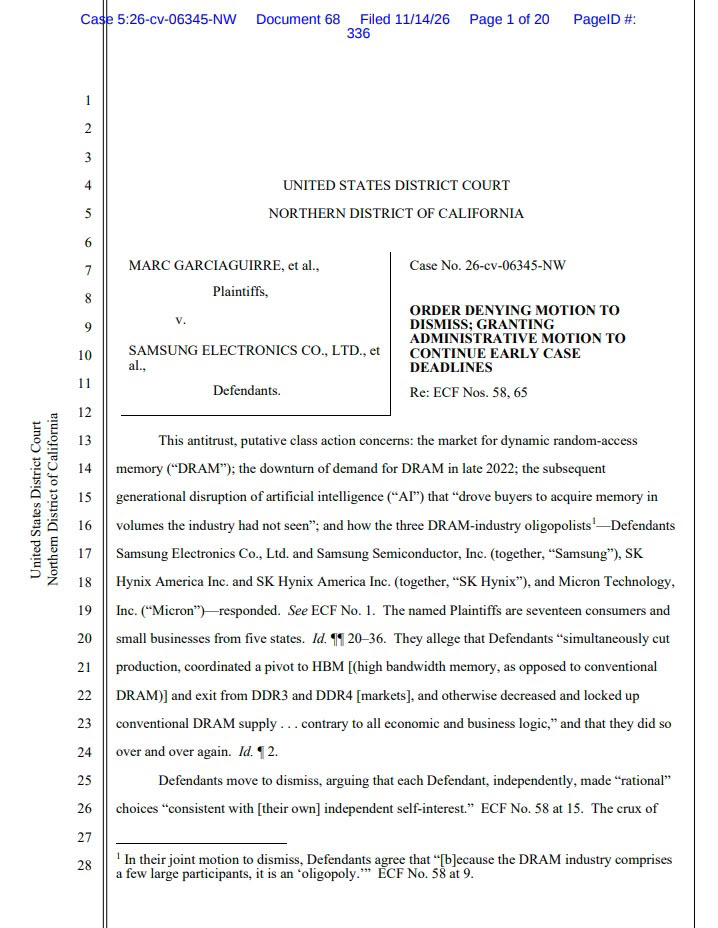
The class-action lawsuit accusing Samsung, SK hynix, and Micron of restricting DRAM supply is moving forward. On November 14, U.S. District Judge Noël Wise of the Northern District of California denied the three companies' joint motion to dismiss, finding the complaint plausibly alleges an agreement in violation of Section 1 of the Sherman Act. The suit, filed in June by 17 consumers and small businesses, claims the trio, which held over 91% of global DRAM revenue as of Q3 2025, coordinated production cuts starting in late 2022 and shifted capacity toward HBM while conventional DRAM prices rose 697% over 18 months. Of course, it's a pleading-stage ruling, and nothing has been proven yet.
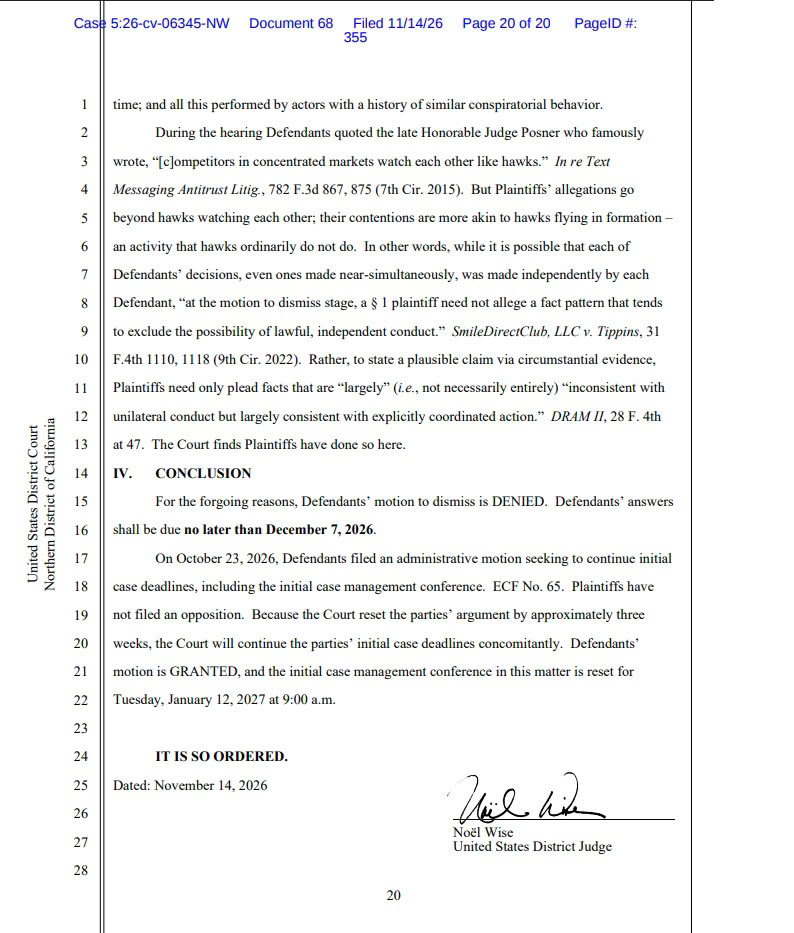
The companies argued the case was a rerun of an earlier suit over 2016 to 2018 supply cuts, which the Ninth Circuit threw out in 2022. Judge Wise disagreed, pointing to newer alleged conduct like long-term HBM contracts, Samsung and SK hynix allegedly refusing long-term deals with conventional DRAM buyers, Micron shutting down Crucial, and near-identical customer vetting questions all three adopted in January 2026. She also turned the companies' own hawk comparison around, writing that the alleged conduct is more like "hawks flying in formation."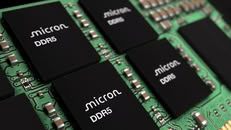
 The three now have until December 7 to answer the complaint, with an initial case management conference set for January 12, 2027. The judge also refused to ignore the 1998 to 2002 DRAM cartel, where Samsung and Hynix paid fines, and Micron got immunity. Despite all this, a lawsuit won't add any wafers, and with SK hynix's CEO expecting the shortage to last through 2030, readers shouldn't count on cheaper memory anytime soon. Still, this one will be interesting to keep an eye on.
Source:
LitNews
The companies argued the case was a rerun of an earlier suit over 2016 to 2018 supply cuts, which the Ninth Circuit threw out in 2022. Judge Wise disagreed, pointing to newer alleged conduct like long-term HBM contracts, Samsung and SK hynix allegedly refusing long-term deals with conventional DRAM buyers, Micron shutting down Crucial, and near-identical customer vetting questions all three adopted in January 2026. She also turned the companies' own hawk comparison around, writing that the alleged conduct is more like "hawks flying in formation."
49 Comments on Samsung, SK hynix, and Micron Fail to Get DRAM Antitrust Suit Dismissed
"Your Honour we cannot afford to pay the fine as we are not making any profits due to our very low 90% margins, tax payers money and tax breaks, we are only a small American company who were bullied by the Korean giants who orchestrated the whole scheme to increase profits and scam customers"
E.g. if RAM spot pricing through the day/week for each vendor randomly changed based on how their orders were progressing and all track upwards because of demand, fine that's pretty standard - hell even putting the price up after seeing the competition do it is 'ok' and pretty standard practice no matter how shitty - but there would always be a lag and usually some discussion internally or standing policy.
On the other hand, if at the end of one day/week and the start of the next all of them either align to a near uniform price or all jump a uniform amount upwards before trading even starts, well they better be bringing some documented reasons to court to explain that.
All the ones that are lending them $ are the ones that are propping up this artificial shortage, without them, we wouldn't have a DRAM shortage
The only case they got is if they find out that all the RAM makers were working together, and I just don't see that happening
This is completely different than the past antitrust lawsuit, where they were holding back supply and price fixing
Sure, if they have a managed sales organisation like OPEC then they'd have some cover.... Last I checked there isn't a RAM equivalent, even though they've acted like that in the past.
At this point they aren't guilty of anything, but they do have to defend their actions - again if a judge hasn't thrown it out there must be something of interest.
Just fine the heck out of the top 3 and give the investments to the next 3 to build their capacity and revive the market competition.
Fabs are super complicated and they cost a TON of $, like $20-25B easy, just to build, then you got everything involved in keeping them up and running, add another $1-4B for that, and if something goes wrong, it's $200-500K/hour in lost wafer starts... they would need a metric ton of cash, and meanwhile, this does NOTHING for many years, it only slows down the big 3 from adding more capacity, which they need a TON of $, so if they get fined, that $ must come from someplace
It still is all about extreme demand, without that, price would fall
The next 3 are CXMT, Nanya and then those with under 1%, Winbond and some others
There is no way CXMT would be given anything, and the others are too small, and it will take 3-4 years to build 1 fab, and it won't be at 100% off the bat, they need time to make sure everything goes smoothly
This is why trials only make lawyers rich, even if they are found to be guilty, consumers will see $5 and a sorry note, the rest will be eaten up by the lawyers
Like the Duracell case, lawyers took 95%, consumers got 5% divided by "customers", so each consumer got 34 cents
Then the Facebook case, Lawyers took in $190M, and consumers got $35, and it goes on and on...
This is why the antitrust suit will move forward.
I am pretty sure you can find news articles on here about the demand from dram dropping, like 6 to 8 months before it all happened. Might have be slighty longer but i kneow i read an article on here about them cutting productions before the a.i circle jerk started.
Which then drove up prices along with "Scam Altmans" sending lenders of intent to buy 40% of the worlds ram capacity. The same capacity they stopped. There were no actual contracts, it was price jumps of fear & uncertaintiy. Which all of which are now looking to be artifically created demand, & scarity.
syndicatemonopoly doing that & much worse for well over a decade now ~www.macrumors.com/2026/10/30/apple-flash-storage-suppliers-revenge-report/
The RAM makers are not the ones stockpiling, it's the AI guys, they are hoarding it all so no other company can get at them (which is legal), they don't want competition
That's the whole point in long term contracts, they buy out all the RAM makers can produce, so the shortage is real, just not where you think it is, and this is why Anthropic is in so much in debt by doing this, they don't care as long as they got all the lenders giving them $, and speculation is, when their IPO hits, it will immediately go to junk status
Anthropic shares are expected to begin trading on the Nasdaq on November 19 under the ticker symbol ANT
The kicker is this...