News Posts matching #GPU

Return to Keyword Browsing

NVIDIA GeForce RTX 3060 Could Return Mid-March

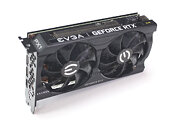
The NVIDIA GeForce RTX 3060, a mid-range GPU now two generations old, is reportedly returning to NVIDIA's supply this month. According to Chinese Board Channels, NVIDIA is planning a mid-March restock of the "Ampere" GPU, aligning with earlier rumors that suggested a Q1 2026 revival. Interestingly, it is unclear which version of the RTX 3060 will be reintroduced—whether it will be the original 12 GB model with a 192-bit wide memory bus or the newer 8 GB variant with a 128-bit bus. NVIDIA's decision to bring back this older SKU is puzzling, especially considering it is two generations old and comes amid memory supply chain shortages. However, this older SKU uses GDDR6 memory, which might be more readily available as the newer GDDR7 is being used by modern "Blackwell" GPUs and the upcoming "Rubin CPX" accelerators.

Why NVIDIA has chosen the RTX 3060 instead of a newer model like the RTX 4060 remains uncertain. Speculatively, it could be due to the fact that the RTX 4060 is based on the same NVIDIA 4N foundry node at TSMC as the current RTX 5060, while the RTX 3060, along with the rest of the GeForce "Ampere" generation, is built on the Samsung 8N (8 nm DUV) foundry node. Additionally, Board Channels note that GeForce RTX 3060 models from various brands will start arriving soon, which means NVIDIA's add-in card partners are doing much of the heavy lifting to bring back this SKU, with NVIDIA only supplying the GPU die and memory as an installation kit. AICs could start marketing this GPU again or just quietly add it to their websites. We are waiting a few more days to see how the re-launch unfolds and which SKUs we end up getting. Finally, the most important factor for considering this GPU when modern alternatives exist is the pricing, which will dictate its sales.

AMD Ryzen AI 400 Comes With Up to 12 Usable PCIe 4.0 Lanes, GPUs Limited to x8 Connection

On Monday, AMD announced its latest Ryzen AI 400 Series and Ryzen AI PRO 400 Series desktop processors, based on the "Gorgon Point" silicon and powered by the "Zen 5" core configuration. This generation follows the Ryzen 8000G series, known as "Phoenix Point." However, it has been revealed that the Ryzen AI 400 series reduces the number of usable PCIe lanes compared to the previous Ryzen 8000G generation. The new top SKU offers 16 native PCIe 4.0 lanes, but only 12 are available to the rest of the system. Four of these PCIe lanes are used for the chipset link that connects the AM5 socket to the motherboard chipset, leaving fewer lanes for the end-user. Lower-tier chips may provide as few as 10 usable lanes, which is insufficient to run a discrete GPU at its full 16x lanes in the PCIe 4.0 connector on the AM5 motherboard. When a user installs an M.2 PCIe NVMe SSD, only eight lanes remain available for a discrete graphics card, meaning the GPU will operate in x8 mode instead of x16.

Interestingly, AMD hasn't fully utilized the "Gorgon Point" silicon in the desktop Ryzen AI 400G series. For example, the top model—Ryzen AI 7 450G—is configured with four "Zen 5" cores and four "Zen 5c" cores, making up an eight-core configuration. The fully unlocked "Gorgon Point" silicon in laptops has 12 cores in total, with four "Zen 5" and eight "Zen 5c" cores. This is a similar configuration to "Strix Point," but adapted for mobile. It's also worth noting AMD's approach with the iGPU. The top 450G processor model only comes with 8 iGPU compute units, which is half the CUs physically available on the silicon. Most other processor models in the series come with just 4 CUs.

ASUS Raises GeForce RTX 50 Series "Blackwell" Pricing in China, Radeon Pricing Unchanged

ASUS has reportedly updated its product pricing in the Chinese market to reflect the memory component shortage across the semiconductor industry. According to Board Channels, ASUS is adjusting the pricing for the GeForce RTX 50 Series "Blackwell" GPUs with GDDR7 memory, while the pricing strategy for AMD Radeon RX 9000/7000 and other series remains unchanged. At the very top, ASUS is increasing the price of its RTX 5090 D v2 SKUs by about 500 yuan, which is approximately $72 at the time of writing. Other SKUs like the GeForce RTX 5080, RTX 5070 Ti, regular RTX 5070, and RTX 5060 Ti with 16 GB of VRAM are experiencing an increase of anywhere from $14.50 to $45. Interestingly, some older and low-end SKUs like the popular GT 1030 and GT 710 series, which provide basic graphics output for many prebuilt PCs, are also seeing a price increase of up to $8. AMD's Radeon series reportedly remains unchanged, which can be explained by these GPUs already having gone through a price increase cycle and GDDR6 memory being in better supply than GDDR7.
You can check out the entire list with proposed price changes below.

EA Working on Javelin Anticheat Port for Windows-on-Arm

EA posted a job listing seeking an engineer to port its Javelin Anticheat, a kernel-level anticheat solution, to the Windows-on-Arm (WoA) platform. This is a significant indicator of where the industry is headed, confirming that the biggest game developers are officially porting their game engines, games, and anticheat solutions to Arm-based PCs running the Windows 11 operating system. Interestingly, this coincides with NVIDIA's introduction of its N1/N1X SoCs with Arm-based CPU cores, which are expected to launch in the first half of this year. These will offer consumers 20 CPU cores, consisting of 10 Cortex-X925 and 10 Cortex-A725 CPU cores based on the Armv9.2 ISA, along with a "Blackwell" GPU optimized for low power settings with 6,144 CUDA cores. Adding to the growing ecosystem of WoA solutions, NVIDIA will be competing with Qualcomm's recent Snapdragon X2 Elite and X2 Plus SoCs.

If readers recall Valve's efforts to port regular Windows games to Linux, one of the biggest issues was the use of kernel-based anti-cheat solutions that simply couldn't work on the non-standard Windows 11 platform. A similar situation is now occurring even between Windows versions, as EA needs to develop a specialized solution that will work on non-x86 deployments like the standard Windows-on-Arm. It will likely be a few months before the official deployment is released, but the job listing suggests that some internal work is in progress. This means that the senior engineer EA is looking for could arrive to quickly bring these pieces together and make the new platform work without any issues.

Apple M5 Pro and M5 Max Debut New "M-Core" Tier and SoIC 2.5D Packaging

Apple today launched its most advanced silicon design yet with the introduction of the M5 Pro and M5 Max processors for MacBook Pro laptops. These new SoCs feature an 18-core CPU with six new "super cores" and 12 performance cores. The main difference between the M5 Pro and M5 Max lies in the size of the integrated GPU and the maximum memory capacity that Apple can equip these SoCs with. With these two SoCs, Apple has added another core tier to its lineup. In the M5 Pro/Max SoCs, a new tier called "M-core" has been introduced, which sits between the Super Core and Efficiency Core. What used to be performance and efficiency cores in the regular M5 have been renamed. Essentially, Apple renamed the performance core to super core and introduced an M-core tier that sits between the super core and efficiency core. Interestingly, the efficiency core is completely absent from the new SoCs, resulting in a combination of performance and middle-class cores, which will enhance the performance of these processors. In this context, the regular M5 SoC has four super cores and six efficiency cores.

Inside these new SoCs, the six super cores run at 4.61 GHz, while the M-cores run at 4.38 GHz. The M-core is a 7-wide out-of-order execution CPU that has roughly 70% of the P-core performance with slightly lower power usage. This new core tier is expected to boost the multithreaded performance of the M5 Pro/Max processors by up to 20%, according to some preliminary estimates found on Chinese Baidu forums. For the M5 Pro, Apple has included 16 MB of cache for the super cores, 16 MB of cache for the M-cores, and 24 MB of memory cache. The memory choice is LPDDR5X, which runs at 9,600 MT/s and offers up to 64 GB of capacity. In the M5 Max, the core cache remains the same, but the memory cache is increased to 48 MB, and the memory capacity is upgraded to a configuration of up to 128 GB. Both SoCs feature GPU cores that run at 1.62 GHz, with the M5 Pro having a 20-core iGPU and the M5 Max having a 40-core iGPU.

Apple Debuts M5 Pro and M5 Max Processors

Apple today announced M5 Pro and M5 Max, the world's most advanced chips for pro laptops, powering the new MacBook Pro. The chips are built using a new Apple-designed Fusion Architecture. This innovative design combines two dies into a single system on a chip (SoC), which includes a powerful CPU, scalable GPU, Media Engine, unified memory controller, Neural Engine, and Thunderbolt 5 capabilities. M5 Pro and M5 Max feature a new 18-core CPU architecture. It includes six of the highest-performing core design, now called super cores, that are the world's fastest CPU core. Alongside these cores are 12 all-new performance cores, optimized for power-efficient, multithreaded workloads. Collectively, the CPU significantly boosts performance by up to 30 percent for pro workloads.

The GPU scales up the next-generation architecture introduced in M5 to an up-to-40-core GPU. With a Neural Accelerator in each GPU core and higher unified memory bandwidth, M5 Pro and M5 Max are over 4x the peak GPU compute for AI compared to the previous generation. The GPU substantially increases graphics capabilities—now up to 35 percent for apps using ray tracing than M4 Pro and M4 Max—enhancing advanced visual effects and 3D rendering. With M5 Pro and M5 Max, the new MacBook Pro is the ultimate powerhouse for pros and is available for pre-order starting tomorrow, with availability beginning Wednesday, March 11.

Entry-Level PC Segment Might Disappear by 2028, Claims Gartner

Rising memory and storage costs are pricing entry-level PC buyers out of the market, which may disappear entirely. According to the analyst firm Gartner, the sub-$500 PC sector might vanish by 2028. Their analysis indicates that memory, which used to be just a small part of the total bill of materials (BOM) at 16% of the total PC cost in 2025, is expected to rise to nearly a quarter of the PC's cost at 23%, making the entry-level PC segment unsustainable. "This sharp increase removes vendors' ability to absorb costs, making low-margin entry-level laptops nonviable. Ultimately, we expect the sub-$500 entry-level PC segment will disappear by 2028," said Ranjit Atwal, Senior Director Analyst at Gartner. He added, "In addition, rising AI PC prices will delay the projected 50% market penetration of AI PCs until 2028."

We have witnessed multiple price increases across many PC components such as DRAM, NAND Flash, and GPUs. With manufacturers unable to produce PCs at any tangible profit levels in the sub-$500 PC sector, it might entirely disappear from the mainstream PC market. The concept of budget builds might become obsolete, with the majority of PCs ending up in categories above that threshold, near or beyond four figures. Gartner estimates that there will be about a 130% increase in combined DRAM and NAND Flash pricing by the end of this year, increasing PC prices by about 17% compared to 2025 levels. This situation will push consumer and enterprise demand toward premium PCs.

Intel Arc Pro B70 Pro-Viz GPU Tested with BMG-G31 Die

Intel has confirmed the existence of its larger Arc Pro B70 "Battlemage" graphics card, designed for professional visualization and AI workloads, through its LLM Scaler software with a small performance testing done in non-ideal scenario. The company plans to release this GPU within the current quarter, which means we could see the official launch and availability in about a month. The upcoming Arc Pro B70 and Arc Pro B65 GPUs are part of this release, utilizing the long-rumored BMG-G31 GPU die intended for higher-end models.

Starting with the more advanced Arc Pro B70, Intel plans a BMG-G31 configuration featuring 32 Xe2 cores and 32 GB of GDDR6 memory on a 256-bit bus. This setup translates to approximately 4,096 FP32 cores in its full configuration, doubling the core count and memory capacity of the current Arc Pro B60, within a single-GPU version. For the smaller Arc Pro B65, Intel has scaled down the BMG-G31 die to support 2,560 FP32 cores, with a total of 20 Xe2 cores. While this matches the core configuration of the Arc Pro B60, the B65 comes with 32 GB of GDDR6 memory, which is 8 GB more than the Arc Pro B60. As dual-GPU configurations were common with the Arc Pro B60, we might also see dual-GPU PCBs with the Arc Pro B70 if Intel's partners like Maxsun follow suit with their Arc Pro B60 Dual-GPU card.

NVIDIA Releases GeForce 595.71 WHQL Game Ready Drivers

NVIDIA has released its latest GeForce 595.71 WHQL Game Ready Driver, addressing issues from the previous 595.59 WHQL version, which caused many headaches for gamers who installed it. With the new 595.71 WHQL, NVIDIA is providing support and optimizations for games such as Resident Evil Requiem and Marathon. Alongside these games, the new 595.71 WHQL fixes problems found in 595.59 WHQL, including a bug where one or more GPU fans stopped spinning after the update. Thankfully, this has been fixed, and gamers were spared the headaches of potentially damaging their expensive GPUs. Additionally, hardware monitoring utilities can now once again recognize all GPU fans, allowing users to continue monitoring and fine-tuning fan profiles without issues. Interestingly, this comes as another game ready driver release, and not a hotfix version. NVIDIA also fixed some game artifacts that were appearing specifically with the GeForce RTX 50 series, such as green artifacts in Total War: THREE KINGDOMS and black bars appearing in The Ascent.
DOWNLOAD: NVIDIA GeForce 595.71 WHQL

AMD Launches Ryzen AI 400 Series Processors for Mobile and Desktop

At Mobile World Congress 2026, AMD announced an expanded Ryzen AI portfolio with the launch of the AMD Ryzen AI 400 Series and Ryzen AI PRO 400 Series desktop processors. The new processors deliver powerful on-device AI acceleration and next-generation performance, enabling users to run AI applications and LLMs locally and tackle compute-intensive applications, including those for design and engineering, with ease. Additionally, AMD is expanding the Ryzen AI 400 Series mobile portfolio to include workstations.

With these additions, Ryzen AI 400 Series processors enable original equipment manufacturers (OEMs) to offer next-gen AI PCs across high-performance desktops, laptops and mobile workstations optimized for modern workloads.

Lenovo Starts LPCAMM2 Rollout With Chinese ThinkBook 14+ and 16+ Launch

Lenovo has officially launched the ThinkBook 16+ in China, officially kicking off its LPCAMM2 rollout to mainstream laptop after it launched the ThinkPad P1 Gen 7 with the new RAM standard as far back as 2024. LPCAMM2 is a new memory standard that allows all of the performance of LPDDR5X with the upgradeability of a regular SODIMM. The ThinkBook 16+ appears to be Lenovo's first consumer device to feature LPCAMM2, launching with up to 32 GB of LPDDR5X-8533 memory backing up an Intel Core Ultra X7 385H and its Arc B390 iGPU.

Specs for the ThinkBook 14+ are not completely listed on Lenovo China, but the rest of the ThinkBook 16+'s specs impress, featuring Wi-Fi 7, 165 Hz display with 100% DCI-P3 coverage and support for VRR, and a 99.9 Wh battery. The laptop also features 2× Thunderbolt 4 ports, 2× USB 3.2 Gen 1 Type-A ports, and 1× USB 2.0 Type-B port, a 3.5 mm audio combo jack, and a 4-in-1 SD card reader for SD, SDHC, SDXC, and CMMC cards. Lenovo has also equipped the ThinkBook 16+ with a Windows Hello-compatible 1080p webcam with a physical shutter as well as support for Lenovo's Magic Bay accessory ecosystem, which has started expanding to more laptops in 2026. The new ThinkBook series also features Lenovo's pressure-sensitive Forcepad, which also integrates haptic feedback and multitouch support. In China, the ThinkBook 16+ 2026 comes in at RMB 8499 ($1,240) while the ThinkBook 14+ 2026 starts at RMB 8299 ($1,210) with all of the same internal specifications. At the time of writing, though, there is no indication that these laptops will launch outside of China, although another laptop series will likely take their place in international markets.

NVIDIA Confirms Supply Constraints May Limit Gaming GPU Availability

NVIDIA CFO Colette Kress confirmed that the gaming sector may struggle during the company's latest Q4 earnings call. In a short but very important note, she stated, "Looking ahead, while end demand for our products remains strong and channel inventory levels are healthy, we expect supply constraints to be the headwind to Gaming in Q1 and beyond." This sentence is rather vague but conveys the message that supply constraints will definitely impact the GeForce RTX 50 series lineup in the current quarter and possibly beyond. NVIDIA's current product inventory is in good shape, meaning that both silicon from TSMC and secured GDDR7 memory are sufficient for the time being, but once the inventory levels start to deplete, availability will become a problem.

Team Green has massive capacity secured at TSMC's facilities for manufacturing "Blackwell" GPUs, meaning that no production issues stem from that end. However, memory makers, with whom NVIDIA collaborates, are supply constrained in delivering their GDDR7 memory solutions, leaving NVIDIA with little to work with outside its high-margin server sector. As NVIDIA supplies its AIC partners with both memory and GPU dies, having no memory modules to bundle with the GPUs becomes a supply bottleneck, leaving the company waiting for weeks without a fresh inventory of memory modules. Hence, NVIDIA now expects that demand will continue to be strong among gamers, but the situation may be getting slightly worse as inventory levels start to deplete.

AMD and Nutanix Announce Strategic Partnership to Advance an Open and Scalable Platform for Enterprise AI

AMD and Nutanix today announced a multi-year strategic partnership to jointly develop an open, full-stack AI infrastructure platform designed to power agentic AI applications everywhere. This agreement aligns to both companies' commitment to an open ecosystem for AI, providing customers with choice and easy-to-deploy, production ready, high-performance and efficient solutions that are optimized for Agentic AI, at the edge, inside enterprises, and across the cloud.

The partnership aligns silicon innovation, open runtime software and enterprise cloud orchestration technologies for AI to deliver scalable, production-ready agentic AI platforms across data centers, hybrid and edge environments. By optimizing the Nutanix Cloud and Nutanix Kubernetes Platforms on AMD EPYC CPUs and AMD Instinct GPUs and integrating the AMD ROCm software ecosystem and the AMD Enterprise AI platform into Nutanix AI full-stack solutions, the companies are developing an open solution for Agentic AI platforms using high-performance infrastructure and supported by a broad set of OEM partners.

AMD "Gorgon Point" Desktop APUs Tipped for Early 2026 Launch

AMD announced its Ryzen AI 400 series "Gorgon Point" mobile APUs based on Zen 5 and Zen 5c cores at CES 2026 earlier this year, simultaneously showing off the AM5-based Ryzen AI 400-branded desktop APUs at the same show. Now, according to a new leak by Moore's Law is Dead on X, AMD will allegedly launch the new Ryzen AI 400-series desktop processors for AM5 in the first half of 2026. MLID adds that the launch may even happen as early as Q1. He also released what he claims to be a short promotional video of an AMD Ryzen AI 400 Pro processor in an AM5 socket to lend credence to his leak.

Exact specifications for the AM5 APUs are unconfirmed, but if they're anything like the laptop counterparts, it is expected that the new APUs will launch with the same silicon as Strix Point but with adjusted power management and increased clock speeds. This means we can expect to see the Ryzen AI 400 desktop processors top out with a 12-core (4× Zen 5; 8 × Zen 5c) CPU cluster tied to a 16 CU RDNA 3.5 iGPU, and a 60 TOPS NPU.

Steam Quietly Addresses Incorrect Hardware Survey VRAM Readings and Multi-GPU Setup Quirks

Valve has steadily been adding features to SteamOS and the Steam Client since the release of the Steam Deck and leading up to the Steam Machine, but the latest Steam Deck Beta client update aims to address two main issues that have apparently been prevalent in the Steam Hardware Survey, which should result in more accurate GPU data reporting. The first change fixes incorrect VRAM reporting on some GPUs, although Valve doesn't provide any explanation about which GPUs are affected by this bug, while the second change makes it so that the Steam Client automatically detects the display adaptor with the most VRAM—therefore likely the most performant or the least likely to be an iGPU—when collecting Steam Survey information.

Aside from weird edge cases, like users running both a workstation GPU and a gaming GPU in one system, these changes should result in more accurate data from the Steam Hardware Survey. It's unclear how widespread these reporting issues were or how far back they go, but the changes are unlikely to have an effect before a wider roll-out, and it's unclear when the wider roll-out will happen. The beta client update also includes two minor updates to Steam Input. The update adds a multi-button selector for the button chord activator, which Valve says will improve compatibility with extra grip buttons on modern controllers. Valve has also changed the way the Gyro to Joystick Camera output works, matching the Gyro to Joystick Deflection behavior, which it says is useful for "identifying a game's internal joystick deadzone." Polishing both the Steam Hardware Survey results and Steam Input might be steps to prepare for the launch of the Steam Controller, Steam Machine, and Steam Frame.

Multiple Reports Emerge of MSI 12v-2×6 PSU Connectors Creeping Out of GPUs

One of the simpler solutions manufacturers have come up with to mitigate the ubiquitous 12v-2×6 GPU power connector meltdowns is colored cable terminations that simply give the user an indication that the GPU power connector is properly connected. According to a recent post on r/MSI_Gaming, those colored connectors are both doing their jobs and causing concerns among MSI PSU users. The original poster shared an image of the stock 12v-2×6 power cables of an MSI MPG A1000GS ATX 3.1 PSU that had slowly been creeping out of both the PSU and PNY RTX 5080 GPU connectors over the course of two months, exposing the colored yellow connector end that is meant to serve as a warning against thermal meltdown events.

While the slowly loosening connector had not yet resulted in a meltdown, it had seemingly started causing instability in the user's system during heavy gaming loads. What's more concerning is the multitude of comments in the Reddit thread echoing the OP's story, saying that they had properly connected both ends of the cable until there was a positive click, but despite this, the cable seemed to be creeping out at one or both ends. Some commenters hypothesized that part of the reason for these meltdown events that happen so long after the system was first built is that repeated thermal cycling causes the plastic connector to expand and contract, resulting in the cable slowly coming loose. The redditor was eventually told to request a replacement unit through Amazon, but if the number of similar reports in the same thread are anything to go by, the issue appears to be at least somewhat widespread with MSI's cables.

Death Stranding 2: On the Beach PC Minimum Specifications Revealed Alongside Graphics Enhancements

Death Stranding 2: On the Beach is slated to launch on March 19 for PC after almost nine months as a PS5 exclusive, and Nixxes and Kojima Productions just revealed the minimum PC hardware requirements, as well as the supported upscaling and graphical enhancement options, in a PlayStation Blog post. According to the blog post, the absolute minimum spec, which gets you 30 FPS as 1080p with low settings, requires an AMD Ryzen 3 3100 or Intel Core i3-10100, 16 GB of RAM, and an NVIDIA GeForce GTX 1660 or AMD Radeon RX 5500 XT 8 GB. Medium, or 1080p with medium settings, requires an RTX 3060 12 GB or Radeon RX 6600, and an AMD Ryzen 5 5600 or Intel Core i5-11400. Stepping it up to High (or recommended specs), which gets you 1440p at 60 FPS with high settings, requires an AMD Radeon RX 6800 or NVIDIA GeForce RTX 3070 and an AMD Ryzen 7 5700X or Intel Core i7-11700. Very High, or 4K resolution at 60 FPS with very high settings, calls for an upgrade to an NVIDIA GeForce RTX 4080 or Radeon RX 9070 XT, while the CPU and memory specs remain the same as for the High tier. All spec tiers require 16 GB of memory, Windows 11 or Windows 10 1909 or up, and at least a 150 GB SSD.

Death Stranding 2: On the Beach will also offer PC players support for both 21:9 and 32:9 ultrawide aspect ratios, and players with 16:9 displays can simulate a cinematic experience by opting for a 21:9 aspect ratio with black bars on the top and bottom of the display—this option will also be introduced for PS5 at the same time as the PC release. PC players will also get support for upscaling tech from all three GPU manufacturers: NVIDIA DLSS 4, AMD FSR 4, and Intel XeSS 2, with both frame generation and upscaling options available. These upscaling options can be used in conjunction with Dynamic Resolution Scaling, and players will be able to adjust upscaling quality. The game will also see the debut of Pico—Progressive Image Compositor—on PC. This is the upscaling technology used by Death Stranding 2 on PS5 and developed by Guerrilla Games for the Decima engine, and it can also be used alongside all available frame generation options and on all available graphics card manufacturers. The game will also offer native AA options for those not interested in upscaling.

OptiScaler One-Ups AMD With FSR 4 Vulkan Support

We previously covered how enterprising gamers managed to bypass AMD's FSR 4 restrictions to get Redstone frame generation tech working on older RDNA GPUs with OptiScaler. Now, it seems as though OptiScaler has managed bypass another one of AMD's limitations that restricted FSR 4 implementations to DirectX 12 games. According to the build notes uncovered by a Reddit user u/eduhfx, OptiScaler is testing adding Vulkan support in a new test build v0.9.0-pre10. Notably, OptiScaler is using a compatibility tool to work around FSR 4's lack of Vulkan support, similarly to how Linux translates DirectX, calls to Vulkan with DXVK or VKD3D. This also means that FSR 4 on Vulkan should work on Linux systems, as well, where games often run better under Vulkan than DX12—although at the time of writing, FSR 4 w/DX12 currently has issues running on Linux due to a Mesa issue that seemingly cannot be solved by the OptiScaler team.
Added Vulkan w/DX12 support - FSR 4 VK w/DX12, FSR 2.1 VK w/DX12

Currently, known issues:
FSR 4 VK w/DX12 has issues on Linux due to missing Mesa extensions
Not interested in reports as nothing we can fix on our side as far as we know

SambaNova Unveils SN50 AI Chip, Collaborates with Intel

SambaNova today introduced their SN50 AI chip, which boasts a max speed that's 5X faster than competitive chips. The company also announced a planned collaboration with Intel to deliver high-performance, cost-efficient AI inference solutions, and more than $350M in investment from new and existing investors.

Positioned as the most efficient chip for agentic AI, the SN50 chip offers enterprises a 3X lower total cost of ownership - a powerful foundation to scale fast inference and bring autonomous AI agents into full production. The SN50 will be shipping to customers later this year.

NVIDIA Reportedly Launching Its Arm-Based Laptop Chips in First Half of 2026

NVIDIA is reportedly preparing its long-awaited new consumer laptop processor for launch in the first half of 2026, according to a report from The Wall Street Journal. The chip uses a system-on-chip approach integrating CPU, GPU, and NPU into a single package. Systems based on those chips could first ship from OEMs such as Dell and Lenovo within months of launch, though no products have been confirmed. These systems are expected to focus on thin-and-light designs with an emphasis on efficiency and battery life. The report says NVIDIA is working with MediaTek on the processor, which will use the Arm architecture rather than x86. Internal names mentioned include N1 and N1X. The report also references a separate project involving Intel. That design would combine an Intel x86 CPU with NVIDIA graphics and neural processing technology, targeting improved graphics in slimmer laptops without a discrete GPU.

NVIDIA has not formally announced either chip, meaning specifications, pricing, and final configurations remain undisclosed. However, we reported in January that NVIDIA's Arm-based N1 and N1X laptop chips were getting closer to launch, with Lenovo accidentally confirming several upcoming models, including Yoga and Legion designs, through a since-deleted support page listing. Dell was also spotted testing the N1X, with a November 2025 shipping manifest surfacing a "Dell 16 Premium" powered by an N1X engineering sample. According to initial leaks, both chips are based on the same GB10 Superchip found in NVIDIA's DGX Spark AI mini PC, with the N1X reportedly packing 20 Arm CPU cores and a 48-unit iGPU. Despite expectations, NVIDIA skipped CES without any official announcement, and earlier rumors of delays pushing the launch to late 2026 hadn't been fully ruled out at the time. With NVIDIA GTC 2026 just a few weeks ahead (March 16-19), that's likely the event where those new mobile processors could be announced.

ASUS Reveals Optimized Liquid-Cooling Solutions and Strategic Partner Framework

ASUS today announced ASUS Optimized Liquid-Cooling Solutions and a strategic partner framework designed to address the escalating thermal, power, and density challenges of next-generation AI and high-performance computing data centers.

ASUS Optimized Liquid-Cooling Solutions for next-generation AI compute density
As AI and HPC workloads push compute density and power consumption beyond the capabilities of traditional air cooling, optimized liquid-cooling solutions by ASUS will provide the critical thermal management required for the next-generation NVIDIA Vera Rubin NVL72 system based data centers. By efficiently dissipating heat from high-performance CPUs, GPUs, and accelerator-dense racks, ASUS significantly reduces energy consumption, lowers PUE, and optimizes TCO while supporting unprecedented rack density.

AMD Seemingly Stops Driver Updates for Ryzen Z1 Extreme Processor

AMD has reportedly stopped driver updates for its Ryzen Z1 Extreme APU solution for handheld consoles, according to the latest Lenovo Korea update. This means that only after 2 and a half years, AMD is pulling support for its SoC, leaving many enthusiasts in a difficult spot. Confirmation from multiple sources are piling up as Reddit users and customers of other handheld consoles are stating that support for their specific devices, based on the Ryzen Z1 Extreme SoC, are also stuck using drivers that are several months old. For example, a user has commented that his ASUS ROG Ally non-X version based on the Ryzen Z1 Extreme SoC has been stuck with six-month-old SoC drivers from August 2025. This means that AMD has effectively placed the Ryzen Z1 and Ryzen Z1 Extreme chips into a periodic update window, with no latest driver support coming to this 2023 SoC.

However, the situation is quite complex. OEMs like Lenovo and ASUS receive drivers from AMD and test them for their specific configurations. AMD offers configurable TDP (cTDP) for the Z1 Extreme with values ranging from 9 to 30 W. This means that OEMs can get a SoC with reduced clocks and power settings to match their desired handheld designs, or simply run the most aggressive 30 W configuration that will sacrifice some battery life but deliver overall higher CPU and GPU clocks. Hence, drivers must be tested to ensure they work properly on the specific TDP configuration by the OEM before they are installed by the user. Finding the "blame" is proving to be difficult, as it could be that AMD is not bothering with new updates, or OEMs are not eager to test their specific configurations.

ASUS RTX 5070 EVO Dual Targets SFF Builds With Short, Thinner Design

In late 2025, ASUS announced the NVIDIA GeForce RTX 5060 and 5060 Ti Dual Evo graphics cards, which touted a slimmer, shorter design for improved compatibility with small form factor PC builds. Now, it has silently expanded the Dual Evo line with the ASUS Dual GeForce RTX 5070 Evo and Evo OC, both of which stuff an NVIDIA GeForce RTX 5070 12 GB GPU into a package measuring just 229 × 120 × 50 mm. ASUS has not yet publicly announced the GPUs, and they don't seem to be available via retail channels just yet, but the spec sheets and product pages are available in full on the ASUS site. As such, pricing is not yet available at the time of writing.

The OC model steps up the standard boost clock from 2,512 MHz to 2,542 MHz and the OC mode clock speed from 2,542 MHz to 2,572 MHz. Both GPUs feature the same 2.5-slot shroud and cooler design, and it seems unlikely that the OC Edition has any additional changes other than a slight vBIOS tweak to achieve the higher clocks, suggesting that you can likely get similar clock speeds with a bit of tuning in GPU Tweak III. This 2.5-slot design is thicker than the 2.0-slot design of the 5060 series Dual Evo cards, but still notably thinner than most other RTX 5070 models, like the 3.2-slot ROG Strix GeForce RTX 5070. The GPU shroud design is also somewhat more reserved than some of ASUS's recent designs, with just an angular, black, dual-texture shroud housing dual axial fans, while the GPU heat sink has a flow-through design for the rear fan. Much like the 5060 variants of the same series, the PCIe power plug is located almost centrally on the side of the GPU, instead of the traditional rearward position.

AMD GPU Prices Rebound Slightly As Demand Drops

It's no secret that GPU prices have skyrocketed lately as a result of increased AI data center demand. This has been especially true for any GPU featuring more than 8 GB of VRAM, like AMD's Radeon RX 9060 and 9070 series. However, while AMD GPUs were previously seen as a viable alternative when NVIDIA GPUs were unaffordable or unavailable, that increased demand resulted in price spikes of up to 40% by December 2025. This is based on Japanese data collected by Gaz:Log, who also found that, since that massive price hike, reduced demand has forced retailers to drop prices for both the RX 9070 XT and RX 9060 XT 16 GB GPUs by as much as 15% and 20% respectively.

Obviously, this is just one market, and it can't be guaranteed that events will play out similarly in other regions, but it is an indication that hardware pricing may be reaching a tipping point, after which we may see prices stabilize or fall slightly in response to reduced demand. It's also worth noting that AMD and NVIDIA have both been rumored to be planning to effectively increase MSRP in early 2026, which would result in price increases of at least 10% across the board. This is on top of a late 2025 price increase of $20-40 on both 8 and 16 GB GPUs.

AMD Sets a New GPU OC World Record With Radeon RX 9060 XT @ 4,769 MHz

VideoCardz first spotted that AMD set a new GPU overclocking world record with its Radeon RX 9060 XT graphics card running at an amazing 4,769 MHz using liquid nitrogen as the coolant. This record was set in tandem with the world-renowned overclocker "Splave" from the United States, who already held the previous world record with an NVIDIA GeForce RTX 4090 running at 4,020 MHz. This time, using RDNA 4 silicon, "Splave" made the GPU maintain stability at a 4,769 MHz core clock. While no official HWBot submissions have been made, AMD posted a video on its AMD Gaming YouTube channel where the company showcased the amazing achievement. We are left to wonder why AMD didn't promote this record, which is a very impressive achievement for its RDNA 4 silicon. In a brief frame, "Splave" was seen running a custom tool to fine-tune the GPU. AMDships this GPU with a base clock of 1,700 MHz, a game clock of 2,530 MHz, and a maximum boost clock of 3,130 MHz, meaning that the new world record pushed the GPU boost by an additional 50%.
Return to Keyword Browsing
Nov 22nd, 2026 17:02 CST change timezone

New Forum Posts

Popular Reviews

TPU on YouTube

Controversial News Posts