Tuesday, February 24th 2026

NVIDIA Reportedly Launching Its Arm-Based Laptop Chips in First Half of 2026
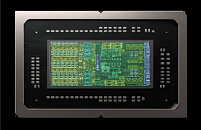
NVIDIA is reportedly preparing its long-awaited new consumer laptop processor for launch in the first half of 2026, according to a report from The Wall Street Journal. The chip uses a system-on-chip approach integrating CPU, GPU, and NPU into a single package. Systems based on those chips could first ship from OEMs such as Dell and Lenovo within months of launch, though no products have been confirmed. These systems are expected to focus on thin-and-light designs with an emphasis on efficiency and battery life. The report says NVIDIA is working with MediaTek on the processor, which will use the Arm architecture rather than x86. Internal names mentioned include N1 and N1X. The report also references a separate project involving Intel. That design would combine an Intel x86 CPU with NVIDIA graphics and neural processing technology, targeting improved graphics in slimmer laptops without a discrete GPU.
NVIDIA has not formally announced either chip, meaning specifications, pricing, and final configurations remain undisclosed. However, we reported in January that NVIDIA's Arm-based N1 and N1X laptop chips were getting closer to launch, with Lenovo accidentally confirming several upcoming models, including Yoga and Legion designs, through a since-deleted support page listing. Dell was also spotted testing the N1X, with a November 2025 shipping manifest surfacing a "Dell 16 Premium" powered by an N1X engineering sample. According to initial leaks, both chips are based on the same GB10 Superchip found in NVIDIA's DGX Spark AI mini PC, with the N1X reportedly packing 20 Arm CPU cores and a 48-unit iGPU. Despite expectations, NVIDIA skipped CES without any official announcement, and earlier rumors of delays pushing the launch to late 2026 hadn't been fully ruled out at the time. With NVIDIA GTC 2026 just a few weeks ahead (March 16-19), that's likely the event where those new mobile processors could be announced.
Sources:
The Wall Street Journal, Videocardz
NVIDIA has not formally announced either chip, meaning specifications, pricing, and final configurations remain undisclosed. However, we reported in January that NVIDIA's Arm-based N1 and N1X laptop chips were getting closer to launch, with Lenovo accidentally confirming several upcoming models, including Yoga and Legion designs, through a since-deleted support page listing. Dell was also spotted testing the N1X, with a November 2025 shipping manifest surfacing a "Dell 16 Premium" powered by an N1X engineering sample. According to initial leaks, both chips are based on the same GB10 Superchip found in NVIDIA's DGX Spark AI mini PC, with the N1X reportedly packing 20 Arm CPU cores and a 48-unit iGPU. Despite expectations, NVIDIA skipped CES without any official announcement, and earlier rumors of delays pushing the launch to late 2026 hadn't been fully ruled out at the time. With NVIDIA GTC 2026 just a few weeks ahead (March 16-19), that's likely the event where those new mobile processors could be announced.


22 Comments on NVIDIA Reportedly Launching Its Arm-Based Laptop Chips in First Half of 2026
8GB ram subscription: $25/month
16GB ram subscription: $60/month
32GB ram subscription: $150/month
More importantly, unlike Qualcomm, nVidia will likely allow booting Linux. Id buy a laptop with a 5070 GPU and a ARM CPU that can hit 20 hours of battery life running Linux.
I would say that its because they are used to building phone chipsets with far greater control, but Apple did it without issue and IIRC even mediatek GPU drivers are not this bad.
OEM partnership issues, I guess. Albeit most OEMs have their own Spark version, so go figure.The DGX Spark (which has 128gb) from nvidia goes for $4k, the Asus model goes for $3k, so I expect any laptop with the same 128gb to go for $3k+, or maybe ~$2k if they cut down the memory capacity (as well as its memory bandwidth).Don't expect good battery life out of it, the DGX Spark has awful idle power consumption. This should be on the same level or even worse than strix halo.
Drivers should be all good though, their Linux drivers for ARM are almost as good as their x86 ones. The WoA one should be at least as bad as the regular x86 windows one.
And yeah, Linux should be a given since the Spark is a thing and its main use case requires Linux anyway.
Give it D3D9-earlier games and the experience varies wildly. Shadows, lighting and textures missing, you name it. D3D9on12 effectiveness is anybody's guess.
In actual CPU benches the ARM chips do pretty well.Perhaps not, but the DGX wasnt built as a laptop either.
The N1 is more likely to give good life. We dont know what it is, but if it was half a N1X it would certainly be something.
PS: I have no knowledge if Proton is usable with the SDs, though. Running Linux on them is still not ready to go, as far as I know there's only an experimental Ubuntu build available.
www.jeffgeerling.com/blog/2025/dells-version-dgx-spark-fixes-pain-points/
But alas it high idle power from NIC is somewhat been addressed in recent update. And sure SOCs 25W idle is still too much for laptop use, so they have to fine tune that further for n1/n1x.
If Google makes Aluminum OS highly optimized for CPUs and GPUs, lightweight, fast, lean, without unnecessary bloatware, and still able to natively run various Windows apps and games, with drivers for all devices being installed automatically, it could capture a large share of the home PC OS market, which is almost 100% dominated by Microsoft Windows.