News Posts matching #HX

Return to Keyword Browsing

Intel Razor Lake-S Reportedly Due in 2028 on LGA-1954

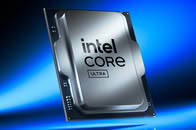
Intel's Razor Lake desktop processors, the generation that follows Nova Lake-S, are currently slated for 2028, according to well-known Intel leaker Jaykihn. When asked on X whether Razor Lake-S was planned for 2027, Jaykihn replied "not currently," then followed up saying Razor Lake is a 2028 product for now. A leaked partner slide placed the first Nova Lake-S SKUs in Q1 2027 and indicated Intel plans to keep LGA-1954 for multiple generations, so Razor Lake-S should drop into the same boards roughly a year later. Apparently, Razor Lake will use new Griffin Cove P-cores, which Jaykihn previously called "an entire tock" rather than a refinement. The same core will reportedly also power Intel's next-generation Coral Rapids Xeon processors, though simultaneous multithreading (SMT) stays exclusive to Xeon.

Jaykihn says the client and server versions are separate architectures built around a similar core, comparing it to how Coyote Cove relates to Panther Cove. Earlier leaks pointed to Intel using TSMC's N2X node for some Razor Lake production, and the 12 Xe3P core iGPU SKU originally meant for Nova Lake-S was reportedly pushed to Razor Lake. HWiNFO also added support for Razor Lake-H, HX, and S in a recent beta. If the plan holds, Nova Lake-S buyers would get a proper CPU upgrade path without swapping motherboards, which is a welcome change after Intel went through three sockets in the last five years. Of course, timelines this far out can move, and Intel hasn't confirmed any of this, so it's reasonable to treat 2028 as a target for now.
Unreleased Radeon RX 7500 and Intel Razor Lake-H/HX/S Appear in Latest HWiNFO Beta

HWiNFO's newest beta, v8.55-6115, adds recognition for an AMD Radeon RX 7500, a graphics card AMD has not yet announced. The changelog entry is a single line with only the name, so the specs, the GPU underneath, and any launch plans are all unknown for now. The most likely candidate is probably the 6 nm "Navi 33" RDNA 3 chip, which already powers the 28 CU RX 7400 and the fully enabled 32 CU RX 7600. Of course, a card squeezed between those two would leave AMD very little room to work with, so the name is a bit puzzling. AMD hasn't said anything about the card so far, but we have heard the name before.

When the RX 7400 and RX 7300 first appeared in rumors back in 2024, there were rumblings of an RX 7500 XT desktop graphics card, though nothing concrete ever followed. Moving onto other additions to HWiNFO, the same build also adds enhanced support for Intel's Nova Lake-E and Razor Lake-H, HX, and S processors. Razor Lake is the platform expected to follow Nova Lake, and Intel has yet to officially announce it. CPUID added Razor Lake support to CPU-Z 3.02 earlier this week, while HWiNFO picked up preliminary Razor Lake-AX support back in August. With the first Nova Lake-S desktop chips not expected until Q1 2027, retail Razor Lake chips are probably still a long way out.

CPUID Readies CPU-Z for Intel Razor Lake, Two Generations Out

CPUID has released CPU-Z 3.02, and the first line of its changelog simply reads "Intel Razor Lake support." Razor Lake is the processor family expected to follow Nova Lake, and Intel has yet to officially announce it. The changelog doesn't say which Razor Lake variants are covered or how deep that support goes, so this could be anything from basic detection to early groundwork. The November 4 update also adds the AMD Radeon AI PRO R9700, along with fixes for an SPD reading issue on Intel Broadwell-E and a validation problem on Windows XP.

Of course, system tools tend to pick up new chips well before they reach store shelves. HWiNFO added early Nova Lake support back in August 2025, and the first Nova Lake-S desktop chips still aren't expected until Q1 2027. HWiNFO also added preliminary support for Razor Lake-AX in August this year, the rumored large APU that could pack up to 32 Xe3 GPU cores alongside on-package memory.

Leak: Intel Core Ultra 9 4995HX Leads Nova Lake Laptop Lineup

Intel's Core Ultra 9 4995HX looks set to be the fastest Nova Lake chip for laptops. Leaker Jaykihn on X has confirmed that the 4995HX uses an 8+16+4+2 layout, meaning 8 P-cores, 16 E-cores, 4 LPE cores, and 2 Xe3 GPU cores. That adds up to 28 CPU cores, four more than Intel's current Arrow Lake-HX chips, with the extra cores coming from the LPE cluster Arrow Lake-HX lacked. The overall layout matches the 8P+16E+4LP ceiling earlier reports pointed to, and the name itself fits the Core Ultra 4000 branding said to be extending to HX parts. Intel hasn't confirmed any of this, and clocks, cache, and power figures are still unknown.

The same post lists the Core Ultra 9 4970H as 4+8+4+12, so 16 CPU cores and a 12-core Xe3P iGPU. That is the same core count as Panther Lake's flagship Core Ultra X9 388H, so any gains here should come from the new Coyote Cove P-cores, Arctic Wolf E-cores, and Xe3P graphics rather than extra cores. The tiny iGPU on the 4995HX is less of a concern, since HX chips almost always end up paired with a discrete GPU anyway. Jaykihn also put the final 8+16 HX compute tile, built on TSMC N2P, at 14.8 x 6.6 mm, or roughly 98 mm², shortly after die shots of both chips surfaced. Current reports point to the first Nova Lake-H and HX laptops showing up around CES 2027, though that timing should be treated as tentative for now.

AMD Ryzen AI 7 HX 455 Surfaces with 16 CU Radeon Graphics

It seems as though AMD is readying a new mobile APU that bears a striking resemblance to the existing Ryzen Z2 Extreme. The AMD Ryzen AI 7 HX 455 was recently leaked by Golden Pig Upgrade on Weibo, with the post suggesting that the new CPU would launch with eight cores and 16 threads and a 16 CU iGPU, while the 16 CU iGPU will reportedly be identical to the existing Radeon 890M on the Ryzen AI Z2 Extreme, which has proven itself capable of very decent gaming performance in our in-depth review of the ASUS ROG Xbox Ally X.

The exact core breakdown is unknown, but in a response to a question about the CCD layout, the leaker alludes to a similar layout to the Z2 Extreme, which features three Zen 5 cores and five Zen 5c cores across two CCDs, although the new APU will have a significantly larger cache to work with—24 MB L3 instead of the Z2 Extreme's 16 MB—signalling that it will be a cut-back version of the existing Ryzen AI HX 470 APU, which features four Zen 5 cores and eight Zen 5c cores.

Intel "Nova Lake-HX" and "Nova Lake-H" Die Shots Appear

Intel's upcoming "Nova Lake" lineup for mobile devices has been revealed in bare-die form, thanks to the Moore's Law Is Dead YouTube channel. Leading the lineup is the "Nova Lake-HX," featuring an 8+16+4 core configuration with 8 P-Cores, 16 E-Cores, and 4 LPE-Cores. The total silicon size measures 12x30 mm, amounting to 360 mm², which is divided across six different dies manufactured on various nodes. The first die is the graphics tile, built on the Intel 3-E node, embedding 4 Xe GPU cores and covering roughly 26 mm². Adjacent to it is a dummy die occupying 21 mm², used for the structural integrity of the package. Next, there is a large 72 mm² die built on the Intel 18A-P node, hosting 4 LPE-Cores and serving as a central hub. Beside it is another 18A-P silicon die that functions as a peripheral control tile, measuring 58 mm². Finally, Intel uses an external foundry for the main compute tile, which is on the TSMC N2P node and hosts the 8P+16E CPU core configuration. This compute tile occupies the largest area of 104 mm². Additionally, there is a passive tile next to it, with 85 mm² dedicated to the structural integrity of the package and the intended operation of the "Nova Lake-HX" chip.

Next, we move to the less powerful "Nova Lake-H" variant, which will feature a 4+8+4 configuration with 4 P-Cores, 8 E-Cores, and 4 LPE-Cores. This package is significantly smaller, measuring only 12x23 mm for a total die area of 276 mm², also consisting of both functional and dummy dies. The die configuration remains the same except for the main compute tile, which hosts a 4P+8E-core configuration on the TSMC N2P node, occupying 55 mm² of area. The adjacent passive die is also smaller, with an area of only 45 mm², while the peripheral control die, central hub die, and graphics tile are all made on Intel nodes and remain the same as in the "HX" variant.

Razer Unveils the New Razer Blade 18: Desktop-class Performance for Gaming and AI

Razer, the leading global lifestyle brand for gamers, today announced the 2026 evolution of the Razer Blade 18, its most powerful Blade ever. Designed for gamers and AI developers, the Blade 18 extends beyond traditional gaming laptops into a true desktop-class platform, built to run advanced workloads locally, from high-speed AI inference to real-time rendering and feature development, within a single, unified system.

The Edge of Performance. Gaming Meets AI Development.
  • Built to sustain high performance while running local LLM inference, compiling large codebases, rendering video and 3D assets, and playing modern AAA games.
  • Intel Core Ultra 9 290HX Plus processor (24 cores, up to 5.5 GHz boost) with an integrated NPU delivering up to 13 TOPS of AI acceleration
  • Up to NVIDIA GeForce RTX 5090 Laptop GPU with 175 W TGP, 24 GB of VRAM, and next-generation RTX AI technologies
  • Brighter 18-inch dual-mode display for UHD+ 240 Hz and FHD+ 440 Hz experiences
  • Advanced vapor chamber cooling with a refined multi-fan design for sustained workloads
  • Desktop-class connectivity including Thunderbolt 5, Wi-Fi 7, 2.5 Gb Ethernet, a 5MP camera, and a six-speaker system powered by THX Spatial Audio+

MSI Unveils New Raider and Crosshair Gaming Laptops with Up to 300W Combined Power

MSI, a global leader in gaming, content creation, and business & productivity laptops, proudly introduced the redesigned Raider and Crosshair gaming laptop series, built for gamers seeking high-performance 16-inch laptops with the latest Intel Core Ultra 200HX Plus processors and NVIDIA GeForce RTX 50 Series Laptop GPUs. The new lineup delivers up to 300 W combined CPU and GPU power on select Raider models and up to 200 W on select Crosshair models, alongside upgraded cooling, OLED display options, and rear I/O for cleaner cable management. These models set a new benchmark as the most powerful gaming laptops in the industry.

MSI has also upgraded its existing 18-inch gaming lineup, including the Titan 18, Raider 18 Max, and Stealth 18. In addition to featuring the Intel Core Ultra 200HX Plus processors, users can experience ultra-smooth visuals through top-tier specifications such as a 4K 240 Hz Mini LED display.

Arctic Launches Senza AI 370 Fanless PC With Ryzen AI 9 HX 370 and 32 GB of RAM

Arctic has announced the updated version of its fanless Senza PC with updated internals, connectivity, and a more flexible design. The Senza AI 370 uses a familiar fanless design, with the heatsink integrated into the case of what would otherwise effectively be a mini PC, but now features the AMD Ryzen AI 9 HX 370 APU and its corresponding AMD Radeon 890M iGPU. That somewhat powerful iGPU in a silent form factor is the biggest differentiator compared to other desktops, but the Senza AI 370 is also designed to fit under a desk, virtually eliminating the need for the PC to be small in the first place. According to the Arctic online store, the Senza AI 370 retails for €1,199.99, and there are no optional barebones kits available.

Arctic markets the Senza as a silent gaming and productivity machine and claims that it can operate at temperatures as low as 50° in gaming workloads—although there were no specifics on the ambient temperature or the exact games and settings tested, so take that with a pinch of salt. To its credit, the Senza AI 370 does have 32 GB of DDR5X-8000 memory and a 1 TB PCIe Gen 4 ×4 M.2 SSD. The I/O situation is also interesting, with Arctic opting for a break-away front I/O panel module that features 1 3.5 mm audio combo jack, a USB 3.2 Gen 1 Type-A port, and a USB4 Type-C port—this module is connected to the PC via a cable, so that the ports can be mounted near the front of the desk. The actual PC itself also features the following ports: 2× USB 2.0, 2× USB 3.2 Gen 2 Type-A, 1× USB4 Type-C, 1× HDMI 2.1, 1× DisplayPort 2.1, 1× 2.5 GbE, 1× DC in, and separate 3.5 mm audio jacks for mic in and audio out. Because the PC is designed to be mounted under a desk, what would traditionally be the rear I/O is also front-facing, which should make it easier to reach.

Intel Silently Adds Core i7-13645HX to Its Raptor Lake Mobile CPU Lineup

Intel has quietly rolled out a new mobile CPU in the Raptor Lake lineup, the Core i7-13645HX. The chip is built with Intel's 10 nm process and splits its 14 cores across six Performance cores and eight Efficient cores, just like the Core i7-13650HX. That means both share the same 20-thread count, 24 MB of Smart Cache, max turbo clock at 4.9 GHz, and power specs: 55 W base, 157 W peak. However, there are some differences. The i7-13645HX supports DDR5-5600, up from 4800 on its older sibling. With that comes also an increase in memory bandwidth to 89.6 GB/s, up from 76.8 GB/s. It also sports a more capable Intel UHD Graphics P730 with 32 execution units versus just 16 on the i7-13650HX. The older part still has a slight edge in efficiency: its E-cores can boost to 3.6 GHz, while this one tops out at 3.5 GHz. But for users who need faster memory and better integrated graphics, especially those running light gaming or video workloads, the new chip might be the better choice.

Compared to the i7-13700HX, which has eight P-cores, a higher boost clock (5.0 GHz), 30 MB cache, and slightly more power headroom, this one feels like something in between, less raw performance than the top-tier HX model but with better memory support. Intel rebranded Raptor Lake as Core 200 series in late 2024, positioning it for higher-end laptops. The i7-13645HX appears to be part of that push: a refined option for systems targeting mainstream performance without stepping up to the full HX stack. No official pricing yet, as this is likely to show up in select gaming and creator machines over the next few months. Remember that just this Tuesday, Intel rolled out its Core Ultra 200HX Plus mobile processors, including the Core Ultra 9 290HX Plus and Core Ultra 7 270HX Plus. These processors add new features and architectural refinements, including support for the new Intel Binary Optimization Tool that can improve native performance in select games.

Acer Refreshes Predator Helios Neo Gaming Laptops With Intel Core Ultra 200HX Plus and NVIDIA GeForce RTX 5080 Laptop GPUs

Acer today announced refreshed Predator Helios Neo series gaming laptops equipped with the latest Intel Core Ultra 200HX Plus series processors and up to an NVIDIA GeForce RTX 5080 Laptop GPU, bringing the latest performance capabilities to gaming enthusiasts across a range of form factors and display options. The new Intel Core Ultra 200HX Plus series processors power a new class of gaming laptops with significant performance gains over the previous generation. These devices are built for split-second responsiveness, rock-solid FPS, smart tuning, and battery life that keeps players locked in across an extensive selection of games and apps.

Powered by NVIDIA Blackwell, NVIDIA GeForce RTX 50 Series Laptop GPUs bring game-changing capabilities to gamers and creators. Equipped with a massive level of AI horsepower, the RTX 50 Series enables new experiences and next-level graphics fidelity. Multiply performance with NVIDIA DLSS 4.5 and generate images at unprecedented speed.

ASUS Announces 2026 TUF Gaming Laptop Lineup

ASUS is proud to announce the launch of the 2026 TUF Gaming A16, F16, and A18 gaming laptops. The TUF Gaming A16 and F16 boast two impressive display options, either a gorgeous 2.5K 120 Hz OLED panel or an ultra-fast 2.5K 300 Hz IPS display. Both models feature advanced anti-reflection coatings on the panel for increased immersion, while the TUF Gaming F16 also comes equipped with the all-new Intel Core Ultra 9 processor 290HX Plus. The larger TUF Gaming A18 sports up to an NVIDIA GeForce RTX 5070 Ti Laptop GPU and a lightning-fast 2.5K 300 Hz IPS display for a truly impressive and immersive gaming experience.

16-inch upgrades
The 16-inch TUF Gaming A16 and F16 receive major upgrades this generation, headlined by two premium new display configurations designed to elevate both immersion and competitive play. Users can choose between a stunning 2.5K 120 Hz OLED panel featuring a Corning DXC advanced anti-reflection coating, or an ultrafast 2.5K 300 Hz IPS panel enhanced with ACR anti-reflection technology for clearer visibility in bright environments. These advanced coatings significantly reduce glare while preserving color accuracy and contrast even when viewed at off angles, ensuring gameplay remains sharp and distraction-free and increasing immersion across your entire gaming library.

Minisforum Starts Selling AtomMan G7 Pro Slimline PC, Crams in GeForce RTX 5070 Laptop dGPU

Minisforum's US webstore has listed the new AtomMan G7 Pro model—starting at a special launch price, $1359.90, for the barebones package. By tacking on an extra $320, prospective buyers can order a configuration that is pre-fitted with 32 GB RAM of system memory, and 1 TB SSD of internal storage. TechPowerUp inspected a demonstration unit at the recently concluded CES trade event. Sat nearby was the AMD Ryzen APU-powered AtomMan G1 Pro SKU. Minisforum's Las Vegas booth was definitely very "Panther Lake-H" heavy, but the Chinese compact PC specialist continues to release systems based on older Intel chip designs. Akin to its "Ti" relative, the much newer AtomMan G7 Pro gaming model dips back into the "Raptor Lake-HX Refresh" generation. Team Blue's flagship 14th Gen Core i9-14900HX mobile processor remains in place, but the Minisforum engineering team has moved on from deploying NVIDIA's past-gen "Ada Lovelace" GPU family within this product tier.

The latest AtomMan entrant features a discrete GeForce RTX 5070 Laptop 8 GB graphics card. The AtomMan G7 range's "ultraslim" profiles likely cannot fully accommodate desktop-grade hardware. Recently, Zotac engineers managed to cram a GeForce RTX 5060 Ti 16 GB custom card into their highly-compact ZBOX MAGNUS EN275060TC pre-built desktop system. The AtomMan G7 Pro compact tower can be switched between gaming and office modes, via a physical button present on the outer chassis. Entertainment and productivity modes have been stressed test, according to the manufacturer's promotional material. They claim that a maximum 200 W-rated profile (comprised of max. 85 W CPU and 115 W GPU ratings) delivers flagship-grade gaming performance, without any compromises. The North American Minisforum webshop anticipates first AtomMan G7 Pro shipments going out on January 23.

Ayaneo Launches Konkr Fit Compact Windows Gaming Handheld with Ryzen AI 9 HX 470

Ayaneo launched the Pocket Fit in mid-2025 as a Snapdragon-powered Android gaming handheld, and it has now brought that compact form factor and minimalist design over to the Windows gaming handheld world with the Ayaneo Konkr Fit. The new Konkr Fit bumps up the screen size from the 6-incher on the Pocket Fit to a 7-inch, 1080p, 16:9 OLED display, and moves away from the Arm architecture entirely, opting instead for the AMD Ryzen AI 9 HX 470, which is a 12-core Zen 5 CPU with the 16-CU Radeon 890M iGPU. Ayaneo has also confirmed that the display will be capable of 800 nits of brightness. It has not yet been confirmed, but the Konkr Fit is likely to use the same Hall effect joysticks and triggers as the Pocket Fit. It will seemingly have dual USB-C ports along the top edge. In terms of physical dimensions, it looks almost identical to the ASUS ROG Ally, if not somewhat smaller in terms of the top-to-bottom measurement.

In the announcement video, Ayaneo shows off the TDP configuration overlay, and it seems as though the APU will be able to reach 40 W or go down to as low as 3 W. How it manages to stay cool at those high TDPs is yet to be seen, but Ayaneo did show the gaming handheld running Black Myth: Wukong on the video as well. The battery is slated to be an 80 Wh unit, which should be plenty for the small OLED screen and with the APU restricted to lower power consumption. The diminutive handheld will compete directly with the likes of the ASUS ROG Ally X and the Lenovo Legion Go 2, both of which feature similarly powerful AMD APUs and run on Windows. Pricing and availability have yet to be confirmed, although it's unlikely to be cheap, given the current trends in PC hardware and pricing.

AMD "Zen 6" SKUs with 3D V-Cache Could Pack Up to 288 MB of Cache

AMD's upcoming "Zen 6" client processors are expected to continue the trend of offering optional SKUs with 3D V-Cache, similar to their predecessors. However, these new processors might feature significantly larger cache capacities compared to the current "Zen 5" SKUs in the "Granite Ridge" family. According to HXL on X, the single-CCD version will include 144 MB of 3D V-Cache, while the dual-CCD configuration will have 288 MB of cache. This suggests that AMD will maintain its familiar CPU design with a client I/O die and two separate CCDs, each benefiting from increased cache capacity.

This approach is quite similar to Intel's upcoming "Nova Lake" processors, which are also set to receive a substantial boost in cache capacity through the big Last Level Cache (bLLC). Rumors suggest that these will offer 144 MB for SKUs with a single compute die and 288 MB for those with two compute dies. Intel already employs bLLC in its "Clearwater Forest" server processors as a passive interposer, integrating local cache beneath active tiles. Including this technology in standard gaming chips could significantly enhance performance, positioning them as strong competitors against the upcoming "Zen 6" processor family.

Dell Ship Pro Max 16 Plus Laptops with Qualcomm's Discrete NPU

If you're in the market for a new laptop and notice that the Dell Pro Max 16 Plus boasts more TOPS than usual, it's because Dell is equipping its latest models with a discrete Neural Processing Unit (NPU) from Qualcomm. The Dell Pro Max 16 Plus features a Qualcomm AI-100 Ultra NPU, delivering 870 INT8 TOPS within a 150 W TDP envelope, along with 128 GB of LPDDR5X memory. This provides enough computing power and memory capacity to run local AI models with up to 120 billion parameters on the NPU alone, without needing additional memory or computing resources.

Dell is outfitting these laptops with robust internals, including up to an Intel Core Ultra 9 285HX vPro CPU with 24 cores. Notably, Dell has removed the discrete GPU to accommodate the NPU, which offers more computing power and VRAM capacity than a traditional GPU. For local AI development, the system utilizes this NPU for all necessary tasks, paired with a CPU and 64 GB of memory. For graphics output, the system relies on the integrated GPU within the "Arrow Lake-HX" chip, which handles basic graphics tasks but isn't suitable for gaming. This design choice is logical, as the dedicated NPU is intended for AI developers and occupies the space, power, and heat dissipation capacity that a GPU would typically use.

Intel Details Core Options for "Nova Lake" Desktop and "Diamond Rapids" Xeon 7 Processors

Intel confirmed today which core microarchitectures will power its next-generation client and server processors, doubling down on previous rumors that "Coyote Cove" P-cores will power the "Nova Lake" family and "Panther Cove" P-cores will power the "Diamond Rapids" line. The details are outlined in Intel's latest ISA reference update and provide the clearest public signal yet about the company's roadmap through 2026. Nova Lake and Diamond Rapids are both slated for release next year, and the confirmation removes much of the guesswork about which P-core and E-core designs each family will use. On the client side, Nova Lake will pair Coyote Cove P-cores with "Arctic Wolf" E-cores and introduce an updated integrated graphics tile based on the Xe3 lineage.

Desktop Nova Lake-S parts are expected to scale to very high core counts, up to 52 cores, while HX mobile variants will focus on iGPU in power-optimized packages. Intel is also planning a platform update with an LGA 1954 socket, and the company suggests that it will deliver meaningful improvements in IPC and performance per watt compared to the previous Cougar Cove and Darkmont designs. For servers, Diamond Rapids will use Panther Cove P-cores, push core density aggressively, and is expected to arrive in the second half of 2026. These initial Panther Cove server chips will not include simultaneous multithreading, a decision Intel appears set to correct with the follow-up "Coral Rapids" family, which will reintroduce Hyper-Threading for datacenter workloads. There is also discussion of a Panther Cove-X variant designed for workstation users and a Wildcat Lake entry tier that will replace Twin Lake, utilizing Cougar Cove P-cores and Darkmont E-cores.

Intel Core Ultra "Nova Lake" Mobile to Top Out at 8P+16E+4LP Core Configuration

As Intel plans to upend the desktop segment with its next-generation "Nova Lake-S" processor, it is also planning a generational increase in core counts for traditional notebook segments, according to Jaykihn, a reliable source with Intel leaks. By traditional mobile segments, we are referring to "Nova Lake-H" and "Nova Lake-U." The enthusiast-segment "Nova Lake-HX" is expected to come with core-counts resembling the desktop "Nova Lake-S," with the top Core Ultra 9 part offering up to 16 P-cores, up to 32 E-cores, and 4 low-power island E-cores. "Nova Lake-H," however, maxes out at 8 P-cores, 16 E-cores, 4 LPE cores, and an iGPU with 4 Xe3 cores.

Even with a core-configuration of 8P+16E+4LP, the top "Nova Lake-H" processor model should offer a significant core-count uplift over the current "Arrow Lake-H," which tops out at 6P+8E+2LP. What's interesting, though, is the iGPU. While "Arrow Lake-H" uses a Xe-LPG based integrated graphics solution with 8 Xe cores, "Nova Lake-H" sees its iGPU architecture jump by leaps to the Xe3 "Celestial" architecture, with only 4 Xe cores for the top part. The lineup is expected to feature a few SKUs that sacrifice CPU core-count in favor of a powerful iGPU. This particular chip is expected to have a 4P+8E+4LP CPU, but a massive iGPU with 12 Xe cores.

ASUS Announces the NUC 15 Performance

ASUS today announced NUC 15 Performance, a cutting-edge barebone mini PC that features the latest Intel Core Ultra 9 / 7 processors (Series 2) and the latest NVIDIA GeForce RTX 5070 / 5060 Laptop GPUs. This compact powerhouse delivers exceptional performance in a sleek 3-liter design, and is ideal for high-vision computing in commercial and industrial applications.

Next-level performance
Powered by either an Intel Core Ultra 9 275HX or Ultra 7 255HX processor, NUC 15 Performance delivers exceptional AI performance and efficiency, offering up to an 18% performance boost over previous NUC models for smooth multitasking while running the most demanding apps. Designed for business and creative professionals, NUC 15 Performance ensures seamless, high-efficiency computing to enhance productivity.

Intel "Nova Lake-AX" APU Enhances iGPU Performance with Plenty of Xe3 Cores

Intel is reportedly preparing "Nova Lake-AX," a high-end laptop SoC that combines a massive 52-core CPU complex with an expanded Xe3 graphics tile. While the standard Nova Lake-S is set to arrive in 2026, followed by the H and HX mobile variants, the AX model will debut later as the flagship SKU. Built on Intel's second-generation Foveros technology, Nova Lake-AX stacks two compute tiles, each one with eight "Coyote Cove" P-cores and 16 "Arctic Wolf" E-cores, and a separate low-power island with four LPE cores. A separate cache-boosted passive tile could add over 100 MB of Last Level Cache (bLLC), which feeds both the CPU cores and the Celestial Xe3 iGPU, potentially scaling up to 20-24 Xe3 cores. Intel already uses bLLC in its Clearwater Forest server processors as a passive interposer, where local cache integrates beneath active tiles, so its inclusion here could deliver a significant performance uplift.

Unlike the regular Nova Lake-S, H, and HX variants, which are expected to feature half as many Xe3 cores or fewer, the AX model promises a truly gaming-worthy APU experience with a massive iGPU. With a combined TDP approaching 150 W in mobile workstations, active cooling will be mandatory in all form factors. Intel clearly aims to challenge AMD's long-standing lead in the APU space. Historically, Intel CPUs have shipped with modest iGPUs, while AMD's APUs have offered solid integrated performance capable of driving many games at 1080p and even 1440p. Nova Lake-AX pairs substantial CPU horsepower with a massive Xe3 graphics engine, marking Intel's most aggressive entry yet for enthusiast and gaming laptops. As Nova Lake news ramps up, we expect more details, such as clock speeds, exact Xe3 core count, and pricing, to emerge in the coming months.

Seagate Technology Reports Fiscal Third Quarter 2025 Financial Results

Seagate Technology Holdings plc (the "Company" or "Seagate"), a leading innovator of mass-capacity data storage, today reported financial results for its fiscal third quarter ended March 28, 2025.

"Seagate delivered another solid quarter of profitable year-on-year growth and margin expansion, elevating our non-GAAP EPS to the top of our guidance range. Our performance underscores the structural enhancements we've made to our business model and healthy supply/demand environment for mass capacity storage," said Dave Mosley, Seagate's chief executive officer. "We remain focused on executing our HAMR product ramp to support ongoing cloud customer demand. While we navigate the current dynamic macroeconomic environment, we are confident that our technology leadership, resilient financial model and solid industry fundamentals will drive profitable growth through 2025 and beyond," Mosley concluded.

AMD Ryzen 9 8940HX "Dragon Range Refresh" APU Turns Up in New ROG Strix Laptop

Lonely City Hardware has discovered an intriguing new ASUS ROG Strix gaming laptop, equipped with a mildly mysterious AMD Ryzen 9 8940HX APU and a familiar NVIDIA GeForce RTX 5070 Ti Mobile 12 GB graphics solution. Potential customers—in China—can part ways with 13999 RMB (~$1907 USD) for the pleasure of ownership. A Weibo bulletin alluded to Team Red's secretive approach with the quiet release of Ryzen 8000HX mobile chipsets. Lonely City Hardware could not find this specific SKU within official company listings/web presences.

According to VideoCardz's interpretation of events, AMD was expected to unveil "Dragon Range Refresh" processors at CES 2025—instead, fresher Ryzen 9000HX "Fire Range" options were prioritized. Going against the grain, MSI allegedly published press material that mentioned a new Ryzen 9 8945HX-powered laptop. Previous leaks have indicated that refreshed "Dragon Range" Zen 4 APUs sport slightly elevated boost frequencies. The Ryzen 9 8940HX can go up to 5.3 GHz; 100 MHz greater than its unmodified sibling; Ryzen 9 7940HX. Team Red's "Dragon Range" processors utilize older RDNA 2 integrated iGPUs, so laptop/notebook manufacturers will likely pair Ryzen 8000HX APUs with the latest-gen discrete graphics solutions.

Intel Reportedly Considering Resurrection of "Arrow Lake Refresh" Processor Family

Intel is reported to be eyeing a revival of its "Arrow Lake Refresh" desktop processor design—Golden Pig Upgrade disclosed this "strange" revelation via an updated Weibo blog post. Back in 2023, the Chinese hardware reviewer and leaker extraordinaire theorized that Team Blue's much-rumored shelving of "ARL-S/HX Refresh" came down to cost/benefit considerations relating to accommodating an upgraded NPU in the chip's tile-based design. Last September, reports suggested that Intel had put the final kibosh on a 14th Gen Core Ultra 8P+32E "Arrow Lake Refresh" processor series—leaked roadmaps had a launch window marked down for late 2025, going into 2026. Industry watchdogs have picked up on Golden Pig Upgrade's latest forecast—prompting further theorizing.

Intel has its mobile segment's future covered with Panther Lake (later in 2025) and Nova Lake (2026), but a notable gap exists in their desktop world. Nova Lake's desktop S-series is slated for launch at some point in 2026, so this year could be prime territory for a mild refresh of existing Arrow Lake-S processors—on the LGA1851 socket. Golden Pig Upgrade reckons that refreshes of ARL-S (desktop) and ARL-HX (high-end laptop) are back on Team Blue's upcoming product roadmap. Industry moles reckon that an updated NPU design—potentially similar to the one housed in Lunar Lake mobile chips—will be the only major upgrade lined up for the so-called "Core Ultra 300" processor series. Intel's current-gen flagship model—Core Ultra 9 285K—has NPU performance topping off at 13 TOPS. Refreshed Arrow Lake SKUs could be deployed with an improved NPU aspect, perhaps capable of hitting 48 TOPS.

Minisforum to Unveil AI X1 Mini PC and N5 Pro NAS at CES 2025

Minisforum, a leader in innovative compact computing solutions, is thrilled to announce its participation in CES 2025, the world's premier technology showcase. Minisforum will unveil two game-changing products: the AI X1 Mini PC and the N5 Pro NAS as part of its commitment to pushing technological boundaries.

Minisforum AI X1 Mini PC: Where AI Meets Compact Computing
The Minisforum AI X1 Mini PC sets a new benchmark in miniaturized computing, leveraging the latest AMD Ryzen AI 9 HX 370 processor, the NO.1 Low Power Efficiency Chip. Designed for seamless AI integration, it utilizes cutting-edge features such as:
  • Copilot AI Compatibility: Elevating productivity and optimizing workflows with intelligent AI integration.
  • 60+ FPS 3 A Gaming: Powered by the AMD Radeon 890M, delivering smooth, high-quality visuals.
  • Versatile Extension Support: Featuring Dual USB4 and Oculink for enhanced connectivity and expansion.

Gigabyte Unveils a Diverse Lineup of AI PCs With Groundbreaking GiMATE AI Agent at CES 2025

GIGABYTE, the world's leading computer brand, unveiled its next-gen AI PCs at CES 2025. GiMATE, a groundbreaking AI agent for seamless hardware and software control, takes center stage in the all-new lineup, redefining gaming, creation, and productivity in the AI era. Powered by NVIDIA GeForce RTX 50 Series Laptop GPUs and NVIDIA NIM microservices for advanced AI NIM and RTX AI, AMD Ryzen AI, Intel NPU AI, and enhanced by Microsoft Copilot, the AORUS MASTER, GIGABYTE AERO, and the GIGABYTE GAMING series deliver cutting-edge performance with upgraded WINDFORCE cooling in sleek, portable designs.

GiMATE, GIGABYTE's exclusive AI agent, integrates with an advanced Large Language Model (LLM) and the "Press and Speak" feature, making laptop control more natural and intuitive. From AI Power Gear II for optimal energy efficiency to AI Boost II's precision overclocking, GiMATE ensures optimal settings for every scenario. AI Cooling delivers 0dB ambiance, perfect for work environments, while AI Audio and AI Voice optimize sound for any setting. Safeguard your screen with AI Privacy, which detects prying eyes and activates protection instantly. GiMATE aims to be users' smart AI Mate, that redefines laptops in users' daily lives.
Return to Keyword Browsing
Nov 11th, 2026 04:20 CST change timezone

New Forum Posts

Popular Reviews

TPU on YouTube

Controversial News Posts