News Posts matching #Huawei

Return to Keyword Browsing

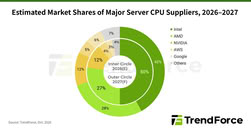
Server CPU Shipments Projected to Grow Over 40% YoY in 2027, with Arm-Based Products Continuing to Gain Market Share

TrendForce's latest AI server industry research indicates that demand for server CPUs has grown steadily since the second half of 2025 as AI server providers actively introduce AI agent applications. Server CPU shipments are projected to increase 31% YoY in 2026.

In 2027, continued growth in AI inference demand and rising adoption of agentic AI services are expected to drive server CPU shipments up by more than 40% YoY, potentially reshaping a market landscape traditionally dominated by x86 processors.

Qualcomm Licenses Huawei's LogicFolding, 5G, and Other Technologies

Qualcomm announced today that it is officially licensing technology from Chinese technology giant Huawei. In a deal estimated to be worth $6.9 billion upon completion, Qualcomm will license various technologies from Huawei to integrate across its product portfolio. According to official releases, these technologies include computing, AI, networking, and more. Bloomberg reports that the deal also covers Huawei's latest LogicFolding silicon design. This is a significant win for Huawei, whose R&D teams have spent years designing a way to bypass sanctions and overcome manufacturing technology limits. By stacking silicon vertically across two sheets, LogicFolding dramatically reduces the distance between compute elements, increases efficiency, and significantly improves transistor density. The result is a 55% increase in transistor density and a 41% boost in power efficiency.

Update, 06:30 UTC, October 6: Qualcomm issued a statement that dismantles rumors that the company is licensing LogicFolding technology.
QualcommQualcomm and Huawei entered into a multi-year, broad patent license agreement that includes cross-licenses across a range of technology fields. The terms are confidential, but reports characterizing Qualcomm as a net payor on the license agreement are incorrect. In addition, assertions that the agreement is related to LogicFold are not accurate. Separately, Qualcomm has agreed to purchase certain Huawei non-cellular U.S. patents across multiple technology areas.
Huawei LogicFolding

Huawei Prepares 160,000 Ascend 950DT Accelerators for DeepSeek Data Center

Chinese AI labs are increasingly ordering domestic AI accelerators, and one of the leading AI labs, DeepSeek, has reportedly placed an order for 160,000 Huawei Ascend 950DT chips. Late last year, Huawei revealed that the company is preparing a series of chips and rack-scale solutions to meet domestic AI demand, and now we are seeing large orders starting to materialize. For reference, the Huawei Ascend 950DT AI accelerator has a memory capacity of 144 GB, built on Huawei's own HBM memory design. This in-house solution delivers a bandwidth of nearly 4 TB/s, aligning perfectly with Huawei's vision. The chip can achieve about one PetaFLOP of FP8 peak compute, or about two PetaFLOPS of FP4.

DeepSeek, one of the leading Chinese AI labs, will use Huawei's Ascend 950DT chips for large-scale inference operations and will deploy them in a single data center located in Inner Mongolia. The overall system will deliver a peak of 160 ExaFLOPS at FP8 or about 320 ExaFLOPS at FP4 precision. The system will also have about 23 PB of total HBM memory, meaning that the large-scale inferencing operations will be able to serve thousands of customers concurrently without any issues.

Microsoft and China's Joint Windows 10 Faces Early Retirement

The Chinese Ministry of State Security has reportedly ordered local governments and state-affiliated organizations to remove Windows 10 installations from their systems as the central government seeks to completely diversify away from Western technology. However, the irony is that this is not the standard Windows 10 OS we are all familiar with. The software was developed by C&M Information Technologies (CMIT), a joint venture between Microsoft and China Electronics Technology Group, and was specifically modified to meet Beijing's security requirements. Based on Windows 10 Enterprise, this government version removes or disables several consumer-facing features, keeps activation and updates within China, and supports the use of Chinese cryptographic standards.

According to Bloomberg, the central government has reportedly moved up the planned obsolescence date, and instead of lasting until February 2027, the retirement is happening now. Despite receiving a highly customized version of Windows 10, Beijing now seems increasingly uncomfortable with maintaining a foreign-origin operating system at the core of sensitive government infrastructure. However, China does have a replacement plan for the Windows operating system.

Huawei MateBook Pro Arrives with Kirin X90 Plus SoC and $1,480 Price Tag

Huawei has just unveiled its latest MateBook Pro laptop, featuring a homegrown processor, operating system, and a fully integrated experience. Priced at 9,999 RMB for the base model with 24 GB of RAM and a 512 GB SSD, this equates to about $1,480. The top-end configuration offers 32 GB of RAM and a 1 TB SSD for 13,999 RMB, approximately $2,072 at the current exchange rate.

Inside, the previous Kirin X90 has been replaced by the new Kirin X90 Plus, which is kept cool by a foam-copper vapor chamber, allowing the chip to maintain a 40 W performance envelope. Huawei seems to have retained the same core counts and GPU specs with a 10-core, 20-thread design, but the improved thermal management suggests they are extracting more performance from this generation. No official specifications have been released yet, so this remains speculative.

Global Tablet Market Sees Marginal Growth at 0.1% in Q1 2026 as Demand Outlook Weakens

The global tablet market remained flat in Q1 2026, with shipments rising just 0.1% year on year to reach 37 million units, according to the latest research from Omdia. While tablet shipments declined sequentially, in line with typical seasonal patterns, regional performance was led by Latin America, followed by the Middle East and Africa. However, this growth was largely driven by inventory build-up rather than underlying end-user demand, pointing to a weaker demand outlook.

"Heading into 2026, tablets have been relegated in importance for vendors across margins, volume, and overall value," said Himani Mukka, Research Manager at Omdia. "In this supply-constrained environment, consumers and vendors alike are being more deliberate about which devices to prioritize. PC vendors are focusing on notebooks and desktops, while those operating across both smartphones and tablets are gravitating toward smartphones due to their outsized contribution to overall business."

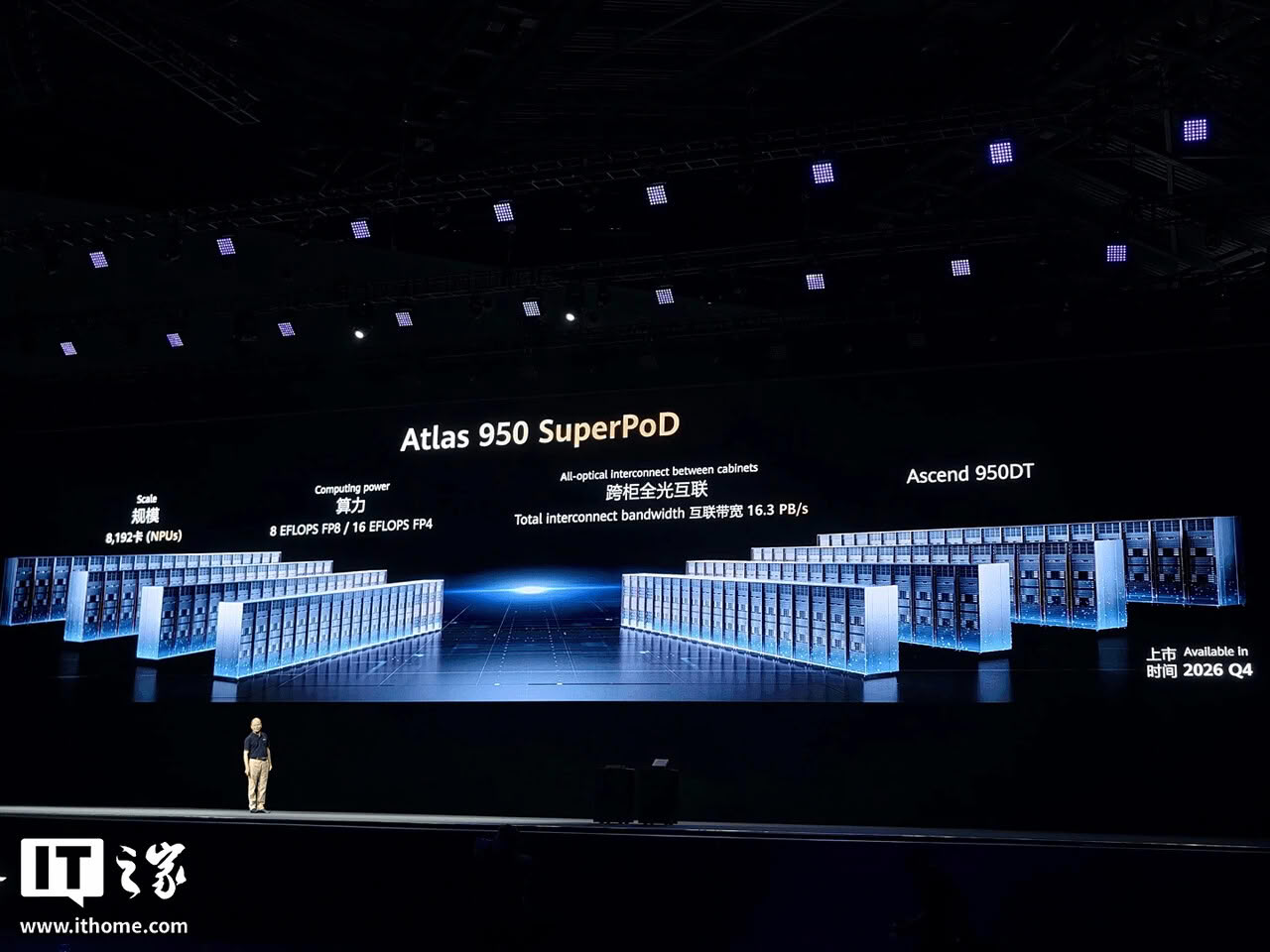
Huawei Debuts Its Latest Atlas 950 and TaiShan 950 SuperPoDs at MWC 2026

At MWC Barcelona 2026, Huawei debuts its latest SuperPoD product Atlas 950 SuperPoD, TaiShan 950 SuperPoD and a series of computing solutions to the global market. This embodies the company's latest endeavor to open source and open collaboration with the aim of building a resilient computing foundation and creating a new option worldwide.

Tech innovation builds a resilient computing foundation
With AI technologies evolving rapidly and models now using trillions of parameters, agentic AI is beginning to penetrate into core production processes in many industries. This is driving up demand for larger computing scale and lower latency. However, these massive models are beyond the reach of conventional horizontal scaling; larger clusters often suffer from lower utilization and frequent training interruptions.

ASML Boosts EUV Power to 1,000W for Better Yields and Lower Chip Costs

ASML says it has boosted the light source power in its EUV lithography systems to 1,000 watts, up from roughly 600 W today. According to a Reuters report, the company claims the increase could enable up to 50% more chip output by the end of the decade. More source power translates directly into higher throughput. ASML says customers could process around 330 wafers per hour by 2030, compared to about 220 wafers per hour today, lowering the cost per chip. EUV light at a 13.5 nm wavelength is generated by firing a CO₂ laser at microscopic droplets of molten tin, creating plasma that emits EUV radiation. The light is then collected and directed through precision optics supplied by Carl Zeiss AG. To reach 1,000 W, ASML doubled the droplet rate to roughly 100,000 per second and shifted to a two-pulse laser shaping approach instead of a single pulse. The company says there is a path toward 1,500 W and potentially even 2,000 W over time.

ASML is the only supplier of commercial EUV scanners, used by major chipmakers including TSMC, SK Hynix, and Intel. The tools are considered critical to advanced node production and have been subject to export restrictions to China. The move is aimed at maintaining ASML's lead as U.S. companies, such as Pat Gelsinger's xLight EUV startup and Chinese efforts to develop competing lithography systems continue to ramp. Chinese companies have reportedly been sourcing parts from older ASML machines through secondary markets. Huawei is leading the charge, working to build a homegrown AI supply chain as a way around foreign tech restrictions. The company set up a large semiconductor manufacturing facility in Guanlan focused on 7 nm chips for its own processors. The Chinese government had initially aimed to have a working prototype from this effort by 2028.
US Government Reportedly Removed CXMT & YMTC from Restricted Chinese Tech Firm List

Last May, insiders alleged that the US Government Bureau of Industry and Security (BIS) was eyeing up a handful of Chinese tech companies. At the time, ChangXin Memory Technologies (CXMT) was considered for inclusion within an extensive "export blacklist." With the regional exit of more mainstream computer memory manufacturing companies, the likes of CXMT and Yangtze Memory Technologies Corporation (YMTC) are being tracked as the native Chinese industry's leading lights. Earlier today, a revised Pentagon Section 1260H document seemed to no longer feature the aforementioned duo of memory and storage makers. Hours later, industry observers and journalists noticed that the updated list had been removed from public view. A fresh Reuters news article mentions the adding of Alibaba and Baidu to the latest edition of the US administration's trade blacklist. Across the past few years, these gigantic tech players are best known for unprecedented large-scale purchases of AI-crunching hardware, mostly supplied by NVIDIA.

The US Department of War's (DOW) Section 1260H document designates Chinese companies with (alleged) military or communist party connections. Last year's addition of CXMT caused plenty of head scratching—the Hefei, Anhui-based memory chip manufacturer largely specializes in consumer-grade products. Earlier this month, Nikkei Asia divulged inside track information about ASUS, Acer, Dell, and HP's supposed consideration of CXMT DDR5 and DDR4 lines. The apparent lifting of blacklist status could make it easier for Western OEMs to acquire DRAM from CXMT, and NAND from YMTC, although the latter still remains within the US Commerce Department's sights (considered a threat to the region's supply chain). CXMT's recent advancement into mass production of HBM3 will (inevitably) elevate its local profile, but a reported collaboration with Huawei—involving the next-gen Ascend 950 AI accelerator—could attract extra Pentagon scrutiny.

Memory Price Surge Intensifies Retail Pricing Pressure, Putting Global Smartphone Production at Risk of a Sharp Decline in 2026

TrendForce's latest smartphone industry research predicts that soaring memory prices are set to weigh heavily on global smartphone production in 2026. Total output is forecast to decline 10% YoY to approximately 1.135 billion units. With memory prices showing no clear signs of easing, the growing gap between higher retail prices and consumer price tolerance is expected to further dampen end demand.

Under a bear-case scenario, TrendForce warns that the annual contraction in global smartphone production could widen to 15% or more. The extent of the impact, however, will vary by brand, depending on differences in product mix and regional exposure.

CXMT Reportedly Plans to Dedicate 20% of Mass Production Capacity to HBM3 Line in 2026

According to fresh news reports ChangXin Memory Technologies (CXMT) has just announced the initiation of HBM3 module mass manufacturing activities. The Chinese computer memory maker is slowly catching up with more mainstream international rivals—most notably, South Korean companies started full production of fourth-generation high-bandwidth memory (HBM3) products back in 2023. Over the past year, CXMT has demonstrated improved capabilities across a promising range of (mostly) commercial lines—for example, their proprietary DDR5 and LPDDR5X designs were showcased in preview form, last November. By early February (2026), the likes of ASUS, Acer, Dell, and HP were reportedly weighing up the sourcing of CXMT consumer-grade memory products.

The first signs of CXMT's diversification into the development of "homegrown" HBM3 modules were divulged by industry insiders, last May. By early autumn, a joint venture—involving YMTC—seemed to pave the way for an acceleration of the Chinese industry's overall HBM manufacturing footprint. Huawei's newest/futuristic Ascend AI accelerator relies on "in-house" HBM tech, due to global sanctions preventing the supply of cutting-edge Micron, Samsung, SK Hynix components to Chinese firms. An MK South Korea reports cites recent information disclosed by an anonymous source, regarding a secret partnership: "Huawei, which is leading the development of AI semiconductors in China, is developing HBM together with CXMT. It is expected to enter mass production despite (talk of) low yield(s)." Further inside track info posits that CXMT is planning a per month output of 60,000 wafers for "HBM3 production." This impressive guesstimate allegedly accounts for about 20% of the memory maker's total manufacturing capacity of 300,000 wafers per month, at least for 2026.

VXE Launches 55 g Dragonfly R1S Gaming Mouse At $18.99

VXE, an ATK Gear sub-brand, is known for making affordable, lightweight alternatives to some big-brand gaming mice, and the brand seems to be taking things to a new level with the latest entry into its Dragonfly R1 series. The VXE Dragonfly R1S, announced in a post on X, takes the same lightweight shape as the existing R1 series, swaps the sensor for the Xhero AI and the MCU for the HiSilicon BS20, drops the refresh rate to 1 kHz, and uses the basic Huano Blue Shell White Dot mechanical switches. As a result, you get a 55 g wireless gaming mouse with tri-mode connectivity—USB-C, NearLink a new standard introduced by Huawei in 2024, and Bluetooth 5.2—150 hours of battery life, and a symmetrical design built for small- to medium-sized hands. The mouse measures in at 120.6 mm × 64.1 mm × 37.6 mm, and it has a slightly rearward low hump with gradually sloping main clicks, two customizable side buttons, and effectively vertical sidewalls—a shape very similar to the Pulsar X2 series or the Endgame Gear OP1 8k we reviewed previously.

Aside from the obvious weight increase and hardware changes, VXE has had to cut some corners to get to the low MSRP of $18.99. For instance, although it has a matte texture, the shell has no coating, so it may become shiny over time and with regular use. The mouse is also only available in black and white, while the other models in the R1 line-up are available in more colors. Regardless of the price, the VXE R1S is officially the new low-end variant of the R1 series, but it is still customizable and remappable in the brand's driver, as long as you're on Windows.

Chinese EUV Lithography Machine Prototype Reportedly Undergoing Testing

According to sources close to Reuters, China has developed a working prototype of an EUV machine, which is currently undergoing testing. This domestic achievement involved Chinese companies successfully reverse-engineering ASML's EUV lithography scanners and creating a functional version using second-hand components. The new EUV prototype reportedly takes up an entire factory floor, comparable in size to modern High-NA EUV machines from ASML. Chinese companies are said to have obtained parts from older ASML machines on secondary markets. The Chinese government initially set a goal of producing working chips from the prototype by 2028.

Leading this initiative is the Chinese technology giant Huawei, which is working to establish a domestic AI supply chain to bypass foreign tech restrictions. In Guanlan, China, Huawei established a comprehensive facility for manufacturing semiconductors using 7 nm technology for its custom processors. Dissatisfied with SMIC's limited output capacity, Huawei has assumed control of the entire silicon production process, from sourcing materials and chemicals to wafer fabrication equipment and chip design. The company is making an unprecedented effort to develop every component of the AI supply chain domestically, from wafer fabrication equipment to model building, and now EUV scanners for more advanced nodes.

Huawei Ascend 950 AI Accelerator Pictured

Huawei's next-generation Ascend 950 AI accelerator has been pictured for the first time, showcasing the company's custom silicon and HBM memory. The chip combines Huawei's first self-developed HBM memory with a new generation of AI acceleration. Huawei aims to compete through scale rather than focusing solely on single-chip performance. Although it currently trails NVIDIA in per-chip performance, Huawei's system-scale solutions can still be competitive. The company has announced the Ascend 950 family for early 2026, featuring two variants.

The 950PR model includes 128 GB of in-house HBM with around 1.6 TB/s of bandwidth, while the 950DT model increases memory to 144 GB and boosts bandwidth to nearly 4 TB/s. Both chips target one PetaFLOP of FP8, and two PetaFLOPS of FP4. Huawei's competitive strategy emphasizes dense packaging and aggressive networking, rather than relying solely on raw per-chip performance. We have no information on the node selection, but it will likely be SMIC's newest N+3 node with 5 nm-class features. Chinese SMIC has officially achieved volume production of its newest 5 nm node relying on the deep ultraviolet (DUV) to manufacture its silicon. Since the first customer for N+3 was Huawei with Kirin 9030 SoC, it is only logical that the more important Ascend AI accelerator family is manufactured using the same node.

Chinese SMIC Achieves 5 nm Production on N+3 Node Without EUV Tools

Chinese company SMIC has officially achieved volume production of its newest 5 nm-class node called SMIC N+3. This is officially China's most advanced semiconductor node produced without any extreme ultraviolet (EUV) lithography tools, relying on the deep ultraviolet (DUV) to manufacture its silicon. In the latest analysis of the Huawei Kirin 9030 SoC, the TechInsights has confirmed that the chip has officially been manufactured using the new advanced node, bringing Chinese semiconductor independence one step closer to reality. This node is a full generation ahead of the older SMIC N+2, which is 7 nm-class node Huawei has been using to manufacture its Ascend series of AI accelerators and other infrastructure parts.

However, this is not without drawbacks. Since SMIC uses DUV to print silicon designs, the company faces significant challenges in realizing its silicon ambitions. For printing smaller nodes, EUV scanners offer more possibilities due to their much smaller wavelength of 13.5 nm, compared to the smallest DUV immersion scanner wavelength of 193 nm. TechInsights has confirmed that SMIC's N+3 node, despite achieving impressive DUV multi-patterning implementation, encounters significant yield challenges, particularly due to the aggressively scaled metal pitch. As a result, the Huawei Kirin 9030 SoC is likely produced at an operating loss, with a significant portion of dies being discarded or used for downgraded chips.

Huawei Ascend 910C Accelerator's Maturation Allegedly Spurred NVIDIA H200 Export Reversal

Earlier this week, the US government approved exports of NVIDIA H200 data center-grade accelerators to China. This reverses a previous decision, to prevent "full fat" H200 hardware reaching Chinese shores. Team Green engineers were reportedly working on a severely reduced "H20" alternative—whispers of this sanction-conforming design emerged earlier on in 2025. A competing Chinese product—Huawei's Ascend 910C accelerator—is often regarded as a main rival to newly approved past-gen Team Green AI-crunching solutions. According to Bloomberg's inside sources, White House officials were assessing the Ascend 910C's capabilities—most notably in the form of Huawei's super node CloudMatrix 384 system.

Despite lagging behind the H200, in terms of computing power and memory bandwidth, a large array of Ascend 910C accelerators (384 in total) is still a significant force. Additionally, Bloomberg's unnamed sources allege that the current US administration is worried about China rapidly improving its domestic semiconductor production capacities. Anonymous industry figures have whispered about Huawei and foundry partners working towards manufacturing 600,000 units throughout the coming year. Supposedly, the aforementioned White House staffers have considered a slightly different scenario—that Huawei: "would be capable, in 2026, of producing a few million of its Ascend 910C accelerators." According to a related Reuters news article, Chinese regulators are reportedly weighing up methods that will limit local industry's access to NVIDIA H200 systems.

NVIDIA Gets H200 Export License for China, With 25% of Revenue Going to the U.S. Government

The Trump administration has approved a framework allowing NVIDIA to resume exports of its H200 data center accelerators to China, subject to a revenue-sharing condition that allocates 25% of sales proceeds to the U.S. government. Rather than lifting export restrictions outright, the arrangement requires that recipients be vetted through Commerce Department licensing, so shipments will be controlled and limited to approved commercial customers. The decision reopens a major market for high-end accelerators while maintaining a regulatory channel to monitor distribution.

The H200 chip remains a powerful solution for large-scale AI workloads even today. Manufactured using TSMC's N4 process, it combines NVIDIA's "Hopper"-derived architecture with 141 GB of HBM3E memory and 4.8 TB/s memory bandwidth, making it ideal for large model training and dense inference tasks. Although it doesn't match the performance of NVIDIA's current "Blackwell" family and other upcoming accelerators, the H200 is a mature product that has been shipping since spring 2024 and benefits from a well-developed driver and software ecosystem. Its raw compute power is roughly double that of solutions like the Huawei Ascend 910C, making it very competitive even today.

China Eyes Chip-Stacking Path to Narrow the Gap with NVIDIA

China's semiconductor industry is looking to bridge its technology gap with NVIDIA by stacking mature logic nodes with high-bandwidth memory and new compute architectures, according to remarks from Wei Shaojun, vice president of the China Semiconductor Industry Association. Speaking at an event in Shenzhen (via ESM China), Wei said that 14 nm logic chips, far behind the 4 nm-class silicon used in NVIDIA's current AI GPUs, could reach comparable performance if paired with 18 nm DRAM using 3D hybrid bonding and a near-memory computing architecture. The approach reduces data movement and improves energy efficiency by placing compute elements directly beside memory. The concept mirrors Huawei's recent strategy of "stacking and clustering" chips as a workaround to US export controls, which block China's access to advanced nodes such as 5 nm and below. Huawei has argued that performance can still scale by increasing chip integration density instead of relying on cutting-edge lithography.

Wei emphasized that his proposed design uses a fully domestic supply chain, 14 nm logic and 18 nm DRAM are both covered by current US export restrictions, limiting access to foreign production. He also noted that the global AI ecosystem remains heavily dependent on NVIDIA hardware and CUDA software, calling it a "triple dependence" across models, architectures, and development tools. Chinese GPU alternatives are emerging, including Zhonghao Xinying, a startup founded by Google engineer Yanggong Yifa. The company claims its custom ASIC TPU accelerator can reach "up to 1.5x" the compute performance of NVIDIA's older A100 GPU.

Huawei Kirin 9030 Mobile SoC Benchmarked - Leaked Scores Suggest Room for Improvement

Earlier today, Huawei Technologies debuted a high-end family of Mate 80 smartphones—all powered by variants of the firm's proprietary Kirin 9030 chip. Industry insiders propose that these relatively advanced mobile processors were fabricated by SMIC, utilizing an N+3 process node. This milestone allegedly marks the Chinese semiconductor leader's first foray into 5 nm territories, at least for smartphone applications. Preceding Huawei's fancy product launch, the Geekbench browser database welcomed a mysterious SGT-AL10 device. Smartphone experts believe that this model code is related to the freshly-revealed Mate 80 Pro Max model. Yesterday's new entry depicts a test platform powered by a (presumably) in-house designed 9-core CPU cluster (1 + 4 + 4). In comparison, the older Kirin 9020 SoC featured an eight-core configuration.

The latest chip could sport a single prime "Taishan" CPU core (designated as cluster #3), clocked at 2.75 GHz. The Geekbench 6.2 (Android AArch64) leak points to cluster #1 featuring four cores clocked at 1.72 GHz, and cluster #2 utilizing four cores clocked at 2.27 GHz. Scores of 1131 (single) and 4277 (multi) were tallied, positioning the emergent Kirin 9030 well below Western rivals in terms of performance. Digital Chat Station provided comment upon discovery of these underwhelming data points—the tenured chipset soothsayer theorized that the processor was not running at its full potential. A fully unleashed Kirin 9030 is not expected to catch up with big name components; Qualcomm, MediaTek, and Apple's very best enjoy significant technological advantages.

Baidu Announces M100 and M300 AI Processors

Chinese company Baidu has announced two new AI processors and several large-scale computing products at its annual Baidu World conference. The company's new M100 and M300 chips, developed by its Kunlunxin Technology unit, target inference and training workloads, Reuters and South China Morning Post reports. The M100 chip optimized for inference workloads, is expected to launch in early 2026. The M300, capable of training massive multimodal models with trillions of parameters will follow in 2027. Both aim to deliver "powerful, low-cost, and controllable AI computing power," according to Baidu Cloud president Shen Dou. Baidu has been developing its own processors since 2011 and now joins domestic chipmakers such as Huawei's HiSilicon, Cambricon, MetaX, and Biren in reducing reliance on NVIDIA hardware. Similar to Huawei's CloudMatrix 384 system based on Ascend 910C chips, Baidu is building new "supernode" clusters that combine hundreds of its in-house processors. The Tianchi256 system, integrating 256 Baidu P800 chips, is set to debut in the first half of 2026, followed by the Tianchi512 with 512 chips later in the year. Baidu said the configuration offers over 50% higher performance than its previous generation and plans to scale these clusters to "millions" of chips by 2030.

Baidu founder and CEO Robin Li called the current AI industry structure "unhealthy," criticizing how most profits concentrate at the chip and foundation-model level. He suggested a "reversed industry pyramid," where value shifts toward real-world AI applications. The company also introduced Ernie 5.0, a multimodal large language model with 2.4 trillion parameters, twice the size of Alibaba's Qwen3-Max and Moonshot's Kimi K2. Baidu says Ernie 5.0 improves in text, image, video, coding, and agent tasks through unified multimodal training.

Huawei Launches Homegrown PCs With Custom Processors and Linux-Based OS

Huawei is advancing its strategy for technology independence by introducing two new desktop computer models built entirely with Chinese components. The Qingyun line—featuring the W515y and W585y models—represents the company's latest effort to provide computing solutions free from foreign hardware. These systems integrate Huawei's Kirin 9000X chip with locally developed Linux software, instead of Microsoft Windows. Users can choose between UOS V20 from Tongxin or Galaxy Kylin V10. While details about the hardware are still emerging, the Kirin 9000X is an eight-core Arm-based chip with 16 threads, operating at 2.5 GHz. It could be a big.LITTLE deisgn, or a big-core only SoC. The desktops feature quad-channel LPDDR5x memory and support both flash storage and conventional hard drives.

The port selection is vast, offering a Type-C USB connector and three standard USB 3.2 ports on the front, with four additional USB connections, wired network capability, a legacy serial interface, and dual video options via VGA and HDMI on the back panel. Weighing approximately 3.6 kg and measuring just under 300 mm in width, the systems are compact. Huawei includes its own keyboard and mouse with each unit, though pricing and release dates have not been disclosed. Notably, Huawei has chosen to equip these computers with established Linux variants instead of its HarmonyOS.

U.S. Could Impose 100% Semiconductor Tariff If Chips Are Not "Made in America"

The U.S. government is considering imposing massive tariffs on semiconductor products unless manufacturers can match those volumes with chips produced in the United States. Under the current draft, companies that do not match foreign-sourced chip volumes with domestic output over time could face tariffs that, in some versions, reach 100%. The idea is an act of forceful action to speed up onshore capacity and reduce strategic dependence on overseas foundries, but they also admit that the plan faces serious practical hurdles. The core concept is simple to draft on paper, but hard to implement. For every unit brought into the U.S. from an overseas plant, such as TSMC in Taiwan and Samsung in South Korea, a corresponding unit would need to be produced domestically within a specified timeframe, or tariffs would be applied. This means that for every batch of chips NVIDIA, AMD, Intel, or Apple produce overseas, the same chip would need to be produced in the U.S.

Counting and comparing chip "units" is extremely complicated. Every semiconductor design differs wildly by complexity, cost, and function, and the typical semiconductor supply chain moves wafers, packages, and finished devices across several countries before a product reaches consumers. Even TSMC, the very maker of the chip, sometimes has a hard time confirming if the designs it makes are on the U.S. sanctions list. Like it experienced with Huawei, TSMC couldn't determine that a third-party shell company was ordering Ascend accelerator IP on behalf of Huawei—which sits on the U.S. blacklist—even with advanced detection tools. Officials are reportedly considering transitional credits and carve-outs for companies that commit to building U.S. fabs, which would allow them to import while new plants come online. Even with those credits, a question arises about how to compare a million small mobile processors against a million high-performance data center accelerators.

Huawei Unveils Homegrown HBM and Ascend 950, Bets on Massive SuperClusters

Huawei used its Connect 2025 event to unveil an ambitious hardware roadmap that pairs the company's first self-developed HBM memory with a new generation of Ascend AI accelerators, and the message was clear: Huawei will compete on scale rather than single-chip supremacy. While still lagging behind NVIDIA on per-chip performance, the system-scale solutions can be competitive. The company confirmed the Ascend 950 family for early 2026 in two variants. One model, labeled 950PR, is described with about 128 GB of in-house HBM and roughly 1.6 TB/s of bandwidth, while the 950DT increases memory to 144 GB and pushes bandwidth toward 4 TB/s. Huawei also sketched longer term plans for Ascend 960 and Ascend 970 devices arriving in 2027 and 2028, promising larger aggregate memory capacities, higher interconnect bandwidth, and wider support for FP8 precision formats.

China's AI Chip Ambitions Limited by HBM Memory Supply, Notes Report

According to SemiAnalysis, Chinese AI semiconductor buildout faces an unexpected bottleneck that's more critical than manufacturing constraints: high-bandwidth memory shortages. While domestic foundries like SMIC can produce sufficient AI processors, the lack of HBM supply chains has emerged as the primary limitation throttling China's semiconductor ambitions. Huawei's Ascend 910C illustrates this mismatch. The company has foundry capacity to manufacture 805,000 units annually through TSMC, which is a result of stockpiling before the cutoff, as well as SMIC. However, HBM shortages prevent realizing this production potential. Chinese firms accumulated roughly 11.4 million HBM stacks from Samsung before export controls tightened, but these stockpiles won't sustain long-term AI scaling. The memory crunch effectively neutralizes Chinese manufacturing capabilities, giving Western competitors like NVIDIA and AMD a sustained advantage despite Beijing's substantial semiconductor investments.

The path toward HBM independence runs through domestic memory manufacturers like CXMT and the recent collaboration with YMTC. Converting standard DRAM production to HBM manufacturing requires specialized equipment, which is predominantly supplied by Western suppliers, creating another dependency layer. China could achieve competitive HBM3E production by 2026 if current investment trajectories continue and equipment restrictions remain stable. However, this timeline assumes successful technology transfer and uninterrupted access to critical manufacturing tools. If export controls expand to encompass additional HBM-related equipment, the development window could become considerably longer. YMTC is reportedly ready to enter DRAM production and could begin purchasing equipment by late 2025, utilizing its secret weapon, Xtacking technology, one of the most advanced hybrid bonding techniques available. This matters because HBM requires stacking at least 16 memory chips with incredible precision, something YMTC has been doing for years with their NAND products.

China to Triple Its Domestic AI Accelerator Output Thanks to Huawei and SMIC

The world's AI arms race is reshaping the global semiconductor supply chain. To reduce dependence on foreign computing, China is looking to triple its domestic AI accelerator output. According to anonymous sources close to the Financial Times, China has developed a plan to significantly scale its manufacturing operations. An entire semiconductor fabrication facility, with unknown total wafer output and node specifications, is being dedicated to Huawei for the production of its Ascend accelerators, and is scheduled to start production by the end of the year. Two additional plants will come online next year. SMIC, China's premier semiconductor manufacturer, has been supporting Huawei's efforts, but it appears that Huawei has decided to initiate its own independent production with SMIC's assistance.

We reported earlier that, out of frustration with SMIC's low output capacity, Huawei has secured the entire silicon production process, from sourcing materials and chemicals to wafer fab equipment and chip-making equipment, as well as actual chip design. A few companies, all backed by Huawei with funding and research, are the backbone of this operation. SiCarrier, which we reported on back in March, supplies optical and X-ray inspection tools, atomic force microscopes, and alignment systems for metrology; gas-based and atomic layer deposition tools for film coating; plasma etchers for patterning; rapid thermal processors for material tuning; and electrical testing platforms for reliability screening. SwaySure and Fujian Jinhua supply memory chips, Si'En and Pehgjin supply power chips, and PWX and PST deal with logic.
Return to Keyword Browsing
Nov 21st, 2026 13:22 PST change timezone

New Forum Posts

Popular Reviews

TPU on YouTube

Controversial News Posts