News Posts matching #NVIDIA

Return to Keyword Browsing

NVIDIA Launches GeForce RTX 5060 Series, Beginning with RTX 5060 Ti This Week

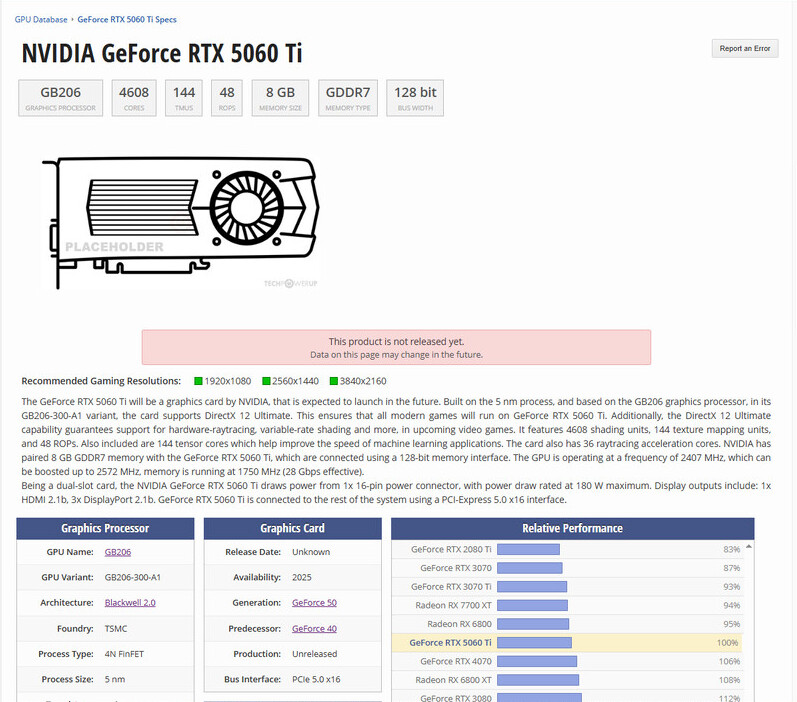
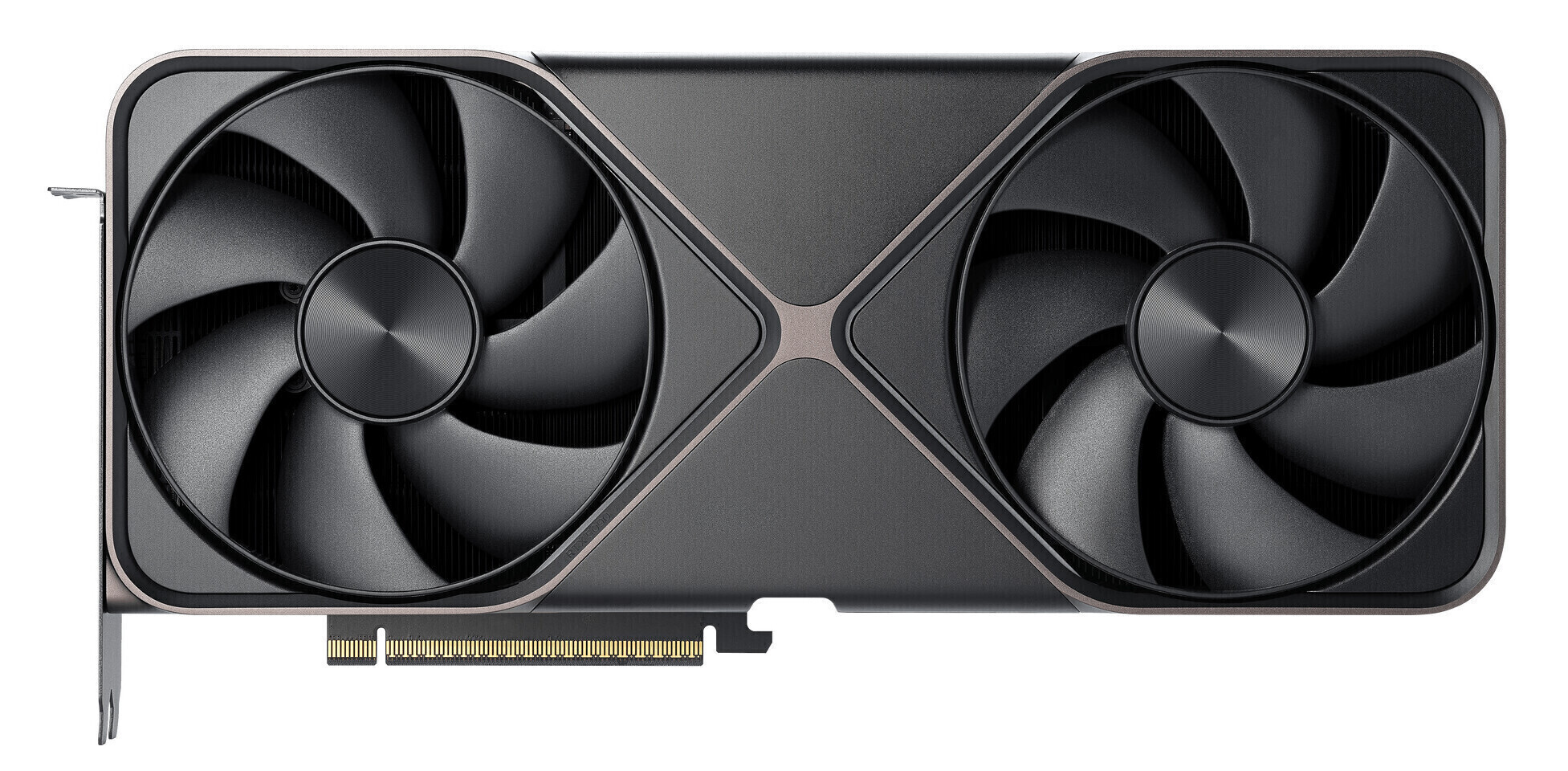
NVIDIA today announced the GeForce RTX 5060 series, with a combined announcement of the GeForce RTX 5060, the GeForce RTX 5060 Ti 8 GB, and the RTX 5060 Ti 16 GB. The latter two will be available from tomorrow, 16th April, which is also when media reviews of the RTX 5060 Ti 16 GB and 8 GB go live. The RTX 5060, meanwhile, is expected to be launched in May. The RTX 5060 Ti introduces the new 5 nm "GB206" silicon, which the SKU maxes out. This chip features 36 streaming multiprocessors (SM) across 3 GPCs. These work out to 4,608 CUDA cores, 144 Tensor cores, 36 RT cores, 144 TMUs, and 48 ROPs. The chip features a 128-bit GDDR7 memory interface driving 8 GB of 16 GB of 28 Gbps (GDDR7-effective) memory for 448 GB/s of memory bandwidth, which is a 55% increase over the RTX 4060 Ti.

NVIDIA recommends the RTX 5060 Ti for maxed out 1080p gameplay, including with ray tracing, although we expect it to be unofficially capable of 1440p gameplay with fairly high settings and ray tracing. You get new features being introduced with the RTX 50-series, including Neural Rendering, and DLSS 4 Multi Frame Generation. NVIDIA is pricing the RTX 5060 Ti 8 GB at $375, and the 16 GB sibling about $50 higher, at $425, although these could be fairy tale pricing given the unpredictable world trade environment and scarcity profiteering by scalpers.


ASUS China Previews "Hatsune Miku" Crossover GeForce RTX 5060 Ti Card

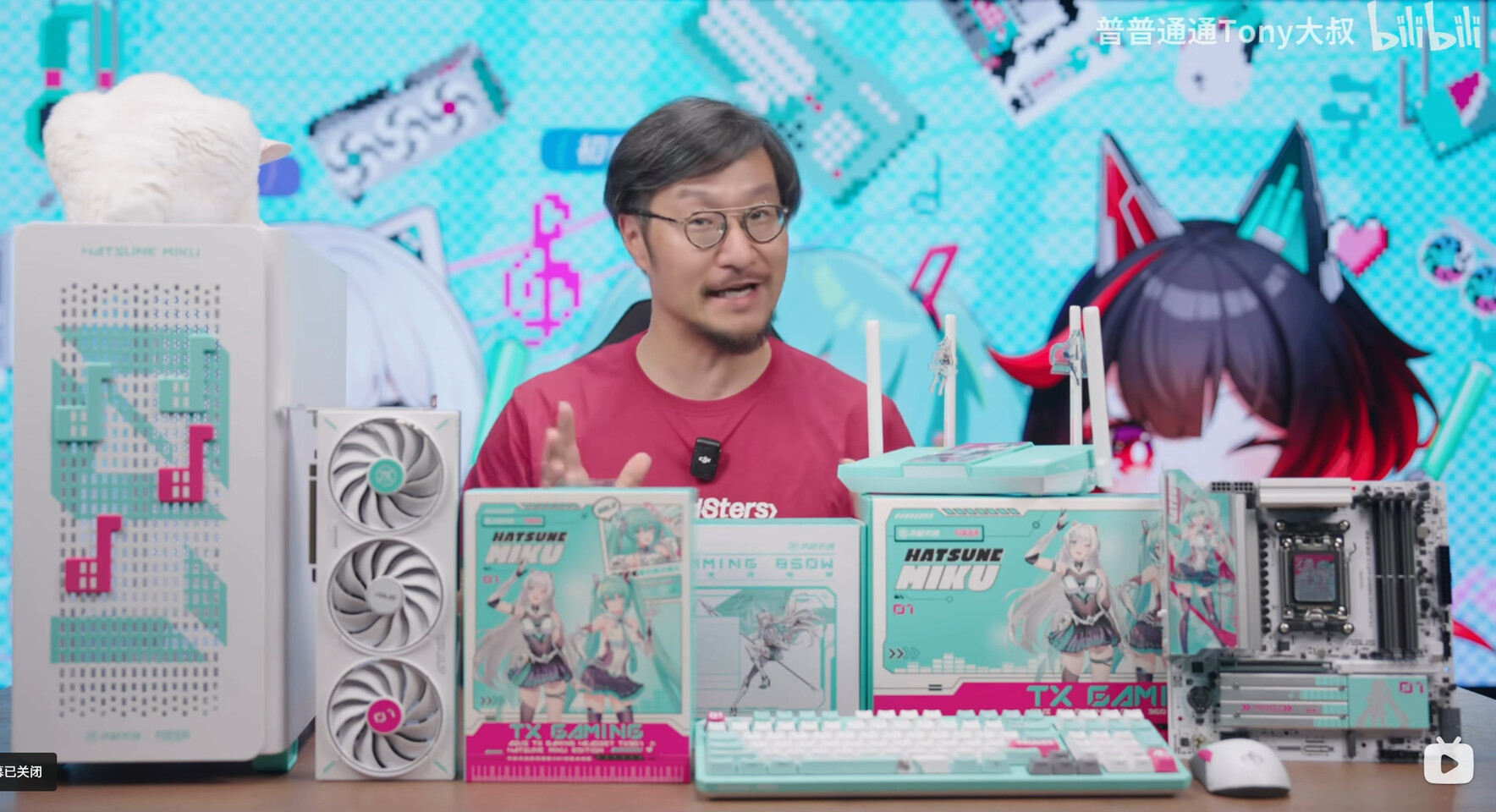
Late last week, the Chinese ASUS branch started to tease a forthcoming ROG and TUF Gaming x Hatsune Miku collection. Eagle-eyed PC gaming hardware watchdogs spotted an intriguing custom GeForce RTX 5060 Ti 8 GB graphics card model within a messy pile of colorful brand-new products. The manufacturer has teamed up with Crypton Future Media; this collaboration is advertised as bringing "a cybernetic fusion to gaming." Initial announcements focused on peripherals, but shortly thereafter the partners unveiled a Hatsune Miku-themed pre-built system. VideoCardz spent its weekend investigating the mysterious new "RTX 5060 Ti O8G" design. A follow-up article pulled information and imagery from Tony Wu's "world premiere" bilibili video—the general manager of ASUS China showcased various upcoming products, including a relevant white triple-fan graphics card.

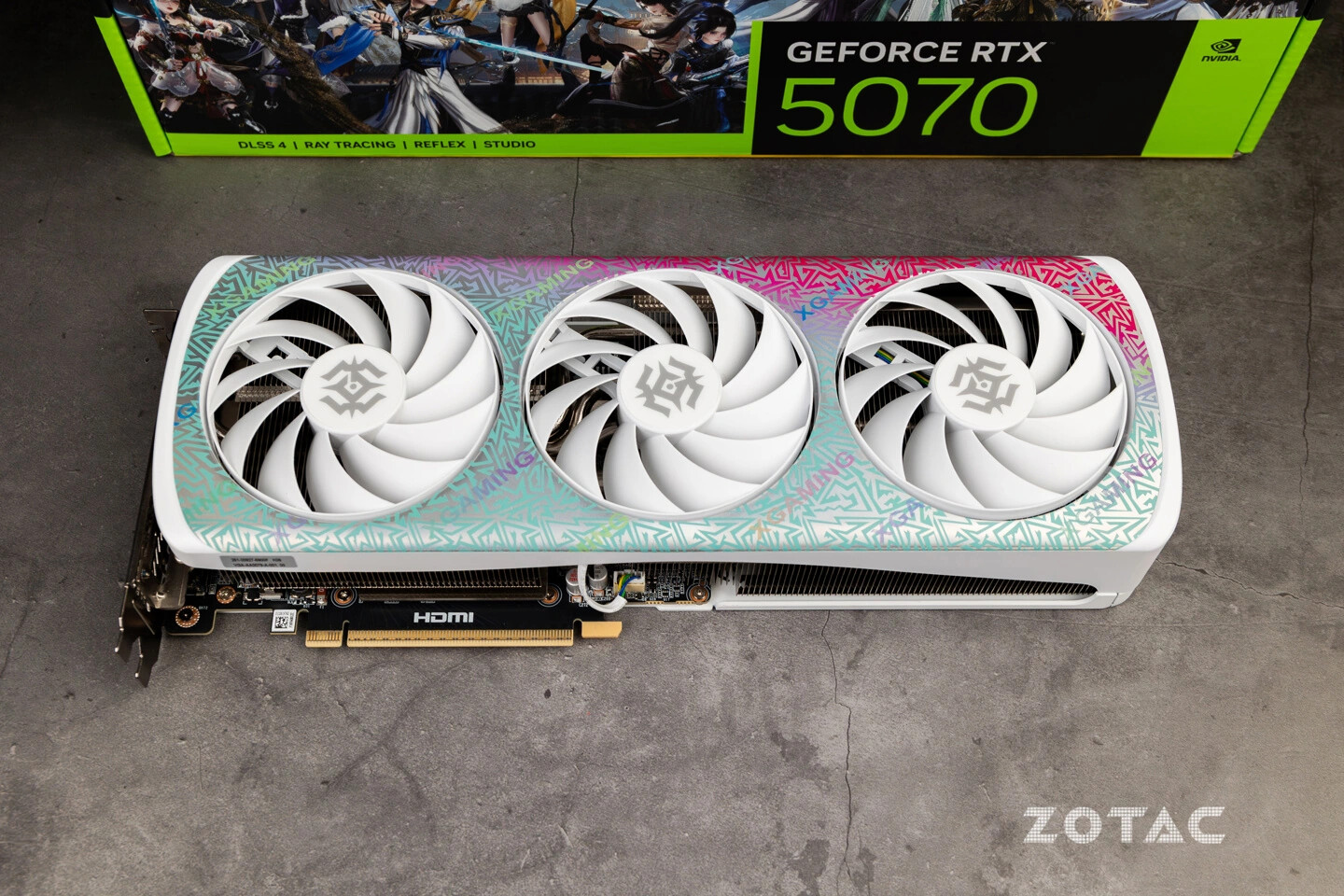
According to reports, Wu did not disclose an exact model name—NVIDIA and board partners are expected to make new entrants "official" at some point this week. Wu's demonstration unit was visually matched up to the teased "RTX 5060 Ti O8G" card. Additionally, Wu and colleagues presented the entire Hatsune Miku product line during a major press conference; last Saturday (April 12) in Changsha. Many items have already launched to market, through JD.com. Naturally, pricing and availability details were not mentioned during their "GeForce RTX 5060 Ti 8 GB OC" segment. The factory overclocked "RTX 50-series" card's unique white design is outfitted with a single 8-pin power connector; suggesting a tentative entry level price bracket. The backplate is decorated with mascot illustrations—TechPowerUp and other media outlets have noticed an uptick in "cute girl" drawings turning up on housings and retail packaging. ZOTAC joined in on the fun very recently; as reported last week.

MSI GeForce RTX 5060 Ti Custom Designs Leaked - Triple & Dual-fan Configs

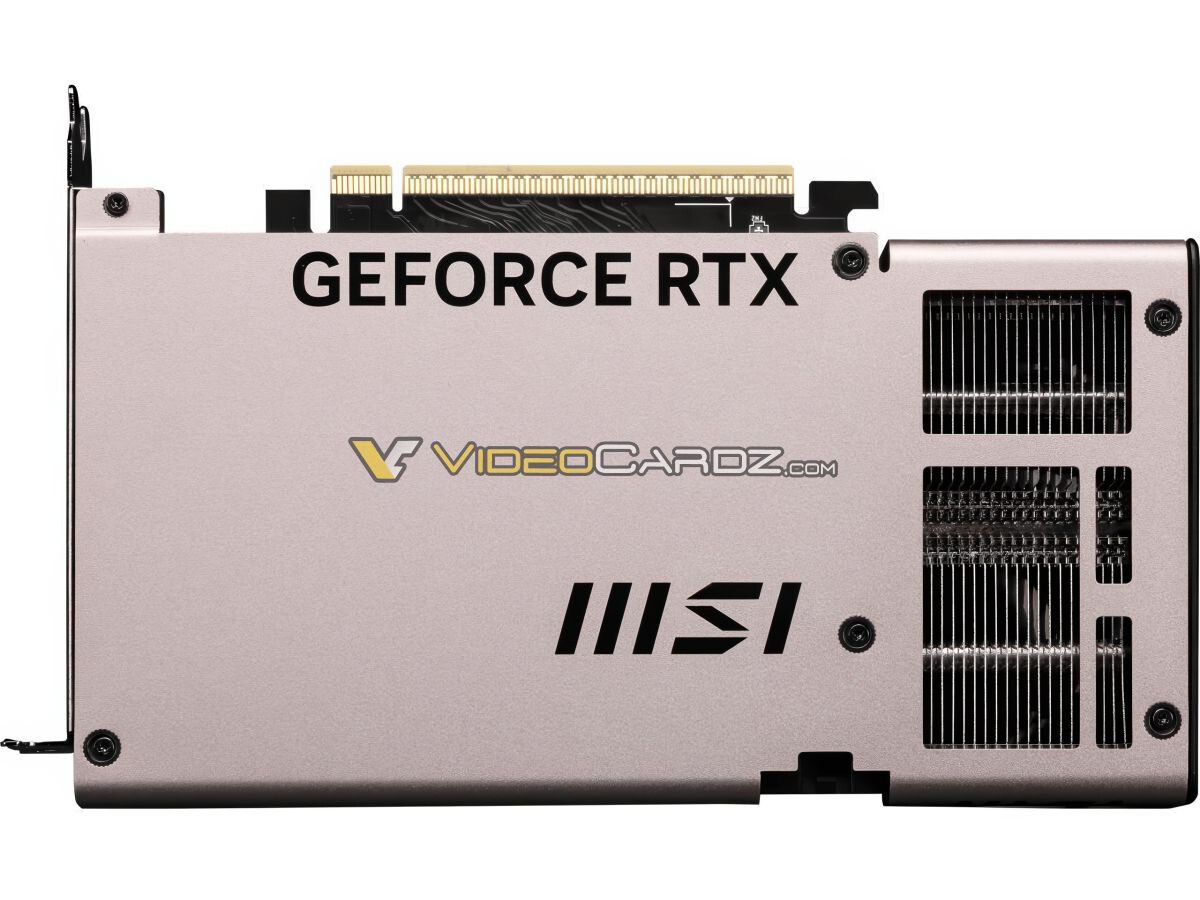
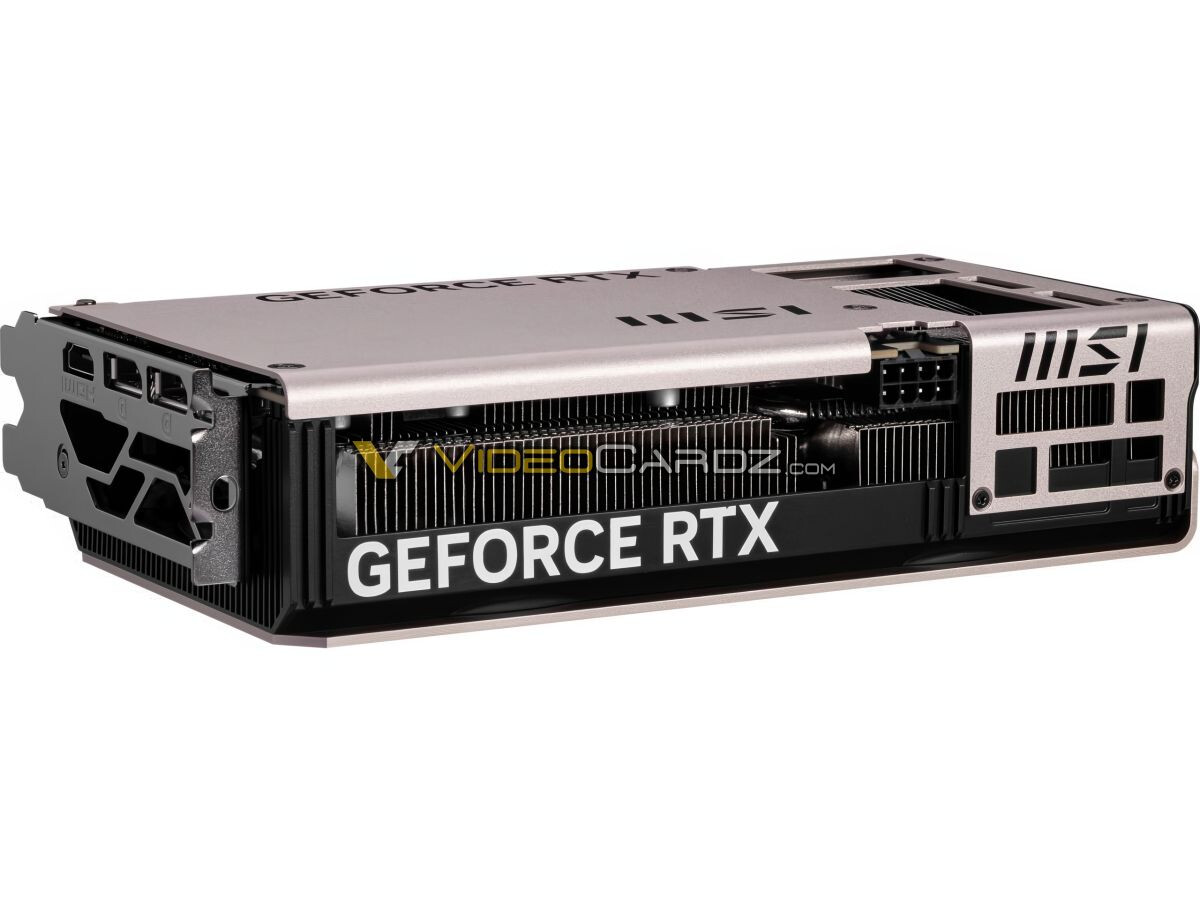
Mid-way through last week, a list of supposed MSI GeForce RTX 5060 Ti 16 GB custom graphic card model names appeared online. Days later, VideoCardz followed up with visual confirmation—covering unannounced INSPIRE and GAMING SKUs. MSI's full lineup of brand-new offerings is expected to be unveiled this week, but the online publication has managed to source pre-launch promo shots from an undisclosed outlet. Previews of retail packaging are absent, but the uploaded images of isolated hardware products look legitimate.

As leaked last week, the board partner's—likely entry level—GeForce RTX 5060 Ti 16G INSPIRE 2X OC model has turned up with a new dual-fan design. TechPowerUp inspected MSI's freshly debuted INSPIRE 3X cards at CES 2025. The manufacturer has gradually populated its custom GeForce RTX 50-series product stack with triple-fan options—the most recent being their GeForce RTX 5070 SKU. The smallest INSPIRE card design seems to feature a single 8-pin power connector—prior to last week, VideoCardz had heard rumors from AIB industry moles about this curious provision. By best guesstimation, the INSPIRE 2X design seems to be 2.3-slots thick. As expected, MSI has outfitted this model with three DisplayPorts (1.2b) and one HDMI (2.1b) port.

Trump Exempts Electronics and GPUs from China Tariffs to Ease Tech Costs

President Trump announced late Friday that a range of electronics imported from China will not be hit by his new reciprocal tariffs, according to a US Customs and Border Protection notice. The exemption, which applies to items arriving in the United States or leaving bonded warehouses on or after April 5, covers smartphones, computer monitors, semiconductors, various electronic parts, and, importantly, high-performance GPUs. Tech companies were bracing for big cost increases. Apple, for example, assembles about 90 percent of its iPhones in China and holds roughly six weeks of inventory in US warehouses. Without this exemption, consumers would likely have seen higher prices once that stock ran out. Framework, the modular laptop maker, has already paused US sales of some Laptop 13 models and discounted others by up to 12 percent after a new 10 percent tariff on Taiwanese parts squeezed their margins.

The GPU market got another break thanks to a clever workaround in the United States-Mexico-Canada Agreement. A research firm SemiAnalysis pointed out that graphics cards made in Taiwan can still enter the US tariff-free if they undergo final assembly in Mexico or Canada. That loophole applies to digital processing units and related circuit boards, which means companies relying on NVIDIA's top-tier accelerators for AI won't see an immediate price jump. White House Press Secretary Karoline Leavitt said these steps are part of a two-pronged plan: offering short-term relief to keep consumer prices down while at the same time pushing major tech firms like Apple, TSMC, and NVIDIA to invest billions in US manufacturing. However, many experts warn that high-precision components are still largely made in Asia, so building up domestic production capacity could take months or even years and may remain more expensive in the meantime.

Update: President Donald Trump posted on Truth Social the following: "There was no Tariff "exception" announced on Friday. These products are subject to the existing 20% Fentanyl Tariffs, and they are just moving to a different Tariff "bucket."We are taking a look at Semiconductors and the WHOLE ELECTRONICS SUPPLY CHAIN in the upcoming National Security Tariff Investigations."

ZOTAC Launches GeForce RTX 5080 & 5070 Ti Apocalypse Models in China

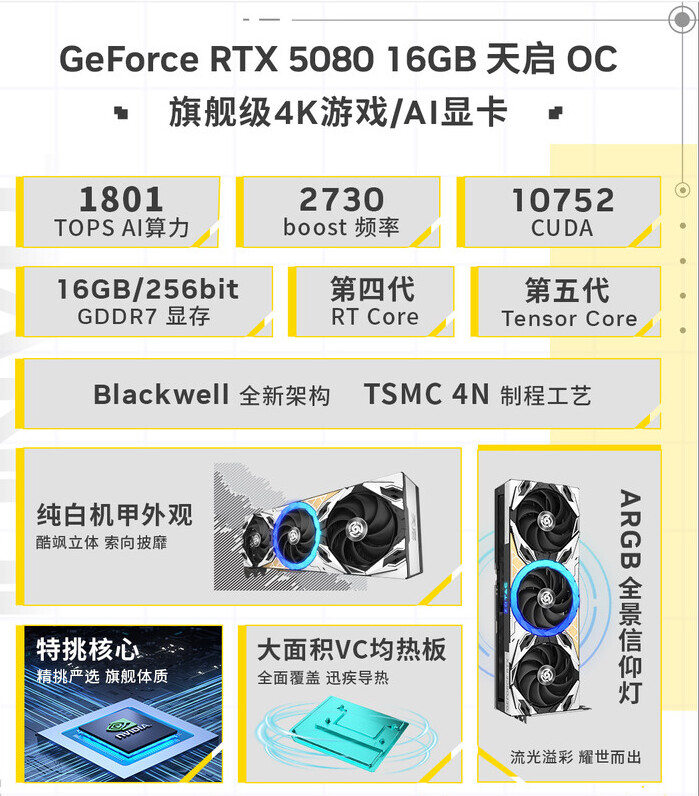
ZOTAC started teasing a refresh of its Apocalypse product line earlier in the year. Two months later, fairly concrete details of the (still) upcoming GeForce RTX 5080 16 GB variant emerged via the NVIDIA board partner's Weibo blog. Unfortunately, ZOTAC's ultra premium 3.5-slot thick/ARGB-lit behemoth design is expected to remain exclusive to the Chinese PC hardware market. Western hardcore gaming enthusiasts are best served by the manufacturer's alternative flagship triple-slotter: GeForce RTX 5080 AMP Extreme INFINITY ULTRA. ZOTAC's mainland China and Hong Kong offices have declared the arrival of brand-new Apocalypse SKUs at retail; utilizing NVIDIA's "Blackwell" GeForce RTX 5080 and RTX 5070 Ti GPUs.

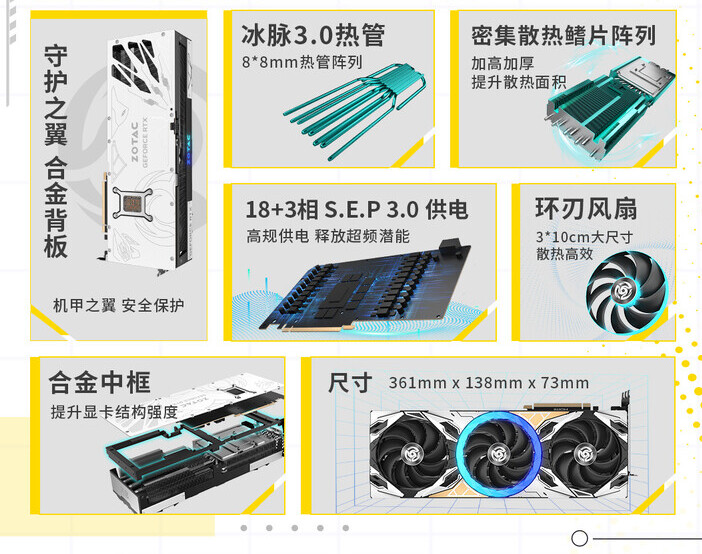
Yesterday's Weibo bulletin commenced with: "when mecha aesthetics collide with technology, and gaming passion merges with extreme performance, the ZOTAC GeForce RTX 50 Apocalypse series graphics cards are born! After (our) continuous R&D, improvement, testing and adjustment—today, newly upgraded flagship graphics cards are officially launched!" The brand has advertised the return of an apparently much-missed product line mascot: "Apocalypse Princess is back with a new look, starting a game/AI exploration journey with you." Promotional imagery and box art feature a prominent illustration of ZOTAC's flagship series heroine—this "mecha artwork" demonstrates a serious sci-fi aesthetic, albeit with a cute female protagonist leading the way. A rival AIB specializes in this type of "marketing"—Yeston's similar-ish presentation language concentrates on enchanting fantasy characters.
GeForce Now Library Updated with South of Midnight, Commandos: Origins, The Talos Principle: Reawakened & more...

Get ready to explore the Deep South. South of Midnight, the action-adventure game from Compulsion Games, launches today on GeForce NOW. Following last week's launch of Advanced Access in the cloud, GeForce NOW members can now pick up where they left off or dive into the adventure for the first time. It leads six games available in the cloud this week. Plus, catch the newest update from Epic Games' Fortnite and miHoYo's Honkai: Star Rail v3.2, just in time to celebrate the game's second anniversary.

Unleash the Magic
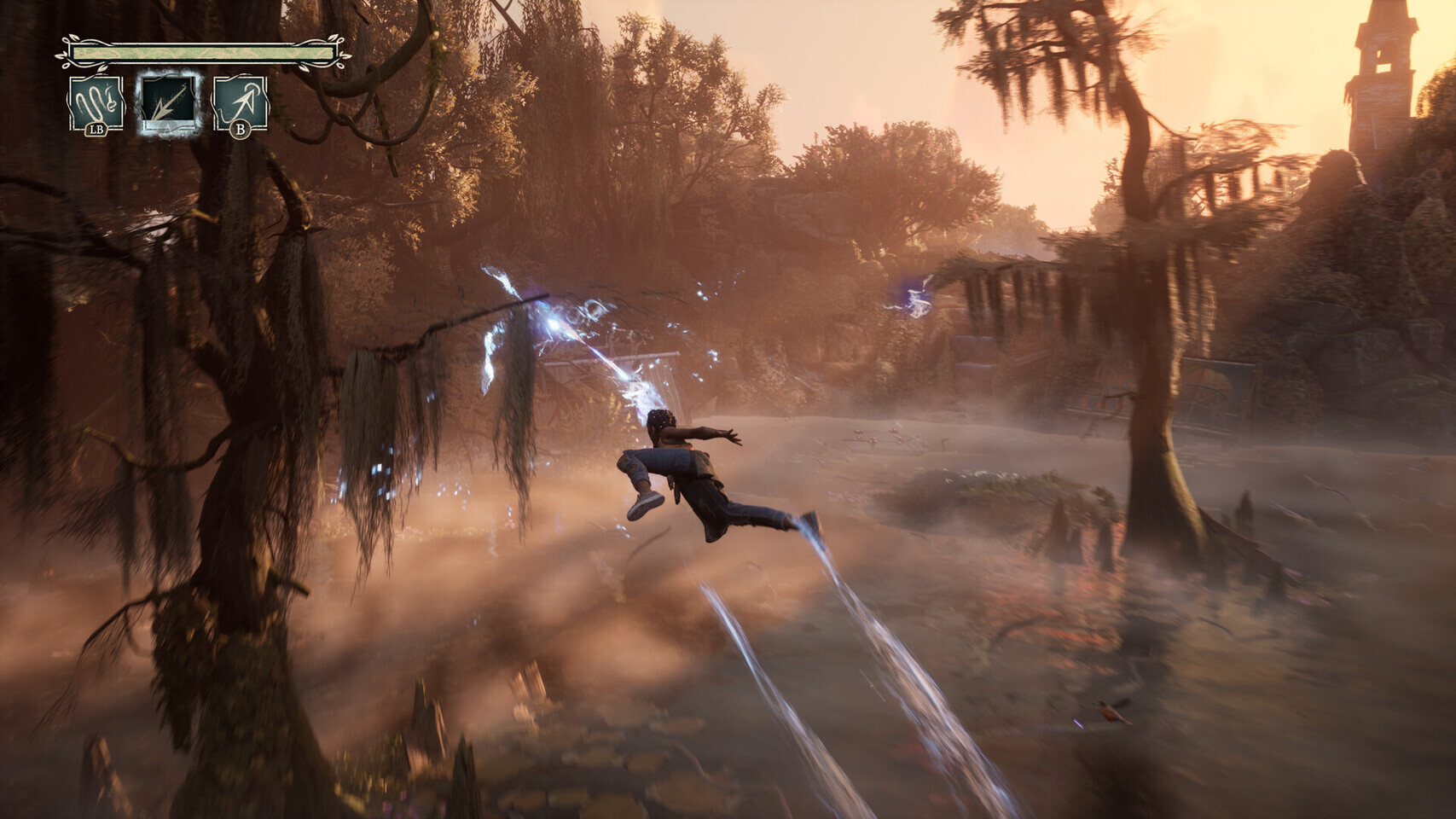
South of Midnight, a captivating third-person action-adventure game, is set against the backdrop of a Gothic fantasy version of the American Deep South. Step into the shoes of Hazel, a young woman who embarks on a journey to find her missing mother and discovers her unique abilities as a Weaver—a magical individual who can mend broken bonds and spirits. Throughout her quest, Hazel encounters intriguing mythical creatures inspired by Southern folklore, explores surreal landscapes and unravels deep family secrets.

Safe Superintelligence Inc. Uses Google TPUs Instead of Regular GPUs for Next-Generation Models

It seems like Google aims to grab a bit of the market share from NVIDIA and AMD by offering startups large compute deals and allowing them to train their massive AI models on the Google Cloud Platform (GCP). One such case is the OpenAI co-founder Ilya Sutskever's Safe Superintelligence Inc. (SSI) startup. According to a GCP post, SSI is "partnering with Google Cloud to use TPUs to accelerate its research and development efforts toward building a safe, superintelligent AI." Google's latest TPU v7p, codenamed Ironwood, was released yesterday. Carrying 4,614 TeraFLOPS of FP8 precision and 192 GB of HBM memory, these TPUs are interconnected using Google's custom ICI infrastructure and are scaled to configurations in pods of 9,216 chips, where Ironwood delivers 42.5 ExaFLOPS of total computing power.

For AI training, this massive power will allow AI models to quickly go over training, accelerating research iterations and ultimately accelerating model development. For SSI, the end goal is a simple mission: achieving ASI with safety at the front. "We approach safety and capabilities in tandem, as technical problems to be solved through revolutionary engineering and scientific breakthroughs. We plan to advance capabilities as fast as possible while making sure our safety always remains ahead," notes the SSI website, adding that "Our singular focus means no distraction by management overhead or product cycles, and our business model means safety, security, and progress are all insulated from short-term commercial pressures."

Multiple GIGABYTE Radeon RX 9060 XT 8/16 GB & GeForce RTX 5060 Ti 16 GB SKUs Registered in S. Korea

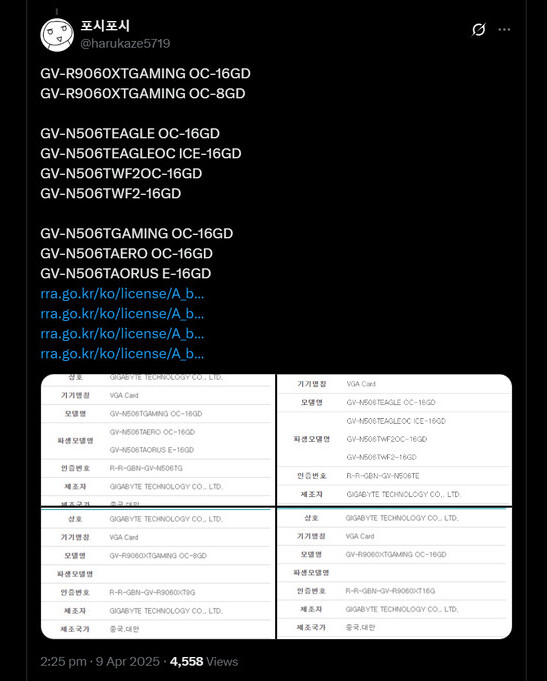
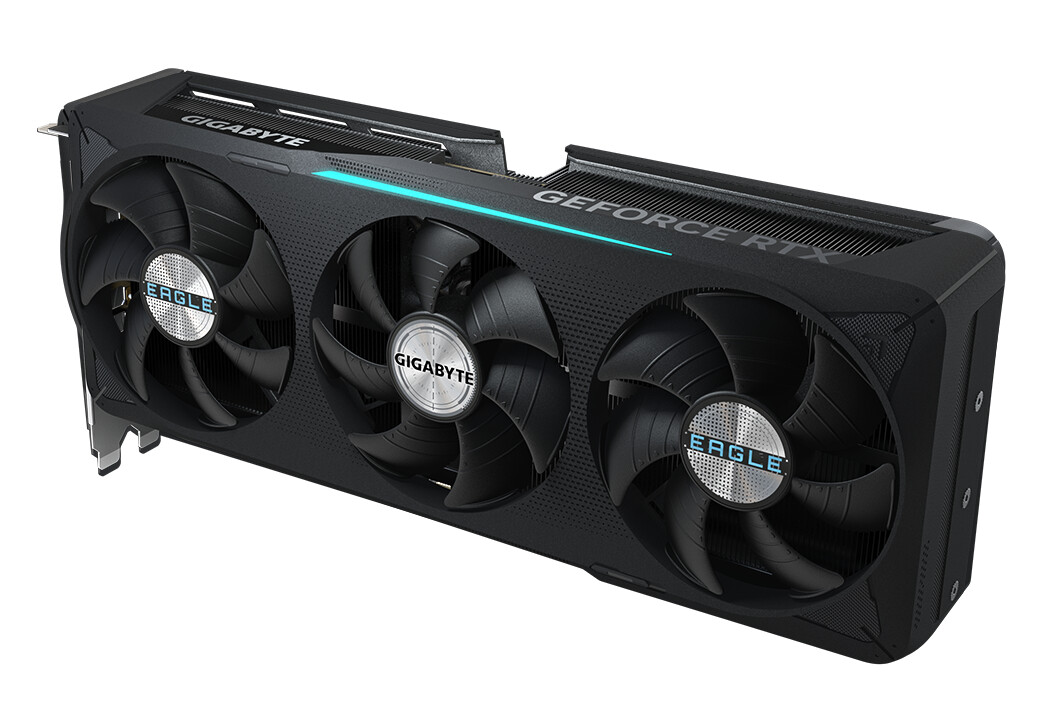
GIGABYTE has registered an (overall) impressive number of unannounced AMD Radeon RX 9060 XT and NVIDIA GeForce RTX 5060 Ti custom models in South Korea. The early April filings were spotted by harukaze5719—evidence of this "official" leak was posted to social media this afternoon. The South Korean Radio Agency (RRA) registrations indicate an imminent arrival of cheaper offerings from the opposing teams—possibly within proximity of each other, time-wise. GIGABYTE's collection of forthcoming GeForce RTX 5060 Ti 16 GB SKUs includes AERO, AORUS ELITE, EAGLE, GAMING, and WINDFORCE options.

By comparison, their Radeon RX 9060 XT portfolio is looking thoroughly threadbare—with the registration of two RDNA 4 GAMING OC cards; sporting 16 GB and 8 GB VRAM configurations. As reported late last month, ASUS seems to have three budget-friendly Radeon product lines—DUAL, PRIME and TUF—in the pipeline. It is possible that another set of cards are in line for processing at the RRA. So far, GIGABYTE's custom GeForce RTX 5060 Ti SKU filings are all 16 GB variants. 8 GB cards could be stuck in a queue. NVIDIA's board partners are expected to launch the first wave of GB206 "Blackwell" GPU-based desktop gaming solutions next week; "adjusted" speculative price points were leaked a day or two ago.

NVIDIA Will Bring Agentic AI Reasoning to Enterprises with Google Cloud

NVIDIA is collaborating with Google Cloud to bring agentic AI to enterprises seeking to locally harness the Google Gemini family of AI models using the NVIDIA Blackwell HGX and DGX platforms and NVIDIA Confidential Computing for data safety. With the NVIDIA Blackwell platform on Google Distributed Cloud, on-premises data centers can stay aligned with regulatory requirements and data sovereignty laws by locking down access to sensitive information, such as patient records, financial transactions and classified government information. NVIDIA Confidential Computing also secures sensitive code in the Gemini models from unauthorized access and data leaks.

"By bringing our Gemini models on premises with NVIDIA Blackwell's breakthrough performance and confidential computing capabilities, we're enabling enterprises to unlock the full potential of agentic AI," said Sachin Gupta, vice president and general manager of infrastructure and solutions at Google Cloud. "This collaboration helps ensure customers can innovate securely without compromising on performance or operational ease." Confidential computing with NVIDIA Blackwell provides enterprises with the technical assurance that their user prompts to the Gemini models' application programming interface—as well as the data they used for fine-tuning—remain secure and cannot be viewed or modified. At the same time, model owners can protect against unauthorized access or tampering, providing dual-layer protection that enables enterprises to innovate with Gemini models while maintaining data privacy.

Yeston Launches GeForce RTX 50 Deluxe Graphics Card Range, No "Waifu" Content Included

Over the past couple of months, Yeston has attracted plenty of media attention—in particular, with its recently launched Sakura Atlantis card design. The Chinese manufacturer produces custom AMD and NVIDIA gaming graphics cards—for its native market—but their unique Radeon RX 9070 Series offerings have made the most noise around the globe. Yeston did unveil GeForce RTX 50 Series Sakura and Game Ace designs around mid-January, but this announcement did not describe the exact nature of upcoming SKUs. As reported by VideoCardz earlier today, the company has distributed "new" GeForce RTX 5080, RTX 5070 Ti, and RTX 5070 models in China—e-tail listings have appeared on JD.com. Their rollout of rather sober looking affairs will disappoint many "waifu" illustration and bright color palette enthusiasts.

Yeston's Deluxe lineup was swiftly identified as a somewhat lazy rebadging of Gainward's GeForce RTX 50 Series Phoenix design. TechPowerUp's W1zzard reviewed the latter's GeForce RTX 5080 Phoenix GS model, just over two months ago. VideoCardz noted that Yeston has a short history of rebranding Gainward products; going back to an almost identical strategy with GeForce RTX 40 "Ada Lovelace" options (Phoenix => Deluxe). Three fan stickers differentiate the board partner brands—everything else is identical; including prominent "Phoenix" text on backplates and on top-mounted ARGB lighting zones. Yeston started to tease its new-gen Deluxe lineup around mid-February; as seen on their Weibo channel. At the time, this official account asked: "is this the card you've been waiting for?" We suspect that the majority of potential customers are preparing credit cards for the purchase of more elaborate options, in the near future.

NVIDIA Confirms Verified Priority Access Program for GeForce RTX 50 Series is Alive

NVIDIA has confirmed that its Verified Priority Access (VPA) program for the GeForce RTX 50 Series remains active following its initial announcement two months ago. The program allows a limited number of US-based GeForce account holders to purchase RTX 5090 and RTX 5080 Founders Edition cards directly from the NVIDIA Marketplace. The VPA scheme was introduced three weeks after the RTX 50 Series launch to address supply shortages and high reseller prices. Initially, two months ago, users with NVIDIA Accounts created on or before January 30, 2025, at 6 AM Pacific Time, could register their interest through an online form. Invitations would have been emailed to qualifying account holders, with the first notifications scheduled for next week.

This pilot program applies only to US GeForce users and is limited to the RTX 5090, RTX 5080, and RTX 5070 Founders Edition cards. The recently released RTX 5070 Ti is not included and must be purchased through AIB partner custom designs. NVIDIA has not disclosed how many priority access slots are available or whether the program will expand internationally. All we know is that an NVIDIA representative on Reddit posted, "VPA for the GeForce RTX 50 series Founders Edition graphics cards has not ended," responding to an alleged VPA program rumor that it has ended. If the US pilot is successful, the company may consider adding more markets and product lines. Eligible users should watch their inboxes for an invitation to buy at the original MSRP.

NVIDIA Sends MSRP Numbers to Partners: GeForce RTX 5060 Ti 8 GB at $379, RTX 5060 Ti 16 GB at $429

Next week's planned launch of NVIDIA's GeForce RTX 5060 Ti series brings two SKUs differentiated by memory capacity and pricing. Both models leverage the GB206-300 GPU, made on a 5 nm node from TSMC, and feature a 128-bit memory interface paired with GDDR7 chips running at an effective 28 Gbps. According to IT Home, NVIDIA has communicated MSRP figures to its key AIC partners ahead of the mid-April rollout. The entry-level 8 GB variant is set at an MSRP of ¥3,199 (roughly $379), while the 16 GB version carries an MSRP of ¥3,599 (about $429). This is a reduction from the $399 and $499 prices anticipated earlier. NVIDIA is adjusting its pricing strategy for these mid-tier chips to align itself against the competition better and draw more new buyers.
Under the hood, the GB206-300 core activates 36 streaming multiprocessors, delivering a total of 4,608 CUDA cores. The GPU operates at a base clock of 2,407 MHz, boosting to 2,572 MHz under load. Memory runs at 1,750 MHz (28 Gbps effective), routed through the 128-bit bus to yield up to 448 GB/s of bandwidth. Graphics-specific throughput is augmented by 144 texture mapping units and 48 render output units, while 36 dedicated ray-tracing cores handle real-time lighting calculations. Additionally, 144 tensor cores accelerate AI-driven workloads such as DLSS upscaling and machine-learning inference. Power delivery for both cards is managed via a single 16-pin connector, with a total board power of 180 W. Display connectivity includes one HDMI 2.1b port alongside three DisplayPort 2.1b outputs, and the card interfaces with host systems over PCI Express 5.0 x16.
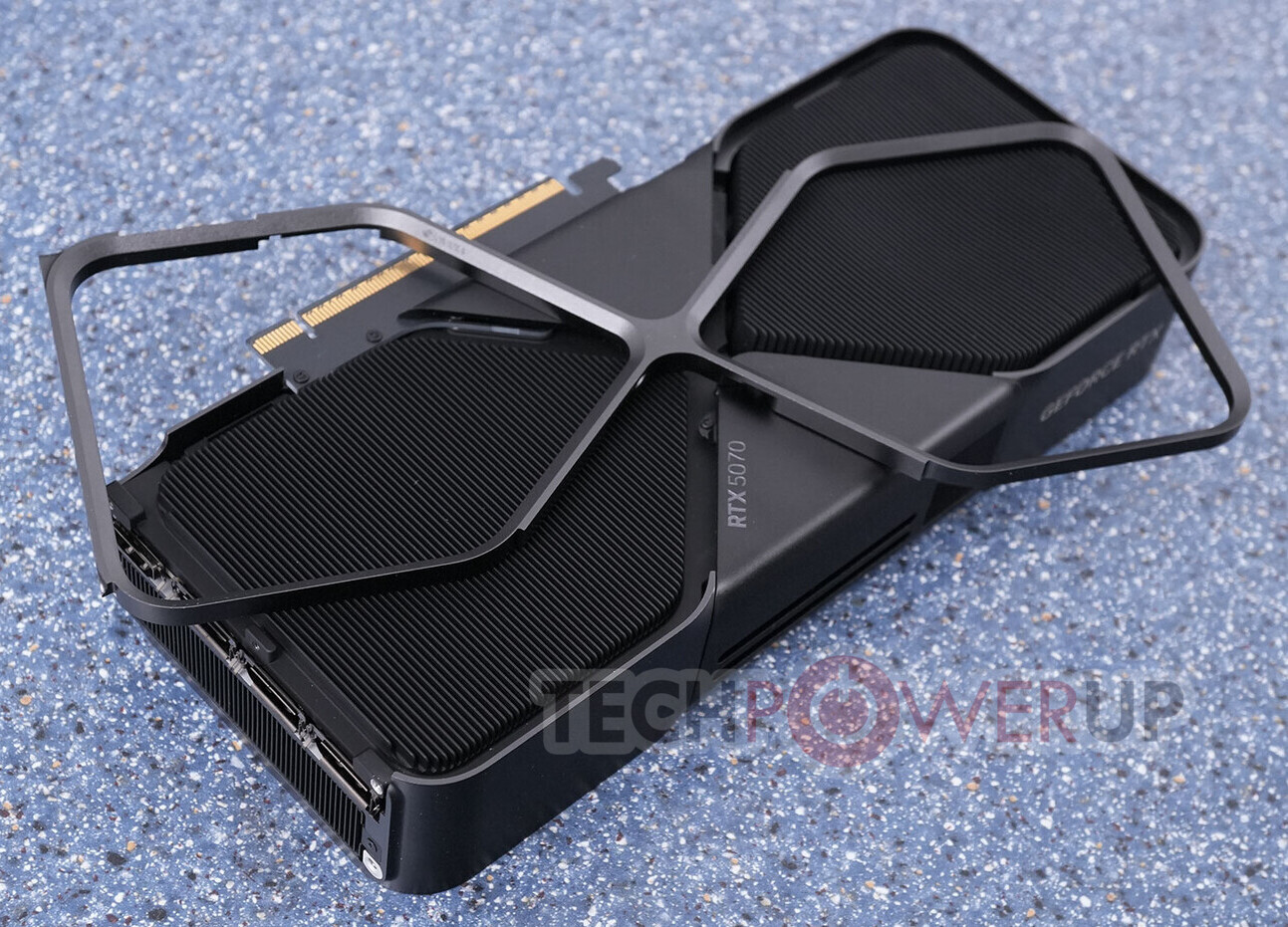
Insider Claims NVIDIA GeForce RTX 50 Series Transitioning to Usage of SK hynix GDDR7 Memory Modules

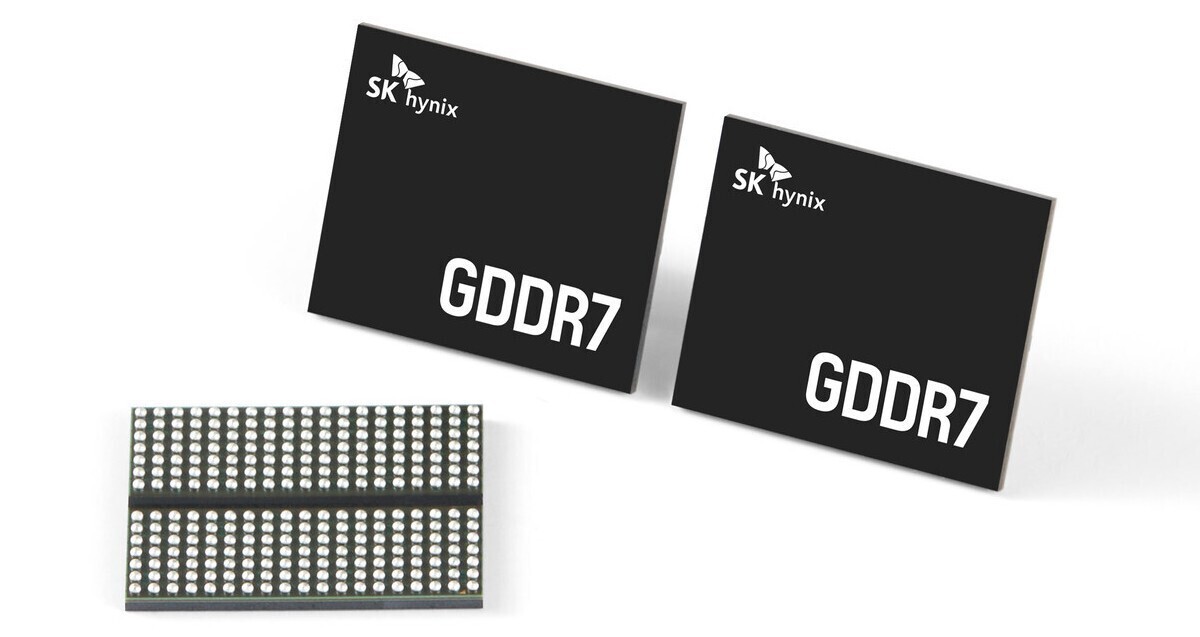
So far, NVIDIA's GeForce RTX 50xx graphics card models have shipped with Samsung GDDR7 memory modules onboard. According to a fresh MEGAsizeGPU (aka @Zed__Wang) claim, a change in vendor has already occurred. The tenured tracker of Team Green inside track information believes that the company has: "started to use SK hynix GDDR7 for the GeForce RTX 50 series graphics cards. Started with GeForce RTX 5070 first." Officially, NVIDIA's latest board designs can support GDDR7 modules produced by the "big three:" Samsung, SK hynix and Micron (see BIOS info below). Team Green's comfortable market leading position probably grants plenty of negotiation power to pick and choose the best component deals. Day one evaluators performed teardowns on GeForce RTX 50 series review samples; TechPowerUp's W1zzard found Samsung "K4VAF325ZC-SC32" GDDR7 units—rated for 32 Gbps—onboard various GeForce RTX 5080 16 GB models. As outlined by VideoCardz, the rest of NVIDIA's "Blackwell" gaming product stack sticks with 28 Gbps-rated Samsung GDDR7 modules, extending to its Mobile portfolio.

NVIDIA GeForce RTX 5060 & 5050 Mobile GPUs "Officially" Leaked by Laptop Manufacturers

NVIDIA is expected to reveal its GeForce RTX 5060 Mobile and RTX 5050 Mobile GPUs later this month, but a series of leaks—going back to last summer—have already spoiled the fun. Last month, leaks pointed to Razer and MSI's preparing cheaper of "cheaper" portable gaming PCs—featuring lower end "Blackwell" Mobile hardware. VideoCardz has spent time looking for more examples—recent detective work has unearthed further evidence of an imminent launch. Yesterday's investigative article put spotlights on Razer, Lenovo and LG. Team Green's manufacturing partners have inadvertently published official web material with multiple mentioning of pre-release GeForce RTX 5060 and GeForce RTX 5050 laptop-oriented solutions. Razer China has already reacted to VideoCardz's report; their Razer Blade 16 (2025) splash page no longer lists an NDA-busting GeForce RTX 5060 Mobile option.

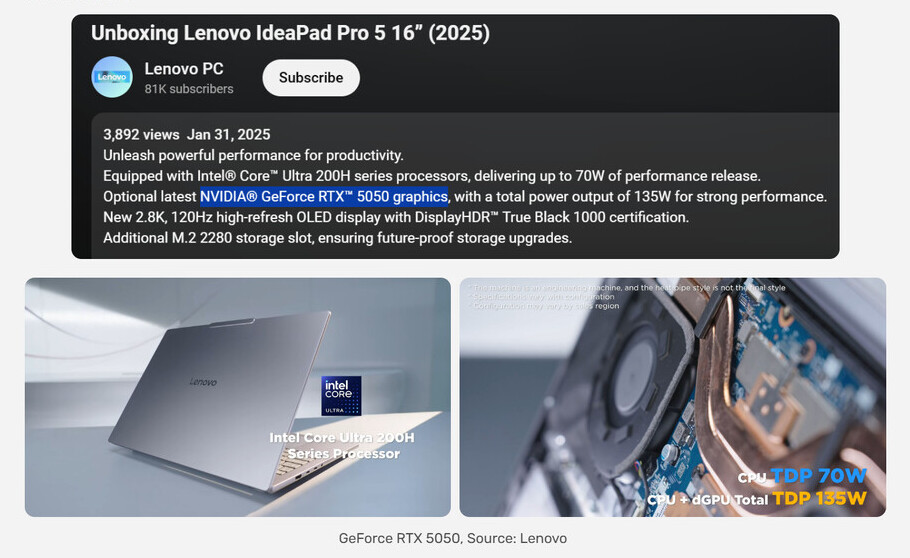
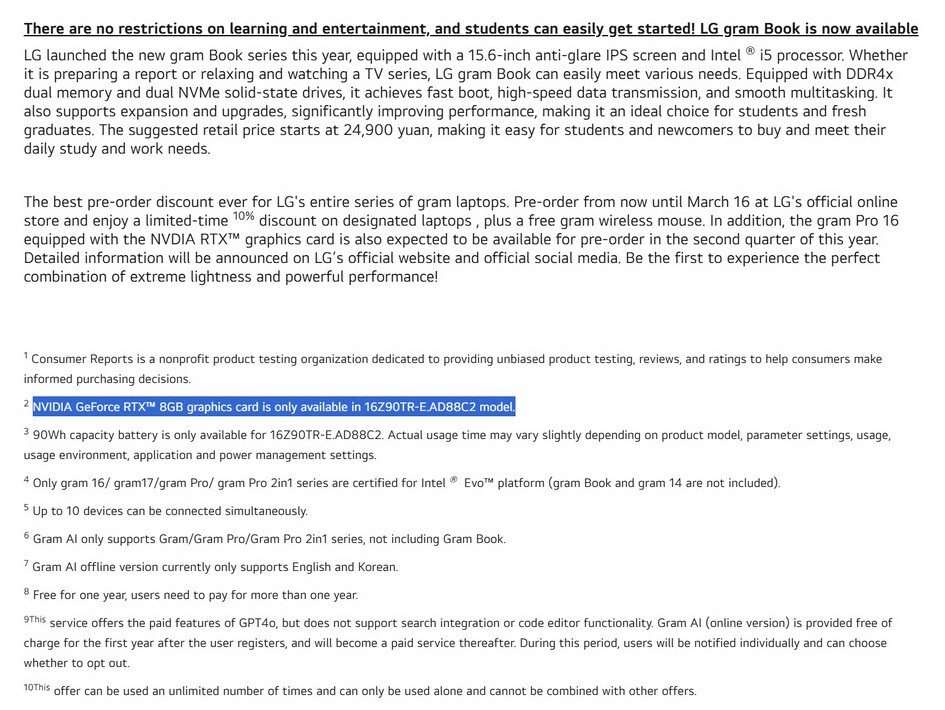
Similarly, LG's Taiwanese office has scrubbed "5050" from a recently published new LG gram AI notebook press release. The edited line states: "NVIDIA GeForce RTX 8 GB graphics card is only available in 16Z90TR-E.AD88C2 model." On January 31 (2025), the Lenovo PC YouTube channel uploaded an unboxing of their refreshed Lenovo IdeaPad Pro 5 16" model. The video's description let slip crucial pre-release information, regarding an upcoming discrete graphics configuration: "optional latest NVIDIA GeForce RTX 5050 graphics, with a total power output of 135 W for strong performance." VideoCardz has deduced a speculative 65 W TDP rating for Team Green's entry level "Blackwell" mobile SKU. At the time of writing, Lenovo has not edited out the offending descriptor from their Lenovo IdeaPad Pro 5 16" (2025) featurette.

NVIDIA DLSS 4 with Multi Frame Generation Added to Wild Assault, THE FINALS & Enotria: The Last Song

More than 700 games and applications feature RTX technologies, and each week new games integrating NVIDIA DLSS, NVIDIA Reflex, and advanced ray-traced effects are released or announced, delivering the definitive PC experience for GeForce RTX players. This week, DLSS 4 with Multi Frame Generation is multiplying performance in Enotria: The Last Song, THE FINALS, and Wild Assault. And The Last of Us Part II Remastered is available now with DLSS Frame Generation, DLSS Super Resolution, and DLAA.

Wild Assault Launching April 11th, Featuring DLSS 4 With Multi Frame Generation
Combat Cat Studio's Wild Assault is a 20 vs. 20 third-person, Unreal Engine 5-powered, class-based PvP multiplayer shooter featuring a cast of anthropomorphic characters with unique animal-themed abilities. Battle across a variety of maps and modes in search of victory, and on GeForce RTX systems, activate DLSS and Reflex to accelerate performance and reduce PC latency.

ZOTAC Reveals X-Gaming GeForce RTX 5070 Jian Wang 3 Special Edition

Earlier today, ZOTAC unveiled a special edition spin-off of its relatively new GeForce RTX 5070 X-Gaming 12 GB design. The manufacturer's Weibo channel outlined the very exclusive nature of this MMORPG-themed offering (via machine translation): "watch the finals and get a graphics card! ZOTAC and the first 'Jian Wang 3' competitive group hero joint customized graphics card, fine customization, supports NVIDIA DLSS 4 and Reflex 2 technology, excellent performance. On April 12-13, Nanjing Ledongli Jiangning International E-sports Center, watch the heroes aiming for the top!" According to an ITHome report, the Chinese brand has redecorated its overclocked GeForce RTX 5070 X-Gaming model with Jian Wang 3 characters. ZOTAC's promotional shots showcase a customized backplate, and the same illustration of Jian Wang 3's main cast adorning the card's retail box.

Late last month, Kuroutoshikou Japan introduced a less impressive Blade and Soul NEO-themed rebadge of their standard Radeon RX 7600 SKU—essentially, PowerColor's Fighter RX 7600 design. ITHome noted that ZOTAC has a short-ish history of readying very limited edition designs for past Jian Wang 3 Masters Tournaments. 2024's prize was based on the manufacturer's GeForce RTX 4070 Ti SUPER TRINITY OC White SKU. 2023 finalists were gifted with customized GeForce RTX 4070 Ti X-Gaming OC cards. Both of the previous gen tie-in designs sported Jian Wang 3 graphics or symbols on their shrouds, while the latest entry simply reuses its base SKU's "youthful graffiti" aesthetic.

Zephyr Showcases GeForce RTX 4070 "Sakura Snow X" Model, Sports a Compact CNC-produced Aluminium Enclosure

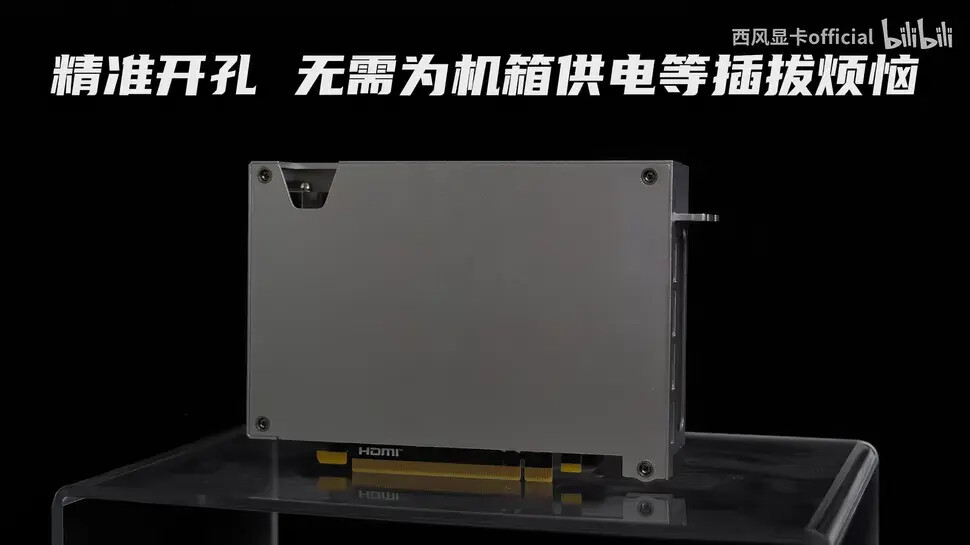
Zephyr has presented a new Small Form Factor (SFF) graphics card design that houses previous-gen NVIDIA GPU hardware. The Chinese board partner showcased its GeForce RTX 4070-based "Sakura Snow X" via a 1-minute 42-second long teaser video; according to their bilibili channel this compact wonder is: "the world's first mass-produced CNC single-fan graphics card. A small space aesthetic benchmark—a balance of high performance and exquisite size." Zephyr's latest Mini-ITX offering seems to be a more premium—in terms of enclosure materials—alternative to last year's GeForce RTX 4070 12 GB "Sakura Blizzard" model—examples were placed next to each other in the AIB's demonstration video (aluminium versus plastic). This brand-new dual-slot entrant has arrived with a slightly larger cooling solution (see relevant screenshot below), and a fancier 105 mm airflow fan design—outfitted with more blades (11 vs. 9). VideoCardz has observed "Sakura Snow X" first batch listings on an undisclosed Chinese e-tail platform; launch pricing seems to be 4399 RMB (~$602 USD).

Unlike its pink-hued sibling, Zephyr's sober metal design integrates an I/O plate—giving off the impression of a unibody-esque setup. SFF enthusiasts will welcome this truly compact design, albeit with the disadvantage of playing host to old hat "Ada Lovelace" silicon. Throughout early 2025, Team Green and certain manufacturing partners have hyped up various "SFF-Ready" new-gen solutions. Last week, ZOTAC updated its "Blackwell" gaming portfolio with a dual-slot GeForce RTX 5070 Ti SOLID SFF card. This slimmed down triple-fan option is still a lengthy prospect (304.4 mm); thus quickly dismissed as unworthy of its moniker by compact graphics solution connoisseurs. Similarly, GIGABYTE sells 304 mm-long "SFF" variants—launched months ago in WINDFORCE and EAGLE guises.

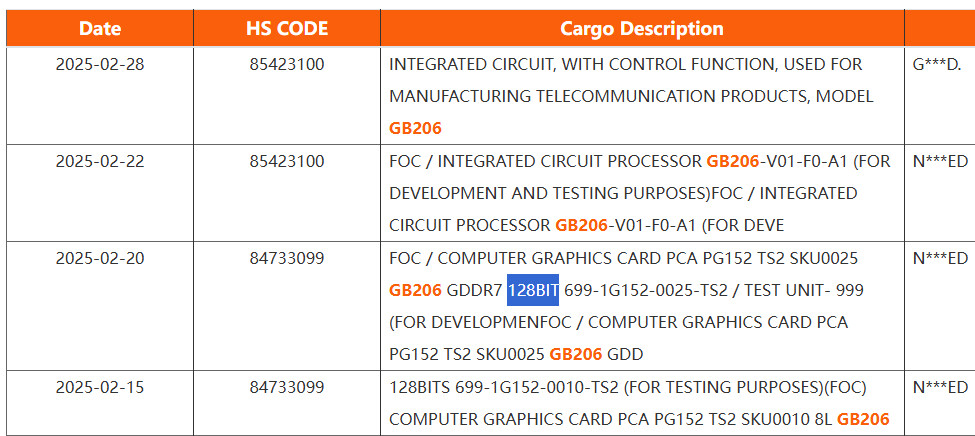
NVIDIA GeForce RTX 5060 Ti & 5060 128-bit Memory Interfaces "Confirmed" by Leaked Shipping Manifest

Last month, PG152 board designs were linked to NVIDIA's rumored lineup of upcoming GeForce RTX 5060 Ti, RTX 5060, and RTX 5050 "Blackwell" GPUs. Despite the emergence of fairly legitimate looking "incomplete" technical information, claimed "128-bit memory bus" spec points (for all lower end cards) did not sit well with a portion of the PC gaming hardware community. In theory, Team Green could roll out truly next-generation budget offerings with 192-bit buses, rather than repeat some of its GeForce RTX 4060 "Ada Lovelace" series homework. Two weeks ago, a GeForce RTX 5060 Ti-specific "full specification" leak reiterated the design's (alleged) 128-bit wide GDDR7 memory interface.

Earlier today, VideoCardz unearthed another example—sourced from shipping manifests—of NVIDIA outfitting PG152 boards with a 128-bit memory bus. The "PG152 SKU 25" and "PG152 SKU 10" identifiers seem to confirm the existence of GeForce RTX 5060 and GeForce RTX 5060 Ti graphics cards (respectively)—the latter design is reportedly due for launch next week. The "wallet friendly" end of Team Green's "Blackwell" GPU spectrum is expected to utilize GDDR7 memory; thus elevating new-gen options above preceding hardware. An advantageous generational leap grants bandwidths of 448.0 GB/s, rather than 288.0 GB/s.

Industry's First-to-Market Supermicro NVIDIA HGX B200 Systems Demonstrate AI Performance Leadership

Super Micro Computer, Inc. (SMCI), a Total IT Solution Provider for AI/ML, HPC, Cloud, Storage, and 5G/Edge, has announced first-to-market industry leading performance on several MLPerf Inference v5.0 benchmarks, using the 8-GPU. The 4U liquid-cooled and 10U air-cooled systems achieved the best performance in select benchmarks. Supermicro demonstrated more than 3 times the tokens per second (Token/s) generation for Llama2-70B and Llama3.1-405B benchmarks compared to H200 8-GPU systems. "Supermicro remains a leader in the AI industry, as evidenced by the first new benchmarks released by MLCommons in 2025," said Charles Liang, president and CEO of Supermicro. "Our building block architecture enables us to be first-to-market with a diverse range of systems optimized for various workloads. We continue to collaborate closely with NVIDIA to fine-tune our systems and secure a leadership position in AI workloads." Learn more about the new MLPerf v5.0 Inference benchmarks here.

Supermicro is the only system vendor publishing record MLPerf inference performance (on select benchmarks) for both the air-cooled and liquid-cooled NVIDIA HGX B200 8-GPU systems. Both air-cooled and liquid-cooled systems were operational before the MLCommons benchmark start date. Supermicro engineers optimized the systems and software to showcase the impressive performance. Within the operating margin, the Supermicro air-cooled B200 system exhibited the same level of performance as the liquid-cooled B200 system. Supermicro has been delivering these systems to customers while we conducted the benchmarks. MLCommons emphasizes that all results be reproducible, that the products are available and that the results can be audited by other MLCommons members. Supermicro engineers optimized the systems and software, as allowed by the MLCommons rules.

BOXX Showcases AMD Threadripper-Based Workstation at 2025 NAB Show

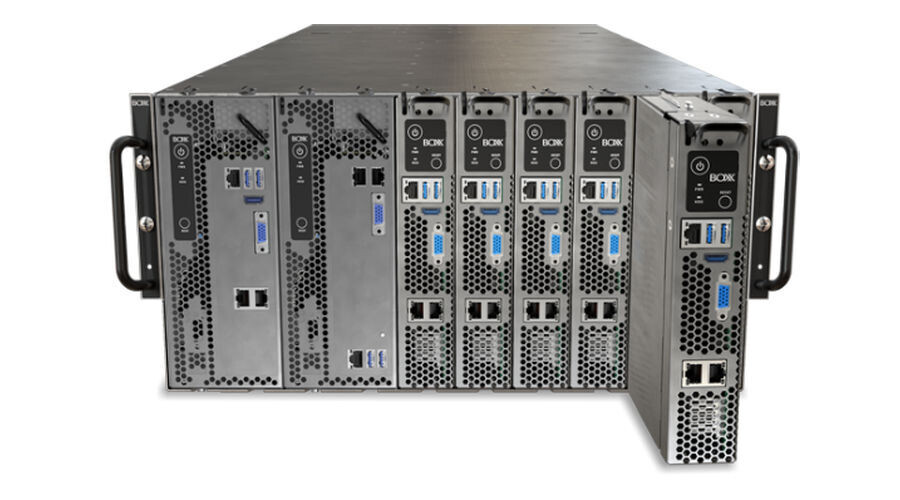
BOXX Technologies, the leading innovator of high-performance computer workstations, rendering systems, and servers, today announced that it is hosting demonstrations of its APEXX T4 PRO workstation inside BOXX booth #SL10113 at the 2025 NAB Show through April 9th, in Las Vegas, NV. Purpose-built to accelerate VFX, animation, compositing, film editing, and broadcast, the remarkably fast, liquid-cooled, and versatile workstation will be joined by FLEXX, the innovative BOXX data center workstation platform designed for on premise or remote installations.

BOXX APEXX: The Pinnacle of Performance
"APEXX T4 PRO is the media and entertainment workstation that does it all," said BOXX CEO Kirk Schell. "From the blazing fast AMD Ryzen Threadripper PRO CPU and NVIDIA RTX PRO 6000 Blackwell GPUs, to renowned BOXX performance tuning like liquid cooling, this system delivers unrivaled, top-tier performance for all facets of post production, live broadcast, and virtual production."

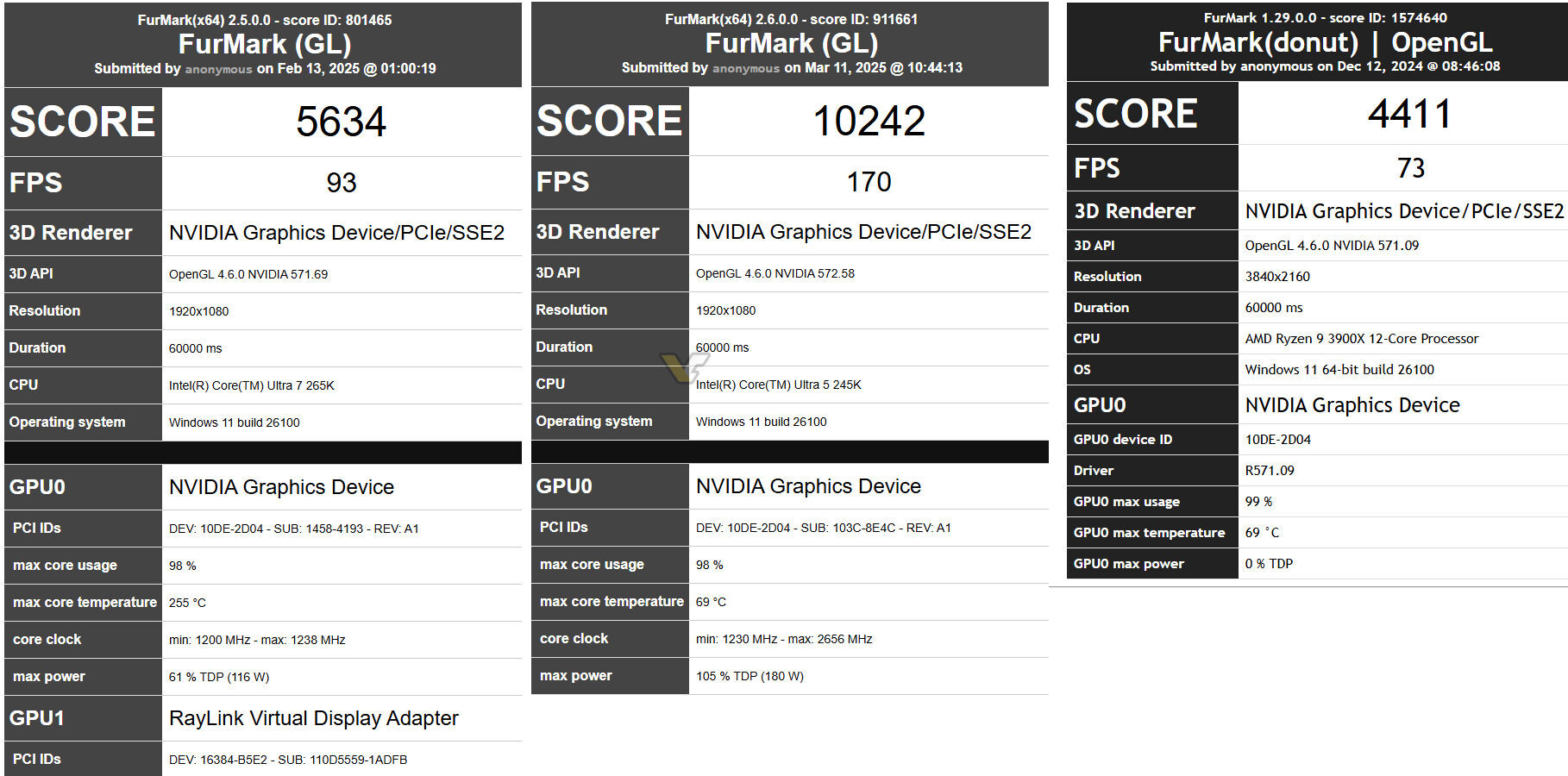
NVIDIA GeForce RTX 5060 Ti Shows up in Furmark Online Database

NVIDIA's upcoming GeForce RTX 5060 Ti performance segment graphics card appeared in alleged Furmark online database entries. These reference the card by its device ID, 10DE-2D04. There are three instances of the card in the database, one of which sees the benchmark being run in a remote desktop session, where the card scores 5634 points or 93 FPS on average, but with its core boosting only up to 1238 MHz. The second, more plausible result sees the card score 10242 points or an average of 170 FPS, with its core going up to 2656 MHz. Both these tests are run at 1080p. The third result sees the GPU score 4411 points or 73 FPS, but at 4K Ultra HD resolution—again, plausible given its score with 2656 MHz maximum boost. The second result has Furmark read the card's maximum TDP to be 180 W.

The GeForce RTX 5060 Ti debuts the new "GB206" GPU, which probably has 36 or 40 SM. The RTX 5060 Ti is configured with 36 SM for 4,608 CUDA cores, 144 Tensor cores, 36 RT cores, 144 TMUs, and an unknown number of ROPs (probably 64). The GPU has a 128-bit wide GDDR7 memory interface, and comes with 16 GB and 8 GB memory variants. We gather from these Furmark screenshots that the GPU boosts over 2600 MHz, and it's possible that the memory ticks at 28 Gbps, yielding 448 GB/s of memory bandwidth. The 180 W TDP shown in one of these screenshots means that some if not all custom-design RTX 5060 Ti cards could feature 8-pin PCIe power connectors (150 W from the connector, plus 75 W from the slot). All rumors point to a mid-April launch of the RTX 5060 Ti.

ASUS to Unveil ProArt Displays, PC Solutions, and More at NAB Show 2025

ASUS today announced its participation in the NAB Show 2025. Visitors to the ASUS booth will have the opportunity to experience the future of content creation with live demonstrations of the latest ASUS ProArt offerings. The showcase includes the debut of the ProArt Cinema PQ09 monitor, featuring the largest-ever ASUS microLED display. The ProArt Display 6K PA32QCV and the ProArt CaliContrO MCA02 three-in-one calibrator will also be showcased. Also on show will be the 16-inch ProArt P16, a creative powerhouse laptop equipped with a 50 TOPS NPU, AMD Ryzen AI 9 HX 370 processor, and up to an NVIDIA GeForce RTX 5070 Laptop GPU. In addition, the NAB Show 2025 will feature the latest installment of the ProArt Masters' Talks series, with renowned creatives sharing their perspectives on current trends.

The ProArt Cinema PQ09 is the latest addition to the ProArt Cinema microLED display lineup. This 162-inch 4K HDR monitor features advanced panel technologies, ultrasmall 0.93 mm pixel pitch, 1200nits peak brightness, high 1,000,000:1 contrast ratio, and 97% DCI-P3 color gamut. Compared to conventional microLED displays with a 1.2 or 1.5 mm pixel pitch, ProArt Cinema PQ09 delivers smoother and more vibrant visuals, making it the perfect large-screen display for home cinema, broadcasting or other uses.

NVIDIA PhysX and Flow Made Fully Open-Source

NVIDIA late last week committed NVIDIA PhysX SDK and NVIDIA Flow as open-source software under the BSD-3 license. This includes the GPU source code—the specific way PhysX leverages CUDA and GPU compute acceleration, and should make it easier for game developers to understand and implement PhysX, including its various interactive 3D effects such as rigid body dynamics, fluid simulation, and deformable objects. More importantly, a deeper understanding of PhysX makes it possible for modders to develop fallbacks for their older 32-bit game titles that use PhysX to work with newer generations of GPUs, such as the RTX 50-series "Blackwell." It should come especially handy when NVIDIA is trying to push Remix—its first-party initiative to refurbish older games with modern graphics and higher resolution visual assets.

Quantum Machines Anticipates Collaborative Breakthroughs at NVIDIA's New Research Center

Quantum Machines (QM), a leading provider of advanced quantum control solutions, today announced its intention to work with NVIDIA at its newly established NVIDIA Accelerated Quantum Research Center (NVAQC), unveiled at the GTC global AI conference. The Boston-based center aims to advance quantum computing research with accelerated computing, including integrating quantum processors with AI- supercomputing to overcome significant challenges in the quantum computing space. As quantum computing rapidly evolves, the integration of quantum processors with powerful AI supercomputers becomes increasingly essential. These accelerated quantum supercomputers are pivotal for advancing quantum error correction, device control, and algorithm development.

Quantum Machines joins other quantum computing pioneers, including Quantinuum and QuEra, along with academic partners from Harvard and MIT, in working with NVIDIA at the NVAQC to develop pioneering research. Quantum Machines will work with NVIDIA to integrate its NVIDIA GB200 Grace Blackwell Superchips with QM's advanced quantum control technologies, including the OPX1000. This integration will facilitate rapid, high-bandwidth communication between quantum processors and classical supercomputers. QM and NVIDIA thereby lay the essential foundations for quantum error correction and robust quantum algorithm execution. By reducing latency and enhancing processing efficiency, QM and NVIDIA solutions will significantly accelerate practical applications of quantum computing.

China's Largest AI Firms Reportedly Forked Out ~$16 Billion Total for NVIDIA H20 GPU Supplies in 2025

Last week, industry reports pointed to evidence of NVIDIA H20 AI GPU shortages in China—supply chain insiders expressed frustration about limited availability, and alleged price hikes. Days later, local media outlets have disclosed staggering sales figures. Two unnamed sources opine that the likes of Tencent, Alibaba and ByteDance have spent roughly US$16 billion on H20 purchases, across the first three months of 2025. Back in February, Reuters noted an extraordinary surge in orders for: "(Team Green's) H20 model—the most advanced AI processor legally available in China under U.S. export controls—driven by booming demand for Chinese startup DeepSeek's low-cost AI models." The unprecedented rush—to secure precious AI-crunching hardware—was likely motivated by whispers of elevated restrictions; coming from across the Pacific Ocean.

Curiously, local government bodies have allegedly "advised" a stoppage of H20 orders—a recent Financial Times article suggested that this message was directed at the nation's largest AI players (mentioned above). A few industry moles believe that NVIDIA's engineering department is working on another Chinese market exclusive AI chip, although it is not clear whether a new entrant will be designed to conform to recently introduced "not very strict" environmental regulations. Anonymous sources have made noise about an upgraded H20 variant; sporting fancy HBM3E modules.
Return to Keyword Browsing
Nov 27th, 2026 19:01 CST change timezone

New Forum Posts

Popular Reviews

TPU on YouTube

Controversial News Posts