Dead Pixels Creep In Along the Edges of Older WOLED TVs, RTINGS Finds
Fourteen of the 16 WOLED TVs in RTINGS' 18,000-hour accelerated longevity test developed what the outlet calls "edge rot," meaning dead pixels and other damage creeping in along the panel edges. All of these sets use LG Display panels and were released between 2020 and 2023, and the test works out to roughly ten years of typical U.S. viewing. Older WBC panels fared worst, with nine of ten affected and five rated severe, while five of six newer WBE panels also showed it. Only the LG A2 and LG G3 came out clean. Meanwhile, the three QD-OLED TVs in the test, Samsung's S95B and S95C and Sony's A95K, didn't have a single dead pixel. However, RTINGS says three units are too few to call QD-OLED immune.
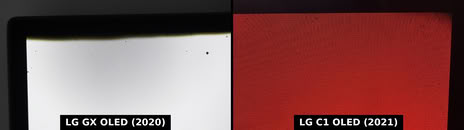
Unlike burn-in, edge rot doesn't depend on what you watch, so the usual advice of mixing up content won't help. RTINGS suspects contamination during manufacturing or flaws in the encapsulation layer that keeps moisture out, though confirming that would need proper failure analysis. Two staffers also found it on their own LG GX and C1 at home. In a statement to RTINGS, LG said the issue may appear in a very small number of products under prolonged heat, humidity or other harsh conditions, and isn't expected in normal use, which is interesting given that LG Display once argued QD-OLED was more prone to burn-in. RTINGS now rates WOLEDs slightly lower for expected reliability, including newer models as a precaution, though it still considers OLEDs more durable than LCDs. Its next planned test includes 2025 and 2026 models, some with LG's RGB Tandem panels, which should show if it's been fixed.

Unlike burn-in, edge rot doesn't depend on what you watch, so the usual advice of mixing up content won't help. RTINGS suspects contamination during manufacturing or flaws in the encapsulation layer that keeps moisture out, though confirming that would need proper failure analysis. Two staffers also found it on their own LG GX and C1 at home. In a statement to RTINGS, LG said the issue may appear in a very small number of products under prolonged heat, humidity or other harsh conditions, and isn't expected in normal use, which is interesting given that LG Display once argued QD-OLED was more prone to burn-in. RTINGS now rates WOLEDs slightly lower for expected reliability, including newer models as a precaution, though it still considers OLEDs more durable than LCDs. Its next planned test includes 2025 and 2026 models, some with LG's RGB Tandem panels, which should show if it's been fixed.