Friday, September 4th 2015
AMD Radeon R9 Nano Review by TPU...Not
There won't be a Radeon R9 Nano review on TechPowerUp. AMD says that it has too few review samples for the press. When AMD first held up the Radeon R9 Nano at its "Fiji" GPU unveil, to us it came across as the most promising product based on the chip, even more than the R9 Fury series, its dual-GPU variant, and the food-processor-shaped SFF gaming desktop thing. The prospect of "faster than R9 290X at 175W" is what excited us the most, as that would disrupt NVIDIA's GM204 based products. Unfortunately, the most exciting product by AMD also has the least amount of excitement by AMD itself.
The first signs of that are, AMD making it prohibitively expensive at $650, and not putting it in the hands of the press, for a launch-day review. We're not getting one, and nor do some of our friends on either sides of the Atlantic. AMD is making some of its tallest claims with this product, and it's important (for AMD) that some of those claims are put to the test. A validated product could maybe even convince some to reach for their wallets, to pull out $650.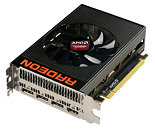 Are we sourgraping? You tell us. We're one of the few sites that give you noise testing by some really expensive and broad-ranged noise-testing equipment, and more importantly, card-only power-draw. Our reviews also grill graphics cards through 22 real-world tests across four resolutions, each, and offer price-performance graphs. When NVIDIA didn't send us a GeForce GTX TITAN-Z sample, we didn't care. We didn't make an announcement like this. At $2,999, it was just a terrible product and we never wished it was part of our graphs. Its competing R9 295X2 could be had under $700, and so it continues to top our performance charts.
The R9 Nano, on the other hand, has the potential for greatness. Never mind the compact board design and its SFF credentials. Pull out this ASIC, put it on a normal 20-25 cm PCB, price it around $350, and dual-slot cooling that can turn its fans off in idle, and AMD could have had a GM204-killing product. Sadly, there's no way for us to test that, either. We can't emulate an R9 Nano on an R9 Fury X. The Nano appears to have a unique power/temperature based throttling algorithm that we can't copy.
"Fiji" is a good piece of technology, but apparently, very little effort is being made to put it into the hands of as many people as possible (and by that we mean consumers). This is an incoherence between what AMD CEO stated at the "Fiji" unveil, and what her company is doing. It's also great disservice to the people who probably stayed up many nights to get the interposer design right, or sailing through uncharted territory with HBM. Oh well.
The first signs of that are, AMD making it prohibitively expensive at $650, and not putting it in the hands of the press, for a launch-day review. We're not getting one, and nor do some of our friends on either sides of the Atlantic. AMD is making some of its tallest claims with this product, and it's important (for AMD) that some of those claims are put to the test. A validated product could maybe even convince some to reach for their wallets, to pull out $650.
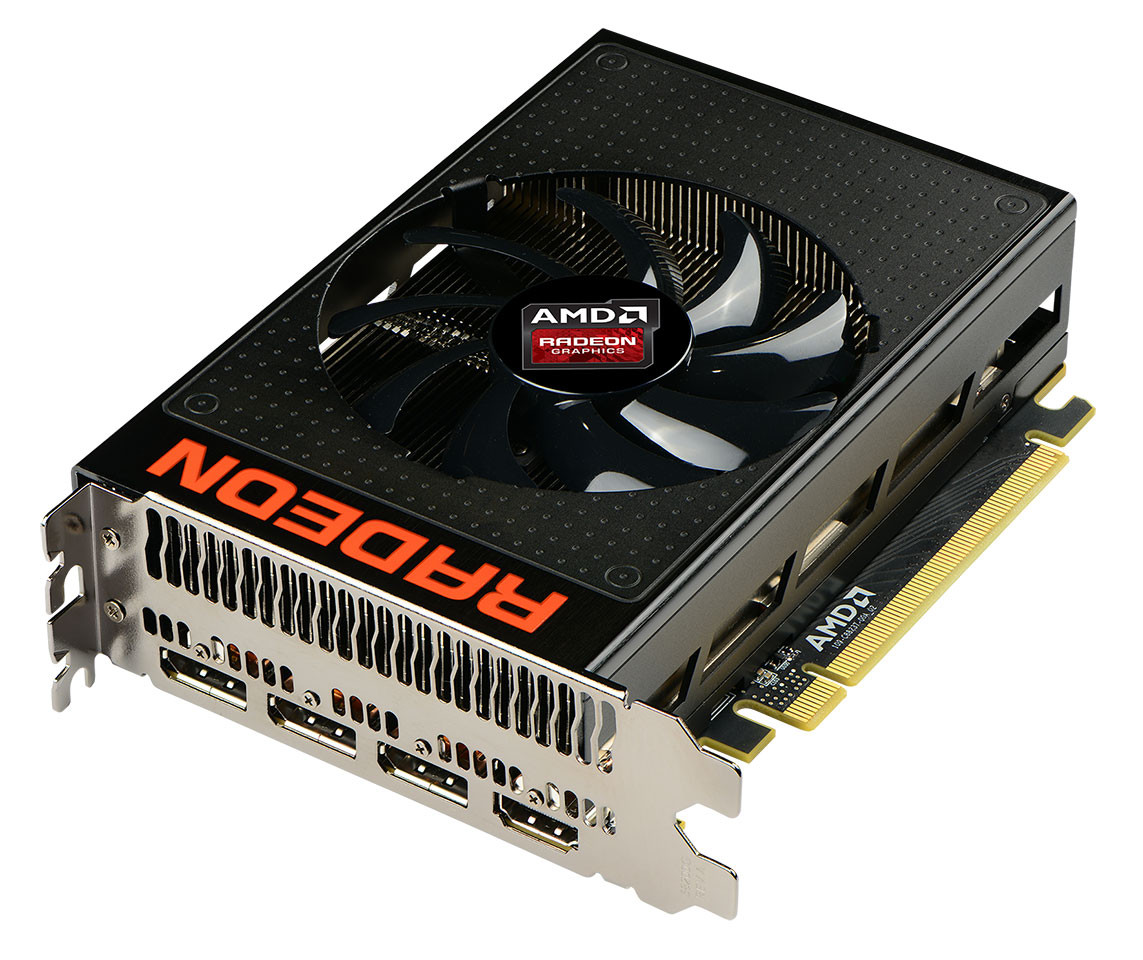
The R9 Nano, on the other hand, has the potential for greatness. Never mind the compact board design and its SFF credentials. Pull out this ASIC, put it on a normal 20-25 cm PCB, price it around $350, and dual-slot cooling that can turn its fans off in idle, and AMD could have had a GM204-killing product. Sadly, there's no way for us to test that, either. We can't emulate an R9 Nano on an R9 Fury X. The Nano appears to have a unique power/temperature based throttling algorithm that we can't copy.
"Fiji" is a good piece of technology, but apparently, very little effort is being made to put it into the hands of as many people as possible (and by that we mean consumers). This is an incoherence between what AMD CEO stated at the "Fiji" unveil, and what her company is doing. It's also great disservice to the people who probably stayed up many nights to get the interposer design right, or sailing through uncharted territory with HBM. Oh well.
759 Comments on AMD Radeon R9 Nano Review by TPU...Not
So the idea that sites with anti-AMD bias aren't getting cards seems wrong, to me. There's another reason why only certain sites are getting cards for launch day.
BTA posting this news item isn't about complaining about it for W1zz... something very weird is going on for sure.
i tought tpu was a major player in the review field, in fact the major player
what the hell amd press folks
The reason Guru3D is getting one is because their decibel reviews are constantly "yeah man, we totally cant hear this card". I've said to W1zzard in the past that Hilbert's reviews are always contradictory to his. If anything, W1zzards testing usually reflects poorly on most cards noise (inc Maxwell) compared to other places. I'll put my chips on this factor. If so it means Nano isn't as quiet as they are saying or that to be quiet, it'll throttle like crazy.
We are already at the point where other sites reviews now lack Fury/Fury X resultsbecause the site had to return the review samples...so, no PR, no ongoing marketing, and a ton of negative press. That doesn't seem like a fair trade-off for the revenue of a few retail sales to me.HardOCP stated that their review would be conducted under the conditions that AMD have been marketing the card for - namely, the review test system would be enclosed in a SFF build. Maybe AMD got cold feet.
So TPU doesn't get a Nano? Who cares! Nano is a lame duck, let it go.
All said and done - nobody should actually see this thread as a stab at the Nano card itself. Once more it's a criticism of AMD's PR dept.Try again.
This is AMD knowing that the R9 Nano will completely suck in the performance/dollar chart TPU make.
This is AMD knowing that the R9 Nano will be measured extremely close to GTX 970 Mini ITX in 1080p and 1440p and they will not be able to defend the BS $650 price point for the card when the GTX 970 Mini ITX cost $300.
You saw the same damage control when they refused to give TechReport samples, because TR measured frame times where 980Ti did much better overall than Fury X. And you saw the same damage control with refusing HardOCP any samples because they said that a factory overclocked GTX 980 with much better cooling than stock 980 can compete against Fury (non X) in most cases.
You saw the signs that the R9 Nano will be quite slower than Fury and Fury X in the pre release Far Cry 4 benchmark from AMD where they didnt seem to test the Nano with BS 0xAF settings. We all know Fury and Fury X are quite close, and since Nano is so far behind Fury X here, one can suspect the Nano of falling down to GTX 980 level, perhaps slower. Which ultimately moves it towards GTX 970 ITX performance. Which cost under half the price.
AMD know the Nano is overpriced beyond almost anything out there, and try to do damage control by handpicking biased reviewers or those that doesnt make accurate graphs which is easy to conclude with, like TPU does.
We all know what you are trying to pull on us AMD. The truth will unfortunately for you come out eventually. And just like Fury X, it will be another overpriced card. Its not our fault that you decided to use HBM before yields was good enough to drive the price down. The expense should come out of your pocket, not from the customers. Ultimately the HBM didnt show much gains if any vs GDDR5 cards, so this is entirely your fault. Just like the missed GPU launch time times, the failed CPU architectures, and the reputation wrecking decision to think you could cover up the handpicking of reviewers.
TPU is just stating what they can provide to their community through a review.
Anyway the constant lesson from all the crap surrounding Fiji and AMD in general is a) fanboyism sure is stupid, and b) there aren't as many fanboys as forum arguments indicates and c) omg it feels like it's been going on forever."Fact" or fact?
Oh fwiw I did prevent you from becoming banned once, no need to say thanks. :)
Right now we have the AMDRTP cult which seems to plague the internet they seem like the biggest fanclub that exists. Members that monitor any forum and news articles, and is quick to go berzerk against any negative post toward AMD products. I bet AMD give cheap cards to these guys every now and then just to get their "protection".
AMD_Roy is the biggest joke around with his constant low blow attacks against Nvidia and reposting of any tweet from a random guy saying "Love my R7 360X, AMDRTP 4 life". That is one of the higher ups in the system and he is a clown.
And...I'll be back to my old self in no time.
If they really dislike it so much here they are welcome to close the door on their way out and hand in their keys at the gate.