Wednesday, October 22nd 2025

Intel "Nova Lake" Could Arrive Without AVX10, APX, and AMX Support

Intel is still finalizing its next-generation "Nova Lake" specifications. However, the core microarchitecture has been done, the NPU design is finished and upgraded, and the instruction set is finalized. It could be the case that these consumer CPUs will again lack support for Intel's AVX10, APX, and AMX instruction set—designed to encompass 512-bit acceleration and fast vector/matrix multiplication for tasks like content creation, encoding/decoding, AI, and much more—remaining exclusive to Intel Xeon processors. According to the latest GCC compiler patch, the initial Nova Lake enablement patch does not include AVX10, AMX, or APX. This might suggest that support for these new x86 instructions could be missing from the next-generation CPU. Initially, Intel decided to disable AVX-512 for "Alder Lake" and "Raptor Lake" client-oriented CPU lineups, meaning that only server-grade Xeon CPUs got the accelerated 512-bit data paths.

This GCC patch seems to contradict the findings from August, when Intel introduced AVX10.2 support for "future Intel Core processors" in the oneDNN software library, likely targeting the Nova Lake series. We need to wait for more information from other enablement patches or direct confirmation from Intel regarding whether AVX10, APX, and AMX will be included in the 52-core Nova Lake SKUs. Enabling fast vector and matrix acceleration on 52 cores would be ideal for consumers, content creators, gamers, and workstation users alike. In comparison, AMD introduced full AVX-512 support with its "Zen 5" cores across its product range, providing a performance boost in optimized applications for both desktop and server CPUs. This marked the first time AMD did not emulate 512-bit AVX, which previously required splitting 512-bit data into two 256-bit units to be processed over two cycles.
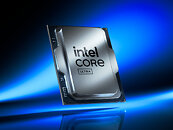
The latest patch states the following instructions are now supported:
Intel Nova Lake CPU with 64-bit extensions, MOVBE, MMX, SSE, SSE2, SSE3, SSSE3, SSE4.1, SSE4.2, POPCNT, AES, PREFETCHW, PCLMUL, RDRND, XSAVE, XSAVEC, XSAVES, XSAVEOPT, FSGSBASE, PTWRITE, RDPID, SGX, GFNI-SSE, CLWB, MOVDIRI, MOVDIR64B, WAITPKG, ADCX, AVX, AVX2, BMI, BMI2, F16C, FMA, LZCNT, PCONFIG, PKU, VAES, VPCLMULQDQ, SERIALIZE, HRESET, AVX-VNNI, UINTR, AVXIFMA, AVXVNNIINT8, AVXNECONVERT, CMPCCXADD, AVXVNNIINT16, SHA512, SM3, SM4 and PREFETCHI instruction set support.
Source: Phoronix
Add your own comment

61 Comments on Intel "Nova Lake" Could Arrive Without AVX10, APX, and AMX Support

#1
Unregistered
Pretty sad that these Estrogen cores keep holding things back so much. I could understand if it was disabled on the mobile chips but on desktop? Bonehead move Intel.
Posted on Edit | Reply
#2
LastDudeALive
ShadowizedPretty sad that these Estrogen cores keep holding things back so much. I could understand if it was disabled on the mobile chips but on desktop? Bonehead move Intel.
Intel's plethora of e-cores seems to compete pretty well against CPUs with AVX-512, actually. Stockfish is fully multi-threaded and has the Zen 4 and Zen 5 CPUs running with AVX-512, but the 285K can match the 9900X, which has the same number of threads and full AVX-512 support.
Posted on Reply
#3
kondamin
That’s disappointing, I’m starting to doubt 18a again because of this tidbit.
Does it make the cores to big or something
Posted on Reply
#4
rjc34
Realistically I can understand why they'd go down this route. While their marketshare in the enthusiast PC building space has fallen drastically, that's still a relatively small chunk of their overall sales. They've likely weighed the options and come to the conclusion that any potential enthusiast sales lost by this move will be more than made up for by forcing SIs to continue shipping Xeons in their workstations and servers for clients who require AVX-512.

Who knows, maybe they'll decide to take another crack at competing with AMD in the HEDT space and enable the new instructions on those chips.
Posted on Reply
#5
LastDudeALive
kondaminDoes it make the cores to big or something
Big and power-hungry. For instance, when AVX-512 is running in Stockfish, the 9950X gets power-limited, there's not enough electricity to supply the AVX-512 units running at full speed. And if you do lift the power limits, it ends up consuming 320W of power, a massive increase over the regular power consumption, and more than even the 14900K at stock settings (the 14900K still consumes more without power limits, though, a whopping 407W).
Posted on Reply
#6
Unregistered
LastDudeALiveIntel's plethora of e-cores seems to compete pretty well against CPUs with AVX-512, actually. Stockfish is fully multi-threaded and has the Zen 4 and Zen 5 CPUs running with AVX-512, but the 285K can match the 9900X, which has the same number of threads and full AVX-512 support.
I don't think Stockfish is a good use case of AVX512 tbh. See here, here, and here for better ones.
Posted on Edit | Reply
#7
LastDudeALive
ShadowizedI don't think Stockfish is a good use case of AVX512 tbh. See here, here, and here for better ones.
Well, two of those are testing EPYC CPUs, which isn't relevant at all. We'd need to see benchmarks in those same programs between Zen 5 and Arrow Lake desktop CPUs. AVX-512 likely has a much bigger impact on EPYCs because they can use significantly more power and have vastly more memory bandwidth.

For RPCS3, TPU has benchmarks for that.
Posted on Reply
#8
_roman_
I'm not sure if that is even correct:
This marked the first time AMD did not emulate 512-bit AVX, which previously required splitting 512-bit data into two 256-bit units to be processed over two cycles.
What i remember, this is how avx512 works with my ryzen 7600x. Ryzen 9600x shoud do that in one cycle.

We should make a difference between Intel AVX and AVX512. Some other sources and forum user claimed intel supports more. When I read about it Intel Supported Less than AVX512.

I did ask the usual AI, several, for cat /proc/cpuinfo for any Intel ULTRA desktop cpu. No AI could answer that.

march native is a bad advise. I want to know beforehand when buying intel ultra, 14th, 13th and so on which cpu instructions are available for which Cores, P core, E cores and the third type of cores. Recently it seems intel has three different Core Processor types in their processors.

Intel should provide cat /proc/cpuinfo for their processor, which include kernel version + userspace version string.

Suggestion to the intel guys:

coreutils + kernel version + cat /proc/cpuinfo

First command searches for which package provides the cat command. Second command shows part of the current linux kernel version i run.
Sienna_Cichlid /home/roman # equery belongs cat
* Searching for cat ...
sys-apps/coreutils-9.8-r1 (/bin/cat)
Sienna_Cichlid /home/roman # uname -a
Linux Sienna_Cichlid 6.17.3 ...

Gentoo wiki which i checked myself also did not have any informations. march native is a bad suggestion.

-- What I learnt today

There is a software which translates march native to waht your current gcc translates to.
Sienna_Cichlid /home/roman # emerge -s resolve-march-native

[ Results for search key : resolve-march-native ]
Searching...

* app-misc/resolve-march-native
Latest version available: 6.0.1
Latest version installed: [ Not Installed ]
Size of files: 55 KiB
Homepage: https://github.com/hartwork/resolve-march-native
Description: Resolve GCC flag -march=native
License: GPL-2+

[ Applications found : 1 ]

Sienna_Cichlid /home/roman # emerge -av resolve-march-native

These are the packages that would be merged, in order:

Calculating dependencies... done!
Dependency resolution took 1.08 s (backtrack: 0/20).

[ebuild N ] app-misc/resolve-march-native-6.0.1::gentoo USE="-test" PYTHON_TARGETS="python3_13 -python3_11 -python3_12" 55 KiB

Total: 1 package (1 new), Size of downloads: 55 KiB

Would you like to merge these packages? [Yes/No]
>>> Verifying ebuild manifests
>>> Emerging (1 of 1) app-misc/resolve-march-native-6.0.1::gentoo
>>> Installing (1 of 1) app-misc/resolve-march-native-6.0.1::gentoo
>>> Recording app-misc/resolve-march-native in "world" favorites file...
>>> Completed (1 of 1) app-misc/resolve-march-native-6.0.1::gentoo
>>> Jobs: 1 of 1 complete

My ryzen 7600x and my march native translates to
Sienna_Cichlid /home/roman # resolve-march-native
-march=znver4 -mshstk --param=l1-cache-line-size=64 --param=l1-cache-size=32 --param=l2-cache-size=1024

When you wonder a entry level Ryzen 7600x supports these cpu flags. I prefer the word cpu instructions.

flags : fpu vme de pse tsc msr pae mce cx8 apic sep mtrr pge mca cmov pat pse36 clflush mmx fxsr sse sse2 ht syscall nx mmxext fxsr_opt pdpe1gb rdtscp lm constant_tsc rep_good amd_lbr_v2 nopl xtopology nonstop_tsc cpuid extd_apicid aperfmperf rapl pni pclmulqdq monitor ssse3 fma cx16 sse4_1 sse4_2 movbe popcnt aes xsave avx f16c rdrand lahf_lm cmp_legacy svm extapic cr8_legacy abm sse4a misalignsse 3dnowprefetch osvw ibs skinit wdt tce topoext perfctr_core perfctr_nb bpext perfctr_llc mwaitx cpuid_fault cpb cat_l3 cdp_l3 hw_pstate ssbd mba perfmon_v2 ibrs ibpb stibp ibrs_enhanced vmmcall fsgsbase bmi1 avx2 smep bmi2 erms invpcid cqm rdt_a avx512f avx512dq rdseed adx smap avx512ifma clflushopt clwb avx512cd sha_ni avx512bw avx512vl xsaveopt xsavec xgetbv1 xsaves cqm_llc cqm_occup_llc cqm_mbm_total cqm_mbm_local avx512_bf16 clzero irperf xsaveerptr rdpru wbnoinvd cppc arat npt lbrv svm_lock nrip_save tsc_scale vmcb_clean flushbyasid decodeassists pausefilter pfthreshold avic vgif x2avic v_spec_ctrl vnmi avx512vbmi umip pku ospke avx512_vbmi2 gfni vaes vpclmulqdq avx512_vnni avx512_bitalg avx512_vpopcntdq rdpid overflow_recov succor smca fsrm flush_l1d amd_lbr_pmc_freeze
Posted on Reply
#9
Unregistered
LastDudeALiveWell, two of those are testing EPYC CPUs, which isn't relevant at all. We'd need to see benchmarks in those same programs between Zen 5 and Arrow Lake desktop CPUs. AVX-512 likely has a much bigger impact on EPYCs because they can use significantly more power and have vastly more memory bandwidth.

For RPCS3, TPU has benchmarks for that.
its showcasing the benefits of AVX512... if you dug into the benchmarks just a little bit you'd find amusing situations like where an 8 core Ryzen Mobile part bests the 285k.

edit: also these benchmarks, it paints a very clear picture.
Posted on Edit | Reply
#10
mechtech
Well I have to say, one thing Intel is good at is market segregation!!
Posted on Reply
#11
LastDudeALive
Shadowizedits showcasing the benefits of AVX512... if you dug into the benchmarks just a little bit you'd find amusing situations like where an 8 core Ryzen Mobile part bests the 285k.
Am I misreading this data set, or does this have an 8 core Zen 4 mobile CPU outperforming a 64 core Zen 4 Threadripper? If that's the case, it's incredibly obvious how much this website is worth for "benchmarks."
Shadowizededit: also these benchmarks, it paints a very clear picture.
Where's the link to that? That's very interesting.
Posted on Reply
#14
LastDudeALive
Shadowizedwww.phoronix.com/review/intel-core-ultra-9-285k-linux/16
Thanks. That's a better example of AVX-512 implementation, for sure, although still with some important caveats. For example, Intel's ability to have faster RAM significantly improves performance, oftentimes enabling it to come close to the Zen 5 CPUs simply by virtue of the bandwidth. Also, it seems some tasks are limited to a single CCD on the Ryzen CPUs, there's much less variation between the dual-CCD models and the single-CCD models than you'd expect from core count. Maybe the memory bandwidth is playing into that as well.
Visible NoiseWhy the fuck would you run any of those workloads on an x86 CPU? An integrated GPU will be an order of magnitude faster.
Also why NPUs are becoming so common in laptops. If I want to go through my photo library and run facial recognition, or have transcription in a Teams meeting, it's much better for that to run on a power-efficient NPU than have a power-hungry AVX-512 unit doing that.
Posted on Reply
#15
Unregistered
LastDudeALiveThanks. That's a better example of AVX-512 implementation, for sure, although still with some important caveats. For example, Intel's ability to have faster RAM significantly improves performance, oftentimes enabling it to come close to the Zen 5 CPUs simply by virtue of the bandwidth. Also, it seems some tasks are limited to a single CCD on the Ryzen CPUs, there's much less variation between the dual-CCD models and the single-CCD models than you'd expect from core count. Maybe the memory bandwidth is playing into that as well.
There are quite a few other examples with AVX512 specially, one of the noteable ones is in things like video encoding (which can be found on page 12 of that Phoronix link) where AMD runs away with it by quite a margin. The IMC that Intel have is just about the only thing of note that they have left in their arsenal, but I suspect that will change with the upcoming EPYC IMC that Zen6 will have, along with the 12 core CCDs, At the very least they should be able to achieve close to parity in terms of raw bandwidth.
Posted on Edit | Reply
#17
LastDudeALive
ShadowizedThe IMC that Intel have is just about the only thing of note that they have left in their arsenal, but I suspect that will change with the upcoming EPYC IMC that Zen6 will have, along with the 12 core CCDs,
Not the only thing, the e-cores are extremely powerful for multithreaded work. As I mentioned above, they enabled Intel to match the 9900X in Stockfish without AVX-512, and in rendering they enable the 285K to match or best the 9950X (depending on the software) despite an 8-thread deficit. If the rumors of a 52-core Ultra 9 CPU are true, then it'll likely wipe the floor with the Ryzen 9 Zen 6 flagship, even with 24c/48t.
Sol_BadguyHere is the 9950X vs 7950X with AVX on and off:
www.phoronix.com/review/amd-zen5-avx-512-9950x/7
Power draw and thermals are pretty much the same. No negative impact.
That actually shows the 9950X is extremely power-limited with AVX-512, that's the maximum power limit of the CPU. As noted above, when power limits are removed, loading the AVX-512 units causes power consumption to skyrocket.
Posted on Reply
#18
Visible Noise
So let me get this strait. Phoronix benchmarks CPUs with memory bound AI algorithms instead of compute bound algorithms because _______.
(Fill in the blank)

Said benchmark runs 14X faster on a seven year old RTX 2080ti than the fastest cpu in the phoronix benchmark. Running this workload on a cpu isn’t only irrelevant, it’s stupid.
Posted on Reply
#19
f0ssile
LastDudeALiveIntel's plethora of e-cores seems to compete pretty well against CPUs with AVX-512, actually. Stockfish is fully multi-threaded and has the Zen 4 and Zen 5 CPUs running with AVX-512, but the 285K can match the 9900X, which has the same number of threads and full AVX-512 support.
Yes, they perform so well that to get the results close, you have to combine Intel's physical cores with AMD's virtual ones.
Below, choose a test on a game on an emulator, where even the 7000 performs better than the 9000.
It will certainly be a representative test, yes, of why you chose it...

Do you have any other signature cherry-pickings, or have you already run out?

I propose a specific test that can be easily repeated by anyone:


It seems like the specific tests are a bit different than you'd like to describe, eh...
Posted on Reply
#20
LastDudeALive
f0ssileYes, they perform so well that to get the results close, you have to combine Intel's physical cores with AMD's virtual ones.
Below, choose a test on a game on an emulator, where even the 7000 performs better than the 9000.
It will certainly be a representative test, yes, of why you chose it...

Do you have any other signature cherry-pickings, or have you already run out?
Do you mean RPCS3? Yeah, I already posted that benchmark.

I was simply showing how Intel's strategy of packing numerous e-cores into CPUs is competitive against AMD's strategy of making large hyper-threaded cores with large, power-hungry AVX-512 units.

AVX-512 isn't a magic spell you can just cast on a program and have it be solved. There's many ways to skin a cat. AVX-512 is one, lots of small single-threaded e-cores is another, NPUs is another, etc.

I, for one, think it's very good that Intel and AMD are implementing different strategies. It makes for a very competitive market and gives consumers lots of options.
Posted on Reply
#21
evernessince
LastDudeALiveDo you mean RPCS3? Yeah, I already posted that benchmark.

I was simply showing how Intel's strategy of packing numerous e-cores into CPUs is competitive against AMD's strategy of making large hyper-threaded cores with large, power-hungry AVX-512 units.

AVX-512 isn't a magic spell you can just cast on a program and have it be solved. There's many ways to skin a cat. AVX-512 is one, lots of small single-threaded e-cores is another, NPUs is another, etc.

I, for one, think it's very good that Intel and AMD are implementing different strategies. It makes for a very competitive market and gives consumers lots of options.
The problem is that when you change the entire paradigm of how you design CPUs merely to match a competitor in a single metric, that's not a good result.

At some point, Intel has to prove that e-cores are worth it. Given that the 7950X and 14900K have a close total die area, despite the added overhead of AMD needing SerDes to transfer data between the dies, says to me that e cores don't end up being that space efficient. They aren't really amazing power wise either, and they introduced a ton of complexity and schedular headaches. We see good ARM big little core designs so it might just be an Intel issue.
Posted on Reply
#22
f0ssile
LastDudeALiveDo you mean RPCS3? Yeah, I already posted that benchmark.

I was simply showing how Intel's strategy of packing numerous e-cores into CPUs is competitive against AMD's strategy of making large hyper-threaded cores with large, power-hungry AVX-512 units.

AVX-512 isn't a magic spell you can just cast on a program and have it be solved. There's many ways to skin a cat. AVX-512 is one, lots of small single-threaded e-cores is another, NPUs is another, etc.

I, for one, think it's very good that Intel and AMD are implementing different strategies. It makes for a very competitive market and gives consumers lots of options.
Check the update...

I proposed a specific test that can be easily repeated by anyone:


It seems like the specific tests are a bit different than you'd like to describe, eh...
www.techpowerup.com/324864/finalwire-releases-aida64-v7-35-with-new-checkmate-64-bit-benchmark

Are you saying that one e-core can be compared to the "leftover" AMD virtual thread?
The fact is, the result isn't comparable, and using a bunch of e-cores to match the secondary thread doesn't seem like anything to brag about.

Besides, fragmenting the task too much decreases the likelihood of profitability.
Consider adopting it for gaming; it'll be a big deal if you take advantage of AMD's main threads.

It seems clear to me that you're biased toward the Intel method, which, if you look closely, is also mandatory; it's not exactly a brilliant alternative...
Posted on Reply
#23
Unregistered
I mean it's good that there is a divergence in strategy but you need to realize that Intel was the one shouting AVX from the rooftops from day one as the key selling point on the ... 11th gen chips if I recall correctly, and it was present in the 12th gen too but then came the Estrogen cores which didn't support AVX-512 and as Intel found out the hard way that trying to have two different CPU instructions sets on the same package is a nightmare for scheduling and stability hence them patching it out at the firmware level on the 12th gen onward and here we are, but instead of just making those cores support AVX-512 after all this time they would rather repackage the same garbage and call it new, it's disappointing and lacks the creative flare that old Intel had.
evernessinceAt some point, Intel has to prove that e-cores are worth it. Given that the 7950X and 14900K have a close total die area, despite the added overhead of AMD needing SerDes to transfer data between the dies, says to me that e cores don't end up being that space efficient. They aren't really amazing power wise either, and they introduced a ton of complexity and schedular headaches. We see good ARM big little core designs so it might just be an Intel issue.
100% agreed.
Posted on Edit | Reply
#24
chrcoluk
AVX is a non issue, my raptor lake comfortable beats my 9900k on RPCS3 which is the only consumer app I am aware of that uses the instructions.
Posted on Reply
#25
LastDudeALive
evernessinceThe problem is that when you change the entire paradigm of how you design CPUs merely to match a competitor in a single metric, that's not a good result.
At some point, Intel has to prove that e-cores are worth it. Given that the 7950X and 14900K have a close total die area, despite the added overhead of AMD needing SerDes to transfer data between the dies, says to me that e cores don't end up being that space efficient. They aren't really amazing power wise either, and they introduced a ton of complexity and schedular headaches. We see good ARM big little core designs so it might just be an Intel issue.
The 7950X was on a 5nm process, the 14900K was on a 10nm process. A close total die area is a strong point in favor of the 14900K, in that case. Much better to look at the 285K on TSMC 3nm vs the 9950X on TSMC 4nm. And in any case, the space argument is more about space on the same CPU, the architecture differences make space comparison difficult between Intel and AMD. For Intel, the choice is between 1 P core or 4 e cores, in terms of space. And even when the P cores were hyper-threaded, 4 e-cores provided significantly more multi-threading power. It's even better now that the P cores have no HT.

They are very power efficient, actually, that's why Intel's mobile chips are mostly e-cores at this point and why they have efficiency-focused Xeons that only have e-cores (also why AMD is putting lots of their c cores in their mobile chips and also have c-core-only EPYCs). The efficiency comes from the fact that they operate within the optimal efficiency window, instead of being pushed to the limits like the P cores for 20% extra performance and 50% extra power consumption. That's how CPU cores have always worked.

The dual-CCD Ryzens (especially the Ryzen 9 X3D chips) have scheduler issues as well, that's not a point in favor of either company at this point. At least Intel's only requires you to run Windows 11 and an updated BIOS to get the best scheduling, while AMD requires Xbox Game Bar. I'd say that even with the scheduling complexity, both Ryzen's multi-CCD approach and Intel's e-core approach have proven their worth. Again, it's great that the two companies are taking very different approaches to these problems. It provides a lot of great competition.
Posted on Reply
Add your own comment
Nov 22nd, 2026 03:41 PST change timezone

New Forum Posts

Popular Reviews

TPU on YouTube

Controversial News Posts