Sunday, November 30th 2025

AMD Lists Ryzen 7 9850X3D CPU with 5.6 GHz Boost Frequency

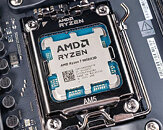
AMD has launched an official website placeholder for the Ryzen 7 9850X3D processor, which was leaked in October. As a part of the "Granite Ridge" Ryzen 9000 X3D series, AMD is reportedly developing two additional updates to the lineup. One is a flagship model, the Ryzen 9 9950X3D2, and the other is a refined eight-core, 16-thread X3D design. Today, AMD's website confirms the Ryzen 7 9850X3D, featuring 8 cores and 16 threads, 96 MB of L3 cache, and a boost clock up to 5.6 GHz, with a 120 W power envelope. This represents a 400 MHz increase over the Ryzen 7 9800X3D model, which has the same cache and core configuration. AMD is likely using higher-binned dies it has saved over the past few months to offer a better alternative to Intel's upcoming "Arrow Lake Refresh," scheduled for early 2026, and "Nova Lake," scheduled for late 2026.

However, details about the new flagship model, the Ryzen 9 9950X3D2, featuring 16 cores and 32 threads, remain uncertain. This chip reportedly includes 3D V-Cache on both chiplets, totaling approximately 192 MB of L3 cache. It is said to operate at a base frequency of 4.30 GHz, with a boost up to around 5.6 GHz, and has a TDP of about 200 W. The 9950X3D2, with its new naming convention, suggests a tradeoff of slightly lower peak boost speeds (-100 MHz) compared to the single-stack X3D Ryzen 9 9950X3D model, but offers significantly increased cache capacity. Today only the higher-clocked Ryzen 7 9850X3D is confirmed by AMD, so we might have to wait on the dual-chiplet X3D2 SKU a bit more.
Sources: AMD, via VIdeoCardz
Add your own comment

148 Comments on AMD Lists Ryzen 7 9850X3D CPU with 5.6 GHz Boost Frequency

#101
Harun8
Vayra86gatekept to the high end? A 400 dollar CPU?

Hmmm... Let's do some comparing and see what 350-400 dollars worth of GPU gets you

Oh.. okay :)
Now... thought experiment, how many bottom-end GPUs like these do you think you can run off a 9800X3D? I reckon you might stretch to 3-4 upgrades and still have CPU oomph to spare.
$400 isnt expensive in isolation, but in the total cost of the build, where you can be allocating some of that $400 into the GPU, which is more expensive and makes a bigger difference, $400 is expensive yes

9800X3D gets you +10% fps from a 9600x in 1440p, for $250 more

5070 -> 5070 Ti for $250 more gets you +20%

Up until a 9070 XT or 5070 Ti, X3D is too expensive. No one is pairing a 9060 XT and an X3D CPU. My GPU costed me 3x my CPU
Posted on Reply
#102
Vayra86
Harun8$400 isnt expensive in isolation, but in the total cost of the build, where you can be allocating some of that $400 into the GPU, which is more expensive and makes a bigger difference, $400 is expensive yes

9800X3D gets you +10% fps from a 9600x in 1440p, for $250 more

5070 -> 5070 Ti for $250 more gets you +20%

Up until a 9070 XT or 5070 Ti, X3D is too expensive. No one is pairing a 9060 XT and an X3D CPU. My GPU costed me 3x my CPU
And this is precisely why I'm returning to you that you're looking at these expenses the wrong way.

Smart people don't buy a gaming rig for their current GPU or the GPU they want to buy today on an already tight budget. If you intend to be gaming on it seriously, you want to think about where you are 5 years from now and build your platform based on that.

So you get a PSU that isn't 'just enough' for your midrange POS x60 with 8GB... you get one that is more than sufficient to carry a spanking new x70ti 3 years from now.
You get a CPU that can run circles around that x70ti.
And then you have a rig that might cost 300-400 more today than your budget solution, but lasts twice as long, and at the end of the day, saves you at least 400 bucks instead because you're not upgrading your RAM, your board, your PSU AND your CPU again.

This is not complicated... You've now spent less money to get a more high end system, with more resale value, more performance on tap since day one, and yes, perhaps you can't spend an extra 200 on your GPU, but within the same gen, that really isn't making or breaking anything either.

It has been the case for several years now that buying low-to midrange systems and parts is a penny wise pound foolish approach to hardware. Since performance increases per gen are stalling and parts get more expensive, your parts keep their value longer and higher end parts resell extremely well, sometimes even for original purchase price.
Posted on Reply
#103
Harun8
Vayra86And then you have a rig that might cost 300-400 more today than your budget solution, but lasts twice as long, and at the end of the day, saves you at least 400 bucks instead because you're not upgrading your RAM, your board, your PSU AND your CPU again.

This is not complicated...
And then in 5 years you're on a 5 year old CPU, 5 year old ram, and 5 year old motherboard. Sure its the best from 5 years ago, but its also from 5 years ago

If I buy something thats high end I buy it so I can get a high end experience right then and there. Not so I can get a mediocre experience in 5 years
Posted on Reply
#104
Vayra86
Harun8And then in 5 years you're on a 5 year old CPU, 5 year old ram, and 5 year old motherboard. Sure its the best from 5 years ago, but its also from 5 years ago

If I buy something thats high end I buy it so I can get a high end experience right then and there. Not so I can get a mediocre experience in 5 years
Who cares? The CPU and platform, if they're fast enough, have zero, and I do mean, completely NO influence whatsoever on your gaming performance. There is no featureset difference, no graphical influence, there are just frames. Its very normal to have a platform for 5 years, and you can easily stretch it to 7, or even 10. We have a forum full of systems like that.

In the end, you do you, its your money, but you're just doubly confirming why people make poor purchase decisions: its all aimed at the immediate and short term, and since your budget IS still limited, you pick a marginally (20% is marginal, 50% is too) GPU performance increase over platform longevity.

That's just a bad way to spend money, especially if you are budget limited.

Its the same silly thing as people borrowing money instead of saving up to buy what they really want. In the end, the people who saved, have more money to spend.
Posted on Reply
#105
Harun8
Vayra86Who cares? The CPU and platform, if they're fast enough, have zero, and I do mean, completely NO influence whatsoever on your gaming performance. There is no featureset difference, no graphical influence, there are just frames. Its very normal to have a platform for 5 years, and you can easily stretch it to 7, or even 10. We have a forum full of systems like that.

In the end, you do you, its your money, but you're just doubly confirming why people make poor purchase decisions: its all aimed at the immediate and short term, and since your budget IS still limited, you pick a marginally (20% is marginal, 50% is too) GPU performance increase over platform longevity.

That's just a bad way to spend money, especially if you are budget limited.

Its the same silly thing as people lending money instead of saving up to buy what they really want. In the end, the people who saved, have more money to spend.
By your logic you can do the reverse and spend most your money on a GPU and keep that for a long time while upgrading your platform later

You can keep a platform for 10 years yeah if you don't play modern AAA games lol. You can also keep a GPU for 10 years if you don't play demanding games. CPU requirements go up. "they are just frames" and when you don't have enough of them, the game becomes unplayable or annoying to play

If 50% of a performance difference is marginal to you then I don't know what to say. That's the difference between 45 and 67 fps

If by "short term" you mean 5 years, then yeah I think for the short term. When I built my PC a month ago I had and still have every intention to build an entirely new one in 4-5 years. If I spent $250 more on a CPU right now that isn't changing
Posted on Reply
#106
Vayra86
Harun8By your logic you can do the reverse and spend most your money on a GPU and keep that for a long time while upgrading your platform later
No you can't because your CPU will handicap your GPU which not only results in lower FPS, but more importantly, a stutterfest.

But like I said, you're at liberty to go about your spending in another way - but it is you who is saying 400 bucks is a high-end kind of money to spend on a hardware part.

And that's just bullshit :)

And the difference between 45 and 67 FPS is not a difference between playable and unplayable, either, (especially now that variable refresh is a thing) so no, 50% isn't a lot.
Your perspective is clearly young and low on experience ;) All in due time. Your experience is your own.
Posted on Reply
#107
A Computer Guy
Vayra86No you can't because your CPU will handicap your GPU which not only results in lower FPS, but more importantly, a stutterfest.
I thought you can up the resolution of your game so your GPU becomes more bottlenecked and that essentially frees up the CPU? I remember doing that with Horizon Zero Dawn and it ran better for me at 1440p when I was running a 3800x with RX5500XT(8GB).
Posted on Reply
#108
Vayra86
Harun8If by "short term" you mean 5 years, then yeah I think for the short term. When I built my PC a month ago I had and still have every intention to build an entirely new one in 4-5 years. If I spent $250 more on a CPU right now that isn't changing
Duly noted but that was clear since your first post on the subject, I've just explained to you what that means in the long run and why you are struggling for budget and always will be.

Again - you do you ;)
A Computer GuyI thought you can up the resolution of your game so your GPU becomes more bottlenecked and that essentially frees up the CPU? I remember doing that with Horizon Zero Dawn and it ran better for me at 1440p when I was running a 3800x with RX5500XT(8GB).
Then you had enough CPU to begin with, but what we have seen in the recent past is that CPU performance is really quite important if you have any kind of reasonably fast GPU and want frametime stability. Alternatively you can also just frame cap - but then you weren't lacking CPU performance to run the game. Its not like CPU requirements change radically with a lower or higher resolution.

There is a reason an X3D games 'so smooth'. It is more than raw FPS - it is frametime consistency where strong CPUs help you, and if you bottleneck on the GPU, your frames can still be inconsistent because you momentarily lack CPU performance.

Its the same thing as lacking RAM capacity or bandwidth: it results in stutter and is an immersion killer. Frames going down a bit, and covered with GPU frame pacing because its just a graphical impact, barely influence the experience, especially with variable refresh rates.
Posted on Reply
#109
Harun8
A Computer GuyI thought you can up the resolution of your game so your GPU becomes more bottlenecked and that essentially frees up the CPU? I remember doing that with Horizon Zero Dawn and it ran better for me at 1440p when I was running a 3800x with RX5500XT(8GB).
At high resolutions the CPU becomes less relevant yes

This is the graph for 1% Lows, ie the measurement of how smooth the games feel. In 4K the difference becomes so small you get the 7800X3D beating the 9800X3D and 245K beating the 285K lol. Assuming this is them being within margin of error of each other. You can see a clear difference between CPUs in the 1080p graph though

Posted on Reply
#110
Vayra86
Harun8At high resolutions the CPU becomes less relevant yes

This is the graph for 1% Lows, ie the measurement of how smooth the games feel. In 4K the difference becomes so small you get the 7800X3D beating the 9800X3D and 245K beating the 285K lol. Assuming this is them being within margin of error of each other. You can see a clear difference between CPUs in the 1080p graph though

Take special note of the fact that even these graphs are averages of the Minimum FPS across a large suite of games.

Its not the actual minimum FPS, and neither does it show you the gap in frametimes between the average and lowest FPS number - which is what matters most.
Posted on Reply
#111
AusWolf
Vayra86You just put I understand and a token of total misunderstanding in the very same sentence. You don't get it at all :)

I'm gonna spend the rest of the day trying to find a proper facepalm pic for this situation. Wow.
The only correct response here is that we should educate.

As you can see, depending on scene and content, you can get a radical FPS impact even on last gen 4090 which is today, a 5080, and next gen is a 6070 (well within range for most), which is when the gap between a 7800X3D and a 9800X3D (two top end gaming CPUs) will make itself known quite well. The Stalker 2 video already shows you a gap of 20+ FPS, and those are frames within the range of 'I kinda do want them', ergo 70-120 FPS.

The issue with people reading CPU reviews is exactly the sentiment that @Harun8 presented as well: a short sighted view on what the PC should do today. You don't buy a platform and CPU for one or two years and a single GPU, I hope - and if you do, you're doing it wrong.
I think there's a misunderstanding here. I don't just get your point, but completely agree with it, too. I totally believe that a high-end CPU + board + RAM combo should outlive 3-4, maybe even 5 GPU generations. For that, 720p tests are totally relevant. But... There's a big but...

Let's be honest with ourselves. Is that what we do? Do we really keep our CPUs for several GPU generations? That's why I asked the question: is there anyone here who games on a 5080 or 5090 with a 9900K?

What we think of as an ideal scenario, and what we actually do are totally different things. Sometimes our mouths say one thing, but our hands do another. This is one of those situations.
Posted on Reply
#112
Tek-Check
This is going to be an interesting SKU, a filler until Zen6 arrives.
Posted on Reply
#113
Vayra86
AusWolfI think there's a misunderstanding here. I don't just get your point, but completely agree with it, too. I totally believe that a high-end CPU + board + RAM combo should outlive 3-4, maybe even 5 GPU generations. For that, 720p tests are totally relevant. But... There's a big but...

Let's be honest with ourselves. Is that what we do? Do we really keep our CPUs for several GPU generations? That's why I asked the question: is there anyone here who games on a 5080 or 5090 with a 9900K?

What we think of as an ideal scenario, and what we actually do are totally different things. Sometimes our mouths say one thing, but our hands do another. This is one of those situations.
Yes, many people do not upgrade their platform when a gpu upgrade is in play and if they do, they waste money. Especially if you are moving between x60 and x80 performance, you are much better off keeping your platform - provided you've pre empted your need for more CPU oomph. Quite simply because for many years on end, the CPU performance in the market does not change all that much. Progress on CPU is slow especially regarding gaming. GPU performance keeps increasing with leaps, CPU is gradual. That is how it happened that a 4090 was released and TPU for a while didn't have a CPU that could max it out.

What is really happening in practice in people's minds when they have 1k budget to spend on a PC, is that they 'make it fit' that budget and end up with a system with no gpu upgrade path. And that is, irrespective of your financial capabilities, a more expensive path than buying what you need only once. Those are the people that open a topic on this forum with a low-end CPU after a GPU upgrade and asking us whether to upgrade their rig to whatever is top of stack on their platform (still on a premium, or poorly available now), versus starting all over. Either way - they are buying two CPUs, the second one at virtually the price of the one they should have bought initially!

You are correct on that last sentence. That is exactly my point. Emotion wins here over being rational, but if you bite the bullet just once in the beginning of building PCs, you have the capital for decades to keep moving to new platforms at optimal moments, and as a result, not only have excellent CPU performance on tap all the time, but also more budget towards GPU upgrades. Because it gets even better than just that: you ALSO have a platform / base system you can sell or re-use for a less performant use case after 7 years that can still go another 5 at least. Try doing that after 7 years with a low end CPU. It won't even suffice as a HTPC. I'm living the example... the 3570k from 2013 is 12 years in service and spent the last 5 or so under the TV, its obsolete now only because it can't stream 4K properly. That is a LOT of value for even a sub-top-tier CPU.

And that is why it is WRONG to suggest a CPU review should be aimed at 'your budget for your rig and desires' with various tests that are actually GPU bound. That is literally inviting the wrong purchase behaviour and promoting a poor rationale :) And... promoting more E-waste. So you're even aligning with climate saving by saving money, what's not to like.
Posted on Reply
#114
rv8000
freeagentThis is the part about X3D that annoys me.

Say you are just a Joe, not knowing what is what these days. You buy the 9950 because you work and play games, maybe do some science stuff on the side.

But then 2 months later you see there is a 9950X3D. Does everything you wanted your 9950 to do, but it does it better for games and science.

So now you are pissed at AMD. Just make everything on the top end that would have an X to an X3D. Problem solved.

Edit:

I almost bought a 9800X3D this weekend, glad that I did not.. because I will get the faster one :)
The amount of tools and data available on the web put that squarely on the person not doing ANY research. Blaming everyone else but themselves does seem to be the general ideology though, so I guess that checks out.
Posted on Reply
#115
freeagent
rv8000The amount of tools and data available on the web put that squarely on the person not doing ANY research. Blaming everyone else but themselves does seem to be the general ideology though, so I guess that checks out.
It was just an example.
Posted on Reply
#116
AusWolf
Vayra86Yes, many people do not upgrade their platform when a gpu upgrade is in play and if they do, they waste money. Especially if you are moving between x60 and x80 performance, you are much better off keeping your platform - provided you've pre empted your need for more CPU oomph. Quite simply because for many years on end, the CPU performance in the market does not change all that much. Progress on CPU is slow especially regarding gaming. GPU performance keeps increasing with leaps, CPU is gradual. That is how it happened that a 4090 was released and TPU for a while didn't have a CPU that could max it out.

What is really happening in practice in people's minds when they have 1k budget to spend on a PC, is that they 'make it fit' that budget and end up with a system with no gpu upgrade path. And that is, irrespective of your financial capabilities, a more expensive path than buying what you need only once. Those are the people that open a topic on this forum with a low-end CPU after a GPU upgrade and asking us whether to upgrade their rig to whatever is top of stack on their platform (still on a premium, or poorly available now), versus starting all over. Either way - they are buying two CPUs, the second one at virtually the price of the one they should have bought initially!

You are correct on that last sentence. That is exactly my point. Emotion wins here over being rational, but if you bite the bullet just once in the beginning of building PCs, you have the capital for decades to keep moving to new platforms at optimal moments, and as a result, not only have excellent CPU performance on tap all the time, but also more budget towards GPU upgrades. Because it gets even better than just that: you ALSO have a platform / base system you can sell or re-use for a less performant use case after 7 years that can still go another 5 at least. Try doing that after 7 years with a low end CPU. It won't even suffice as a HTPC. I'm living the example... the 3570k from 2013 is 12 years in service and spent the last 5 or so under the TV, its obsolete now only because it can't stream 4K properly. That is a LOT of value for even a sub-top-tier CPU.

And that is why it is WRONG to suggest a CPU review should be aimed at 'your budget for your rig and desires' with various tests that are actually GPU bound. That is literally inviting the wrong purchase behaviour and promoting a poor rationale :) And... promoting more E-waste. So you're even aligning with climate saving by saving money, what's not to like.
I'm not even saying that those reviews are wrong or that they're suggesting the wrong thing. All I'm saying is that they're irrelevant for the present discussion.

The 9850X3D will not be a budget CPU, nor one for the conscious buyer. It'll be a CPU for those who demand the best and don't care about value. Like someone said, AMD's equivalent for Intel's KS SKUs. If you care about value, the 9800X3D is already out of your way (the 7800X3D, or the 9700X are much better deals), but the 9850X3D adds a spoonful on top.

While 720p tests are important for reasons discussed above, they are irrelevant if you also consider the intended audience. People who buy CPUs like this will most probably swap it for the next best thing when Zen 6 comes out. That's why you don't see anyone with a 5090 and 9900K. Longevity is very important, but the reality is that people don't buy wasteful top end SKUs with longevity in mind, whether we agree with it or not.
Posted on Reply
#117
Nordic
@AusWolf if I am buying a 9800x3d or 9850x3d I want the maximum performance I can get at the expense of performance per watt. If I want performance per watt like you do, I would buy a different product. I hope AMD makes a 9700x3d for people who want higher performance per watt but that isn't what the 9800x3d is trying to do.
Posted on Reply
#118
AusWolf
Nordic@AusWolf if I am buying a 9800x3d or 9850x3d I want the maximum performance I can get at the expense of performance per watt. If I want performance per watt like you do, I would buy a different product. I hope AMD makes a 9700x3d for people who want higher performance per watt but that isn't what the 9800x3d is trying to do.
Thank you for proving my point. :)

Edit: The 7800X3D wasn't just the fastest gaming CPU, but also the most efficient one. I'm sad that the 9800X3D didn't continue that legacy.
Posted on Reply
#119
Makaveli
The good thing is the 9850X3D will hopefully push prices down the stack.

But without much competition from intel in gaming may only be a small drop.
Posted on Reply
#120
AusWolf
MakaveliThe good thing is the 9850X3D will hopefully push prices down the stack.

But without much competition from intel in gaming may only be a small drop.
I wouldn't count on it. As an Ubermensch class CPU, it'll probably be just more expensive than similar offers.
Posted on Reply
#121
wolf
Better Than Native
Vayra86That is exactly my point. Emotion wins here over being rational, but if you bite the bullet just once in the beginning of building PCs, you have the capital for decades to keep moving to new platforms at optimal moments, and as a result, not only have excellent CPU performance on tap all the time, but also more budget towards GPU upgrades. Because it gets even better than just that: you ALSO have a platform / base system you can sell or re-use for a less performant use case after 7 years that can still go another 5 at least. Try doing that after 7 years with a low end CPU. It won't even suffice as a HTPC. I'm living the example... the 3570k from 2013 is 12 years in service and spent the last 5 or so under the TV, its obsolete now only because it can't stream 4K properly. That is a LOT of value for even a sub-top-tier CPU.
I tend to agree with this, Buying a seriously good higher end chip means as it trickles down through my 2nd and even 3rd teir PC's, they still kick butt and endure in a big way. They also retain more resale value if that interests you, but for me personally also retaining them for period correct high end retro builds that I'll do in 5-10-15+ years time. I think in 2035 not that many people would care about a period correct box with a 5800X, but a 5800X3D.... hell yeah.
Posted on Reply
#123
Vayra86
AusWolfI'm not even saying that those reviews are wrong or that they're suggesting the wrong thing. All I'm saying is that they're irrelevant for the present discussion.

The 9850X3D will not be a budget CPU, nor one for the conscious buyer. It'll be a CPU for those who demand the best and don't care about value. Like someone said, AMD's equivalent for Intel's KS SKUs. If you care about value, the 9800X3D is already out of your way (the 7800X3D, or the 9700X are much better deals), but the 9850X3D adds a spoonful on top.

While 720p tests are important for reasons discussed above, they are irrelevant if you also consider the intended audience. People who buy CPUs like this will most probably swap it for the next best thing when Zen 6 comes out. That's why you don't see anyone with a 5090 and 9900K. Longevity is very important, but the reality is that people don't buy wasteful top end SKUs with longevity in mind, whether we agree with it or not.
And I'm saying you're wrong about that. The enthusiast is probably not even just looking at gaming benchmarks but also a Cinebench and whatever other software they want to perform. The enthusiast that is gaming-only, will simply buy the fastest available gaming thing when it comes out or gets in budget range, CPU reviews be damned. Look at this topic, these guys ain't waiting for the review, they (practically/emotionally) pre order. That's not a target audience really, if you think about it a bit longer - and even THEY are helped with a CPU-isolated 720p test because it still shows them what the fastest part is that they can buy.

Your argument, sorry to say, is bereft of any logic. You keep talking about a nonexistant 5090 x 9900k rig but really, if you had a 5090, you'd have been upgrading your CPU at this point and guess what, you'll just want to see what the fastest part is, how does a 1440p test help them?! The intended audience that tends to ask for a 1440p test is not the enthusiast, its the immense group below that, looking at bang for buck and most helped by, wait for it... CPU isolated testing, showing them the relative performance and giving them the clearest comparison to each part's price vs its raw perf.

Whatever 'the reality is' in your mind... I don't subscribe to catering to stupidity. People create their own reality. Doesn't mean it makes sense.

Its also interesting how you do a 180 on longevity. High end parts have far higher longevity than the cut down poor bin parts lower in the stack. I'm even explicitly pointing that out repeatedly with practical and verifiable examples :D They offer more value for money, have a higher shelf life, and remain relevant for longer, but in your mind they are 'wasteful'. You don't get it at all mate, you're just coloring your perception with your own point of view on people buying high end parts (very judgmental too).

The piles of E waste are low end parts. Not high end parts finding new lives after the enthusiast has moved on. High end parts, and Iphones, for example, end up in refurbish stores, get new screens and are actually repaired. Because its worth doing. The Samsung Galaxy A-whatever junk is floating in the ocean, discarded because 'meh it was just a hundred bucks'. You're oblivious to all that, it seems, busy trying to save pennies on a dollar by not buying 'wasteful' parts, that are in fact far more economical.
Posted on Reply
#124
AusWolf
Vayra86And I'm saying you're wrong about that. The enthusiast is probably not even just looking at gaming benchmarks but also a Cinebench and whatever other software they want to perform. The enthusiast that is gaming-only, will simply buy the fastest available gaming thing when it comes out or gets in budget range, CPU reviews be damned. Look at this topic, these guys ain't waiting for the review, they (practically/emotionally) pre order. That's not a target audience really, if you think about it a bit longer - and even THEY are helped with a CPU-isolated 720p test because it still shows them what the fastest part is that they can buy.
Then let's ask those guys what CPU they currently have. I doubt many of them are older than a couple of generations.

Everybody: if you're determined to get a 9850X3D, and not any of the lower variants, then please let us know what CPU you're planning to replace with it. :)
Vayra86if you had a 5090, you'd have been upgrading your CPU at this point and guess what, you'll just want to see what the fastest part is, how does a 1440p test help them?!
Exactly. So how does a 720p test help, then? Why would you care how your CPU will perform in 4-6 years if you upgrade ever 1-2 gens anyway?
Vayra86Whatever 'the reality is' in your mind... I don't subscribe to catering to stupidity. People create their own reality. Doesn't mean it makes sense.
Let's leave the personal insults out of it, please. We're better than that.
Vayra86Its also interesting how you do a 180 on longevity. High end parts have far higher longevity than the cut down poor bin parts lower in the stack. I'm even explicitly pointing that out repeatedly with practical and verifiable examples :D They offer more value for money, have a higher shelf life, and remain relevant for longer, but in your mind they are 'wasteful'. You don't get it at all mate, you're just coloring your perception with your own point of view on people buying high end parts (very judgmental too).
So you think a 9850X3D has better longevity than a 9800X3D because it's something like 2% faster? What about its price? I doubt it'll reflect its performance and be just 2% more expensive. Higher priced parts plummet in value like a rock in a glass of water, not just because they have higher value to drop, but exactly because of the above: people who look for such parts want the newest, shiniest thing, not your last gen used crap. I highly doubt that the 9850 will ask for a much higher price on the used market than the 9800, if at all.

Just a small addition: the 7950X3D launched for $699. I bought mine for £300 a couple months ago. Is that so because it's not such a good CPU anymore? Or is it because it got dethroned by the 9950X3D that still goes for £600 brand new? Or is the 9950X3D simply two times better? Think about it. ;)
Vayra86The piles of E waste are low end parts. Not high end parts finding new lives after the enthusiast has moved on. High end parts, and Iphones, for example, end up in refurbish stores, get new screens and are actually repaired. Because its worth doing. The Samsung Galaxy A-whatever junk is floating in the ocean, discarded because 'meh it was just a hundred bucks'. You're oblivious to all that, it seems, busy trying to save pennies on a dollar by not buying 'wasteful' parts, that are in fact far more economical.
Another notion I disagree with. Nowadays, there's zero difference between midrange and high end in general use. An 8500G opens your web browser instantly, just like my 7950X3D does. Heck, we're using Comet Lake i5s at work with 8 GB RAM with no issues.

I'm typing this post on my nearly 5 year old Samsung "whatever A-junk" because it's fine. Meanwhile, the typical iPhone buyer stands in line at the store every time a new model comes out. They don't care how long the old one can last with a little care. It's people on a tight budget who ask such questions, but they won't buy the newest, most expensive model anyway for obvious reasons.

Buyers of high end models of whatever don't care about value, only about having the best. If this was any different then they wouldn't be interested in those high end parts to begin with. Please no one try to explain to me why a 9800X3D for £400 is a much more value-oriented and forward thinking purchase than a 9700X for £250, or even a 7800X3D for £335, because it is just simply not.

High end parts thrown away every year, and the power they consume is much more wasteful than midrange parts that people try to take care of because they can't afford to replace so often.

Needless to say, I'm generalising, exceptions do exist, as always.
Posted on Reply
#125
Vayra86
AusWolfThen let's ask those guys what CPU they currently have. I doubt many of them are older than a couple of generations.

Everybody: if you're determined to get a 9850X3D, and not any of the lower variants, then please let us know what CPU you're planning to replace with it. :)


Exactly. So how does a 720p test help, then? Why would you care how your CPU will perform in 4-6 years if you upgrade ever 1-2 gens anyway?


Let's leave the personal insults out of it, please. We're better than that.


So you think a 9850X3D has better longevity than a 9800X3D because it's something like 2% faster? What about its price? I doubt it'll reflect its performance and be just 2% more expensive. Higher priced parts plummet in value like a rock in a glass of water, not just because they have higher value to drop, but exactly because of the above: people who look for such parts want the newest, shiniest thing, not your last gen used crap. I highly doubt that the 9850 will ask for a much higher price on the used market than the 9800, if at all.

Just a small addition: the 7950X3D launched for $699. I bought mine for £300 a couple months ago. Is that so because it's not such a good CPU anymore? Or is it because it got dethroned by the 9950X3D that still goes for £600 brand new? Or is the 9950X3D simply two times better? Think about it. ;)


Another notion I disagree with. Nowadays, there's zero difference between midrange and high end in general use. An 8500G opens your web browser instantly, just like my 7950X3D does. Heck, we're using Comet Lake i5s at work with 8 GB RAM with no issues.

I'm typing this post on my nearly 5 year old Samsung "whatever A-junk" because it's fine. Meanwhile, the typical iPhone buyer stands in line at the store every time a new model comes out. They don't care how long the old one can last with a little care. It's people on a tight budget who ask such questions, but they won't buy the newest, most expensive model anyway for obvious reasons.

Buyers of high end models of whatever don't care about value, only about having the best. If this was any different then they wouldn't be interested in those high end parts to begin with. Please no one try to explain to me why a 9800X3D for £400 is a much more value-oriented and forward thinking purchase than a 9700X for £250, or even a 7800X3D for £335, because it is just simply not.

High end parts thrown away every year, and the power they consume is much more wasteful than midrange parts that people try to take care of because they can't afford to replace so often.

Needless to say, I'm generalising, exceptions do exist, as always.
Fair, I can see where you're coming from now. With respect to the 9800X3D versus 9850X3D discussion... sure, but they're both already high end parts. Are you wasting money buying the slightly faster halo part, for sure! But that's really just a tiny percentage of the market, not exactly a % you'd want to change your CPU review for. A drop in the ocean and we agree that's not the target audience to be comparing the nitty gritty. And even then... are those people wasting money? You don't know, but what I do know for sure is they won't be tossing their 9800X3D on the landfill: it will get another purpose, form the core of another high end system, whatever. But it gets used, or its value gets recovered somehow, perhaps by someone else.

As for insults, nothing personal intended here, sorry if it came across as such. Its a general remark about stupidity and catering content towards stupidity and you are not stupid :). We do a lot of that in the world, and catering CPU reviews towards the mood of the day in hardware parts is not a good path. By catering for it, we enable it and normalize it.

As for the perceived worth of less expensive offerings, of course. OEM exists for a reason, it seems to be 'fine' for most and that is also exactly what its meant to be. I'm generalizing too, world's too big to point out every exception to rule. But in general you do see that higher end products simply last longer - and OEM parts aspire to include as much of that quality at the lowest price, but corners are cut to get there. Its the same thing as buying quality shoes, and out comes the good old shoe analogy: you can buy ten dollar sneakers every year, or buy a proper pair that lasts many years, and the buyer of the latter not only spends his money once (before the inflation of all subsequent years, where the one buying 10 dollar sneakers is actually buying 11, 12, 13 dollar sneakers as the years go on, while quality has remained shit), and spends less on shoes, but also has better shoes to walk on and might save himself $400,- for special soles required later down the line :)

The real art of buying today is identifying what segment is 'safe' as in: not overpriced, still as much quality as high end offerings, and not having all sorts of hidden defects. That's where the real value is at, because I agree, the flagship phone or GPU isn't always a cost-effective endeavour, it only becomes that if you extract its value over many many years, and it depends on the market situation too. We call that 'the sweet spot' and it is NEVER a low end part. The current sweet spot for gaming is clearly the 7800X3D or 9800X3D. Anything under or above is somehow missing the mark. It'll be just as functional today, but it won't retain (as much) value later down the line.
AusWolfExactly. So how does a 720p test help, then? Why would you care how your CPU will perform in 4-6 years if you upgrade ever 1-2 gens anyway?
This though... seems like plank is thick :) A 720p test helps because it isolates the CPU and an enthusiast will want the fastest CPU part for their rig today. Its that simple. It doesn't matter how long you use it, you want to know where the CPU ranks in the list, and that is all you need, alongside the knowledge virtually every CPU will run the content anyway. Also, the relative performance between each CPU alongside its purchase price allows you to make a very informed choice about value for money. If you just want the minimum CPU to run what you need, you buy the cheapest option in the list. Either way, an isolated CPU test helps you buy what you need, while more focused non CPU isolated testing just creates noise.
Posted on Reply
Add your own comment
Nov 13th, 2026 07:02 PST change timezone

New Forum Posts

Popular Reviews

TPU on YouTube

Controversial News Posts