Wednesday, December 3rd 2025

Micron to Exit Crucial Consumer Business, Ending Retail SSD and DRAM Sales

Micron announced today that it will exit its Crucial consumer business, bringing an end to retail sales of Crucial-branded SSDs and memory modules at major stores and online retailers. The company says it will continue shipping Crucial products through fiscal Q2 2026 (ending February 2026), after which the brand will no longer operate in the consumer channel. Warranty coverage and support will remain in place. Micron says the shift is driven by surging AI-related demand in the data center, which requires reallocating manufacturing capacity toward higher-margin enterprise and hyperscale customers. The company noted that its strategic focus is now on segments with stronger long-term growth in memory and storage rather than the competitive consumer market.

Crucial, best known for SSDs like the MX and P-series and its long-running line of desktop and laptop DRAM modules has been part of Micron's portfolio for nearly three decades. While consumer products are being phased out, Micron will continue selling Micron-branded enterprise SSDs and memory through its commercial channels. The company also stated it intends to limit workforce disruption by redeploying affected employees into open internal roles wherever possible. Micron's move comes as demand for AI hardware continues to surge. The company secured major HBM3E contracts with NVIDIA and AMD and expects to sample HBM4 next year.
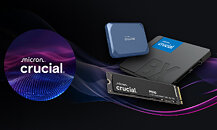
Source: Micron
Add your own comment

195 Comments on Micron to Exit Crucial Consumer Business, Ending Retail SSD and DRAM Sales

#151
freeagent
Ehh..

I was never really a fan of the brand, and I certainly did not go out of my way to buy from them.

I normally do not buy from venders whose hardware has failed me. Sometimes I will give another chance, but it depends.
Posted on Reply
#152
TechBuyingHavoc
R-T-BIn this case we literally don't. Case in point: the article you are commenting on. Enterprise money is bigger and even if AI goes enterprise is here to stay. Show them you are a unreliable and/or emotional customer and only you stand to lose.

You can lobby for change in government of course (and probably should) but that's a whole different animal than consumer buying power being waived around.
I am with you on most of the post until you say that being an unreliable customer means you stand to lose. This is precisely and completely backwards. Power increases when you actually use it (like a muscle), not when you husband it like a precious and limited resource like gold.

Unreliable customers are the ones that get discounts to prevent switching to other vendors, unreliable customers get all the marketing attention and special deals, unreliable customers are the prize that companies seek in their strategy meetings. It is the reliable silent loyal customer that is the dupe, the loyal fool that gets cheated on, ignored, abused by the company.

Now, the DIY customer here has practically no power because of the market dynamics and I would agree that boycotts and other consumer mass behavior will likely not work in the short term. I would also agree that action in more productive areas (like changing or petitioning governments for better antitrust action) would be a more useful use of time and energy. But doing nothing is the worst action of all.
Posted on Reply
#153
Wirko
EndymioThat's the great thing about the law of supply and demand in a free market: prices rise to equalize supply with demand.
Law of supply and demand, second amendment: imaginary demand often has the same effect as real demand. (First amendment is about imaginary supply-side disruptions, which I think doesn't apply to memory market right now.)
EndymioYou want to see how well regulation works, move to Cuba, North Korea, or a former USSR Republic.
This is an all-or-nothing fallacy and it tells nothing about the current state of oligopolised, financialised* Western markets. In between, there's present-day China. Also the USA and the collective West in the days long gone, when there were many enough memory manufacturers (example below) to make up a decently free market.
* S&P500 total market cap is $58 trillon, US GDP in 2024 was $29 trillion, world GDP in 2024 was $111 trillion.

AusWolfWhen I personally say "the AI bubble will pop", what I really mean is a similar situation: AI will be recognised for what it is (LLM), and be relegated to the tasks it is good at - sifting through large amounts of data.
It doesn't seem "similar" to me... but more importantly, you're using the acronym LLM wrong. It means Large Language Model, where language implies human languages and programming languages.
Posted on Reply
#154
AusWolf
WirkoIt doesn't seem "similar" to me... but more importantly, you're using the acronym LLM wrong. It means Large Language Model, where language implies human languages and programming languages.
Maybe I'm using the term wrong - I apologise if that's the case.

I just think the writing is on the wall that AI isn't just not going away, but it isn't going to completely transform our human existence into never before seen godlike transcendental blah-blah, either.
1. It has been around for way too long, but the results have been questionable (I'm not saying nonexistent, just questionable). WWW really was a "boom". AI looks more like a gentle simmer in comparison.
2. The circular investing AI companies are doing suggests there's something fishy under the surface. They're getting rich far too quickly with far too little substance behind it.
3. There's too much advertising, which also suggests that there's more smoke than fire.
4. Divided communities. I know, it's the general zeitgeist we live in today, but still... If there's one thing I've learned about history, is that when people jump at each others' throats on meaningless topics (like if you prefer upscaling or native), and divert their attention to absolute bullshit, that means something's rotten to the core.

Note that none of my points say that AI is bad.
All I'm saying is that we have a new tool at our disposal which we've been using wrong so far. When we learn to use it right, it'll become mainstream, and "the bubble will pop".
Posted on Reply
#155
TechBuyingHavoc
AusWolfMaybe I'm using the term wrong - I apologise if that's the case.

I just think the writing is on the wall that AI isn't just not going away, but it isn't going to completely transform our human existence into never before seen godlike transcendental blah-blah, either.
1. It has been around for way too long, but the results have been questionable (I'm not saying nonexistent, just questionable). WWW really was a "boom". AI looks more like a gentle simmer in comparison.
2. The circular investing AI companies are doing suggests there's something fishy under the surface. They're getting rich far too quickly with far too little substance behind it.
3. There's too much advertising, which also suggests that there's more smoke than fire.
4. Divided communities. I know, it's the general zeitgeist we live in today, but still... If there's one thing I've learned about history, is that when people jump at each others' throats on meaningless topics (like if you prefer upscaling or native), and divert their attention to absolute bullshit, that means something's rotten to the core.

Note that none of my points say that AI is bad.
All I'm saying is that we have a new tool at our disposal which we've been using wrong so far. When we learn to use it right, it'll become mainstream, and the "bubble will pop".
Agree with most of that, but have to correct you on the bubble part. Bubbles can and have popped far in advance of the technology/product becoming mainstream. The AI bubble will pop when investors realize that real returns are nowhere near promised returns and decide to pull their funds. AI becoming mainstream is an independent timeline from that.
Posted on Reply
#156
AusWolf
TechBuyingHavocAgree with most of that, but have to correct you on the bubble part. Bubbles can and have popped far in advance of the technology/product becoming mainstream. The AI bubble will pop when investors realize that real returns are nowhere near promised returns and decide to pull their funds. AI becoming mainstream is an independent timeline from that.
Good point, I agree.
I wish I knew more about the investor side of things. I'm just a random dude watching PC component prices skyrocket every now and then while trying not to remain completely oblivious to the financial world. :ohwell:

Ah, how refreshing it feels to have some real, down-to-earth conversation about AI. :D
Posted on Reply
#157
Bill_Bright
Bill_BrightI see this as the first domino being knocked over. The question becomes, will it knock over any more on the way down?
EndymioWhile your statement is an excellent example of the 'slippery slope' logical fallacy, the exact opposite is true. The exit of one consumer memory manufacturer makes the environment more hospitable for the remaining competitors, not less.
:( Sadly, by taking that sentence out of context, you missed the entire point I was making.

I don't care about making the market hospitable for the remaining competitors. I care about us, the consumers.

That is why I said, and still stand by this comment,
Bill_BrightMy concern is this means less competition in the consumer market. That almost always means fewer options and a more limited supply. And that almost always results in higher costs for the consumer. :(
Posted on Reply
#158
TechBuyingHavoc
AusWolfGood point, I agree.
I wish I knew more about the investor side of things. I'm just a random dude watching PC component prices skyrocket every now and then while trying not to remain completely oblivious to the financial world. :ohwell:

Ah, how refreshing it feels to have some real, down-to-earth conversation about AI. :D
The Economist magazine is my favorite resource when it comes to economics. The subscription is quite pricey for most people but if you qualify for the student discount, it is a good deal. They are currently warm towards AI as a long-term technology but cautiously pessimistic on the investment return.
Posted on Reply
#159
R-T-B
TechBuyingHavocPower increases when you actually use it (like a muscle), not when you husband it like a precious and limited resource like gold.
That would be true if you had any. The consumer in this case does not, it left long ago.
Posted on Reply
#160
Red Hood

Micron were given lots of tax payers money and this is how they treat the consumer market :mad:
Posted on Reply
#161
remixedcat
Red Hood

Micron were given lots of tax payers money and this is how they treat the consumer market :mad:
IKR... it literally made me gag. I was so close to buying a Micron or crucial drive and I'm glad I didn't.
Posted on Reply
#162
Unregistered
WirkoLaw of supply and demand, second amendment: imaginary demand often has the same effect as real demand.
It'll be interesting to see what mental contortions are required to define "artificial demand". These memory chips really are in demand.
WirkoAlso the USA and the collective West in the days long gone, when there were many enough memory manufacturers (example below) to make up a decently free market.
There are 15 memory manufacturers at present, about the same as there were 20 and even 30 years ago. Admittedly the 1980s had three times that number, but "memory" then and now were two entirely different beasts. In the early 1900s, there was (briefly) over 200 different automakers. When the industry matured, most of those vanished.
Bill_BrightI don't care about making the market hospitable for the remaining competitors. I care about us, the consumers.
Intelligent consumers realize a healthy market for those competitors is not just good for consumers, but essential.
Red HoodMicron were given lots of tax payers money and this is how they treat the consumer market :mad:
They weren't given money to ensure aftermarket gamers could get cheap upgrades, but rather to ensure a US source for crucial semiconductor components. Micron is still going to be making memory chips and you're still going to be buying them -- you'll just buy them inside products made by AMD, Nvidia, and others.
#163
Bill_Bright
EndymioIntelligent consumers realize a healthy market for those competitors is not just good for consumers, but essential.
:( Gee whiz. The "intelligent" consumer understands this (the RAM shortage) has nothing to do with the market being healthy or not! The market is extremely healthy! And how does the "intelligent" consumer know this? When demand outpaces supply - like the RAM market has done for the past several years - the market is healthy, particularly for the manufacturers. And when there is no relief seen in the foreseeable future, the market is exceptionally healthy - again for the manufacturers, NOT us consumers.

Micron is not stepping away from the consumer RAM market because they can't make money in it, or because their warehouses are overflowing with unsold stock. They are stepping away because they have (relatively speaking) limited manufacturing capabilities (foundries) and they realize they can make gobs more money retooling those factories to make memory chips used by the commercial industry to support the HUGE and EXPLODING demands by all the new and projected "enterprise" data centers and "AI" server farms.

You said so yourself,
EndymioMicron is still going to be making memory chips...
And this is true. HOWEVER,
Endymioand you're still going to be buying them -- you'll just buy them inside products made by AMD, Nvidia, and others.
Ummm, that is not a given - unless you are buying servers. I note TSMC and Samsung currently make the vast majority of chips for NVIDIA, including the RAM on their graphics cards. I can't find that information for AMD cards but note of the big 3 (TSMC, Samsung and Micron) Micron is already in 3rd place.

Regardless, and once again, "my" point in this discussion is how Micron stepping away from the "consumer" product industry by doing away with the Crucial brand of products WILL result in "less competition in the consumer market. That almost always means fewer options and a more limited supply. And that almost always results in higher costs for the consumer." And any "intelligent" consumer understands that. :rolleyes: When a small number of companies have a stranglehold on the market of products in great demand, it is never good for "us", the consumer.

FTR, I am fundamentally a "capitalist" who believes in a "free market". But I am against corporate greed, monopolies and monopolistic behavior and policies. And I am also for most anti-trust and consumer protection laws. Yes - contradictory beliefs but one that leads to a "balanced" and most importantly, "fair" market.

BTW, support your local, small businesses. I'm for them too.
Posted on Reply
#164
Hecate91
Red Hood

Micron were given lots of tax payers money and this is how they treat the consumer market :mad:
Yeah it's awful and a grim reality what is happening to the overall consumer market, tax payers funded Micron for billions, and they decide to throw away the consumer market after 29 years.
Also while US taxpayers are facing higher electricity bills, and some are discovering their water is being polluted from datacenters dumping their waste water back into municipal supply.


And for the other people saying AI is the best thing ever and gamers are complaining because we're not getting cheap RAM anymore, well news flash it isn't just about gamers, it's going to affect the entire tech industry, Samsung mobile can't get RAM orders from the Samsung DRAM division, Dell is raising prices 15-20%, so is Lenovo, and vendors like Trancend aren't able to source memory.
Some smaller companies could go under from greedy AI companies ruining everything, and I wonder if AI hoarding all the memory will cause people to not be able to afford a new PC, so corporations like Microsoft can sell a subscription to Windows in the cloud. Having less competition in the DRAM manufacturing market is a bad thing as when we only have SK Hynix and Samsung, it means they can both charge you more.
Posted on Reply
#165
Red Hood
EndymioThey weren't given money to ensure aftermarket gamers could get cheap upgrades, but rather to ensure a US source for crucial semiconductor components. Micron is still going to be making memory chips and you're still going to be buying them -- you'll just buy them inside products made by AMD, Nvidia, and others.
The consumer market is a lot bigger than gamers, a lot of that memory goes in devices (pcs/phones/tablets etc) bought by the general public

Yes they were given the money to spend on new fabs but as it stands they won't be using them and their existing fabs to make more products for the consumer market after they have fufilled their existing contracts for them (which they may already have as they have clearly been planning this for some time)

Micron is still going to be making memory chips but for the "ai" market or as they put it "larger, strategic customers in faster-growing segments"

They do currently supply HMB3E for AMD MI350/355X

They were added to Nvidias list for GDDR7 back in July but it wasn't clear to which models they would be used for
Posted on Reply
#166
Unregistered
Red HoodThe consumer market is a lot bigger than gamers, a lot of that memory goes in devices (pcs/phones/tablets etc) bought by the general public
And Micron is not exiting THAT business. Just the Crucial-brand direct-to-consumer line.
Red HoodYes they were given the money to spend on new fabs but as it stands they won't be using them and their existing fabs to make more products for the consumer market
Eh? This isn't true at all. First of all, they'll continue to produce the same Micron-direct memory chips. Secondly, while most of their new production will go into AI-dedicated HBM memory, those same HBM chips will be finding their way into consumer cards sometime in 2027.
Bill_Bright:( The "intelligent" consumer understands this (the RAM shortage) has nothing to do with the market being healthy or not!
It has *everything* to do with the market being healthy. If the memory market was dying off, there'd be a huge overcapacity, and prices would be rock-bottom. That'd make the usual short-sighted chortle gleefully ... but long term it's not a good sign. What's much better is what we're seeing now: vastly increased demand, which will lead quickly to vastly increased supply, and prices declining far below what they are today.
Bill_BrightUmmm, that is not a given - unless you are buying servers. I note TSMC and Samsung currently make the vast majority of chips for NVIDIA, including the RAM on their graphics cards.
Yes, and the entire point of Micron's "refocus" is to change that. They want a bigger slice of that pie -- and it's a pie that doesn't require vast expenditures on product support lines, retailer agreements, marketing campaigns, and all the other components of direct-to-consumer segment.

Certainly, the exit of Crucial does technically mean "less choice" for consumers. But if that translates into significantly higher margins for manufacturers, then that will invariably attract additional competition back again. The real issue here is that direct-consumer memory upgrades have become an increasingly tiny piece of the total memory pie.
Bill_BrightFTR, I am fundamentally a "capitalist" who believes in a "free market". But I am against corporate greed
You have a severe disconnect in those two statements, especially when you define "greed" as a natural (and for public corporations, legally required) attempt to maximize profits. When have YOU ever taken a job for less than market rate, or sold a home for less than market value?
#167
remixedcat
EndymioThey want a bigger slice of that pie
And when that pie rots?? Then what?
Posted on Reply
#168
Hecate91
remixedcatAnd when that pie rots?? Then what?
Companies will still want to use datacenters to keep the circle of money going, even if the AI bubbles pops. The consumer market could be left being force fed rotten pie in the form of using cloud computing instead of owning a PC when buying one is priced too high, or other companies drop out of the consumer market.
Posted on Reply
#169
Bill_Bright
EndymioYou have a severe disconnect in those two statements, especially when you define "greed" as a natural (and for public corporations, legally required) attempt to maximize profits. When have YOU ever taken a job for less than market rate, or sold a home for less than market value?
:( Wow. Clearly you are just here to argue. Once again, you took only a portion of what I said (stopping mid sentence, no less) out of context. How sad as that just degrades the thread down to your level. Why? I can only assume you continue to do this to stroke your own ego.

But beyond that, you illustrated to everyone you really don't know what you are talking about.

Fortunately, readers here are "intelligent consumers" and readers and can see for themselves in the very same paragraph I said,
Bill_BrightYes - contradictory beliefs but one that leads to a "balanced" and most importantly, "fair" market.
They are also intelligent readers who can take a few seconds to fact check your nonsensical claims.

Corporations Don’t Have to Maximize Profits
There is a common belief that corporate directors have a legal duty to maximize corporate profits and “shareholder value” — even if this means skirting ethical rules, damaging the environment or harming employees. But this belief is utterly false. To quote the U.S. Supreme Court opinion: “Modern corporate law does not require for-profit corporations to pursue profit at the expense of everything else, and many do not.”
Think that is just in the US? Wrong. Does the law require public companies to maximise shareholder value?. Not true in the UK and elsewhere too.
There exists a commonly held misconception that the law in the United States and the United Kingdom requires public companies to maximise shareholder value.

This article debunks this myth.

The myth that the law requires company directors to maximise financial value for shareholders can be traced back to the Michigan Supreme Court’s 1919 decision in Dodge v Ford Motor Company.
1919! So it has not been true for well over 100 years!

This thread is about Micron. I suggest getting back to that topic, and the truth.

Moving on.
Posted on Reply
#170
Unregistered
Bill_BrightThey are also intelligent readers who can take a few seconds to fact check your nonsensical claims.

Corporations Don’t Have to Maximize Profits
You're misrepresenting both that link and the underlying case: Prior to 2014's Burwell v. Hobby Lobby, there was zero question that federal and state corporate law required maximization of profits, and was in fact the federal government's position in the case filings. The Court ruled however:

"Burwell v. Hobby Lobby was a significant Supreme Court case that addressed the intersection of corporate rights and religious freedom in the United States ... The ruling applies to closely-held companies (owned by families) where the owners' beliefs directly align with the company's purpose, suggesting owners can use the corporate form to exercise religious values ...."

In brief, the court ruled that religious for-profit businesses do not violate corporate law -- if they're following the wishes of the owners. Corporate law for widely-held public corporations is quite different: Burwell's effect on them is debated, but even the most extreme positions (such as the opinion in your link) admit that it still requires the firm to place "shareholder's best interests" paramount, rather than the earlier "maximizing shareholder profits". In short, if you're a CEO of a publicly-held US corporation, and you take action which harms profits, you can and will be the immediate subject of a suit for breach of fiduciary duty ... unless you can muster a compelling case of how you're helping shareholder's best interests in some other manner*

To return this to Micron, there is absolutely nothing immoral, unethical, or socially opprobious to a corporation choosing to focus on its most profitable products. Quite the reverse, in fact, as from a sheer economic perspective, it increases total utility. A win-win.

(To counter the predictable retort that a "law professor" is an incontrovertible authority, I suggest you research Lynn Stout's lengthy history of political advocacy. But even Ms. Stout admits as much: public corporations must still serve shareholder's best interests)
#171
Chrispy_
Snubbing half a billion consumer customers to cater to a few dozen AI businesses seems like a very very very very shortsighted business move.

If the AI buble doesn't burst, I'll eat my AI-generated hat.
Posted on Reply
#172
Bill_Bright
Chrispy_Snubbing half a billion consumer customers to cater to a few dozen AI businesses seems like a very very very very shortsighted business move.
I understand your point but I don't see it that way because the vast majority of those customers are not buying RAM. Most are buying prebuilt computers where someone else made the decision for which RAM to install. This is also true when it comes to the storage devices (SSDs) in those computers.

According to Investopedia, Micron has been losing $billions in recent years,
due to a sharp drop in the memory and storage industry ... due to weak demand in end markets, global and macroeconomic issues, and customers' reduced inventory levels.
The truth is, those of us who build and upgrade our own computers make up a relatively small part of the entire market. Depending on your source, less than 20% to less than 33% of "PC" owners built their own. Yes, that's still a HUGE market, but in reality 67% of computer users use laptops - not PCs. And virtually all laptops are factory built.

I see Micron in a similar way to how I see Microsoft. Most people, when they think of Microsoft, think of "Windows". But the truth there is, Windows makes up only 10% of Microsoft's revenue. Server products plus associated cloud services make up 40% and Office products plus associated cloud services another 22%.

Crucial is a relatively small part of Micron - and one dragging overall profits down. So from their perspective, probably not a shortsighted business move.
Chrispy_If the AI buble doesn't burst, I'll eat my AI-generated hat.
I don't see it bursting but I would not be surprised if there's not some significant "deflation" in the near future. At least I sure hope that happens if for no other reason than we (the human civilization) need time to get a grip on the ethics and capabilities before its too late and AI takes over the universe!
EndymioYou're misrepresenting
LOL Do you really believe this weaseling is being bought by the readers here?

You said, corporations are "legally required" to attempt to "maximize profits". "LEGALLY" required! That is simply wrong. Of course they have a "moral" obligation to their shareholders to make money, but not a "legal" obligation. Nor are they obligated to "maximize" profits either.

So you have two high-road choices here. (1) Say nothing and move on or (2) man-up, admit you are human and made a mistake, and move on.

Now I'm done wasting my time on this side show. My apologies to all for my part and will say no more on that. Now I really am getting back to the topic
EndymioTo return this to Micron, there is absolutely nothing immoral, unethical, or socially opprobious to a corporation choosing to focus on its most profitable products.
To this, I totally agree - especially, as I noted above, when (allegedly?) Crucial is losing money for the company.

Maybe, if lucky, another company will buy Crucial from Micron. I'm fine with that AS LONG AS the new owner does not destroy Crucial while integrating it into their fold - as too often happens when one company eats up a former competitor.
Posted on Reply
#173
Unregistered
Chrispy_Snubbing half a billion consumer customers to cater to a few dozen AI businesses seems like a very very very very shortsighted business move.
Half a billion? I think that's off by a couple orders of magnitude. Crucial's sales are less than 5% of Micron's revenue, and, given the lower margins involved, I'd guess less than 2% of total profits. I'd be surprised if they were selling to more than a couple million consumers a year. A single large datacenter sale can top that.
Chrispy_If the AI buble doesn't burst, I'll eat my AI-generated hat.
The AI bubble will "pop" the same way the Internet bubble did ... even at the very height of the dot-com devaluation, Internet penetration and spending on Internet-related hardware and software still continued to expand.
Bill_BrightYou said, corporations are "legally required" to attempt to "maximize profits". "LEGALLY" required! That is simply wrong.
No it isn't. Corporations are required to maximize profits -- except in the rare case that they can provide some other benefit superior to profits.

Your argument is like claiming it's wrong to state that slavery is illegal in the US ... because the 13th Amendment allows it for punishment of a crime. Why not just give the nonsense a rest? Just since you started the argument, there's likely been a half-dozen shareholder derivative suits filed for breach of fiduciary duty. And each and every such suit will be won ... unless the board can manufacture a very good reason for why they didn't maximize profits.
#174
remixedcat
EndymioCorporations are required to maximize profits
We'd have a lot more execs in prison if that were the case
Posted on Reply
#175
Dahita
SquaredIn short, one of my favorite computer parts OEMs says that my business isn't enough and will no longer sell to me. With consumer memory prices going up 160% it's amazing that consumer is still not profitable enough to consider.
Unreal. You just stated word for word what I was about to write. Unreal.
Posted on Reply
Add your own comment
Nov 13th, 2026 05:43 PST change timezone

New Forum Posts

Popular Reviews

TPU on YouTube

Controversial News Posts