Tuesday, December 30th 2025
Mainstream PC OEMs Get DRAM Priority As Supply Crisis Changes Market
We've already seen the myriad far-reaching effects of the DRAM crisis play out in a number of ways, including bring-your-own-RAM offerings from custom PC builders and rumors of delayed next-gen consoles. However, a new report out of DigiTimes claims that DRAM producers, specifically mentioning Samsung and SK Hynix, are now selectively prioritizing certain hardware makers. Allegedly, large brands like Apple, ASUS, Dell, and Lenovo are receiving priority access to DRAM, which may result in smaller vendors—the likes of Framework—without DRAM supply.
The report also mentions that DRAM suppliers are starting to change their approach to the supply agreements, more frequently re-assessing the situation in order to take advantage of the limited capacity and likely adjust pricing and supply accordingly. Previously, we covered a report that claimed PC hardware vendors may have to adjust pricing, specs, and potentially launch dates of upcoming laptop and smartphone offerings, and these agreements are likely being pursued by mainstream brands, like Apple, ASUS, Dell, and Lenovo, in order to avoid or mitigate that eventuality.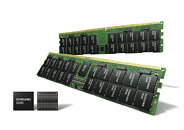
Sources:
DigiTimes, via Wccftech
The report also mentions that DRAM suppliers are starting to change their approach to the supply agreements, more frequently re-assessing the situation in order to take advantage of the limited capacity and likely adjust pricing and supply accordingly. Previously, we covered a report that claimed PC hardware vendors may have to adjust pricing, specs, and potentially launch dates of upcoming laptop and smartphone offerings, and these agreements are likely being pursued by mainstream brands, like Apple, ASUS, Dell, and Lenovo, in order to avoid or mitigate that eventuality.

22 Comments on Mainstream PC OEMs Get DRAM Priority As Supply Crisis Changes Market
Big boys are happily burning those bridges aren't they?
Got a contract? Not anymore! We want more of yo moolah little fella!
Sign here.
Do you mean don't buy products from these OEMs? It's not their fault, they're just trying to do right by their customers, same as everyone right now.
Smaller SI's are already suffering with being forced to offer systems with bring your own RAM, small companies like Framework are definitely going to be hurting as larger OEM's are paying more to the memory cartel.
A cartel doesn't exist, here's why. Cartels raise prices slightly higher than they would otherwise settle in a free market. They can only raise them slightly, because if they raise the price too high, then people will just stop buying the product, cartel members will break off and start underselling to maximize their own profits (which is usually how cartels end), and/or competitors will spring up enticed by the high price and potential profits.
That's not what's happening now. Instead, what is happening now is the result of skyrocketing demand (from AI) colliding with an inelastic supply (because RAM plants are very expensive to build and take a long time to come online). When that happens, basic economics dictates that prices rise to match the demand. That's exactly what would happen in a completely free market, and that's what's happening now. No need to put on your tinfoil hat to imagine a shadowy cartel conspiring to deprive you of the DDR5 I'm sure you deserve.If more people bought Framework products, Framework would have the money and leverage to buy RAM. But most people prefer to buy computers from Apple, Lenovo, Asus, etc. So the RAM is going to the companies that make products people want to buy. That's how a free market works.
en.wikipedia.org/wiki/DRAM_price_fixing_scandalIt isn't basic economics when OpenAI is hoarding unfinished wafers to avoid any market competition.Thinking Framework can compete with Apple,Lenovo, or Asus is about as much of a reach as still refusing to believe ram manufacturers are colluding with AI companies to artificially inflate prices.
The ram manufacturers had to have seen the demand for memory coming, but chose not to increase supply.
In addition to ram manufacturers withholding supply from the consumer market, OEMs are mostly unaffected by RAM prices, but are still increasing cost to consumers, it's obvious price fixing and market manipulation.
There is no free market when OEMs have exclusive contracts to purchase memory at normal market rates while smaller SI's are paying 400x more for the same memory.
The relevant actors are Samsung, SK Hynix, and Micron, the three major DRAM manufacturers, that actually create the RAM chips. The reason prices are rising right now is that Nvidia, AMD, Google, Amazon, and more all want more and more HBM, LPDDR5, and GDDR7 for AI GPUs, TPUs, and ASICs. They are also willing to pay 100x more than Crucial, G.Skill, Corsair, etc. were paying for DDR5 RAM. If the three memory makers spend their foundry time making RAM for AI chips, they make a lot more money. That explains everything that has happened.No, they are not. Here is the original reporting from Reuters. www.reuters.com/business/media-telecom/samsung-sk-hynix-supply-memory-chips-openais-stargate-project-2025-10-01/
OpenAI signed a Letter of Intent (a PR stunt, not a contract) to buy up to 900k wafers in 2029 (by which time several new RAM foundries will have come online). It's a PR move to boost Samsung and SK Hynix's share price and OpenAI's profile. No wafers have been delivered at all and in my opinion, we'll likely see a major downturn in the AI market by 2029, so this probably won't happen at all lmao. Don't rely on Twitter clickbait for your news.Yes, that's exactly what I was saying. Rising prices separate the wheat from the chaff. As much as I like them, Framework can't compete with Apple or Lenovo. So when the market becomes more turbulent, they're going to suffer, while the larger business that provide more value to customers are able to pay higher prices for inputs.Again, you don't know anything. RAM supply can't be increased with 6 months notice. RAM manufacturing plants take years and billions of $ to build. There are several new plants already under construction that will come online in a year or two. RAM manufacturer's have a difficult task. If demand continues to rise over the next 5+ years, then building even more will be the smartest choice, that will make them the most money. On the other hand, if prices collapse (such as from the AI bubble bursting, which IMO is the more likely path), then RAM prices will drop and new foundries will be a net loss. It's a difficult choice that requires strategic long-term planning and a good amount of risk-taking.Selling to the highest bidder is not "withholding supply from the consumer market." The linked article literally says it's starting to impact pricing and will have a bigger impact in the coming months. OEMs absolutely are being affected by rising RAM prices.You think Lenovo et al. are paying the same prices as 8 months ago for RAM? They're still getting RAM because they're deciding to bite the bullet and pay the new prices, because they have the capital and the customer base to do so, and the memory makers recognize they are reliable, long-term partners. Unfortunately, Framework and other independent system builders do not have the capital, customer base, nor stability to warrant that consideration.
Not saying you are wrong.
I'm certain most here are fully aware gskill doesn't make the chips. Only 3 companies do and 1 doesn't do consumer market anymore so now it's down to two.
And they been sued in the past for anti consumer practices. So as the saying goes: a leopard doesn't change its spots.
I would call the current situation a massive detriment to customers, aside from the fact that Micron is actually slowing existing expansions plans after the OpenAI deal was announced.
We have very evident harm to customers. Nevermind that these companies are receiving taxpayer dollars precisely to secure chip supply. It was written directly into the CHIPs act. Intel, TSMC, Samsung, and Micron received money from this. You have to admit these companies are certainly fantastic at taking taxpayer dollars and using them to screw taxpayers.Unless you are going to imply that they've somehow changed, you are working against official record for their past activities. And let's be honest, they haven't changed.You are comparing drug cartels to memory cartels. The level of capital and effort to get into the DRAM business are entirely different than drugs and basically ensure that competition cannot simply pop up when pricing is high.
We've seen plenty of markets wherein the players decide to consort instead of compete because it's more profitable, particularly in markets with a high bar to entry such as DRAM.Aside from this statement contradicting your last (if RAM fabs are expensive and take time to build, it precludes the same pressures drugs face), there's nothing about this comment that's mutually exclusive with them also acting like a cartel / wielding monopolistic powers.
There can be multiple things that contribute to an issue. We are all aware that OpenAI buying 40% of the supply kicked off the issue. It's how the memory manufacturer's reacted that is problematic.This ISN"T a free market and it's never been. It's a mixed market. Free markets must be free of all influence, including government and corporation. It's a fantasy that has never existed because lacking government regulation, corporations always seek to influence the market.
If it was a free market, there would be no protections of Micron's patents and no free public money to them either.Interesting that proven in a court of law in the past is now considered tinfoil hat.The obvious problem here is that typically a healthy market would force you to compete in both volume and price. That we aren't seeing that but instead manufacturers coordinate their response indicates that it is in fact not a healthy market. We've even seen companies like Micron cut existing expansion plans despite the shortage. That's again before you factor in that these companies took money specifically to ensure a stable chip supply.
Certainly the smart move for these companies is to ignore the shortage, because that guarantees them the most money regardless of what happens but it requires every player in the market to agree not to pursue increases in production beyond what is planned or getting aggressive with pricing. In other words, a cartel.
There is also the option for these companies to provide quotas to certain industries, to ensure that one doesn't drain all the supply as AI has. That seems rather common sense for something like memory that is increasingly important in modern life. Of course, that may get in the way of profits. It's a fine demonstrator of the inadequacies of under-regulated capitalism, because companies should always be assumed to take the most profitable options even at the detriment to humanity at large. Something that ebbs at modern life daily.I'd argue the consumer market is OWED supply. Aside from the fact that devices are needed for everyday life (you cannot get most jobs without some device nowadays), their tax dollars literally went to these companies. It makes little sense how one company can just swoop in and buy up 40% of the world's supply of memory that is used in a ton of products nowadays. "cuz free market" would not be an adequate excuse if a single company went and bought up 40% of the world's fresh water. People would raise serious questions about that just as they should for memory.No one here has any idea what kind of memory supply contract Lenovo has / had so it's supposition to imply they are paying current contract pricing. We just don't know.
It was never meant to go head to head, toe to toe or really compete directly with mainstream brands. Framework is for that small group of people who like tinkering with their stuff or the idea that they can upgrade just about every piece of their laptop if it ever breaks or when its too old and slow to do its job. Its the whole modularity and repairability of their laptop which also drags certain people in.
You might get the few average joes who might pick one up but for the most part. average joes arent the target customer/audience for framework laptops.
Framework also seems to have more of a price premium (for good reason) than your average off the shelf Zenbook/Zenbook S or other similar alternatives in the same category.
wccftech.com/asus-announces-price-hikes-for-certain-product-combinations-starting-5th-january-2026/
Obviously they don't have the scale to compete with someone like lenovo, dell or HP but that's the goal, a lot of things have to change for it to become remotely feasible but it's still a laudable goal