Friday, February 27th 2026

NZXT Dredges Up H1 PCIe Riser Debacle to Reassure H2 Flow Buyers: "It Cannot Happen Again"
If you were in or around the PC building space in 2020, you'd have at least heard about the fire risk related to the PCIe riser cable on the original NZXT H1 mini ITX case, which eventually resulted in a recall and replacement PCIe riser kits being sent out. Since NZXT has launched the newest iteration of the SFF case, the H2 Flow—which TechPowerUp has reviewed—the PC case maker has seen fit to publish a blog post explaining the engineering changes it has made to the new H2 Flow's riser cable to avoid the same issues from popping up again. NZXT starts things off by reminding us that the problem with the original H1's PCIe riser cable was that the mounting screw made contact with an internal power plane in the riser cable's PCB, resulting in a short circuit that could lead to a fire.
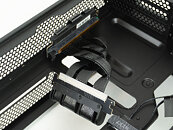
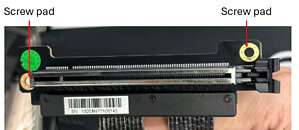
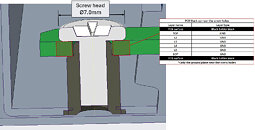
The brand goes on to explain that the issue has been avoided in the new PCIe riser cable with two safety measures. First, there is a physical boss, or "shoulder" that extends into the PCB through-hole to protect the PCB from the screw threads and to ensure that there is a consistent and guaranteed gap between the screw and the PCB. Secondly, NZXT has changed the design of the PCB such that there are no power planes or traces surrounding the screw hole—every trace around the screw is grounded, and that ground plane extends externally to a copper screw pad on the top and bottom of the PCB, adding another layer of protection. NZXT notes that the screw pad may be missing in some early review samples, which is something you can observe in our review of the H2 Flow, but it is included in the final mass production versions of the case. NZXT claims that these measures have eliminated the failure mode that caused issues with the original H1 chassis.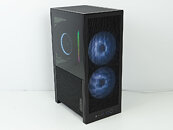
Source:
NZXT
The brand goes on to explain that the issue has been avoided in the new PCIe riser cable with two safety measures. First, there is a physical boss, or "shoulder" that extends into the PCB through-hole to protect the PCB from the screw threads and to ensure that there is a consistent and guaranteed gap between the screw and the PCB. Secondly, NZXT has changed the design of the PCB such that there are no power planes or traces surrounding the screw hole—every trace around the screw is grounded, and that ground plane extends externally to a copper screw pad on the top and bottom of the PCB, adding another layer of protection. NZXT notes that the screw pad may be missing in some early review samples, which is something you can observe in our review of the H2 Flow, but it is included in the final mass production versions of the case. NZXT claims that these measures have eliminated the failure mode that caused issues with the original H1 chassis.


4 Comments on NZXT Dredges Up H1 PCIe Riser Debacle to Reassure H2 Flow Buyers: "It Cannot Happen Again"
But then again I havent been a customer of theirs for a very very long time and dont plan to be any time soon.
Good for them on fixing it instead of just giving RMAs I guess.
can anyone verify or argue against if nzxt is just a label company. put another sticker on hardware made on order by various different quality sources.
changing a design such late in the process is a very bad impression. making such pcb is not difficult. it seems some non tech person did not paramterise the pcb software. i doubt anyone route those traces by hand these days.when i mount hacky self made pcb with 2 screws it is a bad solution. selling such stuff as fractal design did with the meshify 2 with the pwm hub pcb or similar pcbs shows how people lack expertise. it belongs in a plastic housing with proper mounting inside the houseing. like always in any television, car part etc which i disassembled in past 35y or more. injection molds costs money and extra efforts to design and produce.