Tuesday, March 3rd 2026

NVIDIA Lowers HBM4 Specs for "Vera Rubin" VR200 as Memory Suppliers Miss 22 TB/s Target
NVIDIA has reportedly lowered its performance requirements for the HBM4 memory used in "Rubin" GPUs, as SK hynix and Samsung are reportedly struggling to meet the ambitious performance targets set by NVIDIA. According to a new note from SemiAnalysis, NVIDIA is reducing its specification requirements for the upcoming GPU generation. Originally, NVIDIA targeted a total bandwidth of 22 TB/s for the Rubin chip, but memory suppliers seem to be having difficulty meeting these requirements. Initial shipments are expected to achieve closer to 20 TB/s, which translates to approximately 10 Gbps per pin for HBM4. This indicates that NVIDIA's aggressive upgrade plan for "Vera Rubin" is facing a setback, and the final performance will differ slightly.
Interestingly, NVIDIA's initial target for the "Vera Rubin" VR200 NVL72 system was 13 TB/s in March 2025, which was later upgraded to 20.5 TB/s by September. At CES 2026, NVIDIA confirmed that the VR200 NVL72 system is now operating at 22 TB/s of bandwidth. Compared to AMD's Instinct MI455X accelerator, which has 19.6 TB/s, NVIDIA initially had lower system bandwidth. They addressed this by using faster DRAM and improving interconnects between CPUs, GPUs, and the entire system. However, as memory makers like SK hynix and Samsung struggle to meet NVIDIA's performance requirements, we will see HBM4 speeds of about 20 TB/s for the entire "Vera Rubin" system.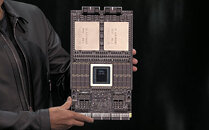
 Additionally, Micron has reportedly fallen out of the equation to supply HBM4 memory, leaving only Samsung and SK hynix to provide this crucial component. According to leaked institutional notes from SemiAnalysis, which closely tracks the supply chain, SK hynix will account for about 70% of the HBM4 supply for VR200 NVL72 systems, with Samsung supplying the remaining 30%. For a major memory maker like Micron, there is reportedly no commitment to supply HBM4 memory. Instead of HBM4, the company will supply LPDDR5X memory for "Vera" CPUs, which can be equipped with up to 1.5 TB of LPDDR5X, compensating for the lost share with HBM4.
Source:
@Jukan05 on X
Interestingly, NVIDIA's initial target for the "Vera Rubin" VR200 NVL72 system was 13 TB/s in March 2025, which was later upgraded to 20.5 TB/s by September. At CES 2026, NVIDIA confirmed that the VR200 NVL72 system is now operating at 22 TB/s of bandwidth. Compared to AMD's Instinct MI455X accelerator, which has 19.6 TB/s, NVIDIA initially had lower system bandwidth. They addressed this by using faster DRAM and improving interconnects between CPUs, GPUs, and the entire system. However, as memory makers like SK hynix and Samsung struggle to meet NVIDIA's performance requirements, we will see HBM4 speeds of about 20 TB/s for the entire "Vera Rubin" system.


10 Comments on NVIDIA Lowers HBM4 Specs for "Vera Rubin" VR200 as Memory Suppliers Miss 22 TB/s Target
I wish the race was this close in the consumer space, but for some reason AMD barely even tries, and the 5090, as powerful as it is, is clearly the product of a company that can afford to slack. A full GB202 chip would reach new heights of performance, if only AMD had something more than a 9070 XT to throw at it (which is frankly trying to stop a tank by throwing a shoe at it).Chances of this happening are absolutely zero, and even if it did happen it'd be just to sell more AI accelerators. They're placing emphasis in manufacturing this type of memory for a reason, they matter way more than any of us to the memory makers' bottom line.
the 4090 was the cut down chip with the limited memory bandwidth.
i think ltt did a gaming review on the rtx pro 6000.
I doubt there would be double digit gains were it a perfect die with nothing gated off and paired with the fast non ecc gddr
No full core AD102 or GB202 part ever released, the last full die big core card was the RTX 3090 Ti that has a perfect GA102.