Wednesday, March 11th 2026

Intel Launches "Arrow Lake Refresh": Core Ultra 5 250K Plus and Core Ultra 7 270K Plus, New Binary Optimization Tool
Intel today announced the Core Ultra 5 250K Plus and Core Ultra 7 270K Plus desktop processors in the Socket LGA1851 package. These chips are drop-in compatible with existing Intel 800-series chipset motherboards, with some boards needing UEFI firmware updates. Both chips are based on the current "Arrow Lake" microarchitecture, and are carved out of the "Arrow Lake-S" disaggregated silicon that uses TSMC N3B (3 nm) foundry node for its Compute tile containing the CPU cores, TSMC N5 (5 nm) for its Graphics tile, and TSMC N6 (6 nm) node for its SoC and I/O tiles.
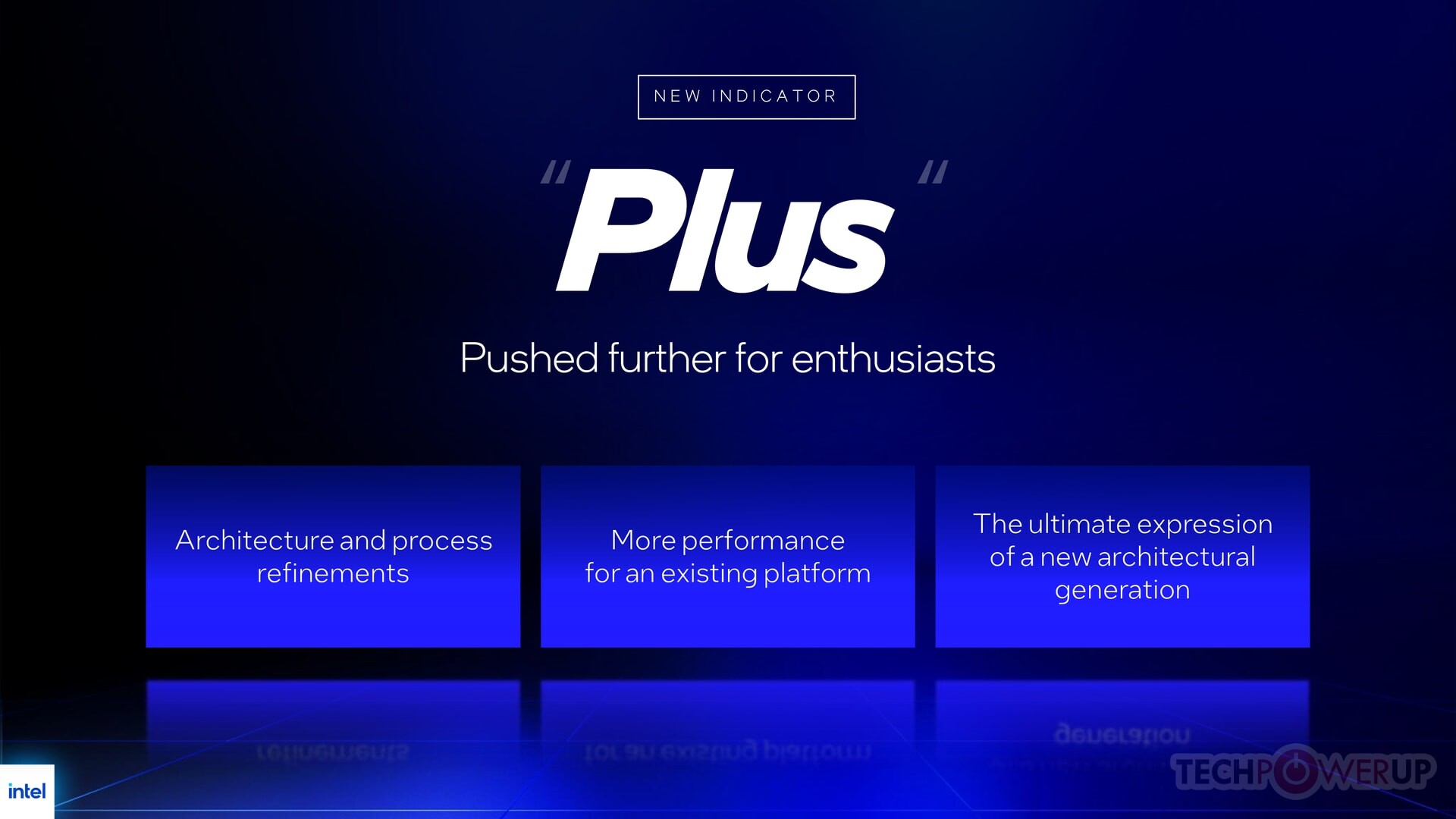
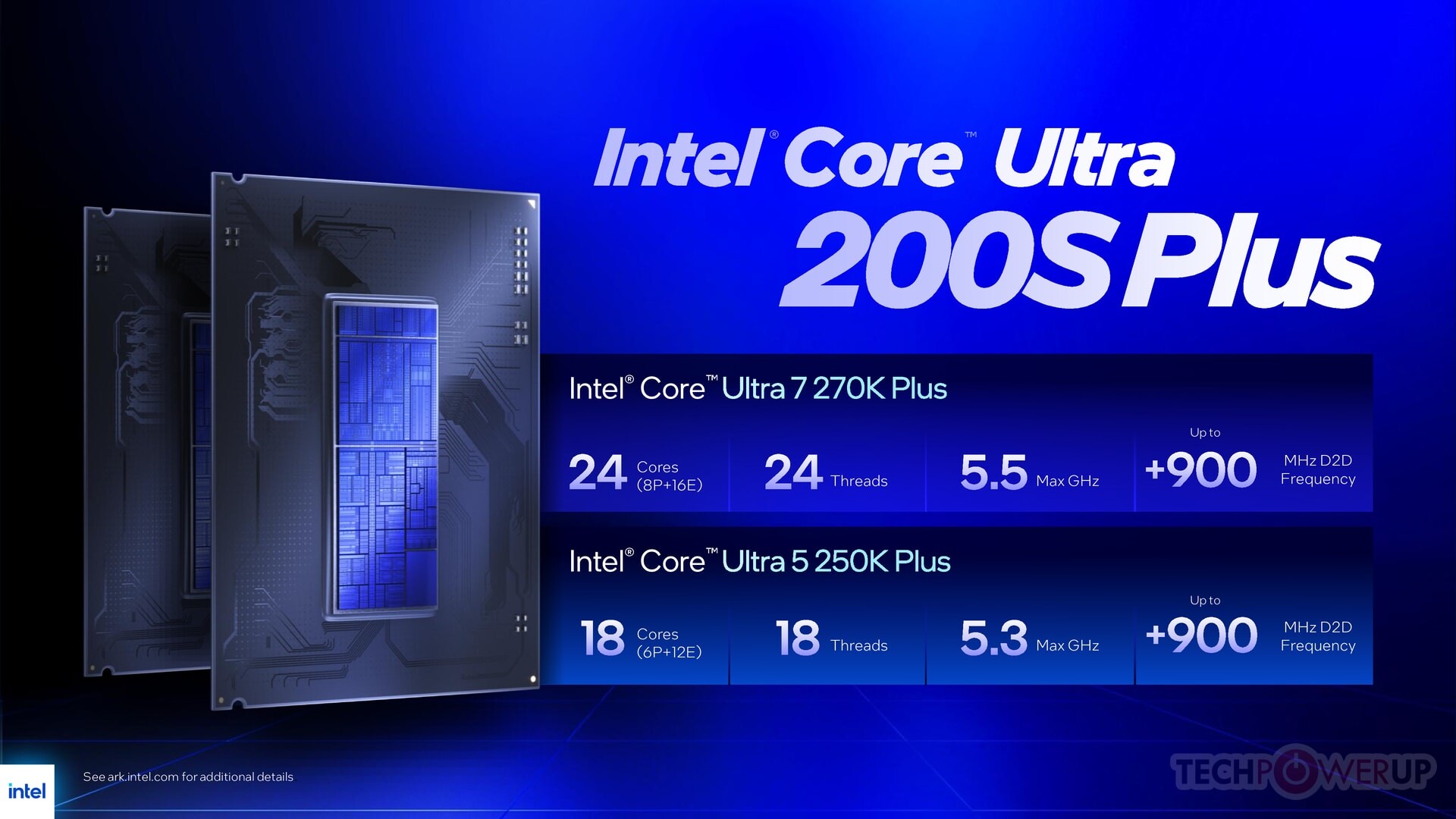
Both the Core Ultra 5 250K Plus ($199) and Core Ultra 7 270K Plus ($299) processor models are designed to push the current Core Ultra 5 245K and Core Ultra 7 265K, respectively, down from their current price-points. The two come with increased E-core counts, larger L3 caches, slightly increased P-core maximum boost frequency, and a 900 MHz faster die-to-die I/O frequency among the Compute and SoC tiles, which essentially makes these chips have "200S Boost Mode" out of the box. The new Core Ultra 5 250K Plus comes with a 6P+12E core configuration compared to the 6P+8E of the Core Ultra 5 245K. Its shared L3 cache has been enlarged to 30 MB, up from the 24 MB on the 245K. The P-core maximum boost frequency is up to 5.30 GHz from 5.20 GHz.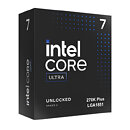
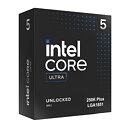
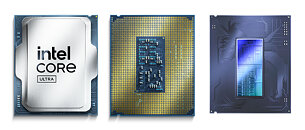
 Meanwhile, the Core Ultra 7 270K Plus maxes out the "Arrow Lake-S" silicon, enabling all 8 P-cores, and all 16 E-cores, along with the entire 36 MB of L3 cache present on the silicon. In comparison, the 265K only comes with an 8P+12E core configuration, with 30 MB of shared L3 cache. The only things segmenting the 270K Plus from the Core Ultra 9 285K are a lack of Thermal Velocity Boost algorithm, and a maximum P-core boost frequency of 5.50 GHz, compared to 5.70 GHz of the 285K. While it lacks Thermal Velocity Boost, it features Turbo Boost Max 3.0, just like the 265K does.
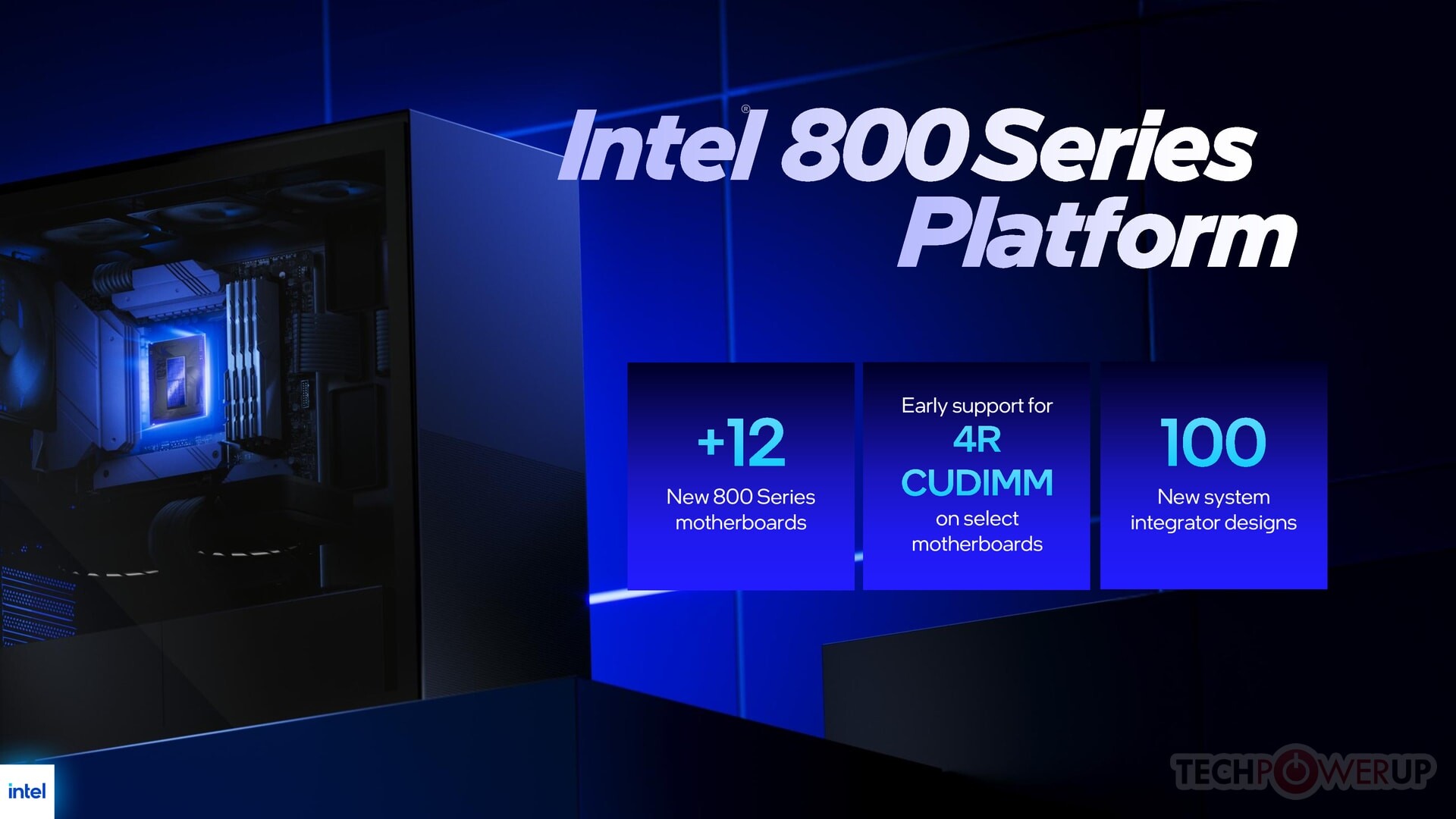
The Core Ultra 5 250K Plus and Core Ultra 7 270K Plus come with native support for DDR5-7200 memory speed, an increase from the DDR5-6400 native support of the older "Arrow Lake" desktop chips. Product warranty covers memory overclocking up to DDR5-8000. The two new chips also come with native support for quad-rank DDR5 CUDIMMs. These are new-generation UDIMMs that feature four DDR5 ranks and a client clock driver (CKD), helping consumer memory manufacturers significantly dial up densities along with memory speeds without having to use expensive high-density DRAM chips that are in short-supply. 4-rank CUDIMM support will also require motherboard vendors to implement it on their end with their latest products. It also requires certain UEFI firmware-level readiness.
Intel also announced the Binary Optimization Tool, a utility that helps end-users optimize application/game binaries to get the most performance out of "Arrow Lake-S" processors, we will have more details on that in our review later this month.
As mentioned earlier, the Core Ultra 5 250K Plus and Core Ultra 7 270K Plus are intended to displace the 245K and 265K, respectively, from their current price points. Both chips will begin retailing from March 26, 2026 for $199 and $299.
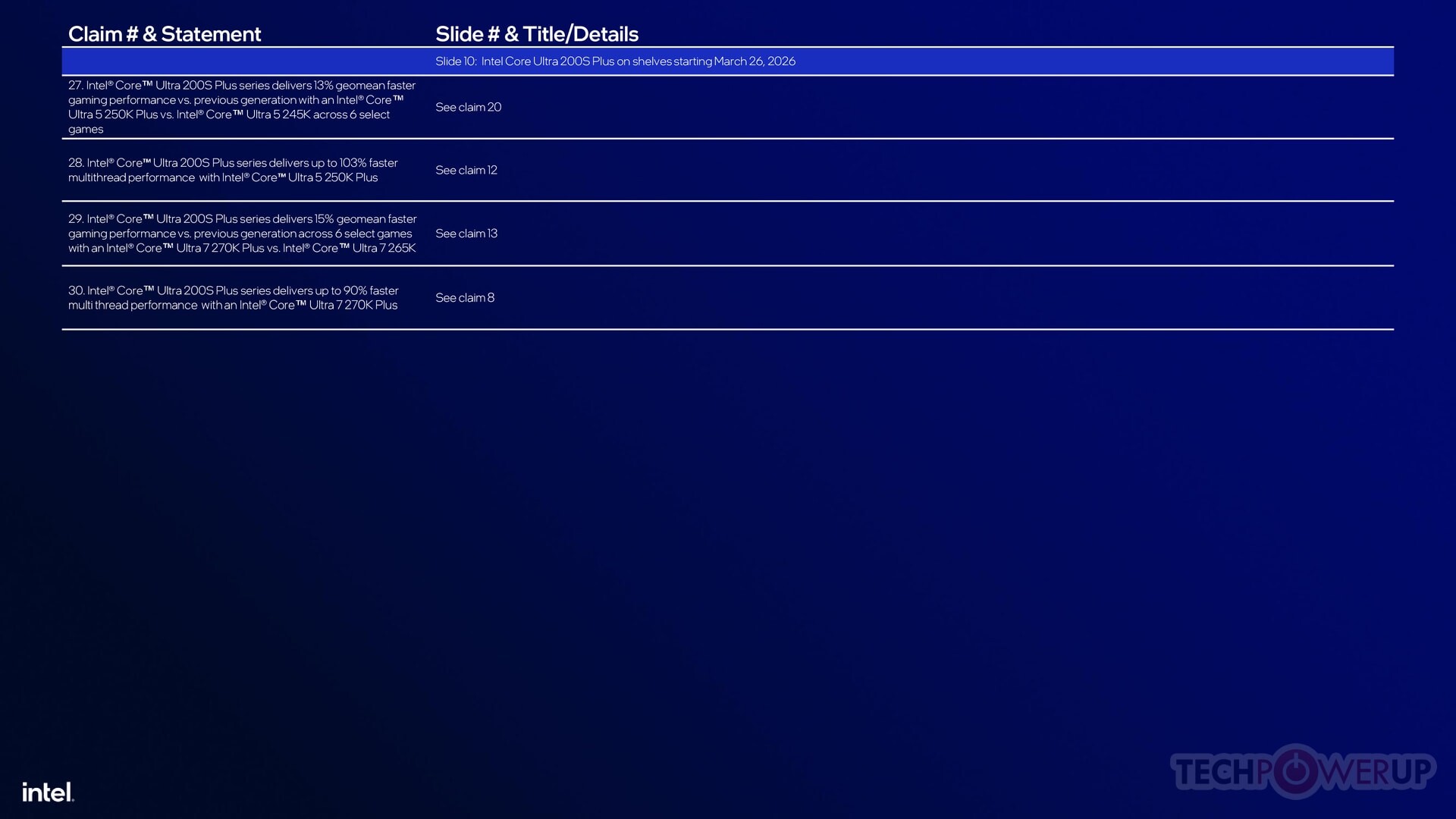
The full Intel presentation deck follows
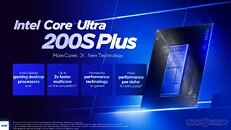

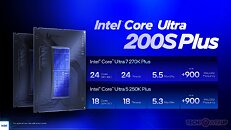
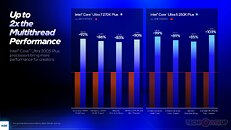
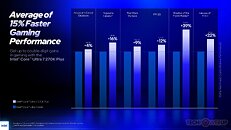
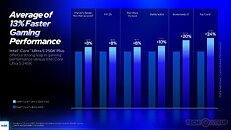









Both the Core Ultra 5 250K Plus ($199) and Core Ultra 7 270K Plus ($299) processor models are designed to push the current Core Ultra 5 245K and Core Ultra 7 265K, respectively, down from their current price-points. The two come with increased E-core counts, larger L3 caches, slightly increased P-core maximum boost frequency, and a 900 MHz faster die-to-die I/O frequency among the Compute and SoC tiles, which essentially makes these chips have "200S Boost Mode" out of the box. The new Core Ultra 5 250K Plus comes with a 6P+12E core configuration compared to the 6P+8E of the Core Ultra 5 245K. Its shared L3 cache has been enlarged to 30 MB, up from the 24 MB on the 245K. The P-core maximum boost frequency is up to 5.30 GHz from 5.20 GHz.


The Core Ultra 5 250K Plus and Core Ultra 7 270K Plus come with native support for DDR5-7200 memory speed, an increase from the DDR5-6400 native support of the older "Arrow Lake" desktop chips. Product warranty covers memory overclocking up to DDR5-8000. The two new chips also come with native support for quad-rank DDR5 CUDIMMs. These are new-generation UDIMMs that feature four DDR5 ranks and a client clock driver (CKD), helping consumer memory manufacturers significantly dial up densities along with memory speeds without having to use expensive high-density DRAM chips that are in short-supply. 4-rank CUDIMM support will also require motherboard vendors to implement it on their end with their latest products. It also requires certain UEFI firmware-level readiness.
Intel also announced the Binary Optimization Tool, a utility that helps end-users optimize application/game binaries to get the most performance out of "Arrow Lake-S" processors, we will have more details on that in our review later this month.
As mentioned earlier, the Core Ultra 5 250K Plus and Core Ultra 7 270K Plus are intended to displace the 245K and 265K, respectively, from their current price points. Both chips will begin retailing from March 26, 2026 for $199 and $299.
The full Intel presentation deck follows







59 Comments on Intel Launches "Arrow Lake Refresh": Core Ultra 5 250K Plus and Core Ultra 7 270K Plus, New Binary Optimization Tool
Last year I bought my 9950x at $565 in the US. In the amazon store I see that it's currently at $513. ARL back then was similarly priced, but there were literally NO mobo options available in my country, so AM5 it is (and with no regrets).
But almost half the price with CUDIMM support? This must be being sold at a loss from Intel to make up for the sales numbers.
The Core Ultra 7 270K Plus in specific is very similar in specifications to the non-K Core Ultra 9 285, but of course higher defaults power than that non-K model and 200S Boost settings applied from factory as standard, given the listed "Recommended Customer Price" of $289.00-$299.00 in Intel's page, this is probably the best value for computing and/or multicore productivity around right now, with a good iGPU and while not the best in games, more than fine in it. A very good value and all-round option that can do almost anything good even if not the best in everything.
It's even harder to justify the already sort of very little cost-value a Ryzen 7 9700X had now, and probably the Ryzen 9 9900X now sort of too as that has 6 cores CCDs.
No further comments.