Thursday, March 19th 2026

Intel Reportedly Readies a 10% Price Hike for Consumer CPUs
Intel has reportedly informed its major PC clients of a planned 10% price increase on its consumer CPUs. According to industry sources cited by ET News, this price hike will affect Intel's Core Ultra family of processors, which power hundreds of millions of PCs worldwide. As a result, PC OEMs may need to alleviate the increased material costs by promoting their AI PCs and premium devices more aggressively. To maintain positive margins, these OEMs will likely have to raise prices further and emphasize their higher-end AI PC offerings to capture better margins.
PC gamers have faced challenges over the past year, with memory and storage prices climbing rapidly, reaching exorbitant levels for simple RAM kits. The high demand from data centers has depleted memory and storage inventories months in advance. GPUs have also been affected, as gamers have struggled to purchase them at MSRP, instead facing inflated prices due to the shortage of GDDR memory (VRAM) used in these GPUs. Now, CPUs are joining this trend, with Intel targeting its consumer CPU sector first. This price increase will impact everything from pre-built systems and DIY PCs to laptops and other consumer CPU variants. For example, the 10% increase will significantly affect PC pricing, depending on the CPU's share of the bill of materials. We are waiting to see how these changes will affect popular retailers like MicroCenter, Amazon, Newegg, and others before drawing further conclusions.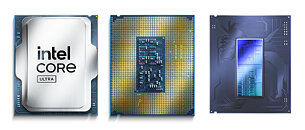
Source:
ET News
PC gamers have faced challenges over the past year, with memory and storage prices climbing rapidly, reaching exorbitant levels for simple RAM kits. The high demand from data centers has depleted memory and storage inventories months in advance. GPUs have also been affected, as gamers have struggled to purchase them at MSRP, instead facing inflated prices due to the shortage of GDDR memory (VRAM) used in these GPUs. Now, CPUs are joining this trend, with Intel targeting its consumer CPU sector first. This price increase will impact everything from pre-built systems and DIY PCs to laptops and other consumer CPU variants. For example, the 10% increase will significantly affect PC pricing, depending on the CPU's share of the bill of materials. We are waiting to see how these changes will affect popular retailers like MicroCenter, Amazon, Newegg, and others before drawing further conclusions.

51 Comments on Intel Reportedly Readies a 10% Price Hike for Consumer CPUs
What a "nice" surprise a few days before launch. :mad:
Back in 2024 just a few days before Arrow Lake launched, AMD announced price cuts on its earlier released Zen5 CPUs. How times have changed.
270K will be a massively discounted 285K...
I just hope Intel don't kill off the graphics team. That's really the only thing Intel have been doing recently that isn't bad.
Intel are struggling to even match their 13th/14th Gen Raptor Lake parts.
Ultra low power laptop chips are doing okay just because they outsourced production to TSMC and can throw e-cores at laptops. That efficiency doesn't scale up efficiently to faster/larger chips using more P-cores and Intel's own foundries are going from fail to fail, falling so far behind the progress curve that not even Intel use them any more.
I feel like Intel are at the same precipice AMD were ten years ago where they need to cut their failing foundry loose and focus on architecture that works well for what people actually want. Desktop chips that are outperformed by their own 4-generation-old products are not a winning strategy. Laptop CPUs like Arrow Lake HX (Core Ultra Series 2) that gobble down 160W are not welcome.
*I understand they couldn't keep them in production forever, but still, it offered great options.
**Microcode updates have statistically helped, but there has been no confirmed guaranteed universal fix or update.
I can only assume this will be a laptop chip thing, which will keep Intel further away from reclaiming the market they are currently losing to Apple and AMD
Don't worry Intel, thanks but no thanks!
It has been weird watching AMD stumble with graphics but have success with CPUs - while Intel has stumbled with CPUs and had success with graphics.
Its actually more efficient than 9955HX, but not more performant than 9955HX3D (due to big L3/3D cache), although the 9955HX3D does lose in overall efficiency.
Most current AMD mobile products are very so-so, mostly just rebadges without much improvement, often lower single core performance, reusing old iGPU technology and worse power efficiency than competitors. Not something surprising as mobile clearly is a market AMD doesn't really give that much attention to.
Intel PR: "I know, we raise prices. If it costs more, it has to better than the competition."
Intel's competing part in the 155H is beaten in all power consumption metrics while being a worse performer.
In fact the AMD CPU actually pulls ahead in maximum load over even the ARM CPUs. Intel is sucking down a tad over 50w more in the same scenario, which is crazy given the Ryzen mobile chip is faster.
That's before you consider than the Intel laptops are usually more expensive to boot.
This isn't 2019 anymore, Intel is a hard 3rd place (4rth if you count Apple) in mobile. Heck I have 2 AMD based mini PCs with mobile chips in them. 8 core CPUs that score near a Ryzen 7700X with 32GB of RAM, all for $450. They consume 65w under full load and 4w idle. Intel options were $700 for the same specs. I laughed and bought AMD and couldn't be happier. 3 M.2 slots in each too.
AMD decided to just re-release (refresh) the Zen 5 Ryzen AI 300 as Gorgon Point with Ryzen AI 400 this year with really no changes apart from an slight memory speed bump, and while those do fine-ish of course not exactly leading.The GPUs on those still being RDNA 3.5 also doesn't help them to also be left behind in that regard compared to current competitors in that aspect too, in both performance and features. I would argue the GPU being left behind because still using RDNA 3.5 is a more significant and notable difference than CPU workloads for those CPUs against competitors.
Apple with M5 is of course at a very different point to their advantage right now in power efficiency, as well as veey good single core performance, but that's well known and also why for people for who Mac OS works, M5 Macbooks can be a good option.