Thursday, March 19th 2026

Intel Reportedly Readies a 10% Price Hike for Consumer CPUs
Intel has reportedly informed its major PC clients of a planned 10% price increase on its consumer CPUs. According to industry sources cited by ET News, this price hike will affect Intel's Core Ultra family of processors, which power hundreds of millions of PCs worldwide. As a result, PC OEMs may need to alleviate the increased material costs by promoting their AI PCs and premium devices more aggressively. To maintain positive margins, these OEMs will likely have to raise prices further and emphasize their higher-end AI PC offerings to capture better margins.
PC gamers have faced challenges over the past year, with memory and storage prices climbing rapidly, reaching exorbitant levels for simple RAM kits. The high demand from data centers has depleted memory and storage inventories months in advance. GPUs have also been affected, as gamers have struggled to purchase them at MSRP, instead facing inflated prices due to the shortage of GDDR memory (VRAM) used in these GPUs. Now, CPUs are joining this trend, with Intel targeting its consumer CPU sector first. This price increase will impact everything from pre-built systems and DIY PCs to laptops and other consumer CPU variants. For example, the 10% increase will significantly affect PC pricing, depending on the CPU's share of the bill of materials. We are waiting to see how these changes will affect popular retailers like MicroCenter, Amazon, Newegg, and others before drawing further conclusions.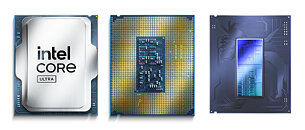
Source:
ET News
PC gamers have faced challenges over the past year, with memory and storage prices climbing rapidly, reaching exorbitant levels for simple RAM kits. The high demand from data centers has depleted memory and storage inventories months in advance. GPUs have also been affected, as gamers have struggled to purchase them at MSRP, instead facing inflated prices due to the shortage of GDDR memory (VRAM) used in these GPUs. Now, CPUs are joining this trend, with Intel targeting its consumer CPU sector first. This price increase will impact everything from pre-built systems and DIY PCs to laptops and other consumer CPU variants. For example, the 10% increase will significantly affect PC pricing, depending on the CPU's share of the bill of materials. We are waiting to see how these changes will affect popular retailers like MicroCenter, Amazon, Newegg, and others before drawing further conclusions.

51 Comments on Intel Reportedly Readies a 10% Price Hike for Consumer CPUs
First off, that isn't AMD's top chip.
Second, I didn't make that comparison, Notebookcheck did, because they compare products in the same class. You are doing a good job of proving my point, the Intel 155H laptop is around the same price as the AMD laptop from the link.
And I have to say, it doesn't really help your argument that AMD is supposedly "so-so" in the laptop segment when their high-end chips smoke the Intel chips in power consumption. That's just makes it worse for Intel.
You are free of course to take a peak a notebookchecks top lists, AMD definitely hangs there. I know because the laptop I linked, the AMD one, exists there.Again, utter nonsense. Comparing AMD's top laptop chip to Intel's, AMD absolutely smokes them in iGPU performance. A whopping 43% faster:
www.notebookcheck.net/AMD-Strix-Halo-128-GB-RAM-in-a-13-inch-convertible-Asus-ProArt-PX13-GoPro-Edition-Review.1232755.0.html
That review was 22 days ago so you've no right to complain about the age on this one.
Seemingly every metric you choose to compare Intel to AMD to, Intel doesn't look good in.
Now I'll buy whichever is best bang for my buck but I hate it when people try to gaslight and grossly misrepresent things. AMD's power consumption is better than Intel and it's competitive with even ARM. It's iGPU perform vastly better than Intel's fastest iGPU (as the chart above shows). If AMD is so-so in your opinion, that Intel isn't even a turd on the toilet bowl. This is a fair application of your own scale given the data and reviews.
Or notebookcheck's testing of the 8060s and a reduced power limit vs the b390?
Would that be because at 20w 28w and 35w the b390 is faster? It isn't until 45w that the 8060s is faster.
So you talked about AMD having better efficiency but neglect to mention that the B390 is actually more efficient and performant than the 8060s
I didn't leave out anything. I provided the exact chart on notebookcheck's website and the link. The reason your comparison isn't there is because it's not a good comparison.
To imply that because I didn't explicitly mention every possible comparison is a disingenuous argument to say the least.You are factually incorrect:
"Update January 31st: We have performed additional benchmarks with the fast AMD Radeon 8060S of the Strix Halo APU. Systems with the powerful AMD chip usually operate at higher power limits, but there are also some handhelds with Strix Halo, so a comparison at lower power limits is also interesting. Contrary to the pure CPU performance, where Strix Halo still has the advantage at 28W, the Radeon 8060S needs more power and only beats the Arc B390 at 45W in the Time Spy benchmark. The gaming performance of Strix Halo, however, is already better at 28W."
www.notebookcheck.net/Intel-Panther-Lake-Arc-B390-performance-and-efficiency-analysis-Intel-s-new-iGPU-trades-blows-with-the-Nvidia-GeForce-RTX-4050.1212582.0.html
You are trying to cherry-pick certain synthetic results at certain power limits or specific applications. You have to bend over backwards to try to put it into a good light, because at full power the 8060S rolls Intel's most powerful iGPU while also scaling down in lighter workloads excellently (a problem wtih AMD's dual CCD mobile chips, but those are intended to be mobile workstations).
I will give you that the Intel chip is more efficient at TDPs below 28w but I never claimed otherwise. That said, it doesn't change anything. It's like saying a 14900K is power efficient when you power limit it and UV it. Correct but entirely missing the point that comparisons of parts are done stock to stock (well, as best you can do that in the mobile space given all the different configurations).The AI Max+ 395 is 62% faster in games across their test suite:
While consuming 37% more power:
62% more performance in their test suite while consuming 37% more power = a more efficient CPU.
AMD decided to just re-release the 2024 parts in 2026 without any significant changes, while in part competitive to extent or on models or usages, there are of course various regards they have been surpassed a little or considerable by competitors because competition did release actusl new products in that time. And I mean in general, not just Intel.
They are now surpassed in single core by a larger margin than back then by Apple, Intel and Qualcomm usually, specially Apple. Panther Lake is overall more performant than the corresponding HX models with less power, the Radeon 890M was already surpassed sligthly in performance and power efficiency by the ARC 140V, the Arc B390 and B370 can be twice or more than twice as fast, let alone some Apple models. And as you yourself said the Strix Halo chips are more of workstations chips, not for pure mobility. All of this is as natural and expected, it's just an straight refresh after all.
Though really and a real problem with the GPU on those current AMD mobile products, compared against competition, is that those are still the exact same RDNA 3.5 completely unchanged, same instructions, same weakness in compute, same bugs in the VCN4 block present since RDNA3 launch, already showing uninterest and slightly iffy support to RDNA3 despite it still having full support. Against Intel and Apple current graphic offerings offerings (Qualcomm's GPUs are still quite iffy), RDNA 3.5 as an architecture is less advanced and adecuate for a lot of modern features, and specially so for computing and interferencing. Strix Halo was promoted for computing and specially AI given it's bigger possible memory pool at rasonable prices, well back when it launched not so much right now with the whole current memory situation as most technology is right now, but given NAVI30 designs have clear weakness from design at that workloads and more important, it took AMD several months after release to support Strix Halo within ROCm.
I'm not sure if you misunderstood, but I meant it not that they are necessarily bad parts because they are not, but when competition is moving ahead and offering new and more interesting things in mobile AMD decided now to keep stall by their own choice in their consumer products for now, probably to focus in other markets taking advantage of current market situation while they can. All the all, indeed however, it's better to buy what's better for oneself own uses within the given price range one has decided or is able to spend.
The fact is, Intel is struggling and you can clearly see it in the laptop segment and desktop as well. I will leave servers out of this.
With the price increase now, that only means Intel has no plan for anything but rather is trying to salvage some cash back by getting it from consumers.
It has already been said but I will repeat it. Intel does not have a lot to offer in the Laptop and Desktop division in comparison to other products from different vendors.
And this is important news because?
CPU cost is barely relevant in a total system these days. You just know you're going to pay far too much for your hardware anyway. You only buy if you absolutely must; and you only buy Intel if you're still living in 2021. I wouldn't trust a single CPU coming out of this company under the current admin or architectures. Its a misguided exercise front to back and the next major 14th gen clusterfuck is around the corner.
Fool me once, fool me twice... ever since the 8700k Intel has been struggling to produce a strong product (having to delid isn't a sign of a good cpu), and it has led to several major mishaps, this train has NOT stopped despite what you keep hearing them say. They still can't produce a top end server CPU for their lives. They still struggle with new nodes. They still have definitely lost the performance crown on almost every (sub)segment of the market and they still haven't got a performant P core that isn't a massive power hog at peak performance.
This ain't over.
Not even close to struggling. They haven't struggled in the mobile CPU space for years, not sure what you are trying to imply?
Its the same thing as Nvidia GPU vs AMD GPU. The former has the above, the latter lacks it and bleeds market share no matter what.
Consumers don't give a flying fuck if CPU one is 2% faster than the other. They trust a brand. Not a CPU.
The last thing I give a flying f*ck about is the "brand" i want performance and battery life from a mobile CPU, but you are telling me that's no longer an important metric to base a mobile CPU purchase on?
But going back to brand image, intel has always had the superior mobile platforms, and that goes back many many years. When the ultra book scene came out and intel was pushing their Centrino platform what did AMD have to offer to answer to that?
AMD can release faster products and yet, because they don't have the mindshare, will not gain meaningful market share. It has been like that on CPU for a long time. Since Zen, AMD has been building on a strong CPU portfolio with consistency and continuous, marked improvement with gen-to-gen releases. In that same time, Intel was found struggling and producing problematic products; you had to delid, the IHS wasn't flat, too thin or too thick, the whole CPU just went up in smoke, etc etc. These events have damaged mindshare and AMD is clearly on top of mind now.
In that slow descent of Intel, yes, it really doesn't matter a thing if Intel produces a marginally faster, cheaper, or even overall better CPU anymore. They'll have to keep doing that for several consecutive generations to build trust again. They may still have the superior mobile CPU, but they're no longer perceived as such.
So now ignoring marketshare is the thing and mindshare is more important....interesting take
, leading to poorer builds and cooling compared to intel products of the same tier from the same OEM,
because of poor cpu design, battery life and unplugged performance are also lower than intel.
In recent gens of pcmark10 battery life tests and performance score comparisons, this situation can be seen.
In desktops, 250kplus and 270kplus are significantly superior to 9750x. In servers, although intel xeon seems to have a much older architecture than amd, somehow customers still prefer intel products with older architectures over amd zen5.
I'm not saying its logical, I'm just saying this is how people's minds work. For this very reason most brands are very careful about brand image - they know it has an effect on everything they make, and do.
AI395 is even worse. AMD rocm cannot handle serious AI, and even intel openvino is better. As an AI device, the main design goal has failed. As a large igpu based on rdoa3.5, it lacks advanced features like mfg and xess, falling seriously behind b390. So its gaming performance is actually simply inferior to b390. rasterization performance at low power stages is worse than b390, idle power consumption is high, making it a failure for handhelds. At medium to high power stages, it is inferior to thin and light gaming laptops equipped with dgpu. rtx5050 can easily crush it. A total failure.
;)
The people that would balk at a $20 increase are already sitting out buying anything right now. The people buying have to buy or don’t care about price.
AM5 isn't cheap either (and NEVER was!), and I talk about CPUs not the RAM thing lol