Thursday, April 2nd 2026

Steam Deck 2 Ditches Semi-Custom APU for Off-the-Shelf AMD Silicon, Eyes 2028 Launch

Valve's next-generation Steam Deck 2 handheld console is reportedly planned for release in 2028, with significant manufacturing changes expected for this sequel to the highly successful handheld gaming device. According to a well-known industry leaker, KeplerL2, posting in the NeoGAF community, Valve is targeting a 2028 refresh for the second-generation Steam Deck. However, the ongoing supply chain shortages of DRAM and NAND Flash could cause disruptions to these plans, potentially leading to delays. Interestingly, this period is when the shortages are expected to start easing, so the Steam Deck 2 could still be released on time, depending on Valve's sourcing capabilities.

One of the most significant procurement shifts for the Steam Deck 2 is Valve's choice of the computing base that will power the handheld. Instead of using a semi-custom AMD APU, Valve is expected to use an off-the-shelf AMD APU that won't require any custom tuning from AMD to meet Valve's needs. This is welcome news, as the latest Steam Machine showed that Valve's reliance on a semi-custom APU solution made the hardware "obsolete" quickly while the rest of the industry advanced. With any semi-custom solution, stockpiling silicon and waiting for DRAM/NAND modules to arrive puts pressure on Valve to ship a product that is significantly underpowered or too expensive. However, with an off-the-shelf solution, Valve could use the best available option at the time of shipping and optimize SteamOS around it.
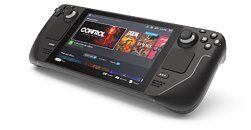
For example, Valve currently uses a 6 nm APU from AMD with four "Zen 2" cores with eight threads running in the 2.4-3.5 GHz range and eight RDNA 2 CUs clocked at 1.6 GHz. Back in 2022, this was a strong specification that contributed to the Steam Deck's success in the handheld gaming market. However, if Valve were to use another semi-custom APU and face delays due to DRAM/NAND shortages, its specifications would lag behind what other companies could offer, especially as many OEMs like Lenovo, ASUS, and MSI have entered the handheld market since then. Instead, Valve will use what's currently available and best, likely involving some SoC configuration with "Zen 6" cores and RDNA 5 GPU IP. AMD offers its APUs with configurable TDPs, so Valve could take any off-the-shelf APU and adjust its power envelope to fit the Steam Deck.
Source: KeplerL2 on NeoGAF
Add your own comment

45 Comments on Steam Deck 2 Ditches Semi-Custom APU for Off-the-Shelf AMD Silicon, Eyes 2028 Launch

#26
mikesg
Medusa Halo Mini
Zen 6 - 4+8+2
RDNA5 - up to 24CU
LPDDR5 or 6

Same as the PS6 handheld... actually next gen compared to today.
Posted on Reply
#27
TheGeekn°72
LastDudeALiveIntel might have a viable option at that point as well. Specifically, the Low-Power Island design and being able to turn the bigger CPU cores completely off is really good design for handhelds. Imagine an Intel chip with a beefy Xe3 or Celestial iGPU, and two LPE cores to run it while you're not gaming, and 4 or 6 P cores to handle the gaming.
problem with Intel's chips is that unlike AMD's, you need to allocate PCB space to put in a chipset (unless that changed recently but I wasn't made aware of such a change in their tech)
that's why you can have things like ASRock's X600 boards & the Steam Machine that straight up don't have a PCH chip to handle the I/O because the I/O die on the CPU/APU handles it all
that said, I know there's the Claw out there with the 155H chip and I wonder how that one handles itself relative to all the AMD-based handhelds and if Intel would be interested to compete in that device segment
although I'll be honest, I suspect we're gonna see an increasing amount of ARM-based HHDs, Android handhelds are already there & SteamOS on ARM is coming through the Frame, if the Deck 2 is an x86 APU, I wouldn't be surprised if Valve already engaged in R&D with some Qualcomm APUs to see what kinda chip they can shove in there, put SteamOS on ARM on and get running to see what are the current limitations
if not them, then the "PC emulator on Android" devs are at least, we got CP77 running on Snapdragon 8 Elite gen5 after all...
Posted on Reply
#28
Vayra86
chrcolukMore frequent updates is anti consumer, long gap between generations is a good thing.
Also I would say the steam deck is still the best steam handheld product, superior to asus, lenova etc. because of its much more reasonable price point.
Agreed. Deck is clearly something that got significant TLC during its development, had enough time to mature in Valve HQ and only gets better post release.

The alternatives all feel rushed, over the top, poorly balanced, all three or one of them depending on which one you're holding; and are not supported by an OS built specifically for it.
The overall performance might be better, but then the question comes whether it really results in better playability, and more often than not, it doesn't and you'll still prefer battery life.
Posted on Reply
#29
mrnagant
Honestly, kind of unfortunate. SteamDeck has been awesome because it can punch above it's weight with it's custom processor. Figured sales would have been good enough they could go custom again, but with their own design this time. Oh well.
Posted on Reply
#30
capdauntless
The SD is not obsolete. It was never tuned to play all the high end triple A stuff. Valve's custom ship made for great battery life and a focus on gpu rather than cpu. Hopefully amd has something similar rather than a chip that the only way you can get the bigger igpu is with 8+ cores.
Posted on Reply
#31
Hakker
Instead of using a semi-custom AMD APU, Valve is expected to use an off-the-shelf AMD APU that won't require any custom tuning from AMD to meet Valve's needs. This is welcome news, as the latest Steam Machine showed that Valve's reliance on a semi-custom APU solution made the hardware "obsolete" quickly while the rest of the industry advanced
this actually makes zero sense. It's also the reason I take this as a bad aprils fools joke.
Steamdeck was never about being cutting edge. It always was about being energy efficient. It's also why it only has a 1280x800 screen. To save in rendering cost. The deck is extremely energy efficient up to the point I can do 10 hours on a single charge. All those of the shelf stuff and bigger screens devices can't come even close to that.
The other reason it doesn't make sense is that you make a product to go on for at least an X amount of years on it being built so you secure a contract for that so it doesn't matter if it's a customized chip or something AMD still has lying around in a drawer. The only difference is that Valve doesn't have to pay for R&D costs.

I still think Valve will partner with AMD on a customized chip and I wouldn't be surprised if it's similar to a new Embedded chip style approach. Low on the megahertz scale but a properly updated GPU in the APU. Being minimally RDNA4 based (which there isn't one) or maybe even an UDNA one.
Posted on Reply
#32
Panther_Seraphin
Have a look at current offerings in both Z1/Z2 and the Strix Halo/Point ranges, there isnt much of a reason to make a custom chip

What I can see happening is something like a refined Pro HX 470 or maybe a Pro 385 on a current node in 2027/28 being offered in the same 5-30 watt power envelope of the current deck. With the growth/normalistaion of DLSS/FSR etc I can see them using frame gen to making 1080p the default option.

Also we have to see what UDNA brings to gaming performance and if they will utilise that?
Posted on Reply
#33
Fizzypop
I thought the steam deck chip was originally designed for the MS surface and was latter rejected. They eventually went with Qualcom a few years latter. It was on the shelf waiting for a use case until steam came along and because it was no longer on cutting edge tech it was cheap. Cut down, under clocked laptop chips maynot cut it, the Z1 and Z2 are operating in a higher power and hardware tier and also operating system.

They are also operating on a different price tier, a yesteryear design with deactivated cores, using c cores and disabled io, clocked low may suit Steam for there handheld. Steam desk will need to be more powerful, a quad channel laptop chip using old Treadripper io die will scare the competition.
Posted on Reply
#34
GenericUsername2001
FizzypopI thought the steam deck chip was originally designed for the MS surface and was latter rejected. They eventually went with Qualcom a few years latter. It was on the shelf waiting for a use case until steam came along and because it was no longer on cutting edge tech it was cheap. Cut down, under clocked laptop chips maynot cut it, the Z1 and Z2 are operating in a higher power and hardware tier and also operating system.

They are also operating on a different price tier, a yesteryear design with deactivated cores, using c cores and disabled io, clocked low may suit Steam for there handheld. Steam desk will need to be more powerful, a quad channel laptop chip using old Treadripper io die will scare the competition.
No, it was likely Magic Leap for whom the Steam Deck chip was originally designed for, to use in AR glasses. See this breakdown I posted earlier in the thread.
Posted on Reply
#35
LastDudeALive
TheGeekn°72problem with Intel's chips is that unlike AMD's, you need to allocate PCB space to put in a chipset (unless that changed recently but I wasn't made aware of such a change in their tech)
that's why you can have things like ASRock's X600 boards & the Steam Machine that straight up don't have a PCH chip to handle the I/O because the I/O die on the CPU/APU handles it all
that said, I know there's the Claw out there with the 155H chip and I wonder how that one handles itself relative to all the AMD-based handhelds and if Intel would be interested to compete in that device segment
although I'll be honest, I suspect we're gonna see an increasing amount of ARM-based HHDs, Android handhelds are already there & SteamOS on ARM is coming through the Frame, if the Deck 2 is an x86 APU, I wouldn't be surprised if Valve already engaged in R&D with some Qualcomm APUs to see what kinda chip they can shove in there, put SteamOS on ARM on and get running to see what are the current limitations
if not them, then the "PC emulator on Android" devs are at least, we got CP77 running on Snapdragon 8 Elite gen5 after all...
There is quite a lot of integrated IO on Intel mobile CPUs. On desktop they've chosen to give mobo partners flexibility, but look at the IO on Panther Lake. 4x Thunderbolt 4, 10 USB ports, Wi-Fi 7, Bluetooth, etc.
Posted on Reply
#36
TheGeekn°72
LastDudeALiveThere is quite a lot of integrated IO on Intel mobile CPUs. On desktop they've chosen to give mobo partners flexibility, but look at the IO on Panther Lake. 4x Thunderbolt 4, 10 USB ports, Wi-Fi 7, Bluetooth, etc.
oh, alright then, guess I jumped the gun a little fast on this... makes me wonder why there's even that much I/O on a mobile SKU, who's gonna use 10 USB ports there?
Posted on Reply
#37
LastDudeALive
TheGeekn°72oh, alright then, guess I jumped the gun a little fast on this... makes me wonder why there's even that much I/O on a mobile SKU, who's gonna use 10 USB ports there?
Micro-PC workstations, and the USB also serve as universal interfaces for other I/O. For a laptop, for instance, a webcam and touchscreen will both communicate their data over USB.
Posted on Reply
#38
aktpu
Luckily I can enjoy Switch 2 today
Posted on Reply
#39
Panther_Seraphin
TheGeekn°72oh, alright then, guess I jumped the gun a little fast on this... makes me wonder why there's even that much I/O on a mobile SKU, who's gonna use 10 USB ports there?
Webcams, fingerprint scanners, RGB 4 USB ports and you soon rack it up there quite quickly!
Posted on Reply
#40
TechLurker
GenericUsername2001Or even just a standard motherboard for hand helds (I propose we call it HH-ATX) that you could swap out with higher performance parts as needed would be nice; stuff like controllers or screens go obsolete a lot slower than internal parts do. And maybe a standard battery too. The handheld market is still relatively young & growing, so it would be nice to force standard now, rather than end up in a situation like laptops where there that sort of thing is only shared at best among a few models from one manufacturer.
Would be nice if Steam pulled a Framework and worked with a few AIB providers to make standardized "HHTX" motherboard+CPU sets that could be replaced/upgraded easily, while reusing the existing shell, drives, and peripherals. Then sell a "Steam Case" that allowed reusing of the old motherboard as a thin client. Again, similar to what Framework's been doing to try and reduce e-waste and extend use of old and still usable components.
Posted on Reply
#41
aktpu
TechLurkerWould be nice if Steam pulled a Framework and worked with a few AIB providers to make standardized "HHTX" motherboard+CPU sets that could be replaced/upgraded easily, while reusing the existing shell, drives, and peripherals. Then sell a "Steam Case" that allowed reusing of the old motherboard as a thin client. Again, similar to what Framework's been doing to try and reduce e-waste and extend use of old and still usable components.
Which AIBs has Framework worked with in order to make 'standardized' mobos for laptops?
Posted on Reply
#42
mikesg
Panther_SeraphinWhat I can see happening is something like a refined Pro HX 470 or maybe a Pro 385 on a current node in 2027/28 being offered in the same 5-30 watt power envelope of the current deck. With the growth/normalistaion of DLSS/FSR etc I can see them using frame gen to making 1080p the default option.

Also we have to see what UDNA brings to gaming performance and if they will utilise that?
The HX 470 / Z2 Extreme APUs are restricted by memory bandwidth, and barely more performant: www.pcgamer.com/hardware/handheld-gaming-pcs/the-first-gaming-benchmarks-for-amds-ryzen-z2-extreme-show-memory-bandwidth-is-hobbling-the-full-potential-the-new-handheld-chip/

The Strix Halo / Pro 385 APU is too large to be cost effective. Laptops/handhelds with this chip are $1200+.

Both of the above use RDNA 3.5. Next gen Medusa Halo Mini (2027-2028) uses RDNA 5, and supports LPDDR6 according to leaks.

RDNA 5 is more of a longer lasting product.
Posted on Reply
#43
CosmicWanderer
Makes sense, considering AMD has its own line of Z-series Ryzen chips for handhelds. Z2 was the first that deviated from the mainstream laptop chips, offering a unique core and graphics combo.

So AMD deems it feasible to create what are essentially "semi-custom" chips just for handhelds.
Posted on Reply
#44
micky3936
LastDudeALiveI mean, wasn't the entire reason Valve needed a semi-custom APU for the Steam Deck in the first place was because there literally was not anything like it before? Nvidia Tegra's were the only existing chips that would meet the requirements (which is why they're used in the Switch), and they were obviously a non-starter due to ARM CPUs and Nvidia drivers on Linux.

The Steam Deck essentially created the handheld PC gaming market, which is why there are lots of chips from AMD and Intel catering to that specific need now. So of course there's no reason to demand a semi-custom chip again now that AMD is designing APUs for this specific market.
Do you seriously think the steam deck was the first PC handheld ? I had a onexplayer windows 10 handheld pc about 5 years ago and long before the steam deck came out.

Did it open it up to the masses yes it did but it certainly didn't create the template
Posted on Reply
#45
rusty caterpillar
LastDudeALiveThere is quite a lot of integrated IO on Intel mobile CPUs. On desktop they've chosen to give mobo partners flexibility, but look at the IO on Panther Lake. 4x Thunderbolt 4, 10 USB ports, Wi-Fi 7, Bluetooth, etc.
Does the Panther Lake comes to Framework desktop as well or I should get the MAX 385/395.
18 A /P is more performant/watt than AI Max 395 as I heard.
Is Framework investing in desktop with Panther Lake?
Posted on Reply
Add your own comment
Nov 13th, 2026 18:49 PST change timezone

New Forum Posts

Popular Reviews

TPU on YouTube

Controversial News Posts