Friday, April 3rd 2026

New Rowhammer Attack Puts GDDR6-Powered NVIDIA GPUs at Risk
Rowhammer attacks exploit vulnerabilities in DRAM hardware by causing targeted bit-flips, allowing attackers to bypass memory isolation and gain control over a device. These attacks were initially focused on CPUs and their associated DDR memory, such as DDR4. However, recent research indicates that NVIDIA GPUs are also vulnerable due to the fragile nature of the GDDR6 memory they use, which directly compromises the CPU host. Two independent research teams have discovered ways to exploit this decades-old memory vulnerability against modern graphics hardware, with trouble extending beyond the GPU itself. The "GDDRHammer" and "GeForge" groups have each developed functional exploits that use Rowhammer bit-flips in NVIDIA GPUs with GDDR6 memory to gain complete control over the host CPU's memory. This attack can perform bit-flips on some NVIDIA GPU models, ranging from the "Ampere" to "Ada Lovelace" families of cards.
An attacker who succeeds in this can read and write anything stored in the machine's main memory. Both teams have also introduced new Rowhammer techniques specifically designed for GPU architecture, achieving a significantly higher rate of bit-flips on GDDR6 memory than previous methods. The critical step in both exploit chains involves targeting the GPU's memory allocator, using controlled bit-flips to corrupt the GPU's page tables. Once these page tables are compromised, the attacker gains arbitrary read and write access to CPU memory, breaking down the security boundary between the graphics subsystem and the rest of the machine. The end result is a full system compromise, as the attacker can manipulate memory at will and gain root access, achieving total control without interacting with privileged software paths. The affected GPUs include the GeForce RTX 3060, which experienced 1,171 bit-flips, and the RTX 6000 "Ada" GPU, which saw 202 bit-flips from the attack.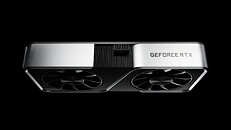
 More GPUs are being tested, and the official website claims 25 NVIDIA GPUs were tested, with only a few showing signs of vulnerability. However, two mitigations exist. Enabling IOMMU through the BIOS closes the primary attack path by restricting which memory regions the GPU can access on the host system. This technology handles the translation of device-visible virtual addresses to physical host memory addresses and can completely fence off sensitive memory from peripheral devices. Another option is activating Error Correcting Codes on the GPU, which NVIDIA exposes through a command-line setting. However, enabling it reduces the pool of usable GPU memory and adds processing overhead, resulting in a performance penalty. Interestingly, no GPU with GDDR6X and GDDR7 memory is vulnerable, as the exploit only works with GDDR6.
Sources:
GDDR.Fail Website, Ars Technica, VideoCardz
An attacker who succeeds in this can read and write anything stored in the machine's main memory. Both teams have also introduced new Rowhammer techniques specifically designed for GPU architecture, achieving a significantly higher rate of bit-flips on GDDR6 memory than previous methods. The critical step in both exploit chains involves targeting the GPU's memory allocator, using controlled bit-flips to corrupt the GPU's page tables. Once these page tables are compromised, the attacker gains arbitrary read and write access to CPU memory, breaking down the security boundary between the graphics subsystem and the rest of the machine. The end result is a full system compromise, as the attacker can manipulate memory at will and gain root access, achieving total control without interacting with privileged software paths. The affected GPUs include the GeForce RTX 3060, which experienced 1,171 bit-flips, and the RTX 6000 "Ada" GPU, which saw 202 bit-flips from the attack.


35 Comments on New Rowhammer Attack Puts GDDR6-Powered NVIDIA GPUs at Risk
So in theory those that run Honeypot VMs for shit'n'giggles with one of these GPUs shared to the honeypot may indirectly lead to complete compromise of the host system and every other VM hosted on it. This is also the cause of concern for hosting platforms that are using these GPUs for Plex hosting etc, leading to the compromise of multiple customers etc.
To everyone else out there? Near 0 realistic impact because if the system is already compromised to do this then there are simpler avenues to gather most of the information they want.
PCs in general are a swiss cheese of security issues, no doubt thousands which arn't known yet.
If I recall intel also has gpu that uses gddr6 as well
All hail the unconquerable Blackwell!
Get ready for price increases for these amazing, and now extra secure GPUs.
Har har!
I don't see any point in testing any other GPU, since this whole thing is flawed by not having IOMMU enabled
more an issue with the operating system not keeping software isolated. we talk here about a graphic card which has a vulnerability.
well reading furtherthe text contradicts itself. does not change i do not agree withroot cause. not dram but graphic card dram which is not directly the cpu dram.
iommu is most likely also a bad fix like secureboot it is. well many will believe it will fix the issue.
so there are no checksums calculated and verified by defaultanother bad fix.
prevent running such code should be the prime directive. is the issue closed source binaries or not audited code for such attacks?
-- edit feel free to share your insights. was a gpu ever meant to give any data back? I see ECC, error correction graphic card memory to be specified. hopefully not the fake EEC DDR5 one but a proper one.
Rowhammer works by manipulating ram cells until it causes nearby bits to flip when they're not supposed to. If you do this on the page table, you move code anywhere you want by remapping memory. You can load malicious code into VRAM, and then manipulate the page table to insert that code into the memory of a legitimate process, like a Windows system process.
IOMMU prevents that by providing a filter between the GPU and CPU page tables, preventing the compromised GPU from mapping the malicious code into the system memory.
ECC prevents the attack by catching and fixing the malicious bit flips that corrupt the page tables in the first place.
Similar to DDR5 does vs DDR4 so should mitigate a lot of these attack vectors initially."memory-safety bugs in the NVIDIA driver"
It's great that they find them, because you should always build with the smallest piece in mind, but too often it ends in sensationalist threads and random links to blog posts like above.
IOMMU
AMD SME
Intel TME
ECC
TRR
RAM encryption
RAM scrubbing
Thats just the bios settings.
BIOS signature checking
Secure boot
Hardened images
Stripped kernels
User isolation
Service tamper guards
to name a few
Intel SGX
KPTI
TPM
Thats some hardware level stuff.
All of this is used. Literally. That is just the tip of the iceberg, then you get into hypervisor isolation, virtual ram addressing for isolated workloads, a bunch of other software abstration and protection.
Users have absolutely no idea. They never look at this stuff. For some reason people think that what? AWS, Meta? Just install Ubuntu?
No.
From the hardware UP every security checkbox is checked, we flash bios with this stuff pre-configured, software checks during OS install, countless steps in the security chain from boot to workload.
The majority of all major outages and hacks in decades were not hardware chain of custody related, they were breaches of the custom software stack.
I am talking about the DCs I have worked in. A single building 1million you read that right 1 million and up servers per building, all of that surface area no breach yet.
These things should be known, so we can make better architectual decisions for the next iteration, but they should not scare you.
If you aren't an infested malware farm, this isn't anything to worry about, no.
As the process nodes get finer, the cell capacitance gets smaller and the proximity to neighboring cells gets closer. Both of these parameters amplify the effects that make the Rowhammer exploit possible. To that end, the problem is a natural limitation of DRAM. It will only get worse with higher density DRAMs. ECC is already borderline effective and will need bolstered further if used as the primary mitigation with increasing densities.
One future option might be reduce array density but start layering instead, not unlike how Flash is done now. Another option is replace DRAM with a different memory type entirely.